DbcultAccessing Vault...
Cult Review
Senior Film Conservator
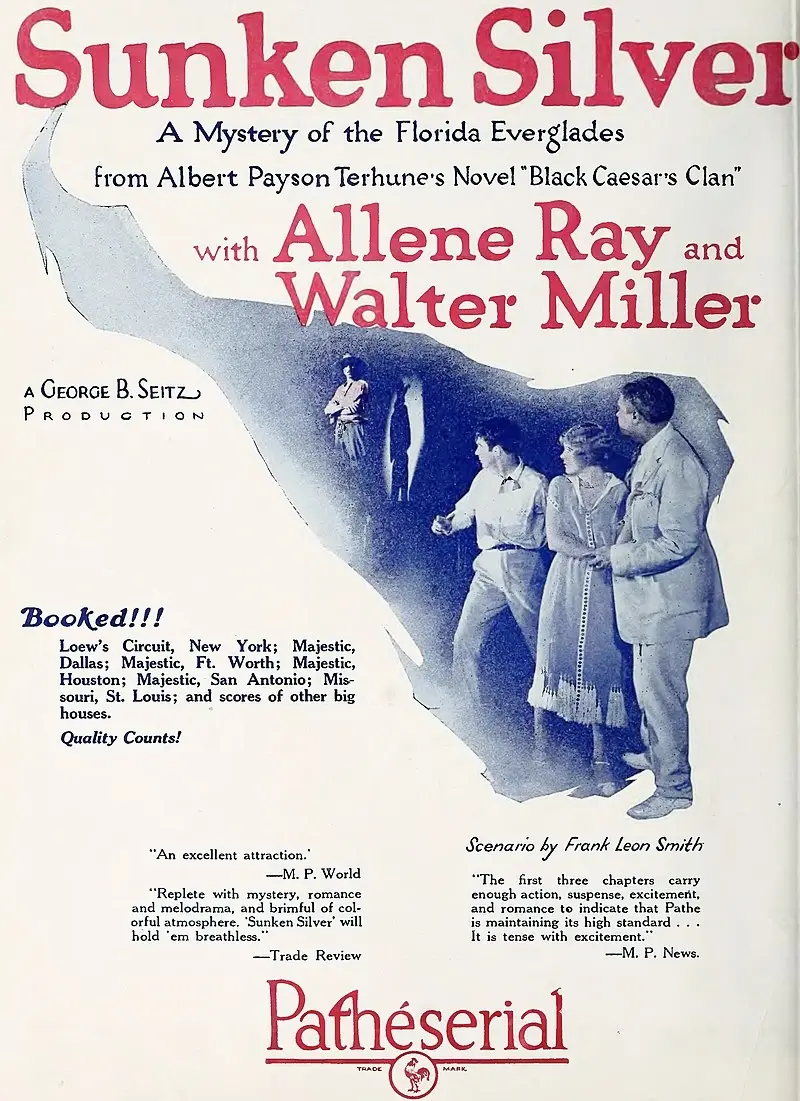
Is Sunken Silver a hidden gem worth digging up for the modern cinephile? Short answer: No, unless you are a dedicated archivist or a glutton for the specific, exhausting rhythms of the silent-era adventure serial.
This film is for the viewer who finds beauty in the grain of 1920s celluloid and the physical bravery of stunt-work performed without a safety net. It is absolutely not for anyone who requires a coherent, fast-paced narrative or nuanced character development to stay awake.
Before we dive into the murky waters of the Florida Everglades, let's address the core of the experience. This 1925 Pathé serial is a fascinating historical document, but as a piece of entertainment, it suffers from the era's tendency toward padding and repetition.
The most striking element of Sunken Silver is its commitment to physical realism. Director Spencer Gordon Bennet, often called the 'King of Serials,' understood that if the plot was thin, the spectacle had to be thick. There is a specific sequence where Brice, played with a rigid, mustachioed intensity by Walter Miller, is thrown into a sea of sharks. Unlike the staged, theatrical danger seen in European imports like L'orpheline, Bennet’s camera lingers on the churning water. You can see the genuine tension in Miller’s movements. It is raw, it is dangerous, and it is the kind of sequence that justifies the film's existence.
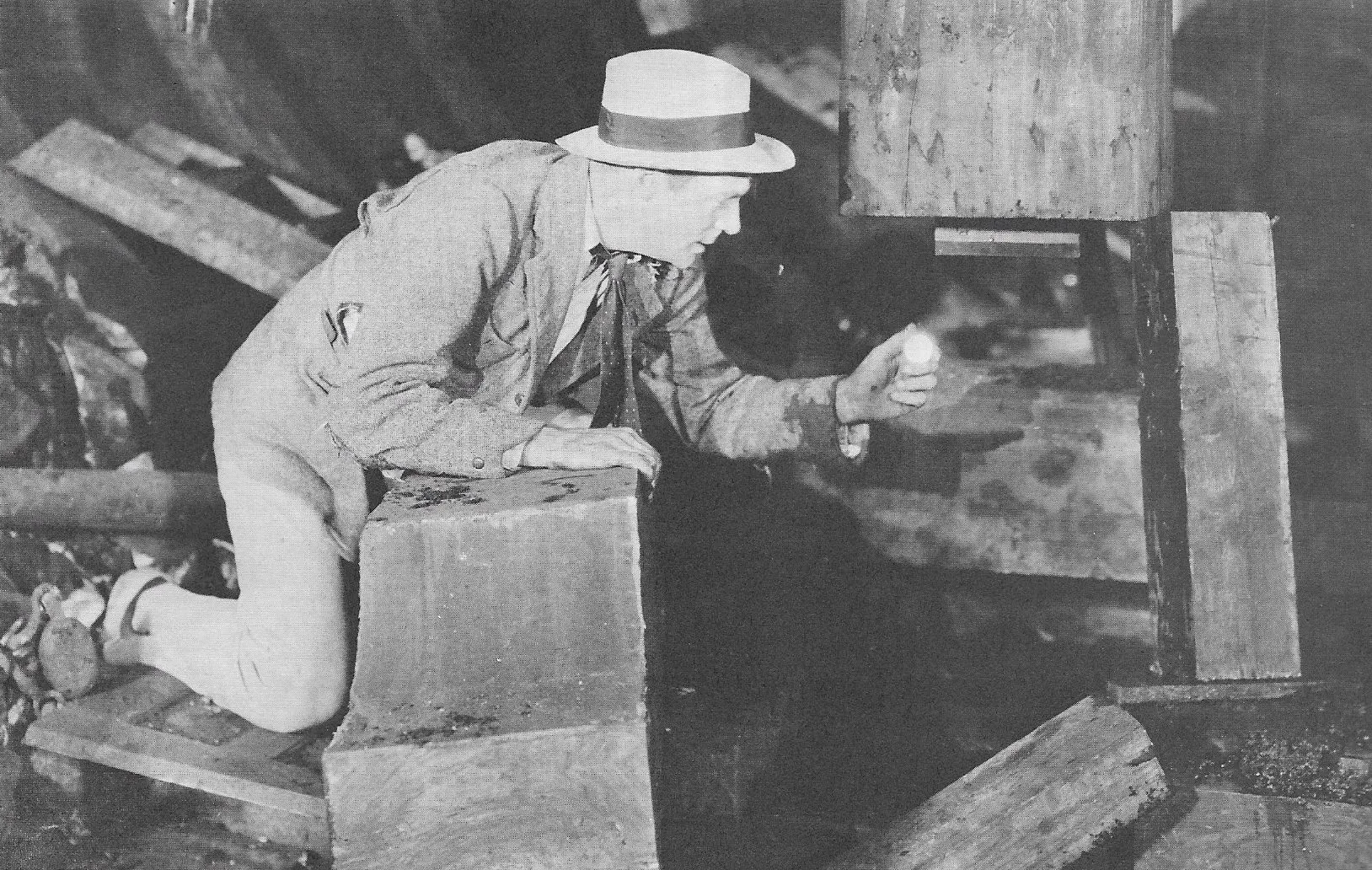
The shark escape isn't just a stunt; it’s a mission statement. It tells the audience that while the dialogue (via title cards) might be melodramatic, the physical consequences are real. This level of commitment to location shooting in the mid-20s was a logistical nightmare. The film captures an Florida that no longer exists—a swampy, prehistoric frontier where the 'Conches' (local settlers) represent a third-party threat that adds a layer of regional flavor missing from more generic adventures like Garrison's Finish.
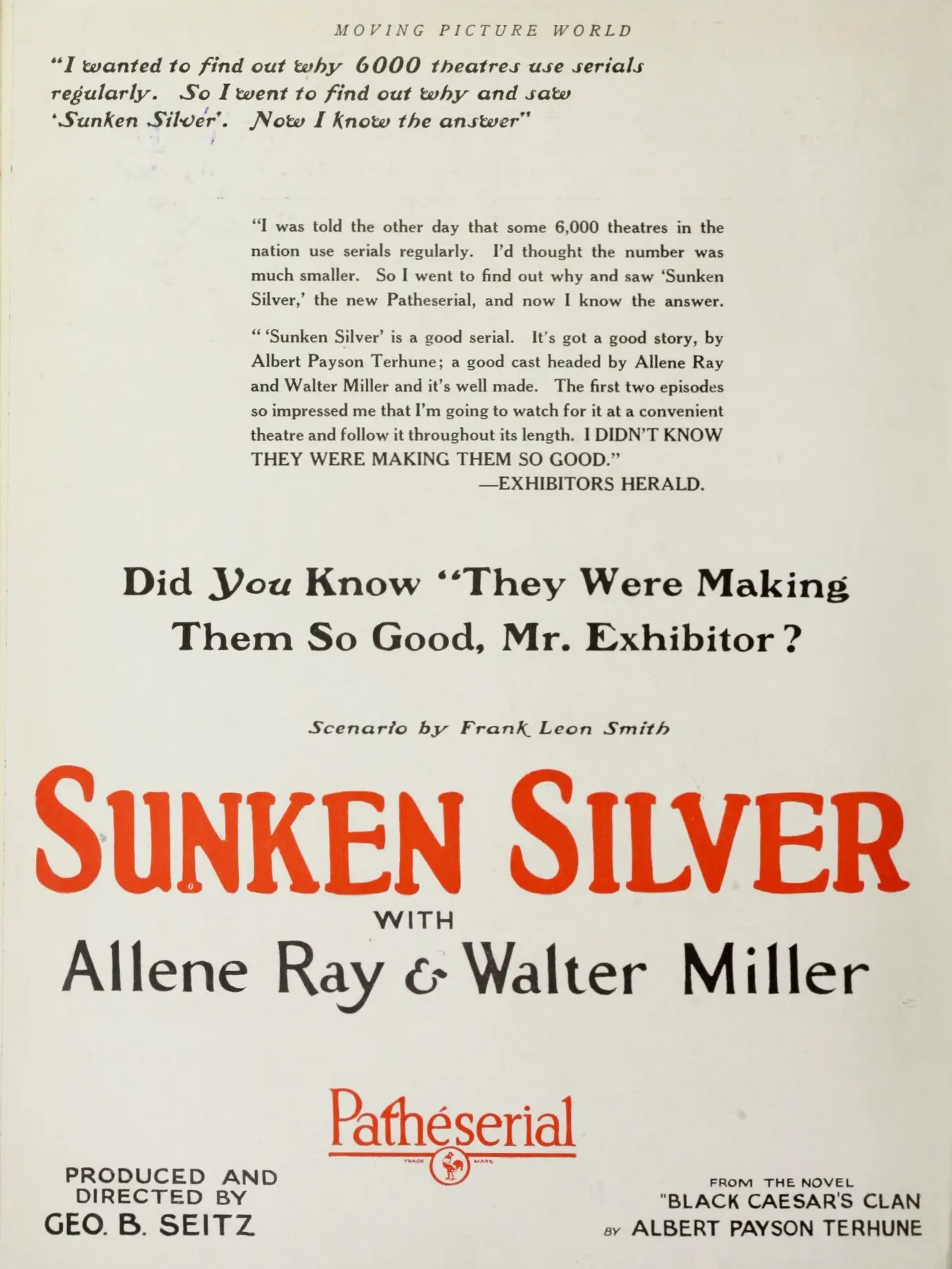
Allene Ray and Walter Miller were the reigning royalty of the serial format, and their chemistry in Sunken Silver is the only thing keeping the romantic subplot from sinking. Ray, as Claire, is more than a mere damsel. While she does spend a fair amount of time being captured, her escape with Brice from the Conch camp shows a level of physical agency that was relatively progressive for the time. She doesn't just wait to be saved; she maneuvers.
However, the film’s reliance on their star power often leads to narrative stagnation. We see them captured, then they escape. They are captured again, and they escape again. It’s a rhythmic cycle that works in weekly ten-minute installments but feels like a marathon of frustration when viewed in a more condensed format. The villains, Hade and Milo, are serviceable but lack the psychological depth found in the antagonists of The Doom of Darkness. They want the silver because the script says they want the silver. There is no nuance, only greed.
Sunken Silver is worth watching for viewers interested in the evolution of action cinema and the history of location-based filmmaking.
If you are looking for a casual Friday night movie, this is not it. The pacing is archaic, and the 'Conches' are portrayed with a cultural insensitivity that is difficult to ignore. However, for those who appreciate the 'Pathé style'—which emphasized outdoor action and athletic leads—Sunken Silver is an essential piece of the puzzle. It represents the bridge between the stage-bound melodramas of the 1910s and the high-octane serials of the 1930s.
One of the most unconventional moments in the film occurs during the final siege. As the Conches attack through a secret tunnel, they aren't met with gunfire or fisticuffs, but with a stream of boiling water. It is a strangely medieval tactic for a film set in the 19th century and filmed in the 20th. This scene is a masterclass in low-budget desperation. It’s visceral, unexpected, and slightly cruel. It highlights a recurring theme in Bennet’s work: the environment and basic elements are more effective weapons than any firearm.
Contrast this with the slapstick-adjacent action of Harold Lloyd’s Why Worry?. While Lloyd used danger for laughs, Bennet uses it for a pulp-novel sincerity that feels almost naive today. There is no wink to the camera. When the water hits the tunnel, the stakes feel life-and-death, even if the special effects are just steam and clever camera angles.
Sunken Silver is a fascinating, if flawed, relic. It captures a moment in time when cinema was moving out of the theater and into the wild. The silver doesn't matter. The plot barely matters. What matters is the sight of Walter Miller fighting for his life in a real swamp. It works. But it’s flawed. If you can handle the title cards and the 1925 sensibilities, there is a rugged, primal energy here that is missing from modern blockbusters. It’s a film that bites, even if it takes its time to do so.
"A grueling testament to the era of physical filmmaking, Sunken Silver is a swamp-soaked adventure that prioritizes the sweat of its actors over the logic of its script."

IMDb —
1934
Community
Log in to comment.