DbcultAccessing Vault...
Cult Review
Senior Film Conservator
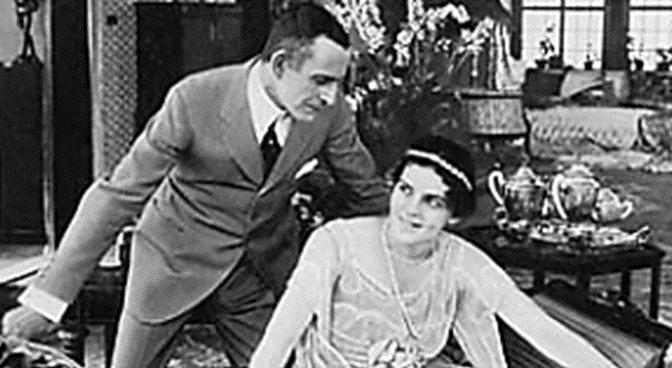
Stepping back into the nascent decades of cinematic artistry, one encounters 'Der Onyxknopf' (The Onyx Button), a masterful silent film from 1917 that, even through the lens of a century, retains an astonishing capacity to grip and provoke. Conceived by the formidable creative partnership of Ewald André Dupont and Joe May, this picture is more than a mere historical curiosity; it is a vital progenitor of the intricate mystery genre, foreshadowing the psychological depth and visual sophistication that would later define German Expressionism and, by extension, the noir aesthetic. It’s a testament to the power of pure visual storytelling, where every gesture, every flicker of light and shadow, carries the weight of an entire dialogue.
The film plunges us headfirst into the high stakes world of industrial ambition and societal hypocrisy, a recurrent theme in early 20th-century German cinema. At its core is the shocking murder of Herr Klinger, a titan of industry whose innovative patent, a veritable goldmine of future prosperity, vanishes with him. This is not merely a crime of passion, but one steeped in the colder, more calculated currents of corporate espionage and cutthroat competition. The immediate and seemingly irrefutable evidence points to Eduard von Linden, portrayed with a poignant vulnerability by Hugo Flink. Flink, a staple of the era, imbues Eduard with a nuanced desperation, allowing the audience to glimpse the torment of a man unjustly accused, his silent pleas for understanding resonating deeply. His clandestine affection for Clara Klinger, the industrialist's niece, provides the convenient, albeit misleading, motive that initially sways both the authorities and the cynical public.
But it is the eponymous onyx button, a small, unassuming detail, that elevates 'Der Onyxknopf' beyond a simple whodunit. Discovered at the crime scene, it is a meticulously crafted object, a bespoke item whose very existence hints at a world of tailored coats, exclusive circles, and hidden opulence. This button, a silent witness to a heinous act, becomes the linchpin of the entire investigation, a macguffin that drives the narrative forward with an almost relentless momentum. Dupont and May masterfully use this singular object as a focal point, imbuing it with a symbolic weight that transcends its physical form. It is the tangible link between the seen and the unseen, the truth and the deception, a beacon in the encroaching darkness of suspicion.
Leopoldine Konstantin, as Clara Klinger, delivers a performance that is both forceful and deeply empathetic. Her portrayal of a woman refusing to accept the facile conclusions of a male-dominated world is remarkably progressive for its time. Clara is no damsel in distress; she is an active, intelligent protagonist, her intuition and unwavering belief in Eduard's innocence propelling her into a dangerous, self-initiated investigation. Konstantin's expressive acting, a hallmark of silent cinema, conveys a fierce determination, her eyes reflecting the turmoil and resolve that drive her to uncover the truth. She navigates the treacherous social landscape, a world where appearances are paramount and secrets are guarded with lethal intent, with a courage that is truly admirable. Her journey is not merely about clearing her beloved's name, but about asserting a moral clarity against the prevailing cynicism. One might draw parallels to the spirited heroines in films like Divorce and the Daughter, who similarly defy societal expectations to fight for what they believe is right, though Clara's stakes feel considerably higher.
Ewald André Dupont and Joe May, two titans of early German cinema, demonstrate an unparalleled command of visual narrative in 'Der Onyxknopf.' Their collaborative genius is evident in the film's taut pacing, its evocative use of mise-en-scène, and the sophisticated interplay of light and shadow that prefigures the expressionistic movement. They understood that in silent film, atmosphere is paramount. Every set piece, from the opulent Klinger mansion to the dimly lit, clandestine gambling dens Clara infiltrates, is meticulously designed to enhance the mood and advance the plot. The camera work, though constrained by the technology of the era, is surprisingly dynamic, employing clever angles and framing to heighten suspense and reveal character. This film, alongside contemporaries like Dämon und Mensch, showcased the burgeoning artistry of German filmmakers in crafting compelling, psychologically rich dramas.
The directorial choices in 'Der Onyxknopf' are particularly notable for their restraint and precision. Unlike some of the more melodramatic offerings of the period, Dupont and May allow the narrative to unfold with a deliberate, almost surgical precision. The clues are laid out carefully, the red herrings are convincing, and the eventual reveal feels earned, rather than contrived. This is a film that respects its audience's intelligence, inviting them to piece together the puzzle alongside Clara and Detective Inspector Kroll. The narrative structure, featuring multiple perspectives and converging storylines, is remarkably complex for its time, hinting at the sophisticated storytelling techniques that would become commonplace in later decades.
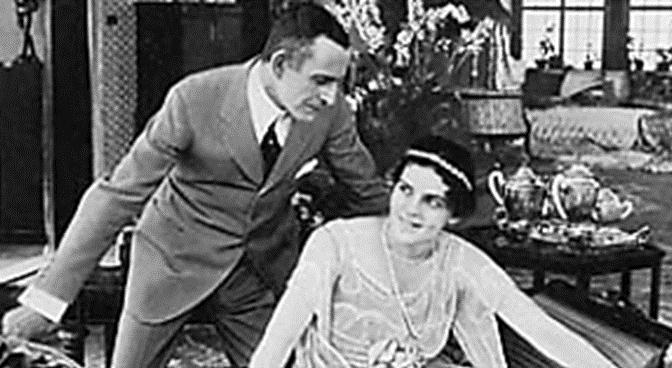
Max Landa, as Detective Inspector Kroll, offers a performance that is both understated and deeply effective. He embodies the classic, astute investigator, initially bound by the visible evidence but gradually open to the deeper, more nuanced truths that Clara uncovers. Landa's Kroll is not a bumbling fool, nor is he an infallible genius; he is a professional, navigating the complexities of justice with a pragmatic skepticism that makes his eventual acceptance of Clara's findings all the more impactful. His scenes, often devoid of overt theatrics, rely on subtle shifts in expression and body language to convey his thought process, a masterclass in silent film acting.
Bruno Kastner, in the role of Baron von Richter, delivers a chilling portrayal of aristocratic villainy. Von Richter is not a mustache-twirling caricature; he is a man of refined cruelty, his suave exterior a deceptive veneer for a ruthless ambition. Kastner's performance is a study in controlled menace, his charm merely a tool to manipulate and deceive. He represents the darker underbelly of high society, a world where power and privilege can corrupt to the deepest core. The contrast between his polished demeanor and the heinous acts he orchestrates creates a palpable tension that permeates every scene he inhabits. His character, much like those explored in A Rich Man's Plaything, highlights the moral compromises often made in the pursuit of wealth and status.
'Der Onyxknopf' is a film rich in thematic resonance. It explores the perennial conflict between appearance and reality, the fragility of reputation, and the enduring power of love and loyalty in the face of adversity. The narrative delves into the socio-economic disparities of the time, hinting at the desperation that can drive individuals to extreme acts, and the protective shield that wealth can sometimes provide for the truly culpable. It also subtly critiques the justice system, showcasing how easily an innocent person can be condemned by circumstantial evidence and societal prejudice, a theme echoed in films like Out of the Darkness, which often explored the plight of the wrongly accused.
The film's climax, a masterfully orchestrated confrontation at a masquerade ball, is a visual spectacle that brings all the disparate threads of the plot together in a dramatic flourish. The masks worn by the revelers serve as a powerful metaphor for the hidden identities and concealed truths that have pervaded the narrative, making the moment of unmasking all the more potent. This scene, steeped in theatricality and high tension, is a testament to the filmmakers' ability to construct compelling dramatic sequences without relying on spoken dialogue. It's a moment that resonates with the kind of grand reveal found in classic detective narratives, reminiscent of the intricate unraveling in The Mystery of the Fatal Pearl and the Sequel, where a single object holds the key to a larger conspiracy.
In an era when cinema was still finding its voice, 'Der Onyxknopf' stands as a remarkable achievement. It demonstrates an early sophistication in narrative construction, character development, and visual language that would influence countless films to follow. Dupont and May's collaboration here is a significant milestone in German cinematic history, paving the way for the more overtly expressionistic masterpieces that would emerge in the 1920s. It's a film that, despite its age, feels surprisingly modern in its psychological depth and narrative complexity. The meticulous attention to detail, from the symbolic weight of the onyx button to the nuanced performances of its cast, ensures its place as a cornerstone of silent film artistry.
Reflecting on the film's enduring appeal, one can appreciate how it deftly balances the conventions of a thrilling mystery with a deeper exploration of human nature. It's a story not just about solving a crime, but about the resilience of the human spirit in the face of injustice, and the profound impact that seemingly insignificant objects can have on the course of destiny. The onyx button, a silent emblem of truth, continues to whisper its secrets across the decades, inviting new generations of viewers to unravel its captivating mystery. Its influence can be felt in the dramatic tension of a film like The Key to Yesterday, where past secrets dramatically influence present events, or the intricate societal critique seen in Ambition.
In essence, 'Der Onyxknopf' is a powerful reminder of the foundational strengths of silent cinema: its ability to transcend language barriers through universal emotions and compelling visual narratives. It's a film that demands close attention, rewarding the viewer with a rich tapestry of suspense, character, and profound thematic depth. It's a true gem, deserving of its place in the pantheon of early cinematic achievements, a testament to the enduring power of a well-told story, even one delivered in the hushed eloquence of silence.

IMDb 6.8
1932
Community
Log in to comment.