DbcultAccessing Vault...
5.9/10
Senior Film Conservator
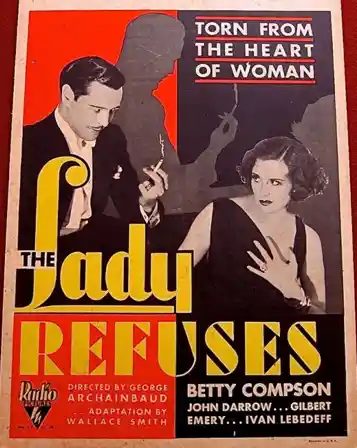
A definitive 5.9/10 rating for a film that redefined the boundaries of cult cinema. The Lady Refuses remains a cornerstone of transgressive art.
You should probably watch this if you have a thing for early 1930s talkies that feel like they were filmed inside a very quiet library. It’s perfect for people who like to see how movies used to struggle with sound, but if you want something with, you know, pacing, you will probably hate this.
The whole thing feels like a stage play that someone accidentally caught on film. It’s not 'cinematic' in the way we think of it now, but there is something deeply charming about how awkward it is.
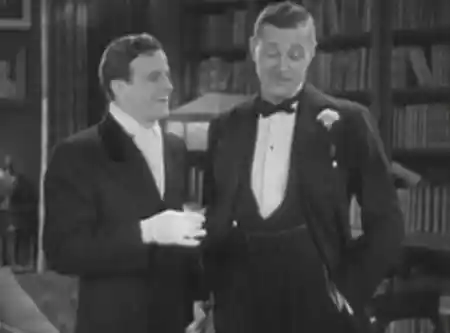
The story kicks off with Sir John, played by Gilbert Emery, who is this very stiff, very British-sounding millionaire. He’s got a son named Russell who is chasing after a woman named Myra, and Sir John is convinced Myra is just a gold digger.
So, what does a rich dad do in 1931? He goes out into the London fog and finds June, a girl who is literally about to be evicted from her flat.

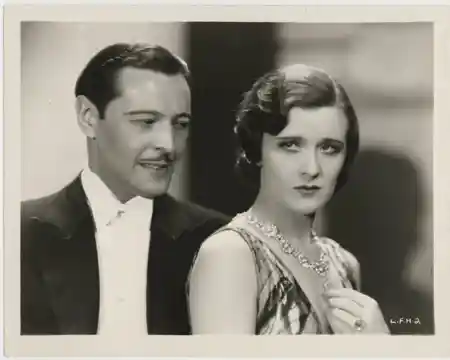
Betty Compson plays June, and honestly, she’s the only reason to stay awake through some of the slower bits. She has these huge, expressive eyes that seem to be doing way more work than the actual script.
Sir John offers her a job: come live in my house, pretend to be a lady, and make my son fall in love with you so he forgets about the other girl. It is basically a social experiment with zero ethics, but everyone in the movie treats it like a standard business transaction.
There is a scene early on where June is talking to her landlord, and you can tell the actors are trying so hard to stay near the hidden microphones. They move a bit like robots, but it adds this weird, dreamlike quality to the whole thing.
Unlike something like Applause, which felt a bit more gritty and real, this movie stays firmly in the world of fancy drawing rooms and very shiny floors. It’s a lot of people standing around in evening wear talking about their feelings in very polite voices.
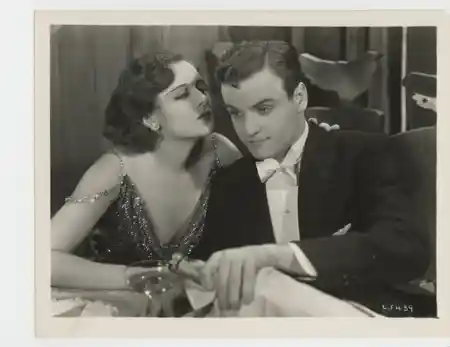
I kept looking at the background sets. The RKO art department clearly spent their whole budget on some very tall doors and a lot of potted ferns.
John Darrow plays the son, Russell, and he is... well, he’s a lot. He does this thing where he stares at June like he’s trying to remember if he left the stove on at home.
Their chemistry is weird. It’s not that they don't like each other, it's just that the dialogue is so formal it’s hard to tell if they’re flirting or discussing a bank loan.
There’s a moment where they’re at a party, and the music in the background is so thin and tinny. It reminded me of The American Beauty in how it tries to show high society but ends up feeling a bit hollow.
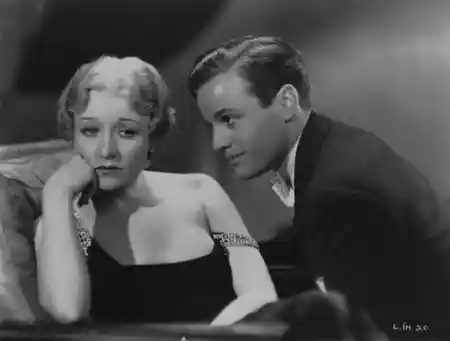
The 'gold digger' Myra is actually played by Margaret Livingston. She’s great because she actually looks like she’s having fun, whereas everyone else looks like they’re worried about their dry cleaning bills.
I noticed one reaction shot of the father where he just stares into space for about five seconds too long. I think the editor might have been asleep, or maybe they just didn't have enough footage to cut away. It made me laugh out loud.
Also, the hats. The hats in this movie are aggressive. They’re like architectural projects sitting on the women’s heads, tilted at angles that shouldn't be possible according to the laws of physics.
Look, it’s not a masterpiece. It’s not even a hidden gem, really. But it is a very specific vibe. It’s like finding an old postcard in a junk shop—you don’t know the people, and the message is boring, but you can’t help looking at it for a while.
The way the plot resolves is a bit of a head-scratcher. The title is The Lady Refuses, and without giving it away, the refusal is less about a big dramatic 'NO' and more about a quiet realization that rich people are kind of exhausting.
If you’ve seen Life's Greatest Game, you know how these early talkies can sometimes feel like they’re stuck in mud. This one moves a little faster than that, but not by much.
I did appreciate the ending, though. It didn't go exactly where I thought it would, which is rare for a movie that feels this old-fashioned. It has a tiny bit of bite to it.
One thing that bugged me: the music just disappears for huge chunks of time. You’re just left with the hiss of the old film stock and the sound of people breathing. It’s actually kind of spooky if you watch it in the dark.
I think the movie is trying to say something about class and how you can’t just buy people’s lives, but it gets distracted by the fancy dresses. That’s fine. I like the dresses too.
It’s a short watch, barely over an hour. You could do worse on a rainy afternoon when you’re feeling a bit theatrical.
Just don’t expect any big emotional payoffs. It’s more of a polite shrug of a movie. Betty Compson deserved a better script, but she makes the most of the one she’s got.
In a way, it reminded me of Appearances—just people trying to look much more important than they actually are. Which I guess is what movies are all about anyway.
I’ll probably forget most of the plot by next week, but I’ll remember that one scene where June looks at the fancy dinner plate like she’s about to steal it. That felt real. Everything else was just acting. 👋

IMDb 5
1928
Community
Log in to comment.