DbcultAccessing Vault...
6/10
Senior Film Conservator
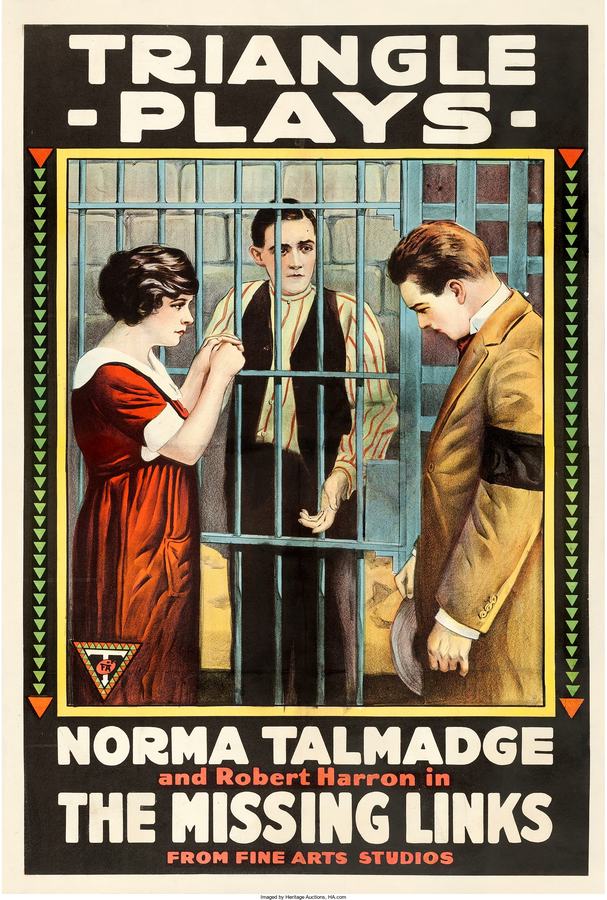
A definitive 6/10 rating for a film that redefined the boundaries of cult cinema. The Missing Links remains a cornerstone of transgressive art.
Stepping back into the annals of early cinema, one often finds gems that, despite the passage of a century, retain a compelling allure, offering a fascinating glimpse into the nascent artistry of filmmaking. D.W. Griffith, a name synonymous with the very foundations of cinematic narrative, once again makes his indelible mark, this time as a co-writer alongside Bernard McConville, on the intriguing 1916 mystery, The Missing Links. This film, a silent-era whodunit, is far more than a mere historical curiosity; it's a tautly constructed drama that explores themes of greed, suspicion, and the often-fragile bonds of family, all wrapped within a cleverly plotted murder mystery.
The premise itself is a potent cocktail of human fallibility. We are introduced to a malevolent bank president, a figure of unchecked avarice who, with shocking deliberation, engineers the catastrophic failure of his own financial institution. Such a character, driven by a thirst for illicit gain, immediately sets a dark tone, establishing a world where moral boundaries are not just blurred but actively obliterated. This act of corporate sabotage, a deliberate betrayal of public trust, is the catalyst for the entire narrative, propelling us into a labyrinth of deceit and eventual violence. When this architect of ruin is found murdered, the stage is set for a classic detective scenario, albeit one complicated by deeply personal stakes.
The core of the film's emotional and dramatic tension rests squarely on the shoulders of two brothers, portrayed by Robert Harron and Elmer Clifton. Their relationship, already perhaps strained or complex, is fractured irrevocably by the murder. Each brother, in a tragic turn of events, becomes convinced that the other is the perpetrator of the heinous crime. This mutual suspicion is not merely a plot device; it's a devastating exploration of how external pressures and a lack of trust can erode the most fundamental human connections. Harron, often lauded for his earnest portrayals, brings a certain bewildered anguish to his role, making his character's plight genuinely empathetic. Clifton, on the other hand, embodies a more hardened, perhaps even resentful, demeanor, creating a compelling dynamic of accusation and self-preservation between the siblings. Their performances, devoid of spoken dialogue, rely entirely on exaggerated gestures, facial expressions, and the subtle nuances that defined silent film acting, a testament to their craft.
The genius of the screenplay by McConville and Griffith lies in its ability to slowly unspool this web of suspicion. They don't rush to judgment, instead allowing the audience to feel the weight of each brother's conviction, to doubt alongside them, and to question the true nature of their familial bond. The narrative adeptly manipulates our perception, constantly shifting the spotlight of guilt, making us second-guess every interaction and every reaction. This kind of nuanced storytelling, particularly in an era often characterized by more simplistic morality plays, speaks volumes about the sophistication of the writers.
At the heart of this intricate puzzle lies a single, seemingly innocuous object: a pair of handcuffs. These metallic instruments of restraint become the primary clue, a silent witness whose very presence screams volumes in a world without sound. The way the film builds suspense around this object is remarkable. It isn't just a prop; it's a character in itself, imbued with meaning and significance that slowly unravels as the story progresses. The discovery of the handcuffs, their provenance, and their connection to the victim and suspects, becomes the driving force of the investigation. This focus on a tangible, physical clue is a classic trope of detective fiction, and The Missing Links employs it with masterful precision, demonstrating how effectively a silent film could engage audiences in intellectual deduction.
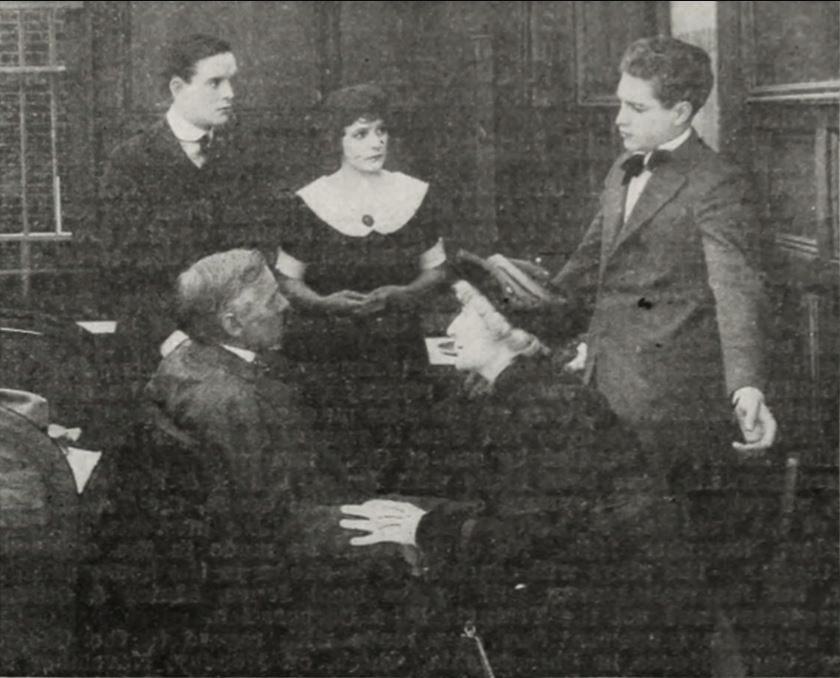
One might draw parallels to other silent mysteries that relied on clever visual clues, though perhaps none quite so direct or singular as this. While films like The Devil at His Elbow or even the more action-oriented Dødsklippen might have had their share of intrigue, the focused intensity around a single object in The Missing Links elevates its particular brand of mystery. It forces the viewer to pay close attention to every frame, every gesture, every subtle interaction with this key item, transforming the viewing experience into an active participation in the investigative process.
Beyond the central fraternal conflict, the film benefits immensely from a robust supporting cast. Constance Talmadge, a luminary of the silent screen, brings her characteristic vivacity and expressive range to her role. While the plot primarily centers on the men, her presence provides a vital emotional anchor, often reflecting the audience's own confusion and fear, or perhaps even offering a glimmer of hope amidst the pervasive gloom. Her ability to convey complex emotions without dialogue is truly a marvel, a hallmark of her enduring appeal. One might compare her nuanced performance here to her more lighthearted roles, or even to the dramatic gravitas seen in films featuring her sister, Norma Talmadge, demonstrating the breadth of talent within that cinematic family.
Thomas Jefferson, Jack Brammall, Elinor Stone, Hal Wilson, Loyola O'Connor, William Higby, and Robert Lawler round out the cast, each contributing to the film's rich tapestry. Even in smaller roles, their commitment to character and their understanding of silent film aesthetics are evident. The ensemble works cohesively, each performance a brushstroke contributing to the larger canvas of suspicion and revelation. It's a testament to the directorial hand, likely heavily influenced by Griffith's meticulous approach to performance, that such a large cast maintains a consistent tone and delivers impactful portrayals without the benefit of spoken word.
The influence of D.W. Griffith, even in a writing capacity, is palpable throughout The Missing Links. Known for pioneering many narrative and technical innovations, Griffith's fingerprints are visible in the film's episodic structure, its use of cross-cutting to build tension, and its keen understanding of visual storytelling. Bernard McConville, a prolific writer of the era, undoubtedly brought his own flair for dramatic plotting, but the underlying rhythm and emotional weight often feel distinctly Griffithian. This partnership likely resulted in a script that balanced intricate plotting with profound emotional resonance, a combination that kept audiences enthralled.
One can observe parallels between the narrative sophistication found here and other films from the period. For instance, the moral complexities in The Unchastened Woman or the social commentary in The Woman Suffers, while different in genre, share a certain depth of character exploration that hints at a growing maturity in screenwriting during the 1910s. The Missing Links, through its careful construction, demonstrates how a silent film could transcend mere pantomime and deliver a genuinely gripping and intellectually stimulating experience.
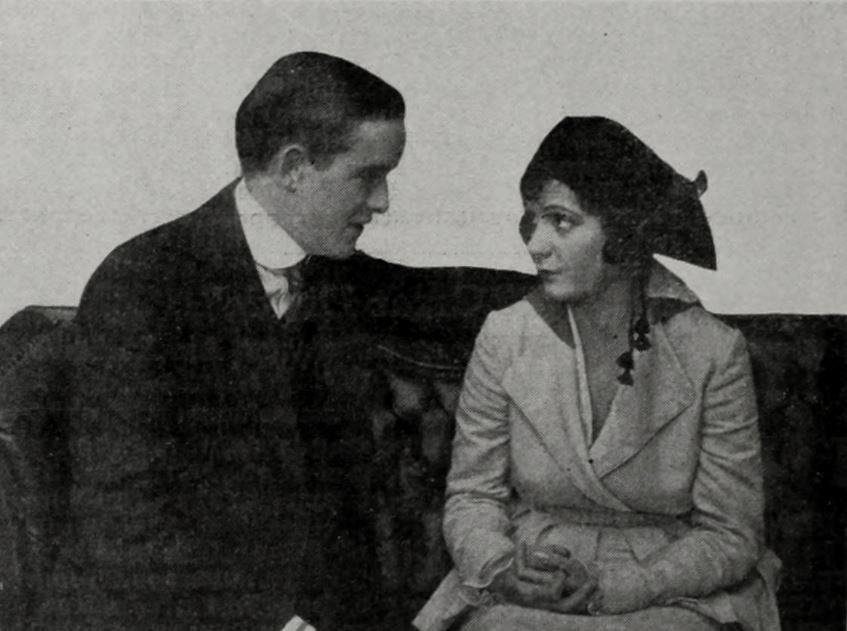
While specific directorial credits for The Missing Links might be attributed to various figures of the era, the overall aesthetic and pacing reflect the sophisticated visual language that was rapidly developing in silent cinema. The use of lighting, particularly, would have been crucial in conveying mood and highlighting key clues. Shadows could deepen the sense of dread or suspicion, while stark contrasts might emphasize a moment of revelation. Camera angles, though perhaps less varied than in later decades, would have been employed to draw the viewer's eye to significant details, such as the aforementioned handcuffs, or to frame the emotional intensity of the brothers' confrontations.
The editing, a hallmark of Griffith's influence, would have played a pivotal role in maintaining the film's suspense. Quick cuts during moments of discovery or pursuit, contrasted with longer takes to allow for emotional development, would have dictated the narrative rhythm. This interplay of visual elements and editing choices transformed the written word of McConville and Griffith into a dynamic, immersive experience, proving that even without sound, a film could be a masterclass in tension and storytelling. Comparing this to the visual storytelling in something like The Inspirations of Harry Larrabee, one can appreciate the diverse approaches to narrative presentation, even within the same period.
The themes explored in The Missing Links – greed, betrayal, justice, and the corrosive nature of suspicion – are timeless. The film acts as a stark commentary on the dangers of unchecked ambition and the devastating ripple effects it can have on individuals and families. The bank president's malicious act isn't just a crime against an institution; it's a moral failing that ultimately costs him his life and throws innocent lives into turmoil. This ethical core elevates the film beyond a simple mystery, imbuing it with a deeper, more resonant message about human nature.
In an era marked by rapid social and technological change, films often served as both escapism and a mirror to societal anxieties. The crumbling of a financial institution, even if fictional, would have resonated with audiences who understood the fragility of economic stability. The exploration of justice, or the lack thereof, and the arduous path to truth, would have been equally compelling. While not overtly political like Kaiser's Finish, its subtle commentary on morality and societal consequence is no less potent.
The legacy of The Missing Links, like many silent films, lies in its contribution to the evolving language of cinema. It showcases how proficiently early filmmakers could construct complex narratives, develop characters, and elicit strong emotional responses from an audience using only visual cues and intertitles. It stands as a testament to the ingenuity of its creators and performers, proving that even without the convenience of sound, the power of a well-told story, a compelling mystery, and nuanced performances could captivate and endure. One might even compare its narrative drive to the adventurous spirit of Stingaree or the romantic intrigue of The Charmer, highlighting the diverse range of stories that found their voice in the silent era.
For contemporary viewers, rediscovering The Missing Links is akin to unearthing a valuable artifact. It offers not just entertainment, but an education in the foundations of cinematic art. It reminds us that fundamental storytelling principles – character motivation, plot development, rising action, and resolution – were being honed and perfected long before the advent of synchronized sound. The film's ability to maintain suspense and engage the audience in a genuine whodunit, despite its technological limitations by today's standards, is truly remarkable. It serves as a powerful reminder that the essence of great cinema lies not in its technological prowess, but in its capacity to tell a captivating human story.
The intricate dance between the accused brothers, the enigmatic clue of the handcuffs, and the ultimate revelation of the killer’s true identity makes The Missing Links a compelling watch even today. It showcases the collaborative genius of writers like D.W. Griffith and Bernard McConville, and the expressive talents of actors like Constance Talmadge, Robert Harron, and Elmer Clifton. It's a film that deserves to be seen, studied, and appreciated for its contribution to the rich tapestry of film history, standing proudly alongside other notable works of its time, whether they be dramas like The Chalice of Courage or lighter fare such as Cupid Camouflaged, each contributing to the evolving language of the screen. The meticulous plotting and character work here are a testament to the enduring power of silent cinema, proving that a lack of dialogue hardly equates to a lack of depth or dramatic impact. It's a missing link, indeed, that connects us directly to the very origins of cinematic suspense.
IMDb 6.1
1937
Community
Log in to comment.