DbcultAccessing Vault...
Cult Review
Senior Film Conservator
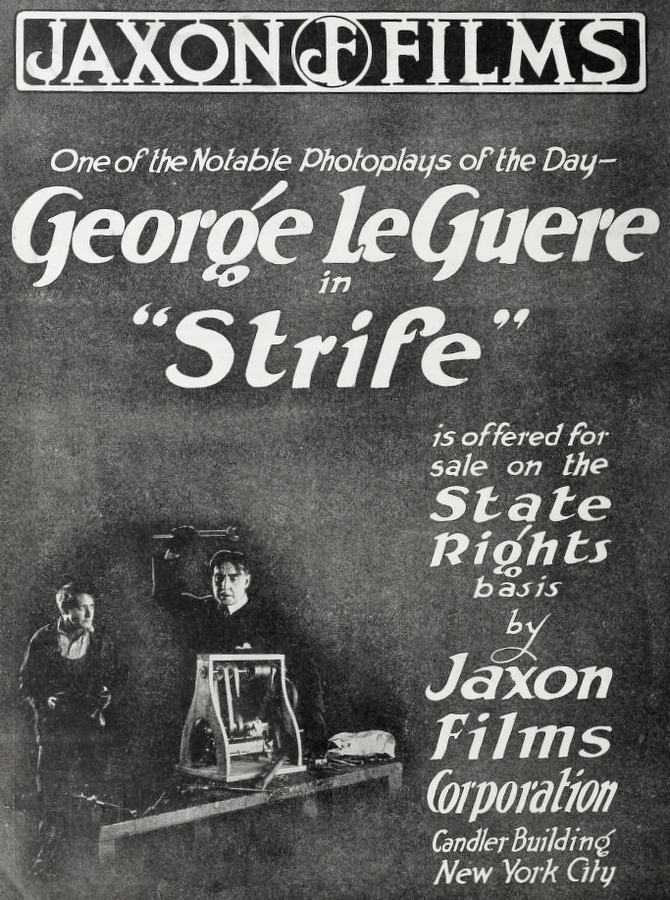
From the moment the opening credits of 'Strife' unfurl, a palpable sense of impending collision hangs heavy in the air, thick with the dust of inevitability and the scent of human resolve. This isn't merely a film; it's a visceral experience, a profound excavation into the very essence of human conflict, where the stakes are not just material, but deeply existential. It forces us to confront uncomfortable truths about progress, tradition, and the often-brutal cost of societal evolution. The narrative doesn't just unfold; it grips you, pulling you into a world where every decision carries the weight of generations and every glance betrays a universe of unspoken suffering.
At its core, 'Strife' is a masterful study of opposition: the old versus the new, the communal versus the corporate, the deeply personal versus the coldly economic. We are introduced to a tranquil, albeit struggling, community, whose existence is inextricably linked to the land they've tilled for centuries. Their rhythm of life, their very identity, is suddenly threatened by the monolithic advance of a burgeoning industrial empire, spearheaded by the formidable Frank Andrews. His vision, while perhaps couched in the language of 'progress' and 'opportunity,' is perceived by the locals as nothing short of an existential threat. The film's brilliance lies in its refusal to paint either side with a simplistic brushstroke of good or evil. Andrews isn't a mustache-twirling villain; he's a man driven by a profound, almost messianic belief in his own capacity to shape the future, perhaps blind to the human wreckage his ambition leaves in its wake. This nuanced portrayal elevates the central conflict beyond a mere legal dispute, transforming it into a tragic epic where two valid, yet irreconcilable, worldviews clash with devastating force. The very title, 'Strife,' becomes a self-fulfilling prophecy, not just for the external battles, but for the profound internal turmoil experienced by every character entangled in its web.
The beating heart of 'Strife' is undoubtedly Katherine Patch, a performance by Katherine Patch that transcends mere acting to become an embodiment of raw, unyielding human spirit. Her portrayal of a woman who carries the weight of her ancestors' legacy, facing down an insurmountable foe with quiet dignity and ferocious resolve, is nothing short of breathtaking. Patch imbues Katherine with a stoicism that never borders on coldness; instead, it's a testament to deep-seated conviction and an almost spiritual connection to her heritage. Every furrow on her brow, every tremor in her voice, speaks volumes about the immense pressure she endures, yet she never breaks. Her defiance isn't loud or theatrical; it’s an internal fire, burning steadily, fueled by a profound sense of justice and belonging. When she speaks, even in hushed tones, her words resonate with the power of generations. We see echoes of similar unbreakable spirits in films like The White Sister, where personal sacrifice and moral conviction form the bedrock of a character's journey, but Patch's Katherine adds a layer of earthy pragmatism, a groundedness that makes her struggle intensely relatable. Her character serves as the moral compass of the film, constantly reminding us of the human element in the grander scheme of economic progress. It's a performance that lingers long after the credits roll, a testament to the enduring power of the individual against overwhelming odds.
Opposite Patch's steadfastness is Frank Andrews, brought to life with chilling precision by Frank Andrews. This is not a man you love to hate, but rather a character whose motivations, though destructive, are disturbingly understandable within his own worldview. Andrews is the embodiment of unbridled ambition, a visionary perhaps, but one whose vision is tragically myopic, unable to perceive the value of anything that cannot be quantified or industrialized. Frank Andrews portrays him with a steely resolve, a man convinced of his own righteousness, oblivious to the profound emotional and cultural devastation he wreaks. His arguments for 'modernization' are logical, almost seductive, yet they stand in stark contrast to the tangible, vibrant life he seeks to dismantle. The internal conflict, if any exists within Andrews, is subtly hinted at rather than overtly displayed, making his actions all the more chilling. He represents the relentless march of progress, a force that, much like the 'turbulent waters' in Through Turbulent Waters, can carve new paths but also erode ancient foundations. The film masterfully avoids demonizing him entirely, instead presenting him as a product of his era, a man who sees the world in terms of resources and efficiency, making his clash with Katherine Patch not just personal, but a clash of entire philosophical paradigms.
Martha Burlington, portrayed with poignant vulnerability by Martha Burlington, serves as a vital bridge, or perhaps, a tragic casualty, between these two opposing forces. Her character embodies the agonizing compromises forced upon individuals caught in larger societal struggles. She is not as firmly rooted as Katherine, nor as unyielding as Andrews; instead, she represents the countless people who must navigate the treacherous waters of change, often sacrificing deeply held beliefs for the sake of survival or perceived betterment. Her internal struggle is palpable, a silent scream against the impossible choices laid before her. Burlington's performance is a masterclass in subtle despair, her eyes often betraying a conflict that her words cannot articulate. She is a mirror reflecting the broader community's pain, the erosion of their collective identity, and the difficult, often heartbreaking, decisions that must be made when the past collides with an unstoppable future. Much like the complex familial loyalties explored in Locura de amor, Martha's dilemma highlights how personal relationships are stretched to their breaking point when external pressures become overwhelming.
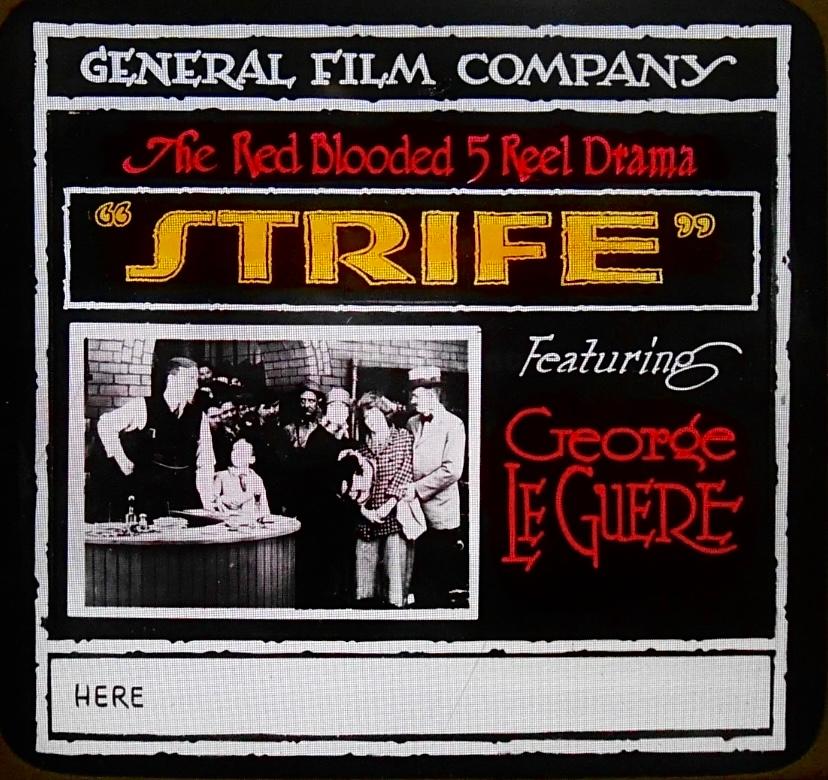
Beyond the central trio, the ensemble cast of 'Strife' contributes immensely to its richly textured tapestry. Malachi Kelley, as Katherine's steadfast brother, provides a grounding presence, his quiet strength a vital counterpoint to her more overt defiance. Jean Stuart, in a role that could have been peripheral, instead crafts a character whose journey from skepticism to reluctant support is profoundly moving, showcasing the gradual awakening of a community's collective conscience. Dean Raymond and Alfred Swenson, as representatives of the corporate machine, are not caricatures but rather men caught in the gears of a system they both serve and, perhaps, are served by. Their performances underscore the pervasive nature of the conflict, demonstrating that 'strife' is not confined to one side. George LeGuere and Herbert Bostwick, playing townsfolk, add layers of authenticity to the threatened community, their faces etched with the anxieties and hopes of ordinary people facing extraordinary circumstances. Each actor, regardless of screen time, contributes a vital thread to the narrative's intricate weave, ensuring that the film feels populated by real, breathing individuals rather than mere plot devices. The collective impact of these performances is a powerful testament to the film's commitment to portraying a multifaceted human drama.
The visual and auditory landscape of 'Strife' is as integral to its storytelling as the dialogue itself. The cinematography, often bathed in a dark orange hue during sunset scenes over the threatened fields, evokes both a sense of impending doom and a fierce beauty worth fighting for. The stark contrast between the natural, earthy tones of the village and the cold, metallic sheen of the encroaching industrial complex is visually arresting, acting as a constant reminder of the fundamental clash. The camera work, often employing long, lingering shots of the landscape and tight, intimate close-ups of the characters' faces, allows the audience to fully immerse themselves in the emotional gravitas of each moment. Sound design, too, plays a crucial role; the gentle rustle of leaves and the distant murmur of the river are gradually overtaken by the jarring cacophony of machinery, a symbolic shift that underscores the narrative's central theme. The use of natural light, particularly in scenes depicting the community's daily life, lends an almost documentary-like authenticity, making their struggle feel incredibly immediate and real. When moments of hope or defiance emerge, they are often highlighted by a yellow warmth, a fleeting sunbeam cutting through the pervasive gloom, offering a visual metaphor for the resilience that refuses to be extinguished.
'Strife' transcends its narrative to delve into profound philosophical questions about the nature of progress, the definition of ownership, and the enduring power of human connection. Is 'progress' always benevolent, or can it be a destructive force, eroding the very foundations of identity and community? The film posits that true wealth isn't always measured in economic terms, but in the intangible bonds that tie people to their land and to each other. It explores the concept of 'standing still' – not as stagnation, but as a deliberate act of resistance, a refusal to be swept away by an tide that promises much but delivers little of true value. In this regard, it shares a thematic kinship with films like The Man Who Stood Still, where individual conviction challenges the prevailing currents of society. The film also interrogates the concept of justice: can true justice exist when one party holds all the power, or is it merely a construct designed to legitimize the powerful? These are not easy questions, and 'Strife' offers no simplistic answers, instead inviting the audience to grapple with the uncomfortable ambiguities of life. The ending, while perhaps not offering a conventionally 'happy' resolution, delivers a powerful, almost elegiac statement on the resilience of the human spirit, even in the face of overwhelming loss. It's a testament to the idea that even when battles are lost, the spirit of resistance can endure, a beacon in the sea blue depths of despair.
Though the writers remain uncredited, the narrative structure and dialogue of 'Strife' exhibit a remarkable maturity and depth. The pacing is deliberate, allowing characters and conflicts to breathe and develop organically, never rushing towards a facile resolution. Every line of dialogue feels earned, every silence pregnant with meaning. The direction is equally commendable, demonstrating a keen understanding of human psychology and the power of visual storytelling. The director employs a masterful control over tone, seamlessly transitioning from moments of quiet contemplation to scenes of intense confrontation. There's a particular scene involving a town hall meeting that exemplifies this, where the cacophony of dissenting voices gradually coalesces into a unified, albeit desperate, plea, a moment of collective awakening orchestrated with subtle brilliance. The ability to convey such complex emotions and societal dynamics without resorting to heavy-handed exposition is a hallmark of truly exceptional filmmaking, making 'Strife' a profound and enduring cinematic achievement. It reminds us that even with uncredited talent, the collective vision can forge something truly extraordinary, much like the unexpected beauty found in Pasquale or the intricate emotional landscapes of Flor de durazno.
'Strife' is more than just a period piece; it's a timeless allegory for the struggles that continue to define societies across the globe. Its themes of environmental exploitation, corporate greed, community resilience, and the relentless march of 'progress' resonate with an alarming contemporary relevance. The film's enduring power lies in its unflinching honesty, its refusal to shy away from the painful realities of human existence. It doesn't offer easy answers, nor does it provide a tidy, comforting resolution. Instead, it leaves the viewer with a profound sense of introspection, prompting a re-evaluation of what truly matters and what sacrifices are deemed acceptable in the pursuit of a perceived better future. Its influence can be seen in subsequent films that tackle similar themes of social justice and individual defiance, solidifying its place as a seminal work in the genre of social drama. 'Strife' is a cinematic landmark, a powerful, emotionally charged experience that challenges, provokes, and ultimately, leaves an indelible mark on the soul. It stands as a testament to the fact that even in the face of insurmountable odds, the human spirit, though perhaps scarred, can never be entirely vanquished. It's a film that demands to be seen, discussed, and remembered, a vital piece of cinematic history that continues to speak volumes about the eternal human condition.

IMDb —
1918
Community
Log in to comment.