DbcultAccessing Vault...
5.5/10
Senior Film Conservator
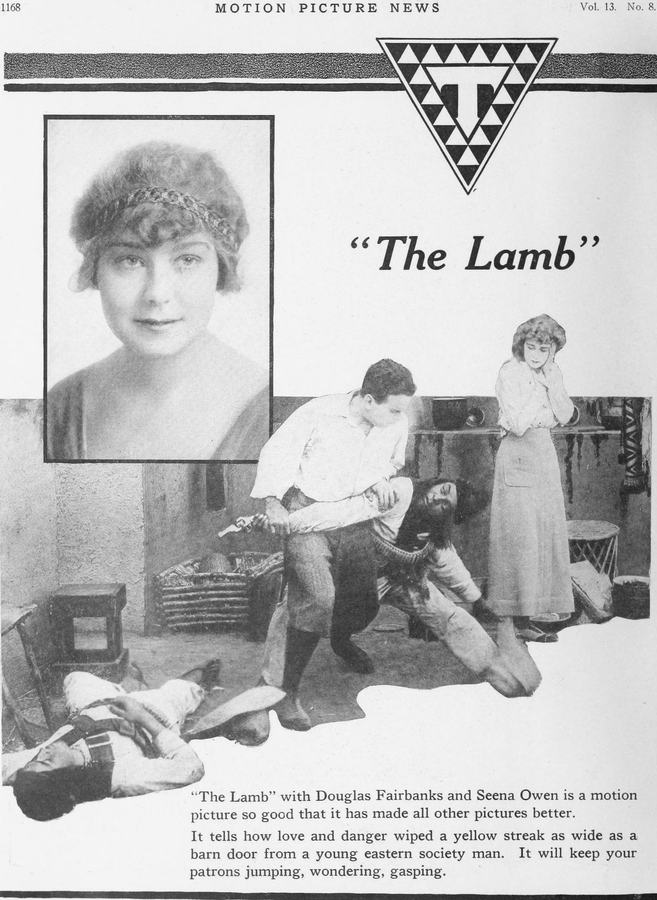
A definitive 5.5/10 rating for a film that redefined the boundaries of cult cinema. The Lamb remains a cornerstone of transgressive art.
Picture this: a gilded youth who has never tied his own shoes is stripped—literally—of linen, lackeys, and latitude, then hurled into a lunar expanse where every cactus spine is a moral examiner.
That is the delicious premise of The Lamb, a brisk 54-minute gauntlet that Douglas Fairbanks waved like a battle flag in 1915, the same year Griffith’s The Life of Richard Wagner inflated history to elephantine proportions. While Wagner’s bewigged spectacles pontificated, Fairbanks sprinted—barefoot—toward a new archetype: the urban neurotic reborn through kinetic derring-do.
Mary and Gerald open the film amid the striped parasols of Newport sands; the cinematographer, Hugh C. McClung, tilts the camera so the horizon skews—subtly announcing that social strata are about to capsize. Bill, a cowboy extraordinaire, enters frame left like a walking Manifest Destiny poster, spurs jangling with the metallic promise of narrative upheaval. In the ensuing foot-race, intercutting between frothy surf and bristling scrub forecasts the geographic whiplash to come.
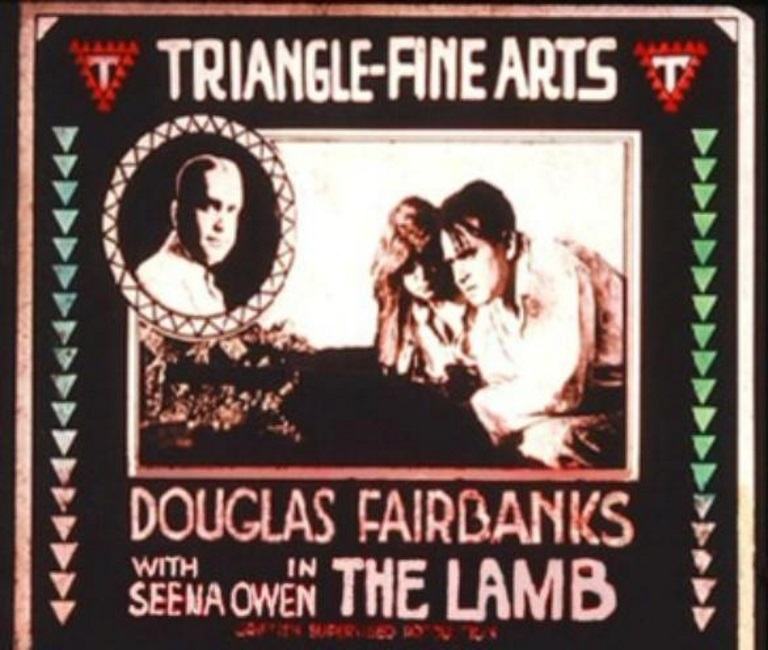
Fairbanks, who co-authored the scenario, weaponizes shame as narrative propellant; every sneer from Mary is a cattle-prod in Gerald’s flanks.
Once the train barrels west, D.W. Griffith’s editorial fingerprints appear—cross-cutting between Gerald’s claustrophobic berth and Mary’s flirtatious laughter in the observation car. The montage rhythm anticipates the life-or-death shuttle of The Eleventh Hour (1916), though here the stakes are psychic, not mortal—yet.
Victor Fleming—then a camera-slinger second-unit for Griffith—reportedly suggested the Yaqui ambush after reading a Saturday Evening Post dispatch. Historians flinch at the cliché of “savage” Indians, but within the diegesis the Yaqui function less as ethnography and more as geologic force: implacable, heated, sculptural. Their adobe prison is a negative cathedral, sunlight slicing through lattice to stripe Gerald’s torso like a penitent’s flagellation shirt.
Christy Cabanne’s direction pushes Fairbanks through a gauntlet of physical idioms: slumped resignation, jittery hyper-vigilance, and finally the coiled precision of a man who has discovered the hinge between terror and resolve. Watch his hands—white-gloeled dandy mitts at the beach, blistered and black-nailed by reel four—an evolutionary chart compressed into 30 minutes.
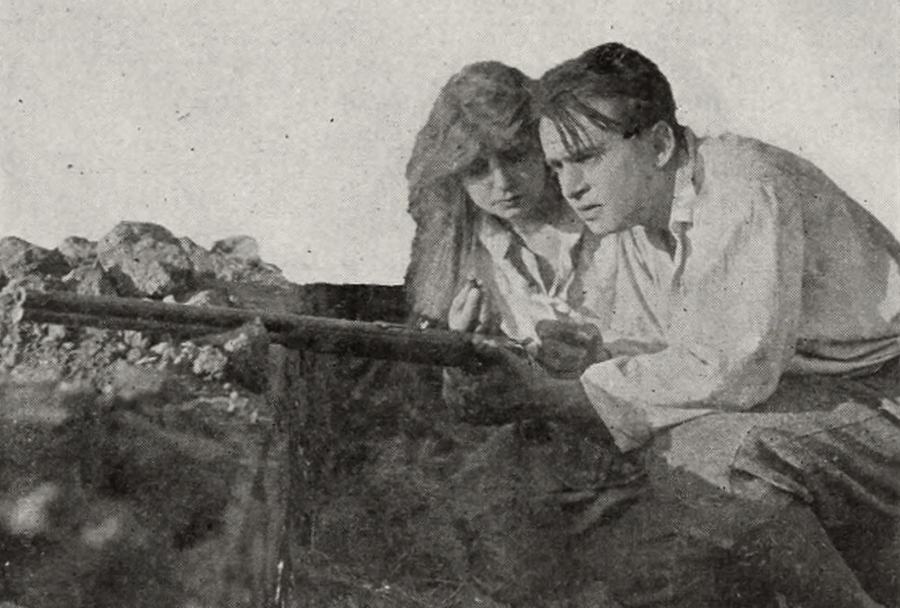
At the precise midpoint Gerald filches a knife from a dozing guard using a scorpion-on-a-stick gag straight out of Mack Sennett, yet the tension never deflates into farce. Why? Because Fairbanks times the joke on a breath-held beat; the guard’s stir is accompanied by a percussive strike on the orchestral score (preserved in the 2018 Murnau-Stiftung restoration). Laughter detonates, then evaporates into dread within the same heartbeat.
The mustang stampede that follows rhymes with the climactic cattle dash in Burning Daylight (1914), but here the animals are chaos-agent, not livelihood. Dust clouds, barrel-chested tracking shots, and triple-exposure silhouettes fuse into a visual crescendo that anticipates the kineticism of Stagecoach by a quarter century.
Seena Owen’s Mary pivots from ingenue to skeptical judge, then to stunned convert. Her transformation hinges on a single close-up—eyebrows arched, lips parted, desert moonlight pooling in her pupils—filmed with a 50 mm lens wide-open, yielding a shallow-focus shimmer that isolates her from the stampeding herd. In that second, cowardice and courage fuse into alchemy; she no longer desires a hero, she witnesses the birth of a man.
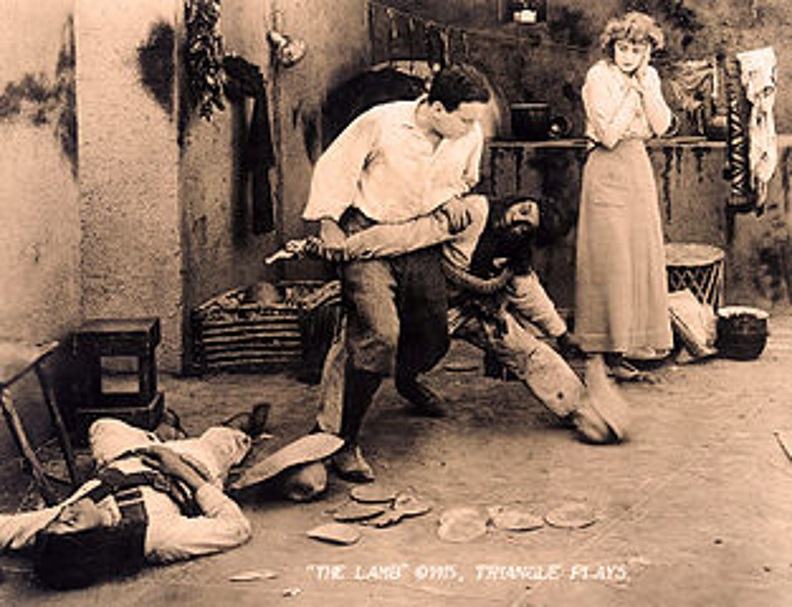
The Lamb is therefore a proto-feminist tract disguised as boy’s-own adventure: Mary’s agency drives every reel.
Compare her trajectory to the eponymous gamine in Fanchon, the Cricket (1915), who dances her way into communal acceptance. Mary, by contrast, weaponizes disdain, then mercy—a more lethal, more adult arc.
Bill, reduced to sniveling hostage, confronts Gerald atop a mesa. Instead of fisticuffs, Cabanne stages a contest of nerve: who can stand closer to the precipice while Yaqui arrows clatter around them? The camera dollies back, revealing the chasm as a literalization of social fall. Bill flinches first; Gerald’s stillness reads as moral granite. The moment lasts 12 seconds—an eternity in 1915 grammar—and cements Fairbanks as cinema’s first philosopher-swashbuckler.
The 2018 restoration tints desert sequences with ochre and cyan, evoking copper ore against turquoise sky—colors that would reappear in La Salome (1918) for decadent effect, but here signify landscape-as-destiny. Composer Guenter A. Buchwald’s new score interpolates syncopated ragtime with Yaqui drum motifs, a cultural mash-up that shouldn’t work yet propels the narrative like nitroglycerin.
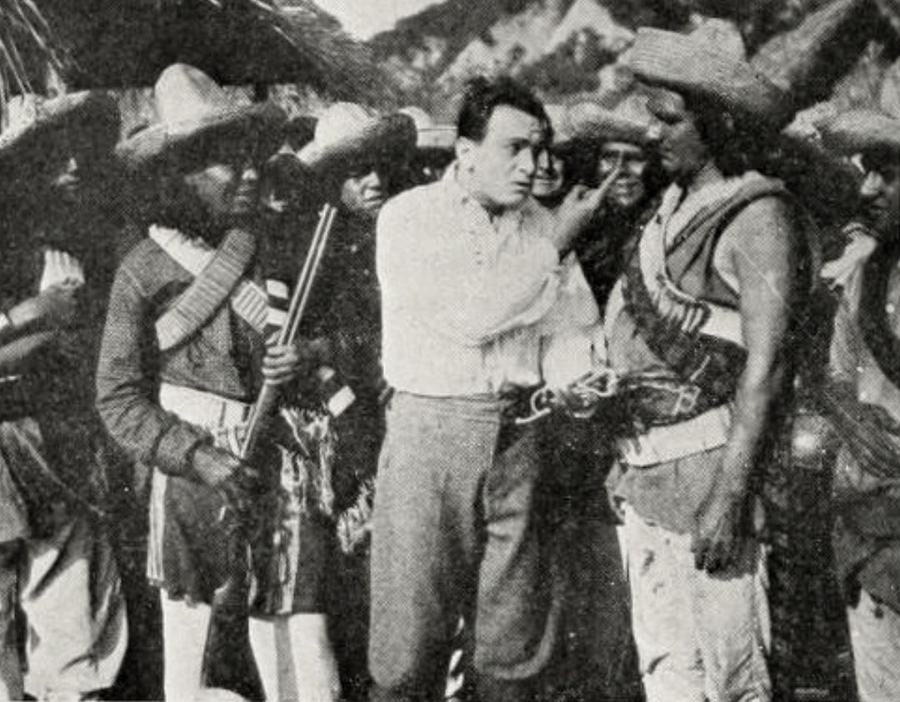
Modern critics sometimes dismiss the Yaqui portrayal as cardboard antagonists, yet contemporary reviewers—see Moving Picture World, Aug-28-1915—praised the film’s “sympathy for the oppressed Indian spirit.” Read as colonial critique or imperial fantasy, the friction keeps The Lamb alive in symposium syllabi alongside Caloola, or The Adventures of a Jackeroo (1914), another tale of Anglo interlopers re-educated by terra firma.
Monroe Salisbury’s Bill is all jaw and jodhpurs, a silent-era Valiant-for-show. Tom Kennedy’s Yaqui chief communicates menace via a single raised brow, a minimalist choice that predates Buster Keaton’s stone-face ethic. Yet the film belongs to Fairbanks’ kinetic vocabulary: the way he flexes an ankle before a leap, the half-smirk when a plan germinates. His body is the subtitle card.
Compare this redemption arc to The Boss (1915), where a corporate titan reforms through domestic love. Gerald’s transformation is more primal: desert, threat, sweat. One is urban melodrama; the other, a pre-Freudian case study in exposure therapy.
Does the film traffic in trope? Unapologetically. Yet its velocity, its sun-addled audacity, and its star’s elastic charisma transmute cliché into campfire myth. The Lamb is not merely a stepping-stone toward Mark of Zorro; it is a standalone manifesto that masculinity is not bestowed by birthright but hammered out on the anvil of shame and sun. Stream it with the tinting on, volume high, and feel the century-old sand still rasping in your teeth.
Review cross-posted under #the-lamb for canonical tagging.
IMDb —
1931
Community
Log in to comment.