DbcultAccessing Vault...
5.6/10
Senior Film Conservator
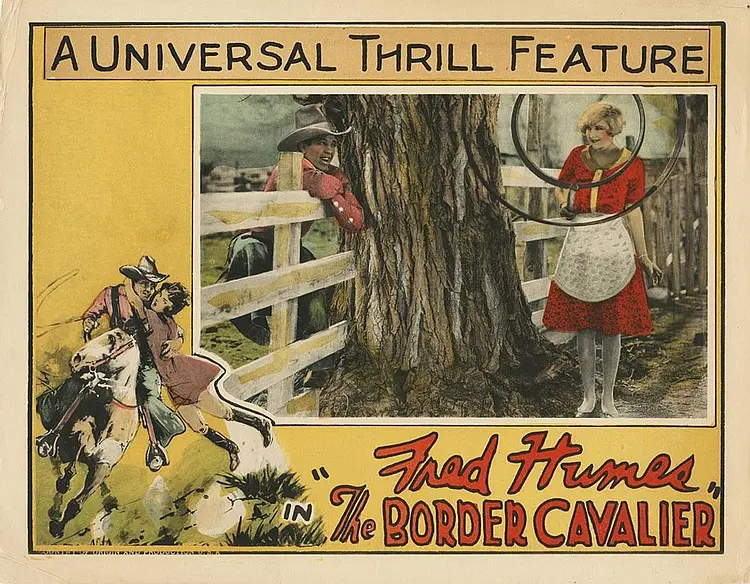
A definitive 5.6/10 rating for a film that redefined the boundaries of cult cinema. The Border Cavalier remains a cornerstone of transgressive art.
Should you carve out time for The Border Cavalier in today's crowded cinematic landscape? Short answer: yes, but with a clear understanding of its historical context and genre conventions. This film is an essential viewing for dedicated Western enthusiasts, film historians, and anyone fascinated by the foundational narratives of American cinema, particularly those who appreciate the straightforward morality plays of early Hollywood. However, it's decidedly not for viewers seeking modern pacing, complex character studies, or special effects; those accustomed to contemporary blockbusters will likely find its rhythm and storytelling too simplistic.
This film works because of its unflinching portrayal of frontier greed, delivering a clear-cut narrative that, despite its age, remains remarkably resonant. It fails because its character development often leans into archetypes, sacrificing nuance for narrative expediency. You should watch it if you're eager to experience a foundational piece of Western cinema that, for all its simplicity, executes its core premise with admirable clarity and purpose.
At its core, The Border Cavalier is a meticulous study of ambition corrupted by avarice. The narrative, penned by Basil Dickey and Gardner Bradford, centers on Vic Harding, an Eastern interloper whose sophisticated understanding of burgeoning infrastructure projects—specifically, a proposed railroad spur—becomes his weapon. This isn't merely a tale of a villain wanting land; it’s about a man leveraging privileged information for illicit gain, a theme that feels remarkably contemporary even now. The Lawton ranch, a symbol of honest toil and frontier promise, becomes the target of this calculated scheme.
Harding's conspiracy with Hank Martin isn't a spur-of-the-moment decision but a deliberate, cold-blooded maneuver. It’s a classic setup for a Western, where the purity of the land and its rightful occupants are threatened by external, predatory forces. The writers, Dickey and Bradford, establish this conflict with a clarity that belies the film's age, setting the stage for a battle not just of wills, but of ethical frameworks. The simplicity of the premise allows for a direct exploration of right and wrong, unburdened by modern narrative complexities.
In early Westerns, character often emerged more from action than introspection, and The Border Cavalier is no exception. Gilbert Holmes, as the titular cavalier figure (implied to be the one challenging Harding, though the plot summary focuses on the antagonist), embodies the stoic heroism expected of the era. His performance, while perhaps lacking the psychological depth favored by modern audiences, delivers precisely what was required: a steadfast presence, a moral compass in a world veering towards chaos. One can imagine his gaze, unwavering, cutting through the deceit of Harding, a silent promise of justice.
The supporting cast, including Evelyn Pierce and Joyce Compton, likely provided the emotional anchors and stakes necessary for the narrative. Pierce, often cast in roles requiring a blend of vulnerability and resilience, would have been crucial in representing the innocent party threatened by Harding’s schemes. Her reactions, her silent pleas, or her determined stands, would have amplified the villain’s menace and the hero’s urgency. These performances, while broad strokes by today's standards, were fundamental in conveying the story's emotional weight to contemporary audiences.
Actors like Dick La Reno and Fred Humes, along with Ben Corbett and William Barrymore, filled out the ensemble, each contributing to the tapestry of frontier life. La Reno, often a character actor of considerable presence, could have brought a nuanced villainy to Hank Martin, making him more than just Harding's henchman. The collective efforts of this cast, under the direction of an uncredited filmmaker (common for the era), would have aimed for clarity and impact, ensuring the audience understood the stakes without needing lengthy exposition. It’s a testament to their craft that these archetypes still resonate, even if their methods of expression feel dated.
The direction of The Border Cavalier, typical of its time, likely prioritizes straightforward storytelling over elaborate camera work. The pacing would have been brisk, driven by plot points rather than character beats. Think of films like The Untamed from a similar era; narrative momentum was paramount. The film wastes little time establishing Harding’s villainy and his objective, immediately setting up the conflict. This directness, while sometimes feeling simplistic, is also one of its strengths, preventing narrative bloat.
One can envision scenes where the tension of the backroom deal is conveyed through close-ups on Harding’s calculating face, contrasted with wider shots of the vast, open land he seeks to control. The director would have used the natural environment as a character in itself, a silent witness to human greed. The rhythm of the film would likely follow the classic Western blueprint: setup, rising conflict, a chase or confrontation, and a clear resolution. This predictable structure, far from being a flaw, was a comforting familiarity for audiences of the time, providing a dependable cinematic experience.
The effectiveness of this pacing lies in its efficiency. There are no meandering subplots or philosophical digressions. Every scene, every interaction, pushes the central conflict forward. This might feel rudimentary to modern viewers, but it’s a masterclass in economical storytelling. The writers, Basil Dickey and Gardner Bradford, crafted a narrative skeleton that allowed the director to focus on clear visual communication, a necessity in the nascent days of cinema. It works. But it’s flawed.
The cinematography of The Border Cavalier, even without specific details, would have been tasked with capturing the rugged beauty and inherent danger of the frontier. Early Westerns, by necessity, made excellent use of natural light and expansive outdoor settings. The Lawton ranch itself would have been framed not just as property, but as a dream, a livelihood, a piece of the American ideal. Wide shots showcasing the vastness of the landscape would underscore the isolation and the immense stakes involved in land ownership.
Imagine the contrast: the dusty, sun-baked terrain representing the honest struggle of the Lawtons, juxtaposed with the crisp, perhaps even artificial, attire of Vic Harding, symbolizing his disconnection from the land he seeks to exploit. The visual language would have been straightforward: good guys on horseback, bad guys lurking in shadows or making deals in dimly lit offices. While not employing the complex camera movements of later eras, the use of deep focus and well-composed static shots would have been key to conveying information and mood. The film likely capitalizes on the iconic imagery of the American West, turning it into a character as potent as any human actor.
The very act of a railroad spur increasing land value is a visual metaphor for progress encroaching on wilderness, and the camera would have been instrumental in presenting this clash. Perhaps there are shots of surveying teams, their instruments a stark contrast to the horses and cattle, signaling the inevitable change. This visual storytelling, simple yet effective, forms the backbone of the film's appeal, grounding the narrative in a tangible, believable world.
The Border Cavalier is a fascinating window into the moral anxieties of its time, particularly concerning unchecked capitalism and the sanctity of individual property. The central theme of greed, embodied by Vic Harding, is a timeless antagonist. His plot to exploit insider information for financial gain speaks to a persistent human flaw, a desire for quick wealth at the expense of others. This isn't just a Western trope; it's a fundamental human conflict, making the film surprisingly relevant despite its age.
The film also engages with the classic Western trope of justice, often delivered outside the confines of formal law. When the system is compromised by figures like Harding, the responsibility for restoring balance often falls to individuals embodying a purer form of righteousness. This narrative arc, seen in countless Westerns including The Smilin' Kid or even the more dramatic The Silent Lie from a slightly different genre, offers a cathartic experience for audiences who yearn for clear moral victories. The film taps into a primal desire for fairness, a fight against the powerful few for the sake of the honest many.
An unconventional observation here is how the film, even implicitly, critiques the very notion of 'progress' when it's driven purely by profit. The railroad, often seen as a symbol of advancement, becomes a catalyst for corruption. This suggests a subtle, perhaps unintentional, skepticism about industrial expansion's moral implications, a deeper current beneath the surface of a seemingly simple plot. It's not just about good versus evil; it's about the soul of a developing nation grappling with its own values.
"The Lawton ranch, a symbol of honest toil and frontier promise, becomes the target of this calculated scheme."
Yes, The Border Cavalier is worth watching today for specific audiences. It offers a valuable glimpse into early filmmaking techniques and the foundational narratives of the Western genre. Its straightforward moral compass provides a refreshing contrast to modern cinema's complexities. This film is a historical artifact that still entertains, particularly for those who appreciate the purity of early cinematic storytelling.
The Border Cavalier stands as a robust example of early Western cinema, a testament to the power of simple, yet compelling, storytelling. While it certainly shows its age in terms of production values and character depth, its core narrative of frontier justice battling insidious greed remains remarkably effective. It's a film that doesn't just tell a story; it embodies a period, a style, and a set of values that shaped an entire genre. For those willing to look past its historical veneer, there's genuine enjoyment and educational value to be found. It’s a solid, if unspectacular, ride into the past, proving that sometimes, the oldest stories are still the most resonant.
IMDb 6.8
1937
Community
Log in to comment.