DbcultAccessing Vault...
6.1/10
Senior Film Conservator
A definitive 6.1/10 rating for a film that redefined the boundaries of cult cinema. The Land of the Lost remains a cornerstone of transgressive art.
The year 1914 represents a peculiar threshold in the evolution of the moving image, a moment when the primitive theatricality of early cinema began to coalesce into the sophisticated visual grammar we recognize today. The Land of the Lost, directed with a surprising degree of narrative density, stands as a testament to this transition. It is not merely a tale of survival; it is a scathing indictment of the Victorian social ladder, where human lives are traded like commodities for the sake of an aristocratic prefix. The film opens in the opulent world of John R. Bradley, a man whose wealth has secured everything but the one thing he craves: a legacy of nobility. By introducing the Baron de Coverly to his daughter Miriam, Bradley sets in motion a tragedy that echoes the maritime anxieties of an era still reeling from the Titanic disaster.
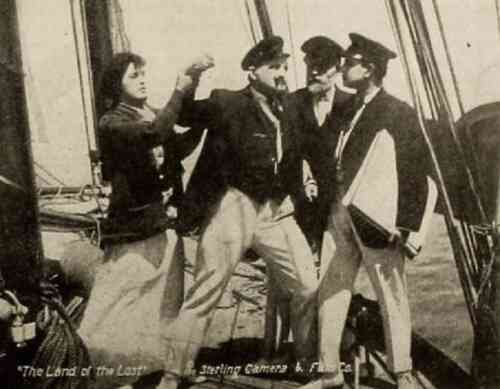
The voyage of the Carpathia serves as the film's first major set piece, establishing a hierarchy that is destined to be upended. We see the Baron, played with a slithering malevolence by Arthur Donaldson, attempting to cement his claim over Miriam. However, the presence of Gilbert, the artist son of Captain Hastings, introduces a disruptive element of meritocracy. Gilbert, portrayed by Roy Sheldon, represents the burgeoning creative class—unburdened by titles, driven by observation and skill. This tension between the inherited privilege of the Baron and the earned capability of the artist is a recurring motif in silent-era dramas, much like the thematic struggles found in The Pursuit of the Phantom.
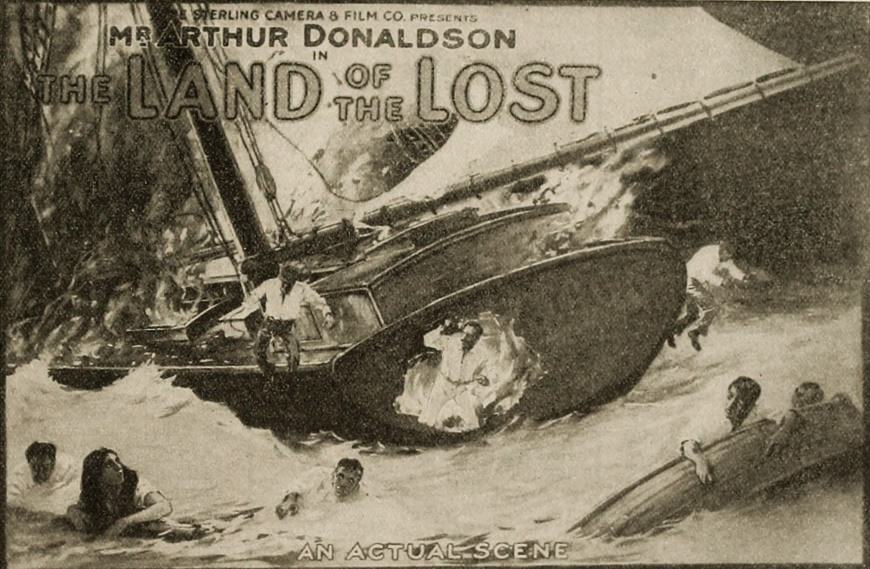
When the Baron, in a fit of alcohol-induced psychosis, sets the schooner ablaze, the film shifts from a drawing-room drama to a visceral spectacle of fire and water. The destruction of the Carpathia is more than a plot device; it is the physical manifestation of the Baron's inner corruption. The fire consumes the symbols of Bradley’s wealth, leaving the characters stripped of their social armor. In the cold light of the following dawn, the sea—that great equalizer—has deposited the survivors on a rugged island, where the rules of the drawing room no longer apply. This transition from the structured world of the ship to the chaotic wildness of the island mirrors the ethnographic explorations seen in In the Land of the Head Hunters, though here the 'savagery' is found within the European aristocrat rather than the environment.
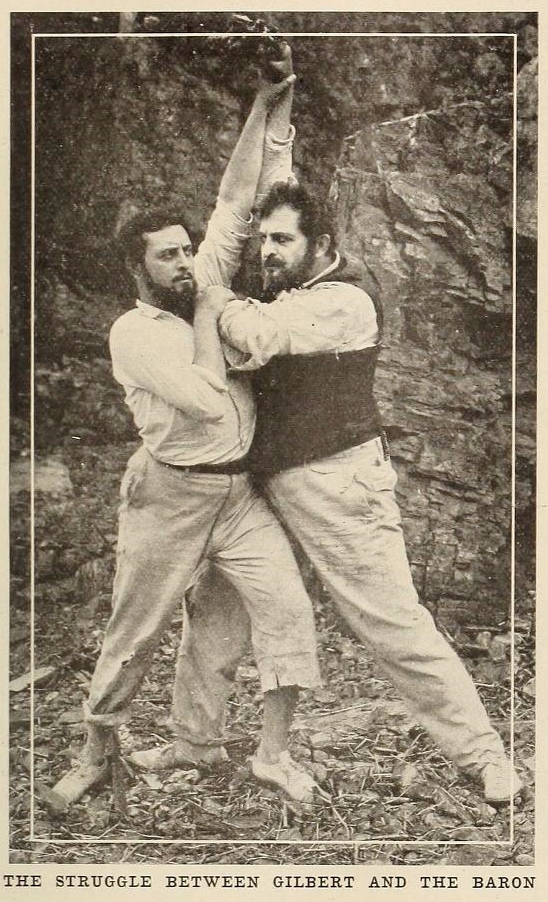
The middle act of The Land of the Lost is a fascinating study in resourcefulness. Gilbert’s ability to fashion a bow and arrow with a mere penknife is a deliberate contrast to the Baron’s ineptitude. The Baron’s survival is parasitic; he waits for Gilbert to provide, then seeks to eliminate him. The scene involving the crossing of the chasm is one of the most suspenseful in early cinema. As Gilbert crawls hand over hand across a precarious rope, the Baron’s attempt to sever the line is a moment of pure, unadulterated villainy. It is here that the film’s moral compass is most clearly defined. Gilbert is the architect of his own salvation, while the Baron is the architect of others' destruction.
Miriam’s character arc is equally compelling. Initially a passive object of her father’s ambition, the harsh realities of the island force a reawakening. She begins to see through the Baron’s 'refined' facade, recognizing the cowardice that lurks beneath his title. Her rejection of the Baron in favor of Gilbert is not just a romantic choice; it is a rejection of the old world’s values. This thematic shift aligns the film with other contemporary works like The Pride of the Firm, which also explored the shifting dynamics of class and character in the early 20th century.
The introduction of the island’s lone inhabitant—an old recluse guarding a chest of treasure—shifts the film into the realm of the Gothic. The hermit is a figure of tragic isolation, a mirror to what the Baron might become if his greed remains unchecked. When the Baron murders the old man for his gold, he commits a sin that the island refuses to forgive. The subsequent haunting of the Baron by the hermit’s specter is a remarkably effective use of double exposure and lighting, techniques that were being perfected in films like Don Juan around the same era.
The haunting is not merely a supernatural event; it is a psychological externalization of the Baron’s crumbling sanity. Every time he reaches for the gold, the accusing finger of the dead man appears, a visual manifestation of the 'thread of reason' being strained to its breaking point. The Baron’s descent into madness is a precursor to the expressionist horror that would later dominate European cinema. It serves as a stark warning that wealth obtained through blood is a weight that eventually pulls the soul into the abyss. The island, once a place of potential refuge, becomes a prison of the Baron’s own making.
Visually, The Land of the Lost utilizes its locations to great effect. The jagged cliffs and crashing waves provide a dramatic backdrop that heightens the emotional stakes of the narrative. The cinematography captures the vastness of the sea and the claustrophobia of the island’s caves with equal skill. While it lacks the kinetic energy of a film like World's Heavyweight Championship Between Tommy Burns and Jack Johnson, it compensates with a deliberate, painterly composition that reflects Gilbert’s artistic perspective.
The acting, while adhering to the pantomimic style of the period, is anchored by genuine emotion. Violet Stuart’s Miriam conveys a journey from sheltered socialite to resilient survivor through subtle shifts in posture and expression. James Vincent’s portrayal of the hermit adds a layer of pathos that grounds the film’s more fantastical elements. The pacing is deliberate, allowing the tension to simmer before boiling over in the final confrontation between Gilbert and the Baron. This nuanced approach to storytelling is reminiscent of the emotional depth found in David Copperfield, where the internal lives of the characters are as important as the external plot.
The climax of the film—the sighting of the rescue vessel—is a masterclass in cross-cutting. We see Miriam’s frantic joy, Gilbert’s heroic signaling, and the Baron’s final, pathetic collapse. The image of the Baron, now a 'raving maniac' haunted by the ghost of his victim, standing alone on the cliffs as the boat carries the lovers to safety, is one of the most haunting endings in silent cinema. He is left in the 'Land of the Lost,' a title that refers not just to the island, but to the Baron’s own humanity.
As the ship sails into the sunset, the film leaves us with a sense of profound closure. The 'land' has been purged of its corruption, and the survivors are 'flooded in light.' This use of natural lighting to symbolize moral clarity is a beautiful touch, elevating the film beyond its melodramatic roots. It is a work that rewards the patient viewer with a rich tapestry of themes—greed, redemption, the resilience of the human spirit, and the inescapable weight of guilt. In the broader context of 1914 cinema, it stands alongside works like Det gamle Købmandshjem as a poignant reminder of the power of visual storytelling before the advent of sound.
Ultimately, The Land of the Lost is a film that demands to be rediscovered. Its exploration of the dark corners of the human psyche, combined with its ambitious maritime sequences and Gothic flourishes, makes it a significant milestone in early film history. It reminds us that even in the dawn of the medium, filmmakers were already grappling with the complex interplay between our social masks and our primal instincts. Whether viewed as a historical curiosity or a compelling drama in its own right, it remains a powerful experience that lingers in the mind long after the final fade to black.
IMDb —
1919
Community
Log in to comment.