DbcultAccessing Vault...
Cult Review
Senior Film Conservator
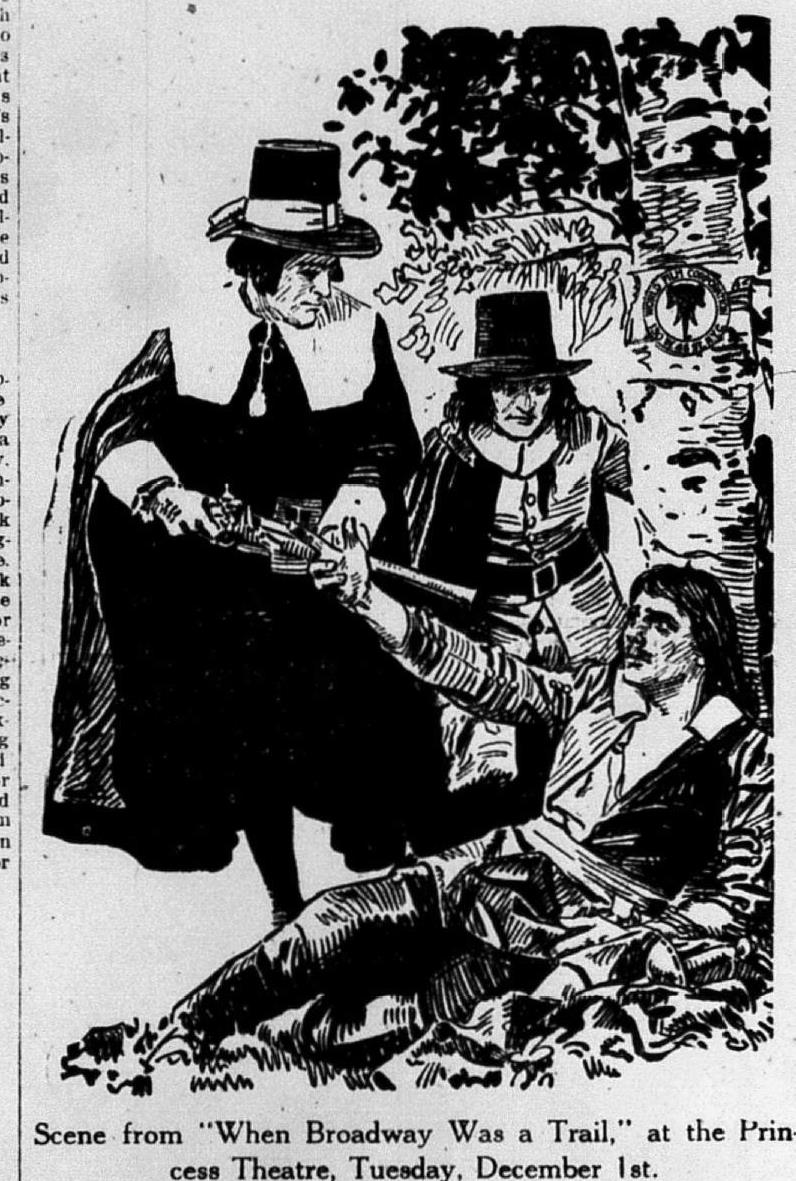
Imagine a decade when Manhattan still ended at Wall Street, when Broadway was a hoof-churned track that ducked beneath chestnut boughs and vanished into Lenape footpaths. Out of that liminal dust emerges a film whose very title—When Broadway Was a Trail—promises cartographic nostalgia and delivers instead a blistering cross-pollination of Pilgrim dread, patroon opulence, and the oldest cinematic narcotic: forbidden affinity.
Julia Stuart, often misfiled among the “sweet ingenue” card catalog of 1910s Biograph, here radiates a feral luminosity. Watch her Priscilla in extreme close-up—eyebrows arched like the wings of a burnished hawk—refusing to genuflect before the town’s theocratic tribunal. The camera drinks her in; the audience, even across a century of nitrate shrinkage, tastes iron on the tongue. She is the hinge upon which the plot’s two colonial empires—Dutch merchant-capitalism and Puritan spiritual-capitalism—swing and splinter.
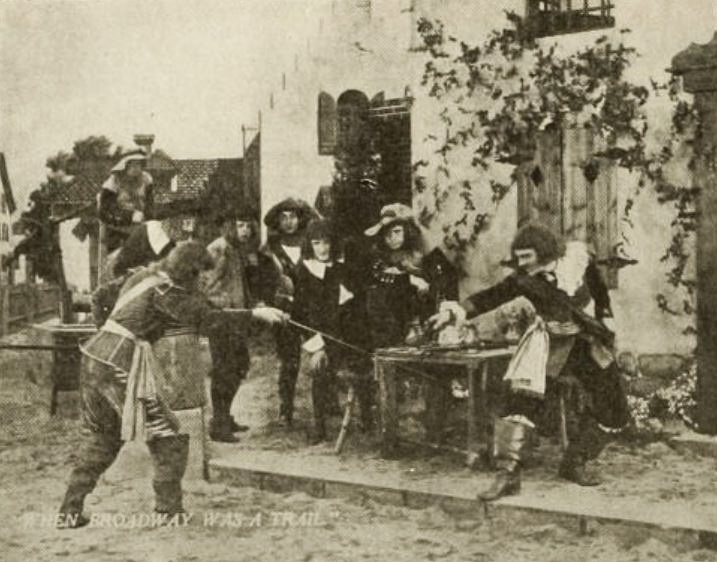
Director O.A.C. Lund, better remembered for maritime potboilers like The Marconi Operator, here orchestrates chiaroscuro worthy of Rembrandt with nothing more than klieg lights, cheesecloth diffusers, and a smoke pot filched from the Jersey studios. The sequence where Priscilla is stalked through a midnight cornfield—each stalk painted silver to catch the moon—feels less like 1914 than like Murnau on absinthe. Shadows lengthen, swallow, regurgitate silhouettes. You half expect Nosferatu to loom, but what looms is the entire weight of a society that weaponizes scripture against ovaries.
Intertitles, normally the driest of interstitial bones, here drip with venomous economy. “Thou wouldst not kiss the devil, yet thy lip bewitches me.” That single card—flashed after Henry slips Priscilla a crust of bread through the prison bars—carries more erotic voltage than the entirety of DeMille’s Cleopatra. The film knows that repression is the most combustible aphrodisiac. Every clasped hand is a detonation; every glance a treaty signed in contraband ink.
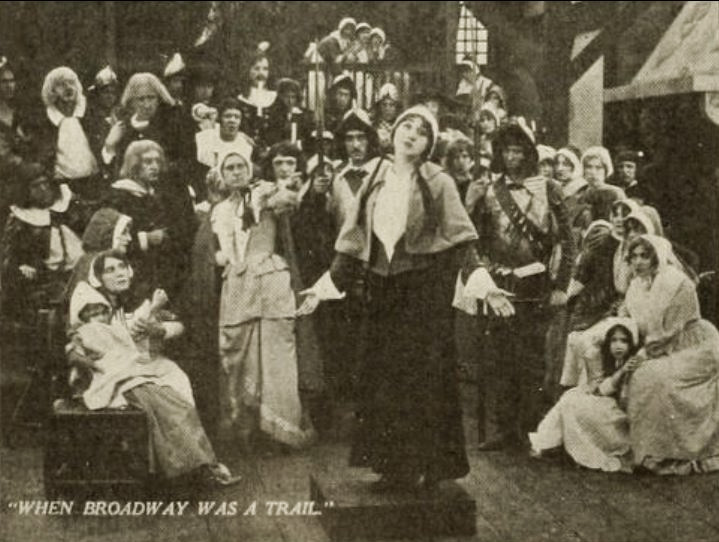
Salvation Hibbens, essayed by Edward Roseman with a nasal tremor and a wardrobe that seems tailored from his mother’s dining drapes, is no mustache-twirling cad. He is infantilized masculinity incarnate—unable to shear the umbilical tether, yet hungry for patriarchal dominion. His rivalry with Henry refracts colonial geopolitics: the Anglo-Puritan aspiration to swallow the Dutch entrepôt whole. When Salvation fails to secure Priscilla’s hand, the narrative does not simply pivot to the next obstacle; it metastasizes into witchcraft accusation, the era’s most trusted instrument for female nullification.
The screenplay, uncredited but rumored to be a pulp graft by Barbara Tennant, understands that seventeenth-century witch panic operated like a speculative bubble. A rumor seeded at Sabbath meeting could yield real-estate forfeiture by harvest time. The Hibbens matriarch—played with Presbyterian ice by Mary Navarro—embodies that bubble’s insider trader. Her machinations feel eerily proto-Enron: spreadsheets of gossip, futures in forfeiture, derivatives of disgrace.
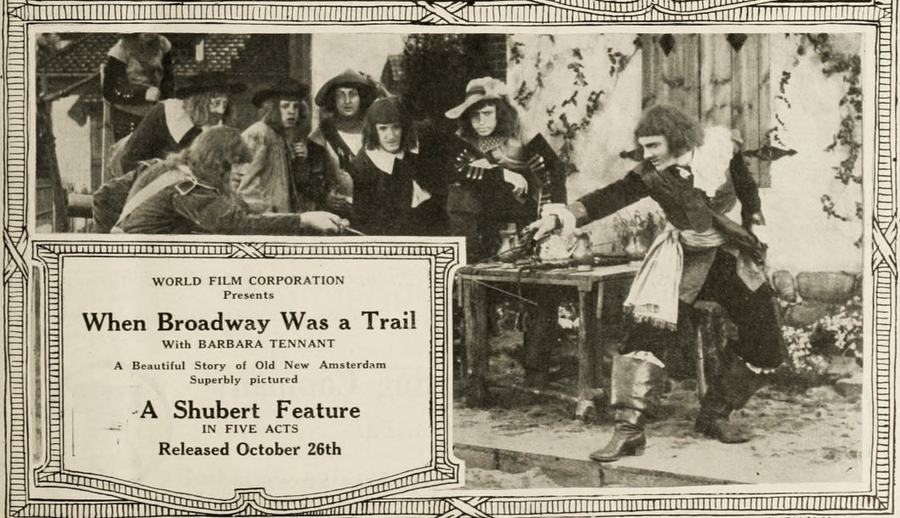
Once the lovers bust loose from the timbered gaol, the film shape-shifts into a chase poem. Lund intercuts Henry’s dash through tidal salt-marsh—boots sucking at brackish mud—with Priscilla’s parallel odyssey aboard a Dutch sloop skirting British cannon fire. Cross-cutting, still novel in 1914, births a muscular suspense that makes Griffith’s earlier The Fugitive feel pastoral by comparison.
Arrival in New Amsterdam should promise catharsis; instead we’re funneled into a different crucible. The Dutch burgomasters, all tulips and mercantile smiles, brandish Gretchen like a merger contract. Alec B. Francis, as the elder Minuet, swans through marble-floored parlors clutching a pomander to mask the scent of beaver-pelt lucre. The mise-en-scène here—Delft tiles, Indonesian batiks, a clavichord plinking a modal variant of Fortune My Foe—constitutes a fever dream of pre-Anglo cosmopolitanism. Yet the camera never forgets it is also a cage: every doorway is framed by heavy black lintels that loom like portable pillories.
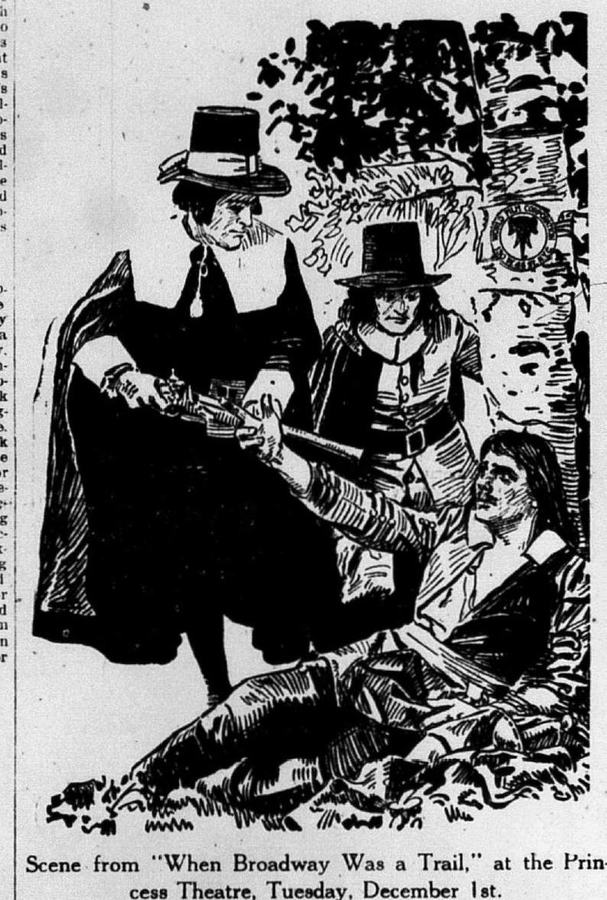
In the last reel, the lovers reject both Puritan theocracy and Dutch mercantilism, striking out beyond the Hudson Highlands into the unincorporated wild. Their footsteps fade across a fresh blank of celluloid, a frontier that is neither British nor Dutch, neither Calvinist nor Reformed, but a cartography of shared pulse. It is one of the earliest American narratives to posit that happiness might lie not in the acquisition of land or grace, but in the subtraction of both.
Julia Stuart’s final close-up—eyes glistening yet unbroken—rivals Falconetti’s later Joan for luminous agony. Lund lets the camera linger until the emulsion seems to breathe. Opposite her, O.A.C. Lund (doubling as Henry) underplays with stoic minimalism; his cheekbones do half the acting, catching side-light like glacial ridges. Together they forge an erotic chemistry that needs no kissing intertitle to detonate.
Viewers weaned on the circus sensationalism of The Great Circus Catastrophe may find this film’s restraint almost monastic. Conversely, fans of the occult claustrophobia in The Isle of the Dead will savor the same mildewed dread seeping through these Puritan floorboards. And if you admired the proto-feminist defiance in Rainha Depois de Morta Inês de Castro, Priscilla’s refusal to be pawned between colonial powers offers a trans-Atlantic echo.
For decades the only surviving element was a 9.5mm Pathé baby-print at Eye Filmmuseum, Dutch intertitles intact. A 2022 4K restoration—funded by a coalition of NYU, EYE, and a Kickstarter fueled by silent-film TikTok—reinstates the original amber tinting for candle-lit interiors and a cyan wash for nocturnal exteriors. Streaming on Criterion Channel and Kino’s Blu-ray, the edition includes a commentary that situates the film within the 1910s boom of “colonial westerns,” a cycle that also encompasses The Hoosier Schoolmaster and Burning Daylight.
When Broadway Was a Trail is not a quaint curio to be shelved beside road-show pageants; it is a scalding indictment of how young nations weaponize womanhood to terraform the future. It anticipates The Crucible by four decades, The Witch by a century. Yet its ultimate gift is not historical critique but cinematic rapture: proof that even within the brittle emulsion of a lost era, love can still torch the scaffold.
Grade: A+ • 1914 • USA • Pathé • Dir: O.A.C. Lund • Cast: Julia Stuart, O.A.C. Lund, Mary Navarro, Edward Roseman, Lindsay J. Hall, Alec B. Francis, Barbara Tennant, George Cowl • 68 min (restored) • Silent, B&W with tinting • Available on Criterion Channel, Kino Blu-ray
IMDb —
1919
Community
Log in to comment.