DbcultAccessing Vault...
Cult Review
Senior Film Conservator
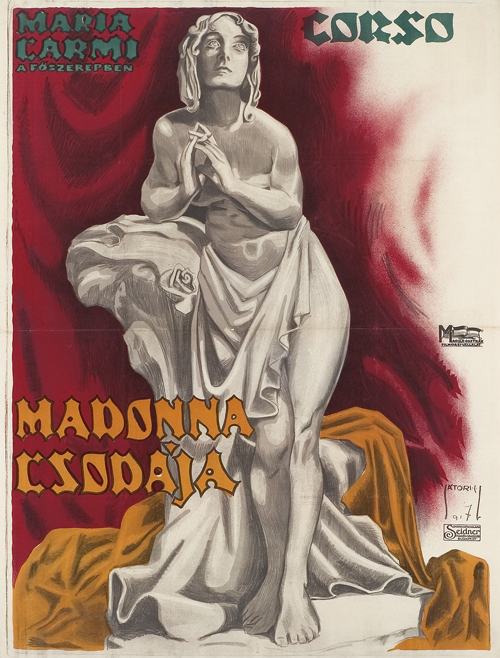
There are films that merely tell a story, and then there are those that etch themselves onto the very fabric of one’s consciousness, resonating with an almost primordial force. Robert Reinert and Alfred Graf Hessenstein’s Das Wunder der Madonna, a cinematic artifact from a bygone era, falls squarely into the latter category. It is a profound meditation on faith, despair, and the inexplicable flicker of hope that often ignites in the darkest corners of human experience. This is not merely a film; it is a spiritual journey, a testament to the enduring power of belief in a world perpetually teetering on the brink of cynicism.
Set against the stark, war-scarred tableau of a desolate hamlet, where the very architecture seems to sag under the weight of collective sorrow, the narrative introduces us to Elara, portrayed with breathtaking vulnerability by Maria Carmi. Her child, Lena, wastes away, a spectral figure embodying the village's dwindling fortunes and the insidious erosion of its spiritual bedrock. Carmi’s portrayal is not one of overt histrionics, but a subtle, deeply internalized agony, a quiet strength that belies her fragile frame. Her eyes, luminous even in the sepia-toned cinematography, convey an ocean of suffering and an unshakeable resolve. Her performance, much like that in The Studio Girl, speaks volumes without uttering a single word, a masterclass in silent era expressiveness.
The village physician, Dr. Richter, brought to life with a compelling blend of detachment and simmering frustration by Theodor Loos, stands as the embodiment of empirical reason, a man whose scientific worldview has been brutally forged in the crucible of a world offering few genuine miracles. His prognoses are grim, his pity detached, and his skepticism a palpable force, clashing dramatically with Elara’s fervent conviction. Loos, known for his nuanced characterizations, here delivers a performance that subtly shifts, allowing glimmers of doubt and eventual awe to pierce his hardened exterior. His journey from cynical observer to reluctant witness is one of the film's most compelling arcs, reminding one of the internal struggles depicted in The Way Back, where characters grapple with immense personal and philosophical dilemmas.
Into this grim landscape steps Jakob, the enigmatic sculptor, rendered with an understated grace by Einar Bruun. A transient artist, he is drawn to the village's forgotten beauty, observing Elara's quiet suffering and her singular, consuming quest: the restoration of a dilapidated chapel and its weather-beaten Madonna. Bruun’s presence is a quiet counterpoint to the village’s despair, an artistic soul who perceives beauty and spiritual potential where others see only decay. His character acts as a silent witness, an observer whose evolving perspective mirrors that of the audience, slowly drawn into the profound gravity of Elara's devotion. This trio of performances forms a magnetic core, each actor contributing to a rich tapestry of human emotion and belief.
At the heart of Elara’s desperate hope lies an ancient effigy of the Madonna, once the focal point of countless fervent prayers, now a decaying relic, its face obscured by centuries of grime, its power dismissed as mere superstition. Elara, fueled by a profound spiritual conviction and the boundless love of a mother, pours her meager strength into this monumental task. She scrubs away layers of time, patches crumbling mortar, and adorns the neglected altar with wildflowers, transforming a forgotten shrine into a sanctuary of renewed hope. Her tireless efforts are met with a complex array of reactions: scorn from Richter, who views it as a futile distraction from Lena's inevitable decline, and a burgeoning, silent respect from Jakob, who sees in her struggle a raw, elemental artistry. This duality of perception—the sacred versus the profane, faith versus reason—is masterfully explored by Reinert and Hessenstein, whose screenplay navigates these intricate philosophical waters with remarkable dexterity.
The narrative architecture is both simple and profound, building inexorably towards its climax. As Lena's condition precipitously deteriorates, reaching a critical precipice, the tension becomes almost unbearable. Elara collapses before the newly unveiled Madonna, her final, tear-choked plea a raw, guttural cry that pierces the oppressive silence of the chapel. It is a moment of absolute surrender, a final offering of her shattered hope. The camera lingers on her anguished face, then subtly shifts to the Madonna, inviting the audience to project their own beliefs onto the stoic, newly cleaned features of the statue. This deliberate ambiguity is a hallmark of the film's brilliance, allowing for multiple interpretations of the events that follow.
In the hushed dawn that follows this desperate prayer, an inexplicable shift occurs. Lena, though still weak, shows a distinct, undeniable improvement, a flicker of vitality returning to her eyes. This subtle yet profound alteration defies medical explanation, leaving Dr. Richter baffled and visibly shaken. The “miracle” is not a grand, theatrical intervention, nor a supernatural spectacle in the vein of more overt religious dramas. Instead, it is a quiet, irrefutable change, a testament to the enduring power of human will interwoven with a spiritual resonance. It is a moment that challenges the empirical, rekindles the spark of belief in a community long resigned to despair, and transforms the Madonna from a mere statue into a potent symbol of hope, resurrected by faith and a mother's boundless love.
This delicate handling of the supernatural is one of Reinert and Hessenstein’s most commendable achievements. They avoid didacticism, instead presenting an event that can be interpreted through various lenses: divine intervention for the faithful, a remarkable coincidence for the skeptic, or perhaps even a psychosomatic response triggered by profound hope and belief. This nuanced approach elevates Das Wunder der Madonna beyond simple melodrama, positioning it as a thoughtful exploration of perception and the human need for meaning in the face of suffering. One could draw parallels to the existential quandaries presented in An Alpine Tragedy, where human resilience and the forces of nature converge to test the limits of endurance and spirit.
Visually, the film is a masterclass in early German silent cinema aesthetics. While not overtly expressionistic in the vein of films like The Cabinet of Dr. Caligari, it employs a sophisticated visual language that conveys emotion and psychological states with remarkable depth. The chiaroscuro lighting, the deliberate framing of characters against desolate backdrops, and the evocative use of shadows all contribute to a pervasive mood of solemnity and spiritual yearning. The dilapidation of the chapel, contrasted with its eventual restoration, is not just a plot device but a visual metaphor for the spiritual desolation and subsequent renewal of the community. The careful composition of each shot, the way light plays upon Maria Carmi's face during her moments of fervent prayer, and the starkness of the village environment all contribute to an almost painterly quality. It's a testament to the ingenuity of silent filmmakers who had to convey complex narratives and emotions through purely visual means, a feat celebrated in documentaries like All for the Movies: Universal City, California, the Wonder City of the World, which showcased the burgeoning artistry of early cinema.
The direction by Robert Reinert, often overlooked in the broader canon of German cinema, demonstrates a keen understanding of human psychology and the power of symbolic imagery. He eschews overt sentimentality, opting instead for a restrained, almost reverential tone that allows the audience to engage with the film's profound themes on their own terms. The pacing, though deliberate, never lags, maintaining a steady, hypnotic rhythm that draws the viewer deeper into Elara's spiritual odyssey. His ability to evoke such strong emotional responses without relying on spoken dialogue is a powerful reminder of the artistic heights achieved during the silent era. This subtlety and depth of emotional portrayal resonate with other character-driven silent dramas such as Amarilly of Clothes-Line Alley, which also relied heavily on nuanced performances to convey its narrative.
Das Wunder der Madonna, while firmly rooted in its historical context, transcends its era through its exploration of universally resonant themes. The struggle between faith and skepticism, the boundless love of a parent, the search for meaning in suffering, and the quiet power of hope are all as relevant today as they were a century ago. It is a film that challenges viewers to look beyond the superficial, to question their own preconceived notions about what constitutes a "miracle," and to consider the profound impact of belief on the human condition. Its contemplative nature sets it apart from more action-oriented films of the period like In the Clutches of the Paris Apaches or even the more adventurous Ranson's Folly. Instead, it aligns more with the introspective character studies seen in The Power of Decision or Der Schloßherr von Hohenstein, which delve into the internal lives of their protagonists.
The writers, Robert Reinert and Alfred Graf Hessenstein, craft a narrative that is both poignant and intellectually stimulating. They resist easy answers, preferring to pose profound questions and allow the emotional weight of the performances and the visual storytelling to provide the resonance. Their collaboration results in a screenplay that, despite its lack of spoken dialogue, feels rich with subtext and psychological depth. The sheer originality of their conception, particularly in how they articulate the spiritual journey without resorting to overt religious dogma, is commendable. This film, much like Das Spiel vom Tode, demonstrates a sophisticated understanding of dramatic tension and character development, utilizing the unique strengths of the silent medium.
One cannot discuss Das Wunder der Madonna without acknowledging the socio-political climate in which it was produced. Post-World War I Germany was a nation grappling with immense loss, economic hardship, and a crisis of faith. Films of this era often reflected these anxieties, and Reinert’s work provides a compelling spiritual counter-narrative to the prevailing despair. It offers a glimmer of hope, a suggestion that even in the most desolate circumstances, a belief in something greater, or simply the indomitable spirit of humanity, can effect profound change. It stands as a powerful artistic response to a wounded society, seeking solace and meaning in the face of widespread disillusionment. Its quiet strength is a stark contrast to the more overt political or social commentaries of other films from the period, yet its message is no less potent. The struggle for survival and dignity, seen in films like El último malón or Betsy's Burglar, finds a spiritual dimension here, elevating the personal plight to a universal human experience.
The performances, particularly Maria Carmi's, anchor the film with an emotional sincerity that transcends the limitations of the silent medium. Her portrayal of Elara is a masterclass in non-verbal communication, conveying hope, despair, and unwavering resolve through subtle gestures and expressive facial work. Theodor Loos's Dr. Richter provides the necessary counterpoint, his scientific pragmatism slowly giving way to a grudging respect, if not full conversion, creating a dynamic tension that propels the narrative. Einar Bruun, as the artist Jakob, offers a contemplative presence, a sensitive soul who appreciates the spiritual and aesthetic dimensions of Elara's quest. Together, they form an ensemble that breathes life into Reinert and Hessenstein's vision, making the characters feel profoundly human and relatable despite the period setting.
For contemporary audiences, Das Wunder der Madonna offers a unique opportunity to connect with a powerful piece of cinematic history that speaks to timeless human concerns. It is a film that demands patience and a willingness to immerse oneself in its deliberate pace and visual storytelling, but the rewards are immense. It is a reminder that the profound questions of existence, faith, and the nature of miracles have captivated storytellers and audiences for generations. Its quiet triumph is not just the "miracle" within the narrative, but the film's own enduring power to move and inspire, proving that some stories, told with enough artistry and conviction, can indeed achieve a form of immortality. Like A Daughter of the Sea, it evokes a powerful sense of place and character, immersing the viewer in its unique world. And in its exploration of human resilience against overwhelming odds, it echoes the spirit of films like The Breaker, where characters defy their circumstances through sheer force of will.
In an age saturated with spectacle and overt messaging, Das Wunder der Madonna stands as a quiet marvel, a testament to the subtle power of cinema to explore the ineffable. It doesn't shout its message; it whispers it, allowing the viewer to absorb its spiritual resonance at their own pace. It is a film that deserves to be rediscovered, studied, and cherished for its artistic integrity, its emotional depth, and its profound exploration of the human spirit's capacity for hope and belief. Its narrative, penned by Robert Reinert and Alfred Graf Hessenstein, is a masterclass in building emotional tension and delivering a conclusion that is both satisfying and thought-provoking, leaving ample room for personal contemplation. This is not just a film about a miracle; it is a miracle of filmmaking itself, preserving a moment of profound artistic expression from a pivotal era in cinema history. It reminds us that the true wonder lies not in the grandiosity of an event, but in the quiet, transformative power of faith and love.

IMDb —
1918
Community
Log in to comment.