DbcultAccessing Vault...
Cult Review
Senior Film Conservator
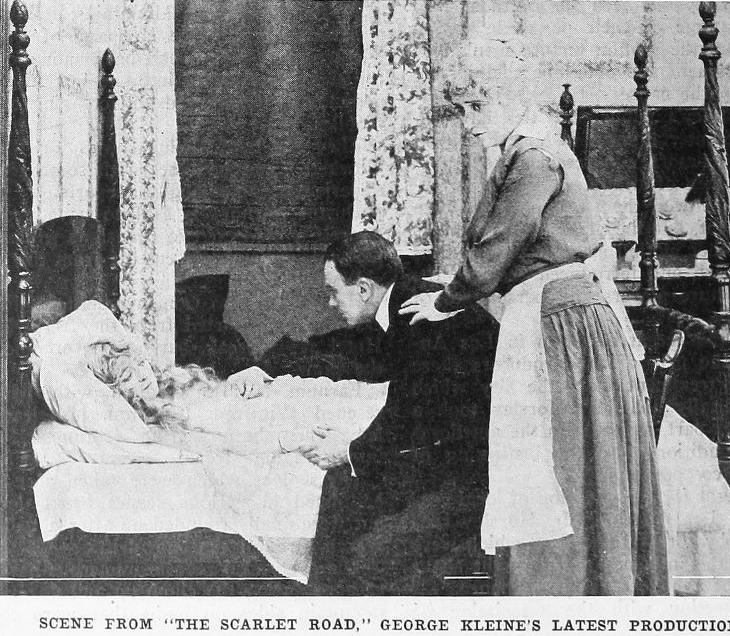
There are films that merely tell a story, and then there are those that etch themselves into the very fabric of cinematic memory, offering a profound commentary on the human condition. The Scarlet Road, a compelling narrative of ambition, temptation, and eventual redemption, unequivocally belongs to the latter category. It is a morality play dressed in the finery of early 20th-century melodrama, a journey through the glittering yet perilous alleys of New York's high society and the stark, unforgiving landscape of the American West. At its heart lies the odyssey of Harry Tremaine, a young man whose initial purity and ingenuity are tested by the seductive allure of sudden wealth and the insidious machinations of those who prey upon it.
Our protagonist, Harry, is introduced not as a blank slate, but as a paragon of clean-living ambition. His days are dedicated to the meticulous perfection of an aeroplane motor, an invention he believes will be his ticket to a prosperous future. This earnest pursuit is nurtured by the unwavering support of his mother's old friend, Mrs. Holbrook, whose daughter, Alice, has been Harry’s steadfast fiancée since childhood. Theirs is a relationship built on shared history, mutual respect, and the quiet promise of a future forged through hard work and fidelity. This idyllic foundation, however, is but a prelude to the tempest that awaits.
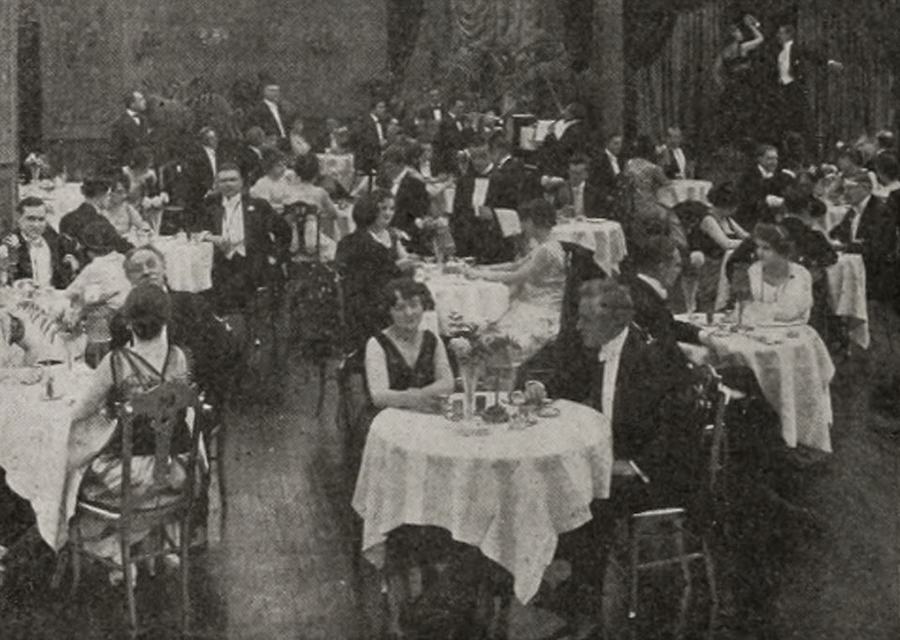
The narrative’s pivotal turn arrives with a mundane errand that catapults Harry from his prosaic bookkeeping duties into the dazzling, disorienting world of New York’s nocturnal elite. Delivering a telegram to his manager at the opulent Café de Paris, Harry encounters a milieu entirely alien to his structured existence. It is here, amidst the clinking glasses and the boisterous laughter, that he first lays eyes on Betty Belgrave, a cabaret entertainer whose vivacious charm and magnetic stage presence embody the very essence of urban temptation. Alongside her, Wilbur Lorimer, her dancing partner, exudes an air of slick opportunism. This initial exposure is a subtle, yet potent, foreshadowing of the storm gathering on Harry's horizon.
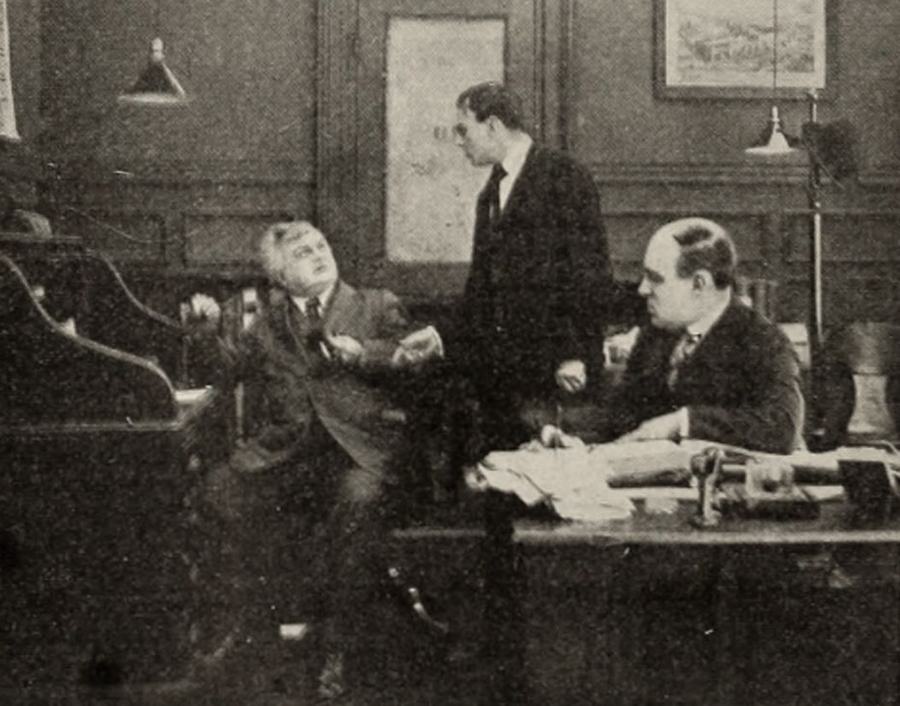
The true catalyst for Harry’s dramatic descent, however, is not Betty’s charm alone, but the unexpected windfall that follows. News of his estranged father's death in the western mining country brings with it the revelation of a substantial inheritance: nearly $200,000. This fortune, astonishingly, comprises money Harry had believed he was sending for his father’s support, revealing a paternal shrewdness that will echo throughout the story. Initially, Harry’s thoughts turn to Alice, imagining their wedding now unburdened by financial constraint. Yet, the sudden acquisition of such immense wealth, unearned and unchastened by struggle, proves to be a dangerous intoxicant. It transforms him from the bashful, awkward youth into a 'young man about town,' flush with cash and ripe for exploitation. This transformation, swift and almost imperceptible, is a classic cinematic trope, reminiscent of characters in films like Who's Who in Society, where the sudden acquisition of status or wealth exposes underlying vulnerabilities and attracts unsavory companions.
Betty Belgrave, with her keen eye for opportunity and her practiced allure, finds Harry an easy mark. Her conquest is swift and devastating. Alice, the epitome of constancy and virtue, watches helplessly as her fiancé becomes increasingly distant, ensnared in Betty’s web of fascinations. The once-sacred promise of their union crumbles under the weight of Harry’s escalating escapades, culminating in a complete break on New Year’s Eve. The film masterfully portrays this gradual erosion of character, making Harry’s fall not a sudden plunge but a slow, agonizing slide into moral compromise and profligate spending. He showers Betty with gifts, indulges her every whim, and, critically, invests thousands in Wilbur’s patently worthless stocks. The speed with which he dissipates his fortune is staggering, a stark warning against the ephemeral nature of unearned prosperity.
The inevitable reckoning arrives. Harry awakens one day to the brutal reality of being 'broke.' As quickly as they had appeared, his 'gay friends' vanish, led by the parasitic Betty and Wilbur. Stripped of his wealth, Harry finds himself deserted, unable to secure employment, and reduced to desperate straits. It is at this nadir that a glimmer of his father’s enduring wisdom emerges. A visit to his father’s lawyer yields a letter, a posthumous message intended for Harry only 'when he shall have dissipated his fortune.' The letter reveals a father who, with prophetic insight, had foreseen his son's follies and, rather than condemn, had provided 'a way out.'
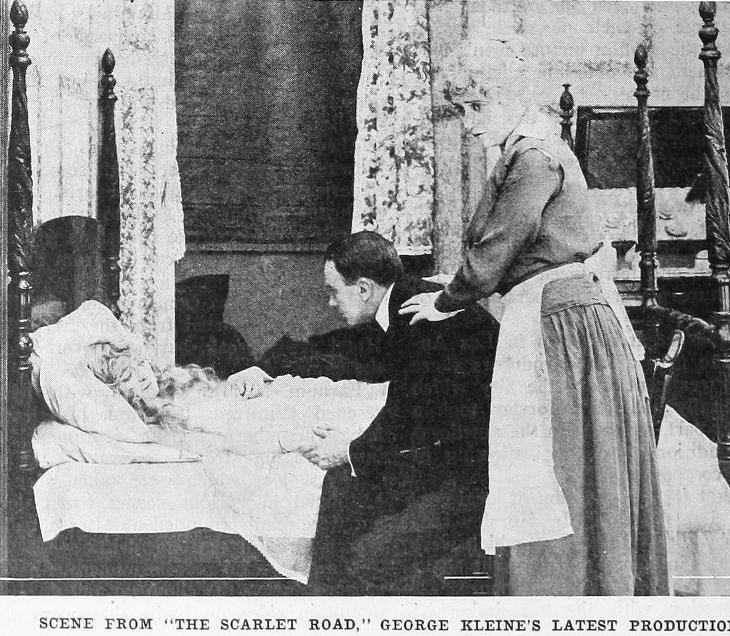
Harry is instructed to journey to his father’s remote cabin in the western wilds, a pilgrimage that feels less like a treasure hunt and more like a penance. The arduous search culminates in a shocking discovery: from the ceiling of the humble hut dangles a hangman’s noose. This grim, visceral symbol, meant to represent 'the way out' promised by his father, is a moment of profound existential reckoning for Harry. The sheer terror and despair evoked by the noose, however, do not break him. Instead, they forge him. The shock of this discovery, rather than leading to despair, catalyzes a profound transformation. The boy, lost in the superficiality of wealth, becomes a man, resolute in his determination to return to New York, to fight, to prove his father’s grim estimate of him wrong. This moment, raw and powerful, echoes the psychological tension found in films such as The Bells, where characters confront their deepest fears and moral dilemmas.
Back in the unforgiving urban landscape, Harry’s newfound resolve is immediately tested. Yet, fate, or perhaps the universe’s karmic balance, intervenes. He heroically rescues a little girl from drowning, an act of selfless courage that brings him to the attention of her millionaire father. Grateful beyond measure, the magnate extends his aid, helping Harry secure the capital needed to develop his aeroplane motor. This is a crucial distinction: Harry’s second fortune is not inherited but earned, a testament to his ingenuity, perseverance, and the moral compass he has recalibrated. A company is formed, the device manufactured, and Harry, once again, finds himself a man of considerable wealth, but this time, it is a fortune forged through honest endeavor and hard work.
The film, ever keen on exploring the cyclical nature of temptation, presents Betty Belgrave with another opportunity to ensnare Harry. Learning of his renewed opulence, she attempts to rekindle her manipulative charm. But Harry, now seasoned by hardship and enlightened by his past mistakes, is immune to her siren call. His resilience in the face of renewed temptation underscores his profound growth, a stark contrast to his earlier naiveté. This resistance to past vices can be seen in other narratives of moral fortitude, where characters, like those in A Pardoned Lifer, having faced profound consequences, are given a second chance to prove their reformed character.
Despite his triumphs, the haunting vision of the noose lingers in Harry’s mind, a grim phantom from his past. It is a constant reminder of his father’s perceived judgment, a legacy he feels compelled to confront and vanquish. He determines to return to the cabin, not out of despair, but out of a need to gloat over the memory of his 'cruel legacy,' to definitively prove his father’s initial, pessimistic estimate of him wrong. This return journey is a symbolic act, a final exorcism of his personal demons.
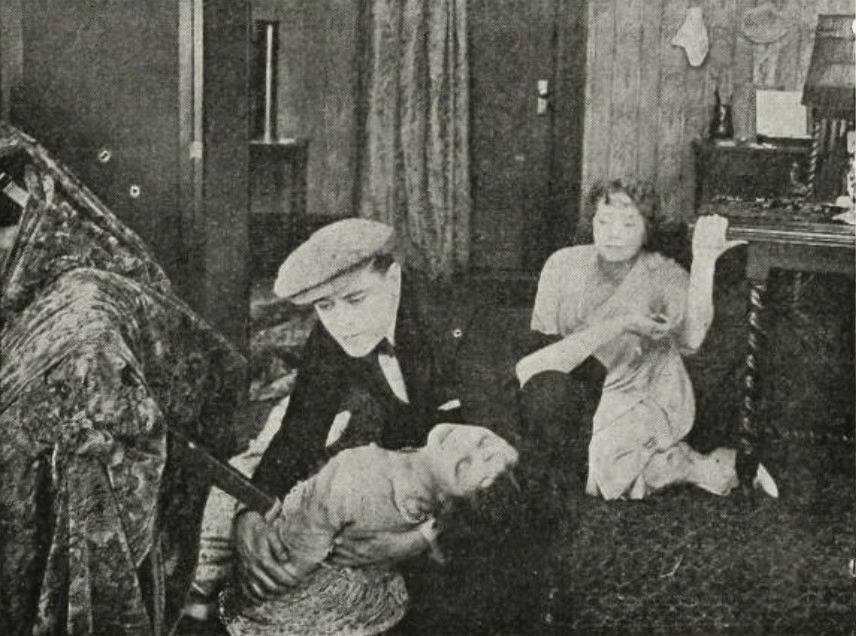
Once inside the desolate cabin, Harry confronts the memory of his father, taunting the silent judgment he believes the noose represents. In a burst of righteous anger, he tears the noose from the ceiling. What follows is a moment of breathtaking revelation: a shower of golden coins pours forth from the ragged hole in the plaster. In an instant, his father’s true, ingenious plan becomes blindingly clear. The noose was not a judgment, but a final, ultimate safety net. Should Harry have been truly broken, truly brought to the brink of self-destruction, this hidden fortune would have been revealed, offering him a third chance, a final reprieve. It was a test of character, a profound act of tough love designed to push Harry to his limits, but never beyond redemption. This paternal foresight, a blend of stern lesson and ultimate compassion, elevates the narrative beyond simple melodrama, imparting a deeper philosophical weight.
Chastened not by despair, but by the profound understanding of his father’s complex love, Harry returns to New York, a man truly at peace with himself and his past. He learns of Alice’s serious illness, a poignant echo of the suffering his actions had caused. Rushing to her side, their reunion is tender and deeply earned, a testament to enduring love and forgiveness. The final scenes offer a serene denouement: Harry and Alice, happily driving through the park in their splendid limousine, their future secure and shared. From a park bench, Betty, now a derelict, observes them, a solitary figure whose faded glamour serves as a stark, melancholic counterpoint to their hard-won contentment. Her fate is a quiet, yet powerful, commentary on the wages of superficiality and manipulation.
The Scarlet Road, while rooted in the storytelling conventions of its era, transcends its period through its exploration of universal themes. It delves into the corrupting influence of unearned wealth, the insidious nature of temptation, and the redemptive power of self-discovery and hard-won experience. John Jarrott, as Harry Tremaine, delivers a performance that convincingly portrays the character’s arc from callow youth to seasoned man. Anna Q. Nilsson, as Alice, embodies grace and steadfastness, providing a moral anchor against the chaotic currents of Harry’s misadventures. Iva Shepard, as Betty Belgrave, skillfully crafts a femme fatale whose allure is both captivating and ultimately destructive.
The narrative structure, moving from innocence to corruption, despair, and then ultimately to redemption and enlightenment, is a powerful one. The film acts as a cautionary tale, yet it never succumbs to pure cynicism. Instead, it offers hope in the capacity for human growth and the enduring strength of true character. The clever twist of the hidden fortune within the noose transforms a potentially morbid plot device into a profound metaphor for a father’s enduring love and belief in his son’s potential. It speaks to the idea that sometimes, the most painful lessons are the ones that ultimately lead to the greatest understanding and liberation.
In an age saturated with fleeting pleasures and instant gratification, The Scarlet Road serves as a potent reminder of the value of earned success, genuine affection, and the profound wisdom that can only be gleaned from navigating life’s most arduous trials. It is a film that resonates not just as a historical artifact, but as a timeless exploration of the human spirit’s capacity for both folly and profound resilience. Its message, that true wealth lies not in what is acquired but in what is earned and retained through integrity, remains as relevant today as it was upon its release. This cinematic journey, fraught with peril and illuminated by hard-won wisdom, is one that continues to captivate and instruct, solidifying its place as a compelling and enduring piece of classic cinema.
IMDb 8
1915
Community
Log in to comment.