DbcultAccessing Vault...
Cult Review
Senior Film Conservator
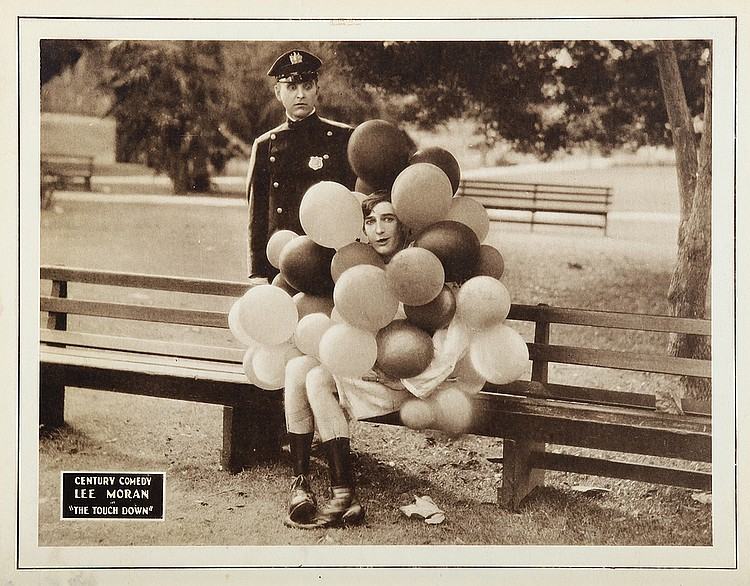
In the grand tapestry of early cinematic comedies, a peculiar thread often emerges: that of the accidental hero, the unwitting protagonist thrust into circumstances far beyond their ken, only to emerge triumphant through sheer happenstance and an indomitable, if naive, spirit. Alfred J. Goulding’s 'The Touchdown,' featuring the endearing Lee Moran, is a quintessential example of this delightful subgenre, a film that, even through the lens of its synopsis, promises a riotous journey of mistaken identity, gridiron glory, and an unexpected romantic entanglement. It’s a narrative premise so perfectly calibrated for comedic effect that it transcends the decades, resonating with a timeless appeal.
The film’s central conceit is a marvel of simplicity and potential for escalating farce. Imagine, if you will, the bucolic innocence of a farmer’s son, Lee, navigating the bustling, often bewildering, environment of a college campus. His world, presumably one of tilling fields and tending livestock, is suddenly, irrevocably altered by a mundane act: donning a football suit by mistake. This isn't a calculated masquerade; it's a pure, unadulterated blunder, transforming him, in the eyes of an eager crowd and a desperate coaching staff, into one of the expected players. This setup immediately positions Lee Moran’s character as an everyman, a blank slate onto which the audience can project their own anxieties and hopes for improbable success. It’s a narrative device that taps into the universal fantasy of being recognized for an unearned talent, of stumbling into greatness. The beauty of this premise lies in its inherent dramatic irony; the audience is privy to Lee's true identity and lack of skill, while the on-screen characters are blissfully unaware, setting the stage for a cascade of uproarious misunderstandings.
What truly elevates 'The Touchdown' beyond a mere gag is the subsequent unfolding of 'complications.' These aren't just minor hiccups; they are the very engine of the film’s comedic genius. Lee, an utterly untrained individual, somehow manages to make several touchdowns. This isn't about athletic prowess; it's about the sheer, unadulterated chaos of the moment, the unpredictable bounces of the ball, the missteps of opponents, and perhaps, a touch of divine comedic intervention. One can almost picture the sequences: Lee, perhaps trying to avoid the fray, accidentally catches the ball; trying to escape a tackle, he stumbles forward, past the goal line. Each 'touchdown' isn't a display of skill but a testament to the ludicrousness of the situation, building momentum and disbelief with every score. The visual comedy here would have been paramount, relying on physical gags, exaggerated reactions from the other players, and the mounting bewilderment of the crowd turning into ecstatic celebration. This kind of physical humor, reminiscent of the best silent-era antics, grounds the fantastical premise in a tangible, if absurd, reality.
Lee Moran, as the titular accidental hero, carries the weight of this comedic spectacle. His portrayal would necessitate a delicate balance of earnestness and wide-eyed confusion. He can't be overtly scheming; his success must feel genuinely unearned, making his triumphs all the more satisfying. The audience roots for Lee not because he's the best player, but because he's an underdog in the most literal sense, a fish profoundly out of water who, against all odds, manages to swim. This character archetype is a powerful one, seen in countless films where the common person achieves extraordinary feats, often through sheer force of will or, in Lee’s case, sheer force of luck. Compare this endearing vulnerability to the more calculated ambition seen in characters from films like The Pawn of Fortune, where social climbing might be more intentional. Lee's journey is far more organic, driven by circumstance rather than a grand design.
Beyond the thrilling, albeit accidental, gridiron triumphs, 'The Touchdown' delivers an equally delightful romantic subplot. Lee’s heroics, however unwitting, capture the admiration of the charming daughter of the professor. This element adds another layer of classic comedic payoff. The accidental hero not only wins the game but also wins the girl, completing a perfect wish-fulfillment fantasy. The professor’s daughter, presumably a figure of intellect and social standing, would initially be drawn to the perceived athletic prowess and sudden celebrity of Lee. Her eventual discovery of his true, humble origins, and the unfolding of the truth behind his 'skill,' would be fertile ground for further comedic and romantic development. Does she find his innocence charming? Is she amused by his accidental genius? Or does she see beyond the uniform to the genuine, if bewildered, soul beneath?
This romantic arc is a cornerstone of many successful lighthearted narratives. It echoes the sweet, sometimes awkward, courtships found in films like Sweet Patootie or the innocent charm of Cecilia of the Pink Roses, where genuine connection often blossoms from unexpected encounters. The dynamic between the farmer's son and the professor's daughter also subtly touches upon themes of class and social mobility, albeit in a lighthearted, comedic fashion. Lee, through no effort of his own, ascends the social ladder, proving that charm and serendipity can be just as potent as pedigree or athletic training. The resolution of this romance would undoubtedly be heartwarming, solidifying Lee's transformation from an anonymous farm boy to a campus legend with a bright future, both on and off the field.

Alfred J. Goulding, credited as the writer, demonstrates a keen understanding of comedic structure and character development, even within the confines of what appears to be a straightforward plot. The strength of 'The Touchdown' lies not just in its premise but in the meticulous crafting of its escalating complications and the satisfying resolution. Goulding's script would have needed to carefully balance the absurdity with moments of genuine character reaction, ensuring that Lee's journey feels earned by the narrative, if not by his athletic skill. The pacing would be crucial, building the tension and hilarity of the game sequences before smoothly transitioning into the romantic denouement. The humor, while broad, would likely be rooted in relatable human foibles – the desire for victory, the pressure to perform, the awkwardness of unexpected attention.
Consider the narrative architecture: the initial mistake, the growing confusion, the improbable successes, the mounting stakes, and finally, the dual triumph. This is a classic three-act structure perfectly tailored for comedic impact. Goulding’s work here exemplifies how a simple setup can be leveraged for maximum entertainment, a technique that has informed countless comedies since. It’s a testament to the enduring power of a well-told story, regardless of its era. This kind of intricate but seemingly effortless comedic writing can also be observed in films like Spring Fever, where lighthearted scenarios are meticulously constructed for maximum audience enjoyment.
The core appeal of 'The Touchdown' lies in its celebration of the underdog, the notion that anyone, regardless of their background or training, can achieve greatness through a stroke of luck and a little bit of pluck. This narrative resonates deeply because it offers a comforting fantasy: that life's greatest rewards might just be waiting around the corner, stumbled upon by accident. It's a story that champions serendipity over strenuous effort, a refreshing counter-narrative in a world often obsessed with meritocracy and intense preparation. Lee’s story isn't about training montages or strategic genius; it's about being in the right place at the right time, and perhaps, having just enough common sense to keep moving forward when the unexpected happens.
Furthermore, the film's premise plays into the universal fascination with sports, tapping into the collective excitement of a pivotal game. The roar of the crowd, the tension of the final plays, the euphoria of victory—these are elements that translate across cultures and generations. By injecting an element of pure absurdity into this familiar setting, 'The Touchdown' creates a unique blend of thrilling sports drama and laugh-out-loud comedy. It’s a masterful manipulation of audience expectations, turning the serious business of a college football game into a playground for comedic invention.
The film also subtly critiques the superficiality of appearances. Lee is accepted and celebrated based solely on his uniform and his accidental success, not on any inherent skill or knowledge of the game. This serves as a gentle reminder that perception often outweighs reality, and that sometimes, the most unlikely heroes are the ones who wear the right costume at the opportune moment. This theme of mistaken identity leading to unexpected consequences is a classic, seen in various forms throughout cinematic history, from farces to more dramatic narratives. For instance, the premise of someone being in a role they shouldn't be, leading to humorous or dramatic outcomes, is a well-trodden path, not entirely dissimilar to the thematic undercurrents one might find in a film like An Inside Job, though likely with vastly different tones.
Ultimately, 'The Touchdown' appears to be a testament to the power of joy and the enduring appeal of a good-natured triumph. It’s a film designed to elicit smiles and laughter, to leave the audience with a warm feeling of satisfaction. The narrative arc, from humble beginnings to unexpected glory and romantic fulfillment, is a deeply satisfying one. It’s a reminder that sometimes, the greatest victories are achieved not through meticulous planning or rigorous training, but through a charming blend of luck, innocence, and the sheer audacity of circumstance. The film's legacy, even if known only through its compelling premise, speaks to the universal desire for happy accidents and the belief that good things can happen to good, albeit bewildered, people.
The narrative’s simplicity is its strength, allowing for broad strokes of comedic action and clear emotional payoffs. The journey of Lee Moran, the farmer's son who inadvertently becomes a sports legend and a romantic lead, is a delightful exploration of what happens when life throws an unexpected curveball – and you accidentally hit a home run. It's a story that continues to charm, proving that some narratives, like a perfectly executed, if unintentional, touchdown, never go out of style. The film, in its essence, captures a moment of pure, unadulterated escapism, inviting viewers to revel in the delightful chaos of an accidental hero's journey. It’s a celebration of the unpredictable nature of life and the sweet rewards that can sometimes follow the most innocent of mistakes, leaving an indelible mark of good cheer and heartwarming romance.

IMDb —
1936
Community
Log in to comment.