DbcultAccessing Vault...
5.2/10
Senior Film Conservator
A definitive 5.2/10 rating for a film that redefined the boundaries of cult cinema. The Last Egyptian remains a cornerstone of transgressive art.
A sand-choked prophecy, a key of lapis lazuli, and love shackled to ancestral shame—The Last Egyptian (1914) is less a museum relic than a cracked funerary urn still leaking perfumed poison.
In the flicker of nitrate twilight, Kara—last dynast heir—learns that imperial blood mingles with the very English ichor he detests. L. Frank Baum, wizard of emerald whimsy, swaps fairy dust for funeral dust, scripting his lone adult screenplay: a vengeance fable drenched in hieroglyphic hubris. The plot pirouettes from sepulcher to salon, from Cairo’s gaslit ballrooms to the Nile’s moon-polished waters, chasing not truth but the perfume of honor soured.
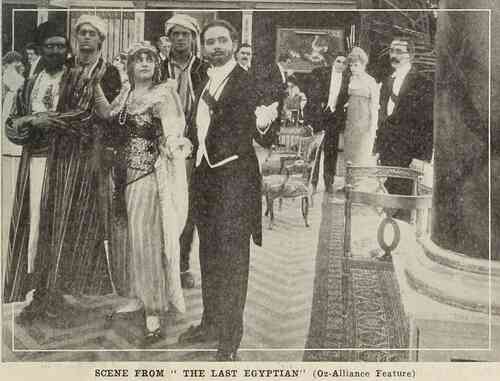
Photographed through veils of cigarette smoke and desert haze, the film’s chiaroscuro anticipates the fever dreams of Shadows of the Moulin Rouge. Sets oscillate between cardboard sphinxes and genuinely evocative palace porticoes; the eye learns to forgive papier-mâché when shadows carve gold across an actor’s clavicle. Director J. Farrell MacDonald—later Mack Sennett’s stalwart—treats every tableau like a mortuary fresco: static yet somehow breathing.
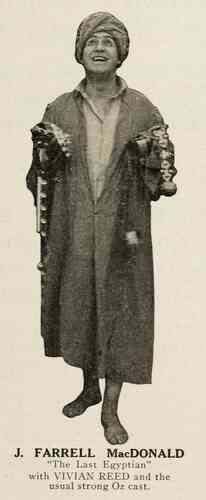
Kara, essayed by MacDonald himself, oscillates between pantherish menace and wounded majesty; his eyes glint like obsidian when he fondles the funereal key. Ora Buckley’s Lady Aneth is no wilting lotus—her straight spine and flickering pupils telegraph intellect caged by Edwardian corsetry. Their betrothal scene plays like a chess match on quicksand: every courteous bow poisoned by ulterior voltage.
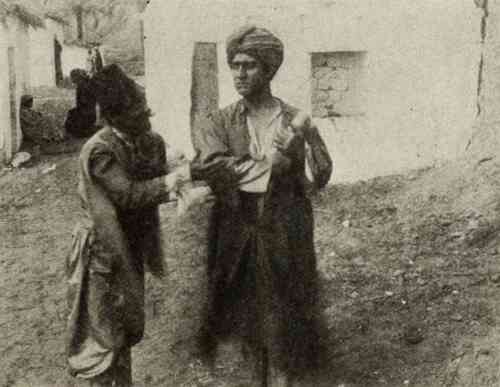
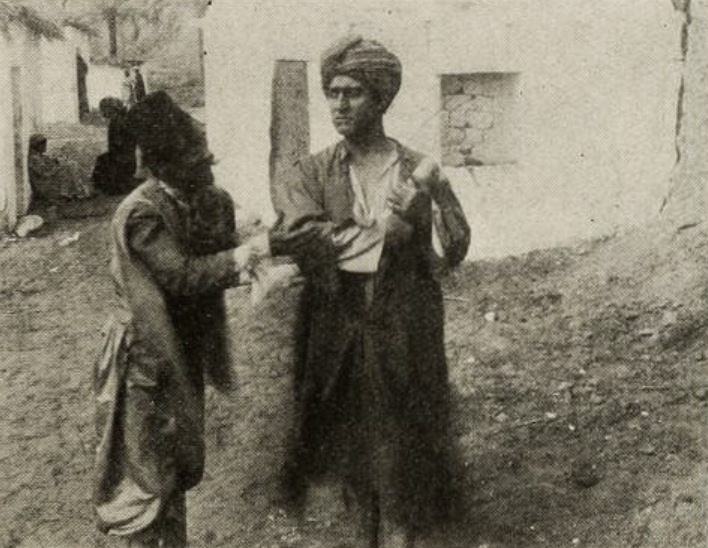
Baum’s narrative revels in exotica—eunuchs, jeweled whips, harem silks—yet the camera cannot decide whether to critique or consume. Kara’s “Oriental cunning” is merely narrative shorthand for strategic brilliance; the Englishmen’s profligacy at the card table is the true moral desert. In 1914, audiences lapped up the fantasy of a wily sheikh out-whisking Anglo ineptitude; today the trope tastes of sand and sour colonial guilt.
Compare this with The Rajah’s Diamond Rose, where the gem is MacGuffin; here, the entire necropolis is bargaining chip. Baum weaponizes heritage, turning antiquity into a loaded revolver pointed at Victorian respectability.
The film’s middle act is a gambling den spiral worthy of The Might of Gold: debts accumulate like desert dunes, each chip a breadcrumb toward Aneth’s sacrificial altar. Baum’s Oz tales hinge on coincidence; here, coincidence curdles into coercion. Once Kara threatens paternal ruin, the screenplay swaps fantasy for noir-ish contract: a woman’s body in exchange for paternal absolution.
Yet Baum the fabulist cannot resist ironic embroidery: the very gold Kara hoards becomes his granite shroud. A slave girl’s mistaken dagger—meant for the prince—paints retribution with a gash of tragicomic error, as though Fate herself chuckles at dynastic comeuppance.
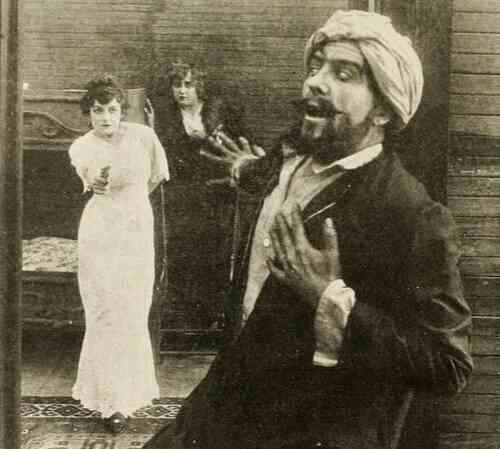
Intertitles arrive like incised tablets—sometimes florid, often spartan. The abduction sequence, crosscutting between yacht sails and galloping camels, anticipates Griffith’s muscular dialectics, though on a budget of beads and balsa. A dissolve from Kara’s grimace to the Nile’s moonlit ripples rhymes human rapacity with elemental indifference.
Aneth’s agency flickers but never extinguishes. She barters herself, yes, yet within the transaction she negotiates temporal space—postponing consummation, demanding rites. When Winston Bey storms the palace, her flight is not dainty but determined, boots hammering flagstones like rifle cracks. Contemporary viewers may still flinch at the damsel template, yet within 1914 parameters she’s a comet, not a paper doll.
Surviving prints screen sans original cue sheets, so modern curators often borrow Saint-Saëns’ “Egyptian” sonata or improvisatory oud sketches. The clash of European romanticism and Near-Eastern pluck mirrors the film’s bloodline schizophrenia—Occident vs. Orient, conqueror vs. conquered.
Where Pinocchio moralizes about lying noses, The Last Egyptian contemplates hereditary stains that soap cannot scrub. Where Karadjordje exalts national resistance, Baum’s yarn personalizes vendetta into bedroom politics. The film’s final irony—a Briton entombed by his own greed—feels closer to Poe than to Baum’s Emerald City optimism.
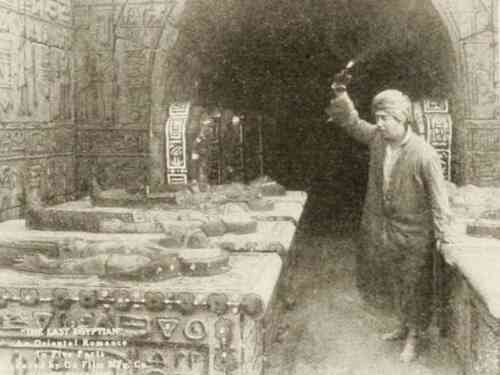
Only two incomplete 35 mm negatives exist—one at Cinémathèque Française, one in a private Beirut archive. Digital 4K scans reveal hairline scratches like desert fissures, yet the amber toning survives, gilding skin and sandstone alike. Rumors swirl of a missing reel depicting Kara’s coronation masque; until it surfaces, the narrative jump from Nile ambush to tomb entrapment feels deliciously abrupt, like a hieroglyph missing a cartouche.
Today, when museums repatriate looted busts and post-colonial voices unpick imperial nostalgia, Kara’s crusade reads as both terrorist and liberator. Baum, blissfully unaware of post-Edwardian ethics, hands the moral compass to the audience; it spins wildly. One viewer’s zealot is another’s anti-hero, a duality streaming services monetize incessantly.
Flawed, feverish, and hauntingly gorgeous, The Last Egyptian is a tarnished scarab: hold it to the light and glimmers of genius wink through the patina of stereotype. It neither attains the formal grandeur of The Sign of the Cross nor the populist zip of The Third Degree, yet it occupies a liminal alcove where revenge melodrama meets proto-film-noir cynicism. Watch it for the candlelit cheekbones, the sepulchral irony, and the frisson of seeing Oz’s creator dabble in dunes of doom.
Stream the 4K restoration, crank up some improvisational darbuka, and let Kara’s mummified vengeance crawl under your skin.
IMDb —
1918
Community
Log in to comment.