DbcultAccessing Vault...
5.2/10
Senior Film Conservator
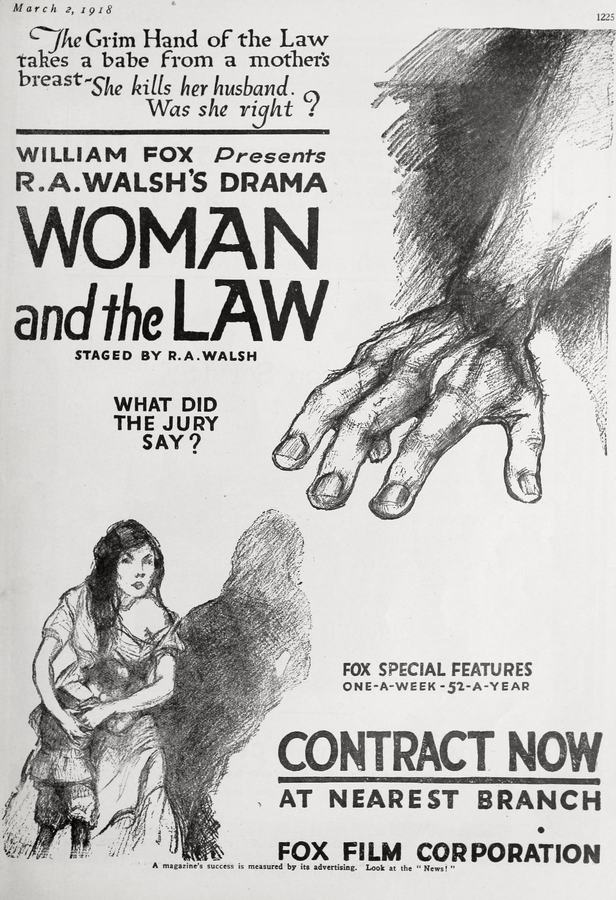
A definitive 5.2/10 rating for a film that redefined the boundaries of cult cinema. The Woman and the Law remains a cornerstone of transgressive art.
From the flickering shadows of the early 20th century emerges The Woman and the Law, a cinematic artifact that, despite its vintage, resonates with a timeless, visceral power. Directed by the prodigious Raoul Walsh, a filmmaker whose career would span decades and genres, this 1918 drama plunges into the tumultuous waters of domestic betrayal and the profound, often tragic, depths of maternal love. It's a film that, even a century later, compels us to consider the immutable conflicts between societal decree and the primal human heart, particularly when that heart beats with a mother's fierce devotion.
The narrative unfurls with the deceptive calm of a well-ordered life. Blanquetta Del Castillo, portrayed with an arresting intensity by Miriam Cooper, is a South American heiress who finds marital contentment with Jack La Salle, played by John Laffe. Their life in New York City is depicted as a tableau of quiet happiness, soon made complete by the arrival of their son, Jack Jr. This idyllic beginning, however, is merely a prelude to a storm of human frailty and devastating consequence. Walsh, even in these nascent years of filmmaking, demonstrates a keen understanding of dramatic irony, setting up a seemingly perfect world only to dismantle it piece by agonizing piece.
The serpent in this domestic Eden arrives in the form of Josie Sabel, a character embodying the allure and danger of societal transgression, played by Peggy Hopkins Joyce. Jack La Salle, succumbing to the temptations of an illicit affair, begins to neglect Blanquetta, his attention and affection siphoned away by his notorious mistress. The film masterfully conveys Blanquetta’s growing isolation and confusion, her silent suffering a testament to Cooper’s expressive power. We witness her journey from loving wife to a woman increasingly aware of her husband's perfidy, her world slowly contracting around her.
The betrayal is not just emotional; it becomes an existential threat to Blanquetta’s identity and her role as a mother. The ultimate transgression, the one that shatters any remaining illusion of civility, is Jack Sr.’s audacious act of taking their young son to Josie Sabel's apartment. This is not merely an act of infidelity; it is a profound violation of the sanctity of their family, a deliberate provocation that crosses an unforgivable line. Blanquetta’s subsequent decision to file for divorce is less an act of pique and more a desperate struggle to reclaim her dignity and, more importantly, to protect her child from the moral decay that now permeates her husband's life.
The legal proceedings that follow are a stark portrayal of the era’s judicial system grappling with complex domestic disputes. The court's ruling, dividing custody of Jack Jr. between his parents, is presented not as a solution but as a further torment. It highlights the inherent limitations of legal frameworks in addressing the intricate emotional bonds of a family. For Blanquetta, this decision means relinquishing her son for periods, an agonizing separation made worse by the knowledge of his father's morally compromised lifestyle. The film subtly critiques the notion that a child can be neatly bisected, emotionally or physically, to satisfy legal mandates.
As the time approaches for little Jack's departure from his father, the tension ratchets up to an unbearable pitch. Jack Sr.'s declaration that he will never return the boy to his mother is the final, cruel twist of the knife. This act of paternal tyranny, driven by spite and possessiveness rather than genuine concern for his son's well-being, pushes Blanquetta beyond the brink. It is a moment that echoes the desperate choices faced by characters in other melodramas of the period, such as The Warning or The Penitentes, where individuals are forced to extreme measures to uphold what they perceive as moral righteousness or to protect their loved ones. Here, Blanquetta's plight is heightened by the direct threat to her child.
The decision Blanquetta makes in this moment of utter despair — to shoot and kill her faithless husband — is the film's shocking climax. It is an act born not of malice, but of a tortured mother's desperate desire to protect her child from a life she deems destructive and morally bankrupt. Miriam Cooper's portrayal of this internal struggle, culminating in the tragic deed, is nothing short of masterful. Without dialogue, she conveys the seismic shift from profound grief to resolute, albeit tragic, action. This is the kind of raw, unflinching emotionality that defined the best of silent cinema, demanding an engaged interpretation from the audience.
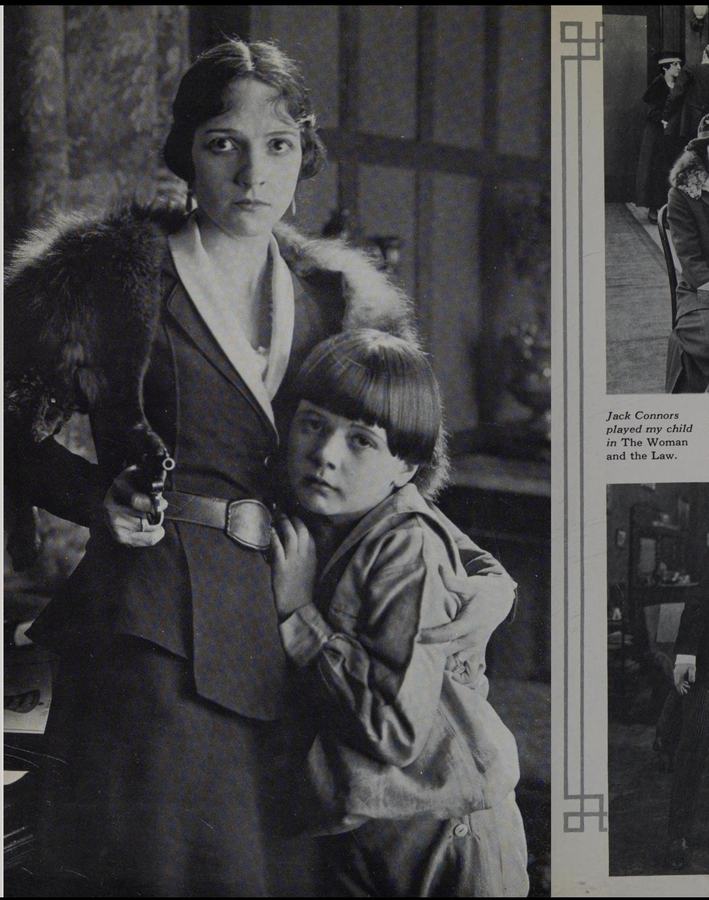
The ensuing trial is where The Woman and the Law truly distinguishes itself as a commentary on societal values. The courtroom scenes are not merely procedural; they become a battleground for competing notions of justice. On one side, the strict letter of the law demands retribution for murder. On the other, the profound human element – Blanquetta's overwhelming maternal instinct – pleads for understanding. The jury, ultimately moved by Blanquetta's desire to love and protect her son, delivers a verdict of acquittal. This conclusion, while potentially controversial even then, speaks volumes about the societal empathy for a mother's plight, suggesting that some acts, born of ultimate desperation and love, transcend conventional legal judgment.
Raoul Walsh, credited here as the writer, and likely a guiding force in its direction, demonstrates his nascent talent for crafting compelling narratives with strong emotional cores. While his later career would be marked by sprawling epics and gritty gangster films, The Woman and the Law showcases his ability to focus on intimate human drama. His direction, though constrained by the technical limitations of the era, effectively uses visual storytelling to convey character emotion and plot progression. The pacing, the use of close-ups (where available and appropriate for the time), and the staging of dramatic confrontations all speak to a director with a clear vision.
Walsh's work here, in its exploration of moral ambiguity and the consequences of passion, finds echoes in other films that delve into complex human dilemmas. One might draw a parallel to the profound questions of justice and societal judgment explored in Victor Hugo’s narratives, brought to the screen in adaptations like Les Misérables (1917). Both works ponder whether the law, in its rigidity, can truly encompass the multifaceted nature of human experience and motivation. Similarly, the film's examination of personal struggle and the pursuit of a moral path against overwhelming odds can be seen in films like Body and Soul, which often grappled with the spiritual and ethical dimensions of individual choices.
Miriam Cooper's performance as Blanquetta is the beating heart of this film. Her ability to convey profound sorrow, righteous anger, and ultimate desperation through gesture, posture, and facial expression is truly remarkable. In an age before synchronized sound, the actor's body and face were the primary instruments of emotional communication, and Cooper proves herself a master of this craft. Her Blanquetta is not a passive victim but a woman driven to extremes by circumstance and an unwavering commitment to her child.
John Laffe, as the errant Jack La Salle, effectively portrays the callous indifference and ultimate self-destruction of a man consumed by his own desires. His character's descent into moral depravity serves as a stark counterpoint to Blanquetta's escalating anguish. Peggy Hopkins Joyce as Josie Sabel, the catalyst for much of the drama, embodies the 'other woman' archetype of the era, a figure of dangerous allure and social disruption. While the supporting cast – including Ramsey Wallace, Jack Connors, Lewis Dayton, Lucille Southerwaite, Winifred Allen, Agnes Neilson, and George Humbert – provides solid contributions, it is Cooper's magnetic presence that anchors the film and elevates it beyond mere melodrama.
Beyond its dramatic plot, The Woman and the Law offers a fascinating glimpse into the social mores of the late 1910s. It tackles themes of divorce, infidelity, and maternal rights at a time when these issues were still highly contentious and often stigmatized. The film’s sympathetic portrayal of Blanquetta, and particularly the jury’s ultimate acquittal, suggests a societal undercurrent of empathy for women trapped in impossible situations, especially when the welfare of a child is at stake. It subtly challenges the patriarchal norms that often left women with limited recourse in marital disputes, particularly concerning custody.
The film's exploration of family dynamics and the profound impact of parental conflict on children resonates with stories told throughout cinematic history. From the challenges faced by protagonists in Her Father's Son to the emotional barriers depicted in The Wall Between, the struggle for familial harmony and identity remains a powerful narrative engine. The Woman and the Law, through its stark portrayal of a family torn asunder, provides an early, potent example of this enduring theme.
In conclusion, The Woman and the Law stands as more than just a historical curiosity. It is a potent drama that, through the compelling performance of Miriam Cooper and the insightful direction (and writing) of Raoul Walsh, explores the raw edges of human emotion and the complex interplay between personal morality and legal justice. It reminds us that some battles are fought not with words, but with the very fabric of one's being, and that a mother's love, when pushed to its absolute limit, can indeed move mountains – or, in this case, a jury. This silent film speaks volumes, its message echoing across the decades with undiminished power, cementing its place as a significant work in early American cinema.
IMDb —
1928
Community
Log in to comment.