DbcultAccessing Vault...
8/10
Senior Film Conservator
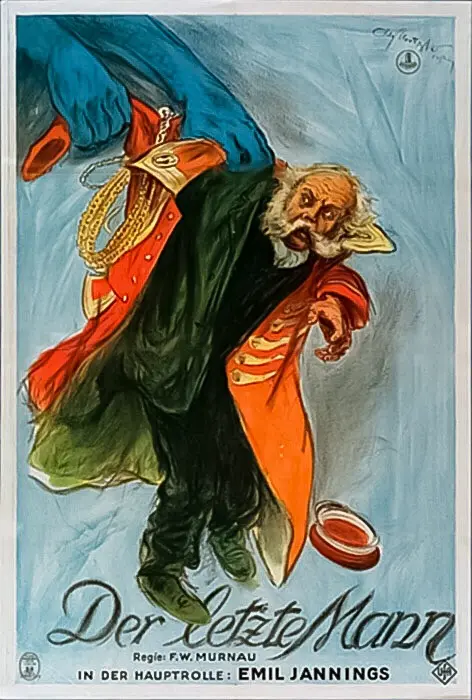
A definitive 8/10 rating for a film that redefined the boundaries of cult cinema. The Last Laugh remains a cornerstone of transgressive art.
Stepping into the world of F.W. Murnau’s The Last Laugh (1924) is akin to entering a waking dream, a profound exploration of human frailty and societal cruelty, rendered with a visual poetry that transcends the limitations of its silent medium. This isn't merely a film; it's a visceral experience, a masterclass in cinematic storytelling that eschews intertitles for an almost symphonic reliance on imagery, movement, and the unparalleled performance of Emil Jannings. It’s a work that asks us to consider what defines us, what happens when those definitions are violently stripped away, and the brutal indifference of a world obsessed with outward appearances.
At its heart, The Last Laugh presents the devastating narrative of an aging doorman (portrayed with heartbreaking authenticity by Emil Jannings), a man whose entire identity is inextricably woven into the fabric of his magnificent uniform and the prestigious position it signifies at a grand hotel. Every morning, he strides forth, a figure of imposing dignity, his chest puffed out, medals gleaming, a beacon of authority and stability in the bustling urban landscape. He is not merely an employee; he is the embodiment of the hotel's grandeur, a living monument to its luxurious facade. His uniform is his armor, his status, his very self. It commands respect from passersby, admiration from his neighbors, and a deep-seated pride within himself. This initial portrayal, rich with detail and subtle characterization, meticulously establishes the profound significance of his role, making his subsequent fall all the more harrowing.
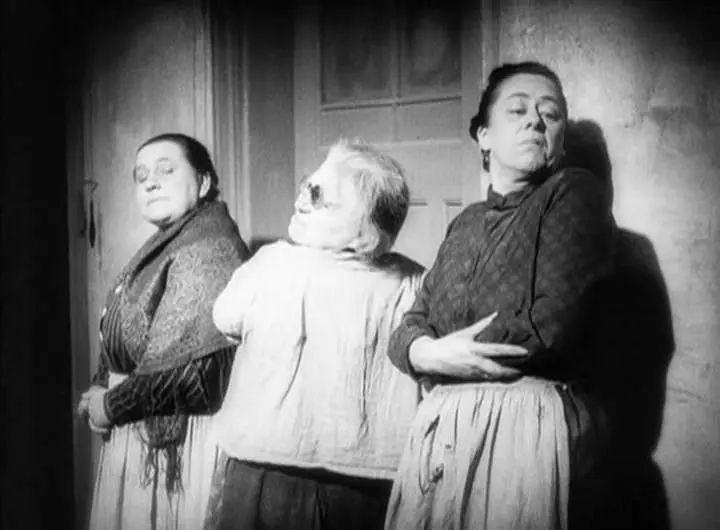
The narrative’s tragic pivot occurs when, due to his advancing age and perceived infirmity, he is unceremoniously stripped of his coveted position. The uniform, once a symbol of power, becomes a painful memory, replaced by the drab, humiliating attire of a washroom attendant. This demotion isn't just a change in employment; it's an existential crisis. The loss of his uniform is the loss of his identity, his social standing, and ultimately, his dignity. The world, which once greeted him with deference, now looks upon him with scorn and pity. His neighbors, who once admired him, now mock him. His family, once proud, now shies away. The film masterfully illustrates how swiftly society can turn on an individual once their perceived value diminishes, reducing a man to a mere husk of his former self.

It is impossible to discuss The Last Laugh without extolling the monumental performance of Emil Jannings. His portrayal of the doorman is a tour de force, a masterclass in physical acting and emotional expression. Without the aid of spoken dialogue (and remarkably, with only a single, strategically placed intertitle for a letter), Jannings conveys a breathtaking spectrum of emotions: pride, joy, confusion, shame, despair, and a flicker of defiant resilience. His hunched shoulders, his trembling hands, the profound sadness in his eyes – every gesture, every facial contortion, speaks volumes. We witness his initial swagger, the gradual erosion of his confidence, the desperate attempts to cling to his former glory, and the eventual, crushing weight of his humiliation. His performance is so raw and vulnerable that it transcends the screen, drawing the audience into his profound agony. It’s a testament to the power of silent cinema when an actor can communicate such complex internal states with such clarity and emotional impact.
The supporting cast, including Max Hiller, Carl Schenstrøm, Olaf Storm, and Maly Delschaft, contribute to the tapestry of societal judgment, acting as a mirror reflecting the doorman's diminished status. Their reactions, from outright mockery to subtle shunning, amplify the protagonist's isolation and the film's central theme of social ostracization. Even in moments of fleeting kindness, such as from the night watchman, the underlying pathos of the doorman's situation is never truly alleviated. The interplay between Jannings and these secondary characters paints a stark picture of a community quick to celebrate status and equally quick to condemn its loss.
Murnau’s directorial genius is nowhere more evident than in his revolutionary use of the 'unchained camera' (entfesselte Kamera). Freed from the static confines of the tripod, the camera in The Last Laugh becomes a dynamic, almost sentient entity, gliding, swooping, and tracking with unprecedented fluidity. This technique was groundbreaking for its era, allowing the audience to literally move through the doorman’s subjective experience. We follow him up and down the hotel's grand staircase, through the bustling streets, and into the claustrophobic confines of his new, lowly workplace. The camera’s movement mirrors his emotional state: confident and sweeping when he is proud, erratic and disorienting during his moments of despair, and tightly focused on his face as he grapples with humiliation.
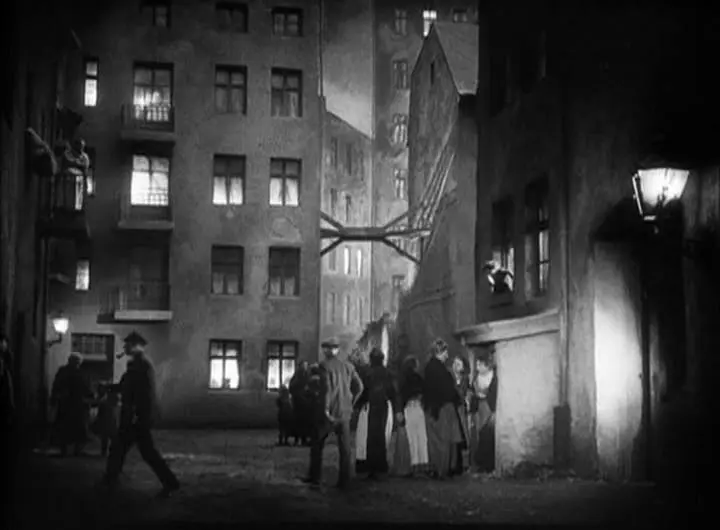
This fluid cinematography, orchestrated by Karl Freund, is not merely a stylistic flourish; it is integral to the film’s narrative and emotional core. It eliminates the need for most intertitles, allowing the story to unfold almost entirely through visual cues. The camera acts as our guide, our empathic eye, immersing us fully in the doorman’s world without the interruption of text. This innovative approach set a new standard for cinematic expression, influencing countless filmmakers for decades to come. One might draw a parallel to the bold visual narratives seen in works like The Treasure of the Sea, where visual spectacle is paramount, but Murnau takes it a step further, making the camera an active participant in the emotional journey.
The Last Laugh is often cited as a pinnacle of German Expressionist cinema, though it also subtly departs from some of its more overt stylistic hallmarks. While it lacks the angular, distorted sets of films like The Darkest Hour (which often featured exaggerated, non-realistic backdrops), it certainly captures the movement's thematic essence: a deep psychological exploration, often imbued with a sense of dread, alienation, and a critique of societal structures. The film uses dramatic lighting, stark contrasts, and symbolic imagery to externalize the doorman’s internal turmoil. The grand, imposing architecture of the hotel, for instance, initially represents his status, but later becomes a symbol of his exclusion and the unattainable world he once inhabited. The visual metaphors are potent, from the doorman’s uniform itself to the swirling, disorienting shots that convey his drunken despair.
Carl Mayer’s screenplay, almost entirely devoid of dialogue, relies on this visual storytelling to convey character and plot. His genius lies in crafting a narrative that is both universal in its themes and deeply personal in its execution. The lack of intertitles forces the audience to engage more deeply with the visual cues, to interpret emotions from a glance, a posture, a movement. This minimalist approach amplifies the emotional impact, making the doorman's suffering palpable and immediate. It's a testament to Mayer's skill that such a complex emotional arc could be communicated so effectively without words. This stark, psychological depth can be seen as a precursor to the intense character studies found in films like Kinder der Finsternis - 1. Der Mann aus Neapel, where the inner world of the protagonist dominates the narrative.
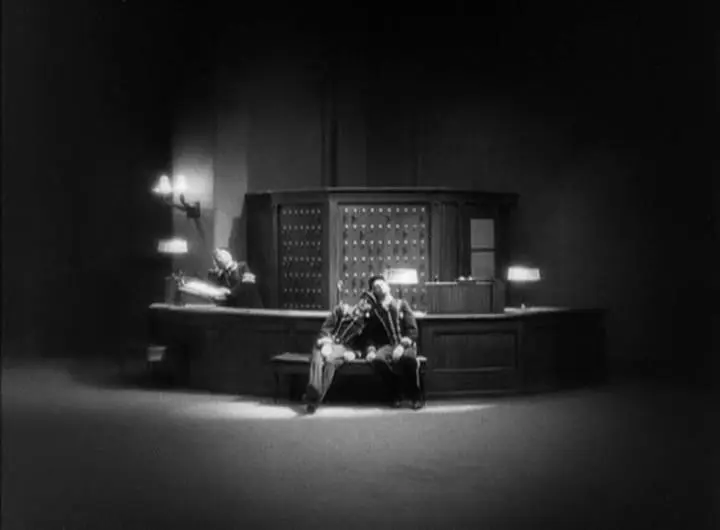
The Last Laugh is a profound meditation on the fragility of identity and the brutal impact of social status. The doorman’s uniform is not just clothing; it is his social skin, his very essence. When it is removed, he becomes invisible, worthless in the eyes of his community. This theme resonates powerfully, speaking to the universal human need for belonging and recognition, and the devastating consequences when these are denied. The film exposes the superficiality of a society that values individuals based on their occupation and outward display of success, rather than their inherent worth.
The film’s portrayal of societal cruelty is unflinching. The doorman's neighbors, initially deferential, quickly turn to mockery and disdain. His family, once proud, now feels shame. This rapid shift in attitude highlights the harsh realities of social judgment and the lack of empathy often found in communities. The film suggests that society is quick to build up, but even quicker to tear down, especially those who fall from grace. This stark depiction of social judgment can be compared to the moral dilemmas and community pressures explored in films like Nobleza gaucha, where honor and reputation are paramount.
Dignity, once a bedrock of the doorman's existence, becomes a fleeting memory. His desperate attempts to reclaim it, even if only by secretly donning his old uniform, are heart-wrenching. The film brilliantly captures the psychological toll of humiliation, the way it corrodes a person's spirit and self-worth. It forces us to confront uncomfortable questions about our own perceptions of others and the value we place on external markers of success.
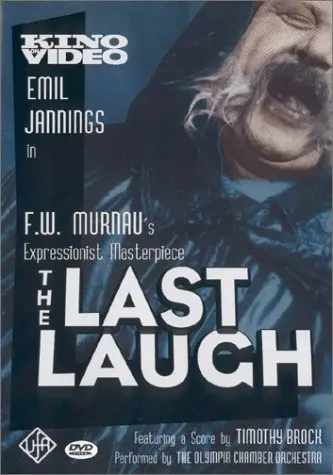
Perhaps the most debated aspect of The Last Laugh is its notorious epilogue. After enduring an almost unbearable sequence of humiliation and despair, the doorman inexplicably inherits a vast fortune, reversing his fortunes overnight. He returns to the hotel, now a benevolent millionaire, showering his former colleagues with food and drink, regaining a semblance of his lost dignity, albeit through the sheer luck of circumstance. This abrupt shift from tragedy to fairytale ending has divided critics and audiences for decades. Some view it as a cynical concession to studio demands, a tacked-on happy ending to appease a public unaccustomed to such bleak realism. Indeed, Carl Mayer himself reportedly disavowed this ending, preferring the film to conclude with the doorman's profound despair.
However, others interpret the epilogue as a brilliant, albeit darkly ironic, commentary on the very themes the film explores. It underscores the arbitrary nature of social status and the superficiality of societal respect. The doorman regains his standing not through any personal triumph or inherent change, but through wealth – the ultimate symbol of power in a capitalist society. His newfound respect is bought, not earned, highlighting the film’s critique of a world that values money over human dignity. It's a 'last laugh' indeed, but one that rings hollow, a bitter jest at the expense of genuine human connection and worth. This thematic ambiguity and the sudden reversal of fortune could be seen in comparison to the dramatic shifts in character status found in narratives like The Man Who Came Back, though usually with more explicit justification.
The Last Laugh remains a monumental achievement in cinematic history, a testament to the power of visual storytelling and the enduring talent of its creators. Its influence on filmmaking is undeniable. Murnau's 'unchained camera' technique revolutionized cinematography, paving the way for more dynamic and immersive visual narratives. Filmmakers continue to study its innovative camera movements and its profound emotional depth. The film's ability to convey complex psychological states without dialogue set a benchmark for silent cinema and continues to inspire contemporary directors.
Beyond its technical innovations, the film’s timeless themes of identity, social status, and the human need for dignity continue to resonate with audiences. In an era where personal branding and outward appearances often dictate perceived worth, the doorman's tragic tale serves as a powerful cautionary reminder. It compels us to look beyond the uniform, the job title, or the bank account, and to recognize the inherent dignity in every individual. The film’s power lies in its ability to evoke profound empathy, forcing us to confront uncomfortable truths about ourselves and the societies we inhabit. The exploration of social structures and individual struggle finds echoes in various silent films that sought to depict the human condition, from the class distinctions in Dukes and Dollars to the personal trials of A Rough Passage.
In conclusion, F.W. Murnau’s The Last Laugh is far more than a historical artifact; it is a living, breathing work of art that continues to provoke, challenge, and move audiences. It is a cinematic experience that proves the profound capabilities of the silent film era, demonstrating how powerful narratives can be crafted through pure visual artistry and stellar performances. Emil Jannings’ unforgettable portrayal anchors the film, making the doorman’s journey through pride, humiliation, and ambiguous redemption an intensely personal and universally resonant experience. The revolutionary camera work, the stark yet evocative set designs, and Carl Mayer's psychologically incisive script combine to create a film that is both a product of its time and remarkably ahead of it.
Whether one views the epilogue as a forced happy ending or a stroke of cynical genius, it does not diminish the profound impact of the preceding narrative. The film's unflinching gaze into the human soul, its critique of superficial societal values, and its technical brilliance ensure its place as an indelible masterpiece. It compels us to consider the fine line between respect and ridicule, identity and illusion, and ultimately, the enduring quest for dignity in a world often too quick to judge and dismiss. The Last Laugh is a must-see for anyone interested in the history of cinema, the power of performance, or the timeless exploration of the human condition. It’s a film that stays with you, long after the final frame has faded to black.
IMDb —
1923
Community
Log in to comment.