DbcultAccessing Vault...
Cult Review
Senior Film Conservator
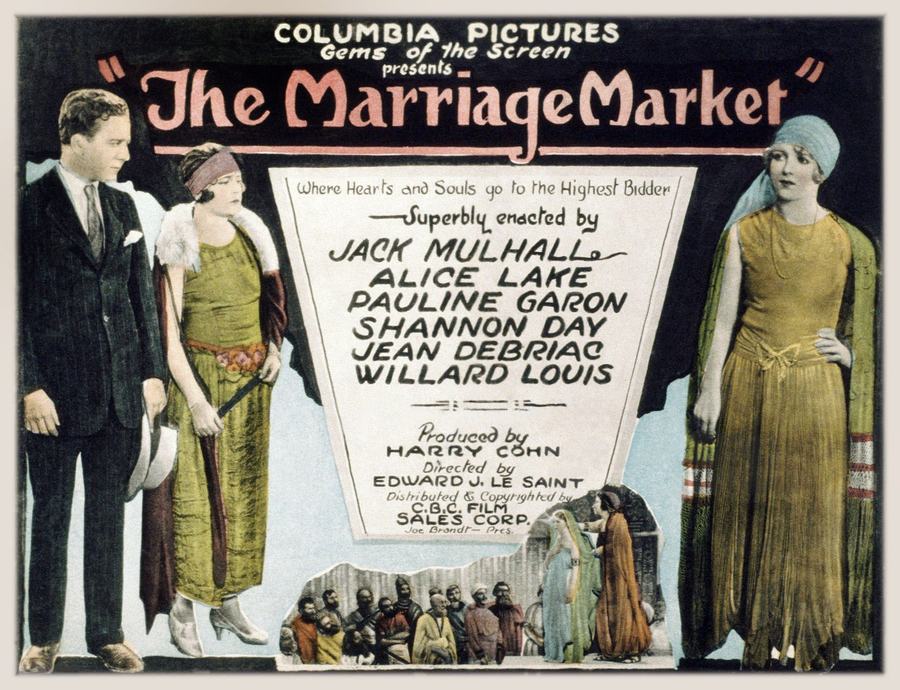
Stepping back into the cinematic landscape of 1923, one encounters a fascinating artifact in 'The Marriage Market,' a film that, despite its century-old vintage, still resonates with surprising thematic depth concerning female agency and the often-fraught path to self-discovery. This cinematic offering, penned by the collaborative talents of John Stone and Evelyn Campbell, plunges us headfirst into the effervescent yet restrictive world of Theodora Bland, a character who embodies the nascent spirit of the flapper era. Her story is not merely a quaint period piece; it’s a vibrant, sometimes poignant, exploration of a young woman grappling with the expectations of her station versus the undeniable stirrings of her own rebellious heart.
The narrative’s genesis lies in Theodora’s unceremonious expulsion from a high-society East-coast boarding school. This isn't just a plot device; it's a symbolic severance from the rigid, conventional path laid out for women of her standing. Pauline Garon, in the pivotal role of Theodora, delivers a performance that manages to convey both youthful exuberance and an underlying vulnerability. Her expressive eyes and gestures, characteristic of the silent film era, paint a vivid portrait of a young woman teetering on the precipice of adulthood, thrust into a series of 'amorous adventures and misadventures' that serve as her unconventional education. Garon’s portrayal is key to the film's success, anchoring the sometimes-farcical situations with a genuine sense of a character's internal journey.
Theodora Bland is, in many ways, a quintessential flapper, yet with nuances that elevate her beyond mere archetype. She possesses the characteristic bobbed hair, daring fashion sense, and an undeniable craving for freedom that defined the generation. However, her journey is less about superficial rebellion and more about a profound search for authentic connection and self-worth beyond the confines of inherited wealth. The 'marriage market' itself is presented not just as a societal construct, but as a deeply personal challenge for Theodora. She must navigate a landscape populated by suitors whose intentions range from genuine affection to purely transactional aspirations, reflecting a keen social commentary on the era's attitudes towards matrimony as an economic and social transaction rather than a union of hearts.
The supporting cast meticulously builds the world around Theodora. Willard Louis, with his commanding presence, often embodies the patriarchal or traditional forces at play, representing the older generation's expectations. Kate Lester, a veteran of the screen, brings a certain gravitas and often a touch of world-weariness to her roles, providing a counterpoint to Theodora's youthful idealism. Vera Lewis and Jean De Briac contribute to the varied tapestry of characters Theodora encounters, each interaction subtly shaping her perspective. Alice Lake, Kasha Haroldi, Marc B. Robbins, Shannon Day, Mayme Kelso, and Jack Mulhall, though perhaps with less screen time than Garon, collectively create an immersive environment, their performances adding texture and verisimilitude to the film's social fabric. Each face, each gesture, contributes to the overall impression of a society in flux, grappling with changing morals and burgeoning freedoms.
The directorial choices in 'The Marriage Market' are particularly noteworthy for their ability to maintain a brisk pace while allowing moments for emotional resonance. Silent films often relied heavily on visual storytelling, and this picture is no exception. The use of elaborate sets and period-accurate costumes transports the viewer directly into the opulent, yet sometimes stifling, environments of the wealthy in the 1920s. The cinematography, while perhaps not groundbreaking for its time, effectively captures the energy of the era, from bustling cityscapes to intimate drawing-room dramas. The intertitles, crucial for conveying dialogue and internal monologue, are skillfully integrated, providing narrative clarity without disrupting the flow of the visual narrative.
John Stone and Evelyn Campbell's screenplay is a testament to the enduring power of character-driven storytelling. They craft a narrative that, while ostensibly a romantic comedy, subtly critiques the societal pressures placed upon young women of means. Theodora's journey is not a straightforward path to matrimonial bliss; it's a winding road filled with misunderstandings, dashed hopes, and moments of genuine peril. The writers deftly balance lighthearted humor with moments of genuine dramatic tension, ensuring that Theodora's quest for love and independence feels both entertaining and meaningful. Unlike some contemporary melodramas, the film avoids excessive sentimentality, opting instead for a portrayal of a woman learning through experience.
At its core, 'The Marriage Market' is a nuanced exploration of a young woman's struggle for self-determination in a society that still largely defined women by their marital status and economic prospects. Theodora's expulsion from school is merely the catalyst for her true education: learning to discern genuine affection from superficial charm, and understanding the true value of her own independence. This theme echoes the broader societal shifts of the 1920s, where women were increasingly challenging traditional roles and seeking greater autonomy, both personally and professionally.
The film cleverly juxtaposes the glittering facade of wealth with the often-hollow reality of relationships built on convenience rather than love. Theodora, despite her privileged background, finds herself questioning the very foundations of her world. This internal conflict is what elevates 'The Marriage Market' beyond a simple romantic comedy, imbuing it with a layer of social commentary that remains surprisingly relevant. One might draw a faint parallel to the societal pressures depicted in a film like Mrs. Thompson, though 'The Marriage Market' injects a more overt sense of youthful rebellion and a quest for personal agency into its narrative.
'The Marriage Market' stands as a compelling example of early American silent cinema's ability to capture the zeitgeist of its era. It's a film that, while entertaining, also serves as a valuable historical document, reflecting the anxieties and aspirations of a generation undergoing profound social change. Theodora Bland, through Pauline Garon's spirited performance, becomes an emblem of the nascent feminist spirit of the 1920s, a woman determined to forge her own path, even if it means defying convention and risking societal censure.
The film's comedic elements, while sometimes broad, are tempered by the genuine emotional arc of its protagonist. It's a balancing act that the director handles with considerable skill, ensuring that the audience remains invested in Theodora's fate. While not a cinematic spectacle on the scale of, say, The Mark of Zorro, its intimate focus on character and social dynamics gives it a unique charm. The film's strength lies in its relatability; who hasn't, at some point, felt the pressure to conform, or yearned for the freedom to define their own happiness?
In many ways, 'The Marriage Market' is a precursor to later films that would more explicitly tackle themes of female liberation, but its subtle yet firm stance on a woman's right to choose her destiny makes it a significant entry in the canon of early cinema. It doesn't preach, but rather invites the audience to empathize with Theodora's predicament and celebrate her small victories. The film's portrayal of love, while framed within the romantic conventions of the time, suggests a deeper desire for partnership built on mutual respect and understanding, rather than purely on economic or social standing.
The enduring appeal of 'The Marriage Market' lies in its timeless questions about identity, love, and societal expectations. It's a testament to the power of silent film to convey complex emotions and narratives without the aid of spoken dialogue, relying instead on the artistry of its performers and the ingenuity of its creators. For those curious about the social fabric of the Roaring Twenties, or simply seeking a compelling story of a young woman finding her voice, this film offers a delightful and insightful journey. It stands as a vibrant snapshot of an era, a mirror reflecting both the glamour and the underlying tensions of a society on the cusp of profound change, demonstrating that even in the early days of cinema, stories of human complexity and resilience were being told with compelling artistry.
The meticulous attention to detail in costume and set design, typical of the period, further immerses the viewer. Each outfit worn by Pauline Garon's Theodora is not merely fashion; it's a statement, reflecting her evolving character and her defiance of rigid norms. The contrast between her rebellious attire and the more conservative dress of the older generation visually underscores the generational divide that the film subtly explores. This visual language, combined with the emotive performances, creates a rich tapestry that draws the audience into Theodora's world. While perhaps not as overtly daring as some European counterparts like Der Tänzer in terms of cinematic innovation, 'The Marriage Market' expertly utilizes the conventions of American silent film to tell a distinctly American story of freedom and aspiration.
The work of John Stone and Evelyn Campbell, the writers, deserves particular commendation for crafting a plot that, despite its potential for melodrama, remains grounded in relatable human experience. They avoid the pitfalls of caricature, even when depicting some of the more unsavory characters who populate Theodora's 'market.' Instead, they present a nuanced view of human motivations, from genuine affection to cynical opportunism. This narrative sensibility allows the film to transcend its genre, offering insights that resonate far beyond its immediate context. The development of Theodora's character, from a naive heiress to a more self-aware individual, is handled with a delicate touch, allowing her growth to feel organic and earned rather than simply imposed by plot contrivances. It's a journey that, like life itself, is full of unexpected turns and profound lessons.
Ultimately, 'The Marriage Market' is more than just a historical curiosity. It is a vibrant, engaging piece of cinema that offers a window into a pivotal moment in social history and the evolving role of women. Its themes of independence, the search for true love amidst societal pressures, and the journey of self-discovery remain as pertinent today as they were a century ago. It reminds us that the human heart's desires, and the societal structures that often complicate them, are timeless subjects for artistic exploration. The film is a quiet triumph, a testament to the power of early cinema to entertain, provoke thought, and ultimately, to endure.
IMDb 7
1924
Community
Log in to comment.