DbcultAccessing Vault...
5.7/10
Senior Film Conservator
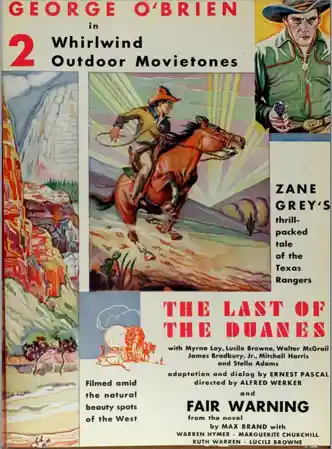
A definitive 5.7/10 rating for a film that redefined the boundaries of cult cinema. The Last of the Duanes remains a cornerstone of transgressive art.
Alright, so you’re thinking about diving into a 1930 Western, The Last of the Duanes? Look, this one isn't for your casual Friday night popcorn crowd. If you love digging into the early days of talkies, or you’re a real Zane Grey enthusiast, then yeah, give it a shot. Otherwise, if you expect modern pacing or crisp sound, you’re probably gonna want to skip it. You might find yourself a little bewildered.
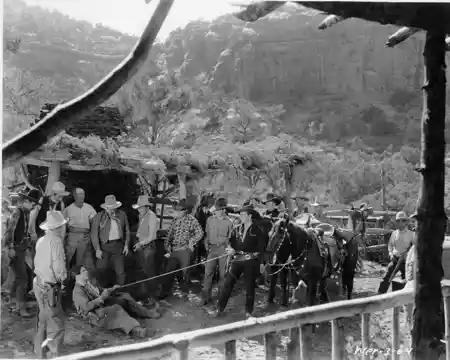
The story kicks off pretty straight, as these old Westerns often do. Buck Duane, our hero, wastes no time in avenging his father’s murder. He guns the guy down. This means, naturally, he’s gotta hit the road, becoming an outlaw himself. It’s a familiar setup, really.
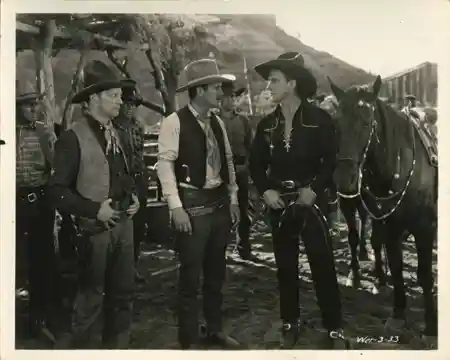
Then we meet Ruth, a past love, stuck with this outlaw named Bland. Buck, being Buck, decides he has to save her. This is where the movie starts doing some interesting, if a little clumsy, footwork. The whole rescue part feels a bit… staged, you know? Like everyone knew where their marks were, even the horses.
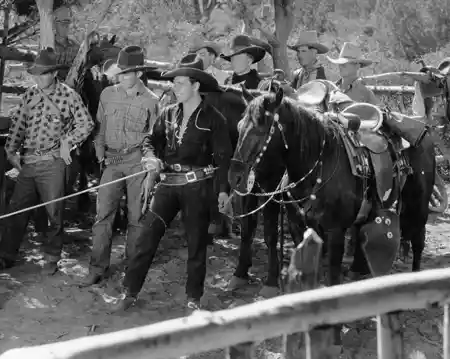
But then Bland’s wife shows up. And let me tell you, she’s something else. This isn’t your typical demure damsel. She’s got a real thing for Buck, and it’s surprisingly direct for a film from 1930. The way she just sort of *throws herself* at him? It made me pause. You don’t see that kind of forwardness often in these early films. It almost feels like a different movie for a few minutes there. Like they snuck in a little forbidden romance subplot, which, good for them, I guess? But it also feels a little out of place with the dusty cowboy justice stuff.
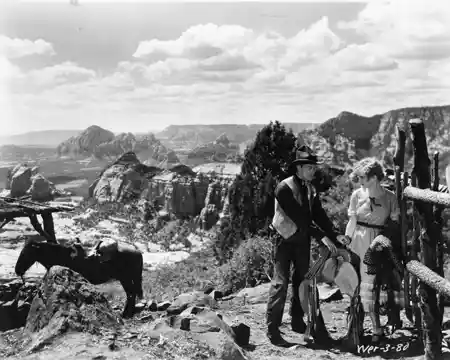
George O’Brien as Buck Duane is… well, he’s got the stoic cowboy thing down. Lots of staring off into the middle distance. Myrna Loy, though, as Bland’s wife, she’s the one who really catches your eye. Even in this early role, she has this sparkle. You can see hints of the star she’d become. She’s got this presence, even when the scene around her feels a bit stiff.
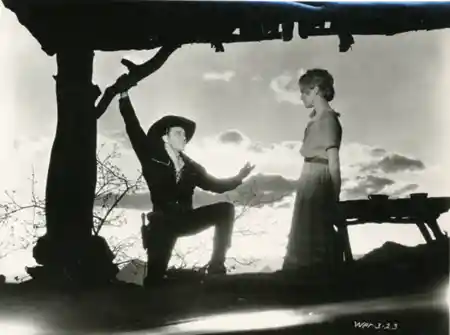
The sound quality, as you’d expect for 1930, is a bit rough. Dialogue sometimes feels like it’s being shouted from a different room. The outdoor shots are mostly fine, vast and empty, but then you get these interiors that are clearly sets, and the contrast is pretty stark. You can almost feel the limited budget pushing against the grand Western narrative.
One scene, where Buck is riding away from the law, just goes on for a while. Not much happens, just a guy on a horse. It’s like they needed to pad the runtime, or maybe they just really liked that shot of the horse. The silence here starts to feel less atmospheric and more like someone forgot to yell 'cut!'
Honestly, the movie gets a noticeable boost whenever Myrna Loy is on screen. She injects some actual life into what could otherwise be a very by-the-numbers revenge tale. Her character’s bold interest in Buck is probably the most memorable, and frankly, the most interesting thing about the whole film.
It’s not a masterpiece, not by a long shot. But it’s a curious piece of cinematic history. You get to see a young Myrna Loy. You get to see how Westerns were starting to find their voice in the talkie era. And you get a weird, almost forgotten, romantic entanglement thrown in for good measure. A bit messy, a bit charming.
IMDb 6.1
1933
Community
Log in to comment.