DbcultAccessing Vault...
Cult Review
Senior Film Conservator
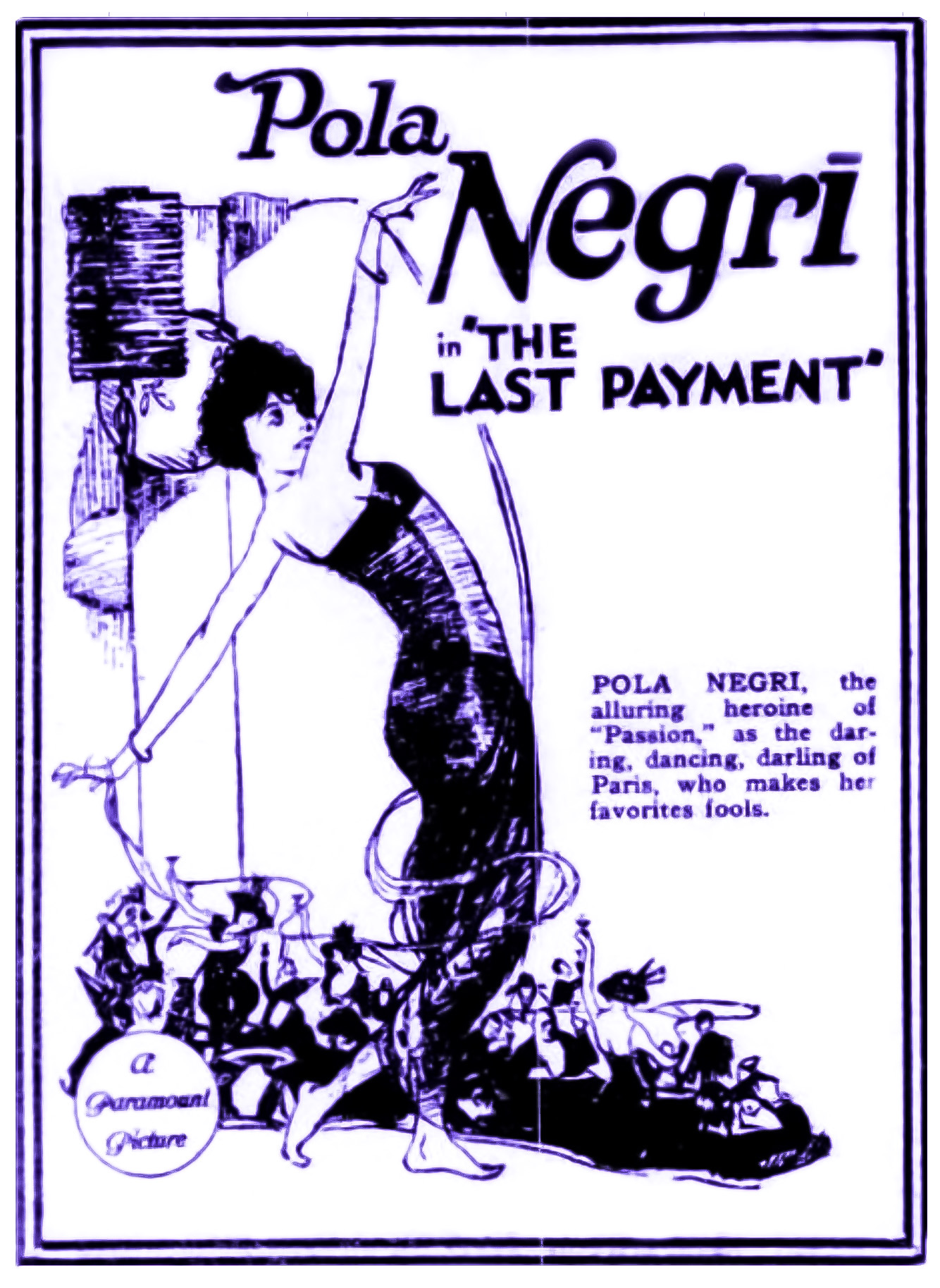
There's a particular kind of allure to silent cinema, a captivating mystique that transcends spoken dialogue, relying instead on the raw power of visual storytelling and the profound expressiveness of its stars. Georg Jacoby's 1919 drama, 'The Last Payment' (original German title: 'Das letzte Geld'), stands as a compelling testament to this era, a film that, even a century later, resonates with a potent emotional undercurrent. It's a narrative woven from threads of regret, escape, and the relentless pursuit of an elusive peace, all brought to vivid life by the magnetic presence of Pola Negri.
The film plunges us into the tumultuous world of a woman ensnared by her own past, a denizen of Paris's bohemian Latin Quarter whose life has been a tapestry of intense, often scandalous, love affairs. This isn't merely a tale of romantic entanglements, but a profound exploration of their cumulative weight, the psychological burden that eventually compels her to seek radical change. Her decision to flee the vibrant, yet suffocating, embrace of Parisian society for the distant shores of South America isn't a whimsical choice; it's an act of desperation, a last-ditch effort to bury a history that threatens to consume her entirely. It's a narrative that echoes the internal struggles seen in films like The Soul of a Child, where early life experiences cast long shadows over future decisions, though 'The Last Payment' delves into the more immediate and visceral consequences of adult choices.
At the heart of 'The Last Payment' is Pola Negri, an actress whose reputation for fiery passion and dramatic intensity was already firmly established by 1919. Here, she delivers a performance that is nothing short of tour-de-force, embodying the complexities of a woman haunted by her choices yet yearning for absolution. Negri's ability to convey a universe of emotion through a mere glance, a subtle shift in posture, or the eloquent tremor of her hands is simply breathtaking. She doesn't just play the role; she inhabits it, allowing us to feel the weight of her character's past affairs, the desperation of her flight, and the fragile hope she clings to in her self-imposed exile. Her portrayal transcends the limitations of the silent medium, communicating a profound internal struggle that would challenge even the most gifted performers today.
Negri's character is not a simple villain or victim; she is a deeply flawed, undeniably human individual navigating a world that often judges women harshly for their independence and their desires. The Latin Quarter, with its artistic fervor and libertine spirit, offered her a certain freedom, but it also became the crucible of her undoing. Her flight to South America is a desperate gamble, a test of whether a change of scenery can truly cleanse a soul burdened by regret. This thematic core, the idea that one can escape geography but not destiny, is masterfully articulated through Negri's nuanced performance.
Director Georg Jacoby, who also contributed to the screenplay with Hans Brennert, crafts a narrative that is both expansive in its scope and intimate in its emotional focus. The transition from the bustling, perhaps suffocating, energy of Paris to the stark, untamed landscapes of South America is handled with visual flair, even within the confines of early cinematic techniques. Jacoby understands that the setting is not merely a backdrop but an active participant in the protagonist's journey. The wildness of her new environment mirrors the untamed aspects of her own spirit, as well as the tumultuous past she desperately seeks to outrun.
The screenplay, attributed to Jacoby and Brennert, demonstrates a keen understanding of human psychology, particularly the enduring power of memory and the societal pressures that can drive individuals to extreme measures. It avoids simplistic moralizing, instead presenting a complex portrait of a woman striving for autonomy and peace. The narrative pacing, a crucial element in silent film, is expertly managed, allowing moments of quiet introspection to breathe alongside dramatic confrontations. The film doesn't rush to judgment, instead inviting the audience to empathize with the protagonist's arduous quest for redemption.
While Pola Negri undeniably commands the screen, the supporting cast provides a crucial framework for her performance. Leopold von Ledebur, Reinhold Schünzel, Harry Liedtke, and Albert Patry each contribute to the film's rich tapestry, portraying characters who either represent the past she's fleeing or the new life she's attempting to build. Their interactions with Negri's character are pivotal, often serving as catalysts for her emotional journey or as reminders of the inescapable nature of her history. The silent film ensemble relied heavily on exaggerated gestures and facial expressions, yet in 'The Last Payment,' there's a commendable restraint that allows for genuine dramatic weight.
The interplay between these actors, though wordless, speaks volumes. We see the lingering affections, the lingering resentments, and the societal expectations that form the invisible chains binding Negri's character. Their performances are carefully calibrated to enhance the central theme of a past that refuses to be buried, making the protagonist's struggle all the more poignant. This intricate web of relationships is reminiscent of the societal pressures explored in Married in Name Only, where external forces dictate personal choices and consequences.
'The Last Payment' exemplifies the sophisticated cinematic language developed during the silent era. The cinematography, though perhaps not as technically advanced as later German Expressionist works, is effective in establishing mood and atmosphere. Close-ups on Negri's face are used judiciously, allowing her expressive eyes to convey fear, longing, and determination. The use of light and shadow, while not overtly dramatic, subtly underscores the psychological states of the characters, particularly during moments of introspection or revelation.
The editing rhythm contributes significantly to the narrative flow, creating a sense of urgency during the escape and a more measured pace as the protagonist attempts to build a new life. The visual contrasts between the crowded, ornate interiors of Paris and the expansive, often stark, exteriors of South America are striking and serve to emphasize the protagonist's journey from one world to another, both physically and emotionally. This visual storytelling is a masterclass in how to convey complex ideas without dialogue, relying purely on composition, performance, and sequencing.
What makes 'The Last Payment' particularly compelling is its timeless exploration of themes that continue to resonate with audiences today. The desire to erase one's past, to escape the consequences of past actions, and to seek a fresh start is a universal human experience. The film delves into the psychological toll of carrying such a burden, and the often-futile attempt to outrun one's own history. It subtly questions whether true redemption can be found through geographical displacement or if it must be forged through internal reckoning.
The film’s portrayal of a woman navigating a world that holds her accountable for her romantic choices speaks volumes about societal norms of the period, yet also touches upon the perennial struggle for personal agency. Her journey is not merely about physical escape but about a spiritual cleansing, a desperate plea for a second chance. This theme of a hidden past bubbling to the surface can be found in various forms across cinema, from the dramatic revelations in The Undercurrent to the more subtle anxieties of characters trying to maintain appearances.
In an era where personal histories are often inescapable due to digital footprints, the concept of a complete disappearance, a total reinvention, feels almost mythical. 'The Last Payment' reminds us of a time when such radical acts of self-exile were perhaps more plausible, yet it also underscores the enduring truth that true peace often comes from confronting, rather than fleeing, one's past. The film doesn't offer easy answers, instead opting for a nuanced portrayal of a woman's desperate struggle for peace in a world that seldom grants it freely.
For enthusiasts of silent cinema, 'The Last Payment' is an essential viewing experience. It showcases Pola Negri at the height of her powers, delivering a performance that is both emotionally raw and exquisitely refined. It is a testament to Georg Jacoby's directorial skill and the evocative power of early German cinema. The film serves as a poignant reminder of the universal human longing for escape, forgiveness, and the elusive promise of a truly clean slate.
Beyond its historical significance, 'The Last Payment' offers a compelling narrative that holds up remarkably well. Its themes of identity, regret, and the search for peace are perennial, ensuring its continued relevance. It's a film that invites introspection, prompting viewers to consider the weight of their own histories and the lengths to which one might go to find solace. The journey of Negri’s character is a powerful meditation on the human condition, a silent scream for redemption that echoes across the decades, proving that some stories need no words to be profoundly felt.
The film's subtle complexities, its refusal to simplify moral quandaries, and its unwavering focus on the protagonist's internal world elevate it beyond mere melodrama. It's a psychological drama of considerable depth, offering a window into the anxieties and aspirations of an era, yet speaking directly to the contemporary soul. Like a long-lost letter, 'The Last Payment' reveals truths about human nature that remain as pertinent now as they were a century ago, solidifying its place as a significant, albeit often overlooked, work of early cinema.

IMDb —
1930
Community
Log in to comment.