DbcultAccessing Vault...
5.6/10
Senior Film Conservator
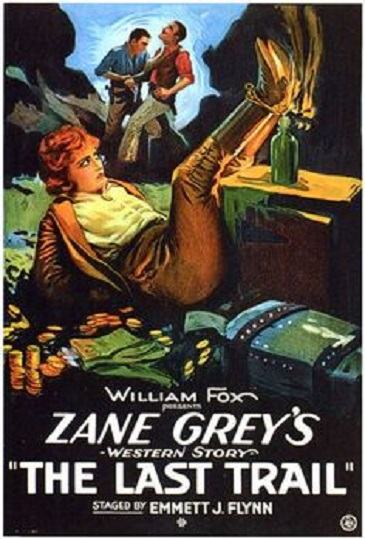
A definitive 5.6/10 rating for a film that redefined the boundaries of cult cinema. The Last Trail remains a cornerstone of transgressive art.
The camera opens on a negative space of inky celluloid into which a single lantern gradually blooms—an omen that The Last Trail will treat light itself as contraband. Director John K. Wells, armed with Zane Grey’s yarn and Jules Furthman’s scalpel-sharp intertitles, fashions a western less concerned with drawls and duels than with the vertigo of mistaken identity. What lands on the screen feels closer to proto-noir than horse-opera: every silhouette is guilty until proven guiltier.
A town that refuses to name itself is already in moral default. The so-called Night Hawk, a marauder who signs his hold-ups with theatrical flair, becomes the perfect alibi for collective paranoia. When the actual stranger—played by Maurice ‘Lefty’ Flynn with the feline grace of a man who expects every door to slam—arrives, the locals swap folklore for finger-pointing faster than a card-sharper’s shuffle. The genius stroke here is narrative inversion: instead of a wrongly accused hero trying to clear his name, Flynn’s character is content to remain opaque, letting the townsfolk indict themselves while he mines data for the company that signs his pay vouchers.
Eva Novak gifts Winifred a kinetic intelligence; every glance is a cost-benefit analysis. Betrothed to William Kirk, she intuits the rot inside his booster rhetoric yet clings to the promise of civic uplift. Her decision to shelter Flynn splits the screen into two moral hemispheres: the domestic sphere scented with stew and starched lace, and the wilderness reeking of cordite and coyotes. Novak’s micro-gestures—a jaw muscle twitching, fingers drumming a tabletop—carry whole paragraphs of subtext that intertitles only sketch.
Francis McDonald eschews moustache-twirling for something colder: the calm of a ledger balancing. Kirk’s plan to dynamite the dam and abscond with the payroll is less criminal tantrum than hostile takeover. Wells photographs him against looming turbine housings, turning industrial might into a visual metronome counting down to doom. The sequence where he lights the fuse—using the very blueprints that once promised progress as kindling—ranks among silent cinema’s most mordant ironies.
Shot on location in California’s Kernville, the film exploits the Sierra foothills’ chiaroscuro geology. Cinematographer Virgil Miller positions the sun low, stretching shadows until they resemble prison bars. Night scenes were clearly day-for-night optically printed, yet the slight silver halo edging characters only amplifies their alienation. Compare this to the pastoral optimism of American Game Trails and you’ll see how The Last Trail weaponizes landscape rather than worships it.
Wells’ editing oscillates between languid observation and staccato bursts. When Kirk’s dynamite finally ruptures the dam, the intercutting achieves Eisensteinian cruelty: a child’s rag-doll, a miner’s lamp guttering out, a church bell clanging underwater. The sequence clocks barely three minutes yet feels like a geological epoch of guilt. Silent film scholars who revere One Week for its kinetic comedy should revisit this opus for its kinetic calamity.
Original exhibitors would have hired local pianists to supply thunder rolls; Kino’s recent restoration offers a commissioned score that leans into atonality. Sparse vibraphone tremors against double-bass glissandi recreate the psychological tinnitus that surely plagued frontier settlements where every hoof-beat could herald annihilation. The effect is unnervingly modern—think The Witch without the dialogue, or There Will Be Blood distilled to pure dread.
Wallace Beery, essaying a blustering deputy, provides comic ballast yet never topples into burlesque. His corporeal vocabulary—belly-laugh jiggles, eyebrows like startled crows—serves as counterpoint to Flynn’s minimalist menace. In a saloon standoff, Beery’s thumb hovers over his holster while Flynn merely flexes a wrist tendon: two schools of masculinity distilled into micro-movement. Meanwhile Charles K. French as the sheriff embodies bureaucratic impotence, forever polishing spectacles that never clarify moral vision.
Read against the 1920s fascination with hydroelectric modernity, the film becomes an allegory of patriarchal anxiety: men dig, dam, and detonate while women navigate the ethical spillway. Winifred’s final glance at the re-opened irrigation sluice carries no triumph—only the dawning horror that civic survival depends on which man seizes the valve. It’s a proto-ecofeminist beat hidden inside a B-western, smuggled past studio censors more fixated on exposed ankles than on exposed power structures.
Set it beside The Beautiful Liar and you’ll notice both trade in deceit, yet The Last Trail interrogates the cost of deception on communal infrastructure rather than romantic rapport. Place it against Les Misérables, Part 2: Fantine and observe how each grapples with the ex-convict figure; whereas Jean Valjean wrestles redemption, Flynn’s stranger simply performs justice as corporate service—bleaker, perhaps, but chillingly pragmatic.
The 2023 4K restoration rescues nearly seven minutes previously languishing in Portuguese archive nitrate. Scratches remain, yet they function like scar tissue—testament to survival. The HDR grade amplifies Miller’s amber sunsets without blooming into pumpkin overload. As for extras, an audio essay by critic Imogen Sara Smith dissects the Furthman-Grey collaboration, arguing that the writer’s hard-boiled future (His Girl Friday, To Have and Have Not) germinates here in embryo.
In an era when trust in institutions teeters and infrastructure failures dominate headlines, The Last Trail feels like prophecy sold as entertainment. Its thesis—that progress and plunder often share the same saddle—resonates through every modern water-rights scandal. The film’s formal daring, economic runtime (58 minutes), and moral ambiguity make it an ideal gateway drug for neophytes wary of “creaky” silents. Plus, where else will you witness a dam blown sky-high without a single CGI pixel?
Verdict: A razor-sharp morality play disguised as a Saturday matinee oater, The Last Trail deserves shelf space beside the canonical noirs and neo-westerns it anticipates. Let its shadows crawl under your skin; they leave a scar that whispers warnings about the next charming engineer promising to make the desert bloom.
IMDb —
1922
Community
Log in to comment.