DbcultAccessing Vault...
Cult Review
Senior Film Conservator
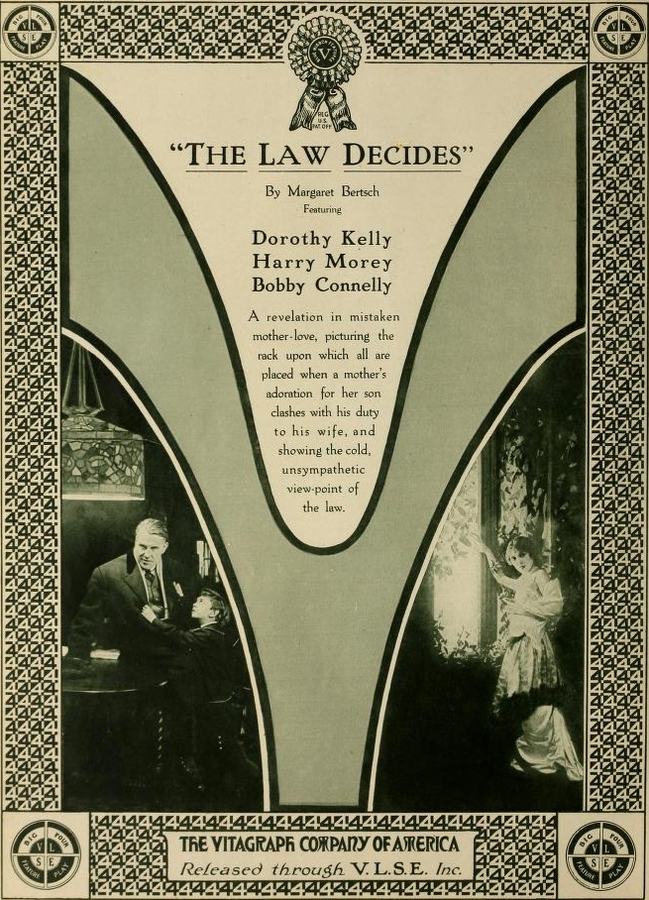
In the grand tapestry of early cinema, where emotions were writ large and morality often painted in stark chiaroscuro, there emerges a compelling, if often overlooked, masterpiece: The Law Decides. This 1916 drama, a product of an era still grappling with the nascent language of film, plunges its audience into a maelstrom of unbridled passion, calculated deceit, and the crushing weight of societal judgment. It's a narrative that, despite its vintage, resonates with a timeless, almost Shakespearean intensity, exploring the destructive power of obsession and the insidious nature of familial manipulation. Far from being a mere relic, this film stands as a testament to the enduring human capacity for both profound love and profound villainy, meticulously crafted to provoke thought and stir the soul.
At the pulsating heart of this intricate narrative lies Lorenz, a man whose love for Florence, though years removed from any possibility of fulfillment, remains an unextinguished inferno. His visits to the Wharton household, ostensibly to engage with Beatrice—the daughter of John Wharton's step-mother—are nothing more than a thinly veiled pretext. Every glance, every shared moment, every breath drawn in Florence's proximity is a desperate attempt to rekindle a flame that, to him, has never truly died. This kind of persistent, almost predatory affection finds echoes in other cinematic portrayals of obsessive love, perhaps less overtly sinister than in The Spider and the Fly, but equally potent in its capacity to disrupt and destroy. Lorenz is not merely smitten; he is possessed, his entire being oriented towards the woman who is now, irrevocably, another man's wife and the mother of his child, Bobby.
Florence, portrayed with a nuanced fragility by Adele Kelly, finds herself unwittingly ensnared in this emotional quagmire. She is a woman seemingly content in her marriage to John Wharton (Harry T. Morey), a union blessed with domestic tranquility and a young son. Yet, the ghost of a past affection, embodied by Lorenz, hovers menacingly. Her struggle is palpable: the desire for peace against the unsettling intrusion of a love she once knew, a love that threatens to unravel the fabric of her present happiness. This internal conflict, often conveyed through subtle gestures and expressive eyes in the silent era, speaks volumes about the societal constraints placed upon women and the profound personal dilemmas they faced when confronted with such intense emotional currents.
The true architect of this domestic downfall, however, is not Lorenz's unbridled passion, but rather the chilling avarice of John Wharton's own mother, played with formidable intensity by Louise Beaudet. This matriarch is a master manipulator, her mind a relentless engine of greed. She eyes John's fortune with a covetous gaze, her singular ambition being to redirect it. Her scheme is as ruthless as it is simple: orchestrate a marriage between John and Beatrice (Bonnie Taylor), her step-daughter, thereby ensuring the fortune's reversion to her control. Her character embodies a particular brand of villainy prevalent in melodramas of the era, where familial bonds are twisted into instruments of personal gain. One might draw parallels with the manipulative figures in films like Slander or even the more subtle pressures seen in The Unwelcome Wife, where external forces erode marital harmony.
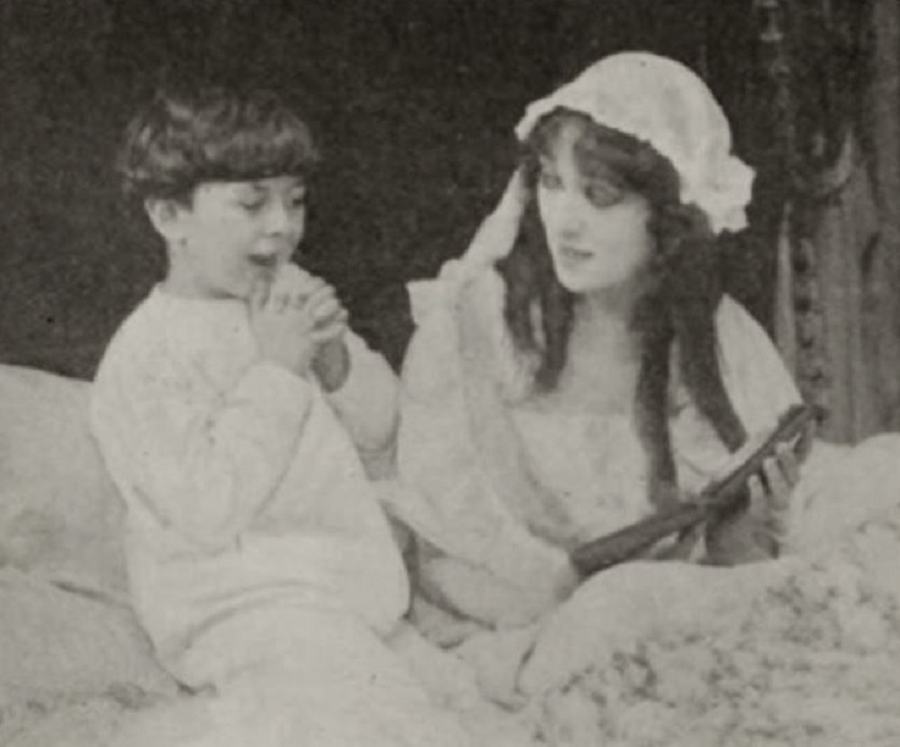
The elder Mrs. Wharton's strategic brilliance lies in her ability to identify and exploit the weaknesses of those around her. She sees Lorenz's desperation as a tool, a weapon to be wielded against Florence and, by extension, against John's happy marriage. Her proposition to Lorenz—the promise of Florence's hand should their malevolent plans succeed—is a devil's bargain, an offer so tempting to a man consumed by love that he loses sight of any moral compass. This alliance, forged in the shadows of desire and greed, sets the stage for a series of events designed to systematically dismantle John and Florence's life together, culminating in a devastating legal battle and profound heartbreak.
The film masterfully builds suspense as the manipulative plot unfolds. Lorenz, emboldened by the elder Mrs. Wharton's promise, renews his fervent suit to Florence, only to be spurned. This rejection, however, serves merely to confirm his willingness to go to 'any extremities,' a fact not lost on his conniving ally. The stage is set for a meticulously choreographed deception. When John enters his home, he witnesses Florence seemingly fleeing from Lorenz, an artfully constructed scene designed to ignite the flames of suspicion. His mother, a master of subtle insinuation, then provides 'evidence' to solidify his doubts, painting Florence as unfaithful. This psychological warfare is particularly cruel, preying on John's trust and love, eroding it with calculated whispers and staged encounters. The emotional weight of such betrayal, even when fabricated, is immense, leaving indelible scars.
Florence, reeling from John's hasty accusations, seeks solace and distance at a hunting lodge, hoping for a period of reflection and eventual reconciliation. Yet, even this sanctuary is infiltrated by the machinations of Lorenz. His 'accidental' presence, a 'missed' train, and a plea for shelter are all part of a larger, sinister design to place Florence in a compromising position. The elder Mrs. Wharton, ever vigilant, ensures John is informed of Florence's whereabouts and Lorenz's presence, twisting the circumstances into conclusive proof of perfidy. This sequence of events is a chilling demonstration of how easily truth can be distorted and innocence maligned when fueled by malice and suspicion. The very fabric of their marriage, once robust, is now shredded by the relentless onslaught of orchestrated lies.
The climax of this initial phase of the tragedy arrives with the legal proceedings. John, convinced of Florence's infidelity by the carefully constructed web of deceit, sues for divorce. The courts, presented with the manufactured evidence, rule in his favor, awarding him custody of their son, Bobby (Bobby Connelly). This judicial pronouncement, though based on a distorted reality, has devastating, irreversible consequences for Florence. Stripped of her child and her marital status, she is left with what she perceives as the only honorable alternative: to marry Lorenz. This forced union, devoid of affection and born out of desperation, is a bitter irony, a hollow victory for Lorenz and a profound tragedy for Florence, whose heart remains tethered to John. The film brilliantly portrays the limitations of legal justice when confronted with personal vendettas and hidden truths, a theme explored in other courtroom dramas of the era like The Celebrated Stielow Case, though with far more personal stakes here.
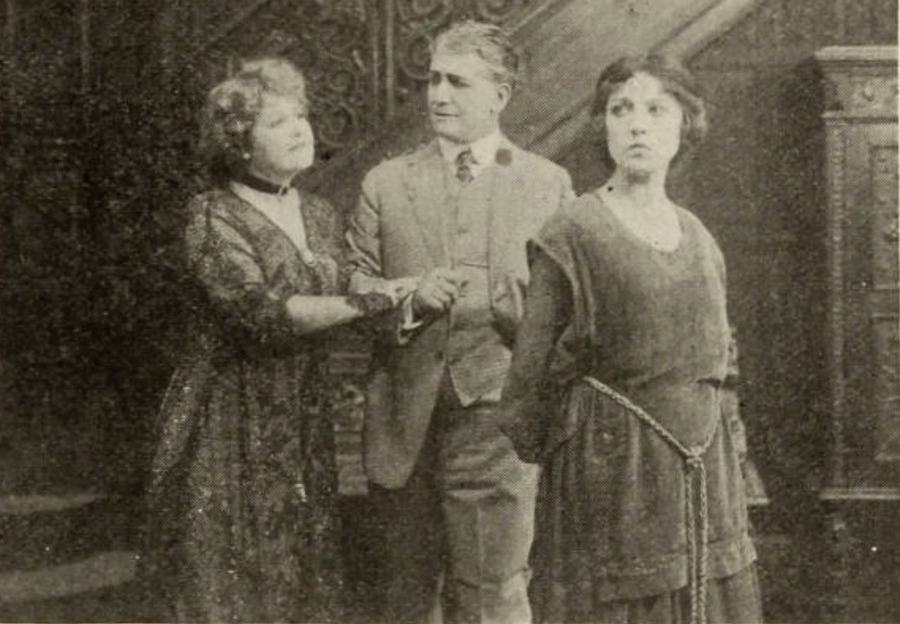
The elder Mrs. Wharton's plans, it seems, are finally materializing. With Florence out of the picture, she pressures John, who holds her in the highest esteem, to marry Beatrice. This impending marriage, an act of filial duty rather than genuine affection, is the final piece of her elaborate puzzle, designed to secure her financial ambitions. The film thus transcends a simple love triangle, evolving into a commentary on the corrosive nature of unchecked greed and the vulnerability of individuals caught in the crosshairs of such ruthless ambition. The performances, particularly Louise Beaudet's portrayal of the manipulative matriarch, are crucial in conveying the chilling efficacy of her schemes without the benefit of spoken dialogue, relying instead on gesture, expression, and the careful staging of scenes.
The narrative, however, is far from its conclusion. On the very day of John and Beatrice's wedding, a pivotal moment occurs. Florence, still heartbroken, calls and through a conversation with her son Bobby, gleans the truth: John still loves her. This revelation, delivered with the innocence of a child, shatters the illusion of his indifference and reignites a flicker of hope. Meanwhile, Lorenz, trapped in a loveless marriage with Florence, finds himself tormented by the sorrow his actions have wrought. In a moment of unexpected candor, he confides in Beatrice, warning her against marrying John and experiencing a similar desolate existence. This act of unexpected compassion, a glimmer of his former self, prompts Beatrice to abandon the wedding and flee with him, disrupting the elder Mrs. Wharton's carefully laid plans at the eleventh hour. It's a dramatic pivot, reminiscent of the sudden shifts in fortune found in other silent era melodramas like Hypocrites, where moral awakenings often dictate the narrative's trajectory.
Lorenz, still unable to relinquish his profound, if misguided, love for Florence, leaves her a note, a final testament to his enduring affection. In it, he offers her a choice: to decide whether she desires his return, a testament to his belief in her agency even as his own life spirals. The disappearance of the bride throws the Wharton household into utter consternation, and amidst the chaos, Florence finally uncovers the elder Mrs. Wharton's venomous role in her estrangement from John. The full extent of the manipulation, the calculated cruelty, is laid bare. Hoping to salvage what remains, Florence desperately phones Lorenz, who, upon arriving and seeing that all is known, realizes the futility of his actions and the profound damage he has inflicted. In a supreme, dramatic, and utterly unexpected act of sacrifice, Lorenz takes his own life. This suicide, born of a final spark of honor and perhaps an overwhelming sense of guilt, serves as a catalyst for redemption and resolution.
Lorenz's tragic end paves the way for the Wharton family's reunion, leaving John and Florence to their unmolested happiness, a testament to enduring love overcoming orchestrated malice. Beatrice and her mother embark on a sea voyage, the latter finally repentant, her grand schemes crumbled, and sufficiently punished by her daughter's unhappiness. This resolution, while perhaps a touch too neat for modern sensibilities, perfectly aligns with the moral frameworks of early cinema, where virtue is ultimately rewarded and vice is punished. The film's conclusion emphasizes not just the triumph of true love, but also the inevitable reckoning for those who sow discord and deceit. The journey of the elder Mrs. Wharton, from ruthless manipulator to a figure of regret, provides a satisfying, if somewhat swift, arc of comeuppance.
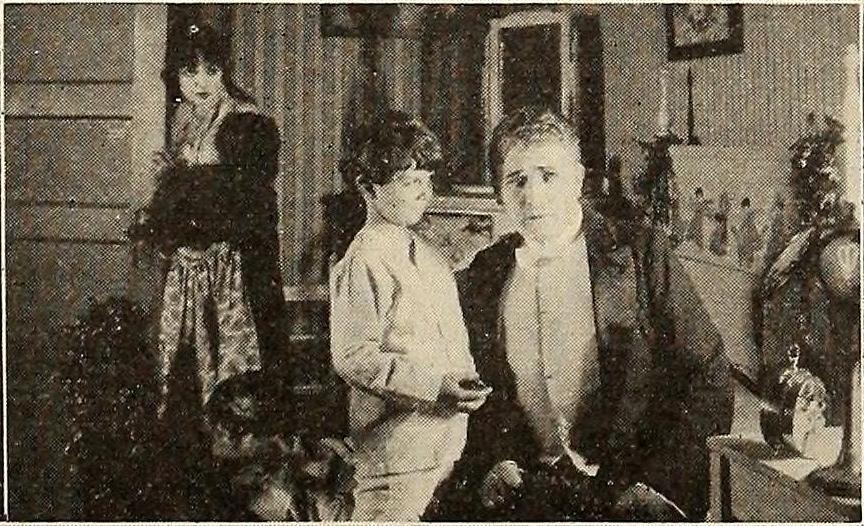
The performances, particularly from Louise Beaudet as the elder Mrs. Wharton, are pivotal in conveying the layers of manipulation without dialogue. Her expressions, her posture, her very presence on screen communicate volumes. Similarly, Adele Kelly's Florence navigates a complex emotional landscape, from contented wife to heartbroken divorcee, to a woman finding renewed hope, all through the silent art of acting. Harry T. Morey's John Wharton portrays the trusting husband, the wounded lover, and finally the reunited patriarch with commendable range for the era. The young Bobby Connelly, as Bobby, provides moments of innocent truth that serve as crucial plot devices, effectively moving the narrative forward. This ensemble effort, under the likely guiding hand of writer Marguerite Bertsch, crafts a memorable and emotionally resonant experience.
Marguerite Bertsch's screenplay for The Law Decides is a masterclass in silent film narrative construction. It weaves together multiple character arcs and motivations into a cohesive, escalating drama. The plot is intricate, yet never convoluted, allowing the audience to follow the emotional beats and strategic maneuvers of its characters with clarity. The use of intertitles would have been crucial in conveying the precise details of the elder Mrs. Wharton's machinations and Lorenz's internal torment, but the visual storytelling alone, through blocking, performance, and camera work (even if rudimentary by today's standards), carries immense weight. The film's ability to elicit strong emotional responses purely through visual means is a testament to the power of early cinematic artistry. It reminds us that storytelling, at its core, transcends dialogue, finding its voice in the universal language of human emotion and action.
Comparing The Law Decides to contemporaries, one can see shared thematic DNA with films grappling with societal pressures and moral dilemmas. While Gatans barn might explore urban hardships and On the Steps of the Throne delve into aristocratic intrigues, The Law Decides focuses intently on the domestic sphere, elevating personal betrayals to epic proportions. It's a drama that underscores the fragility of happiness and the constant vigilance required to protect it from external and internal threats. The film's ultimate message, that true love and honor will find a way to prevail, even through the darkest of trials, resonates with a profound optimism characteristic of many narratives from this period, offering a cathartic release after a journey through deceit and despair.
In conclusion, The Law Decides is more than just a historical curiosity; it is a potent, emotionally charged drama that speaks to the enduring complexities of human relationships, the corrupting influence of greed, and the ultimate triumph of genuine affection. It is a compelling argument for the power of silent cinema to convey profound truths and to leave an indelible mark on its audience, proving that the earliest films were anything but simplistic. Its intricate plot, memorable characters, and powerful emotional arc make it a deserving subject of study and appreciation for anyone interested in the foundational narratives of cinematic art.
IMDb —
1921
Community
Log in to comment.