DbcultAccessing Vault...
Cult Review
Senior Film Conservator
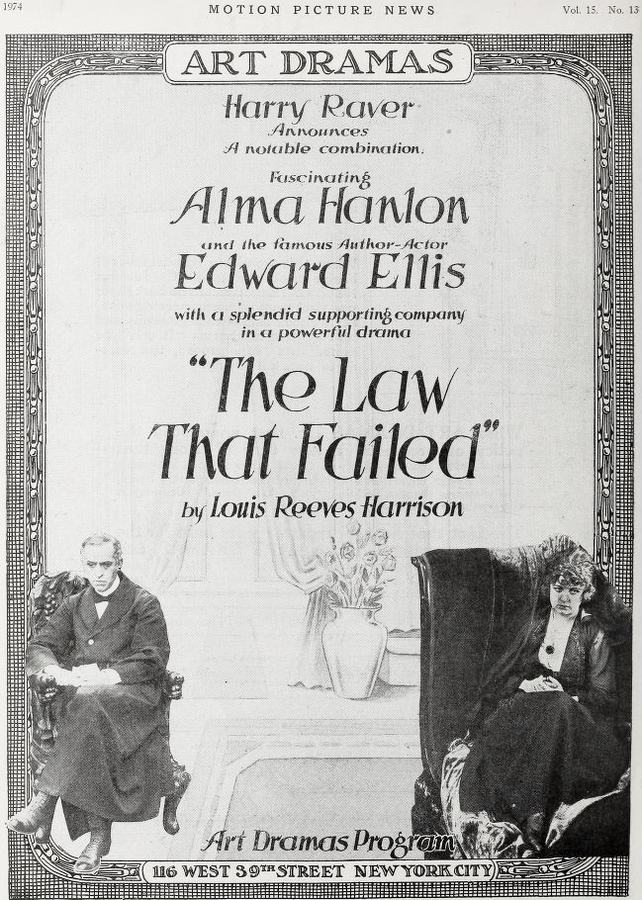
There are films that merely tell a story, and then there are those that burrow deep into the psyche, challenging our very understanding of justice, morality, and the crushing weight of circumstance. The Law That Failed is unequivocally the latter. It’s a stark, unvarnished exploration of a man's descent into a personal hell, a narrative that masterfully dissects the chasm between legal acquittal and moral condemnation. This isn't a tale of clear-cut villains and heroes; it's a labyrinthine journey through manipulation, desperation, and the chilling realization that sometimes, the law, in its cold, procedural majesty, fails the human spirit most profoundly. It forces us to confront the uncomfortable truth: can one truly be innocent when all around them, including their own heart, whispers of guilt?
At its core, The Law That Failed introduces us to Rodin, a prospector whose years of arduous toil in the unforgiving wilderness finally culminate in a significant strike. His triumph, however, is short-lived, swiftly overshadowed by a harrowing ordeal that begins with a desperate plea for survival. Stricken by starvation and on the brink of collapse, he stumbles upon Estrella’s secluded cabin. This chance encounter, born of necessity, rapidly morphs into a suffocating nightmare. Estrella, a woman abandoned and embittered, seizes upon Rodin’s weakened, delirious state, fabricating a grotesque lie: she convinces him that in his feverish stupor, he murdered her missing husband. This act of psychological terrorism, executed with chilling precision, sets the stage for years of torment.
The film meticulously chronicles Estrella's relentless campaign of extortion. For years, she bleeds Rodin dry, her insidious demands a constant drain on his newfound wealth and, more significantly, on his very soul. His existence becomes a purgatory of fear and frustration, a Sisyphean struggle to prove an innocence that, in the eyes of his tormentor, is irrelevant. The psychological toll on Rodin is immense. He becomes a shadow of his former self, haunted by a crime he didn't commit but is powerless to disprove. This prolonged period of psychological torture is where the film truly shines, illustrating the devastating impact of relentless manipulation. It’s a grim reminder of how easily a person's reality can be warped by the machinations of another, leading to a profound sense of helplessness and despair. The narrative doesn't just present the blackmail; it immerses the viewer in Rodin's agonizing efforts to find evidence, the crushing defeats, and the growing despair that gnaws at his resolve. His wealth becomes a curse, attracting not comfort but relentless persecution. One might draw parallels to the intricate web of deception found in films like The Intrigue, where characters are ensnared in elaborate schemes, though here, the intrigue is far more personal and psychologically devastating.
Estrella is not merely an antagonist; she is a chilling personification of opportunistic malevolence. Abandoned and seemingly without recourse, she transforms her misfortune into a weapon, wielding it against a vulnerable man. Her motivations, while rooted in her own abandonment, are never presented as justification for her cruelty. Instead, the film paints her as a calculating, unyielding force, whose grip on Rodin tightens with each passing year. Her ability to maintain the upper hand for so long speaks volumes about her cunning and Rodin's inherent struggle against a fabricated truth. She thrives on his misery, her power growing with his despair. The film doesn't offer a simplistic portrayal of her character; rather, it subtly suggests the depths of her desperation and resentment, which manifest as a relentless, almost pathological, need to control and punish. This makes her a compelling, albeit terrifying, figure, whose shadow looms large over Rodin's entire existence.
Years into his ordeal, a beacon of light emerges in Rodin's shadowed life: Alice Carey. Their love blossoms amidst his hidden torment, offering a fragile promise of redemption and happiness. Alice represents a potential escape, a chance for Rodin to reclaim a semblance of normalcy and emotional stability. Her presence introduces a poignant contrast to the grim reality of his blackmail, highlighting what he stands to lose. This burgeoning romance is expertly used by the narrative to heighten the stakes, making Estrella’s subsequent actions even more devastating. The moment Estrella reads of their engagement, the film pivots dramatically. Her immediate response—another, perhaps more aggressive, blackmail letter—is a chilling reminder of her unwavering resolve to control Rodin's destiny. This act of malicious interference pushes Rodin to his breaking point. He confronts Estrella, pleading for his freedom, for a chance at a life unburdened by her lies. Her steadfast refusal, her unyielding grip on his life, ignites a desperate, impulsive act.
In a moment of profound desperation, Rodin switches off the lights, plunges the room into darkness, and locks Estrella in a secret chamber, leaving her to her fate. This desperate measure, a turning point in his long suffering, is fraught with moral ambiguity. Is it an act of liberation or a descent into criminality? He then disposes of her packed trunk, giving it to an expressman, only for it to accidentally fall into the river. This sequence of events, born of a desperate desire for freedom, ironically seals his fate in a way Estrella never could have managed directly. His actions, intended to sever the chains of blackmail, instead forge new, stronger ones, leading him directly into the maw of the law. This is the kind of critical juncture that defines a character, akin to the pivotal choices explored in films like His Turning Point, where a single decision irrevocably alters a protagonist's trajectory.
With Estrella's disappearance and the discovery of her trunk floating in the river, Rodin is inevitably accused of her murder. The ensuing trial is a masterclass in building tension and demonstrating the overwhelming power of circumstantial evidence. A host of damning details are brought against him: his known association with Estrella, her sudden vanishing, the discovery of her belongings in the river, and his desperate confrontation. To all observers, including Rodin himself, conviction seems an inescapable certainty. The narrative meticulously constructs a seemingly airtight case, drawing the audience into the courtroom drama, making them feel the oppressive weight of the evidence. The justice system, in its diligent pursuit of truth based on available facts, appears poised to deliver a verdict that aligns with popular perception and the compelling narrative of the prosecution.
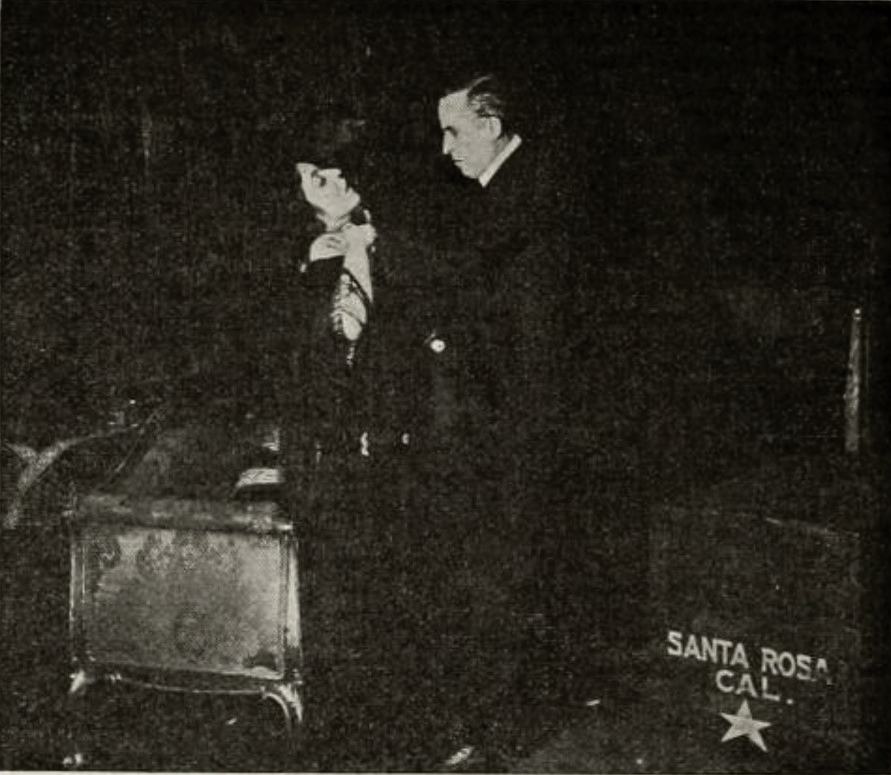
However, just as the jury prepares to retire, a seismic shift occurs. The judge, in a stunning and unexpected move, instructs them that a verdict of guilty cannot be rendered due to a critical technicality: the absence of a body. This legal loophole, a stark reminder of the law's rigid adherence to procedure, comes as a complete surprise to everyone present, including Rodin. The accused man is acquitted, set free not by a declaration of his innocence, but by a procedural quirk. This moment is perhaps the most profound commentary the film makes on the nature of justice. It exposes the inherent limitations of a system that can deliver a legal triumph while leaving the moral questions unanswered. The jubilation of the acquittal is tempered by the unsettling realization that true justice, in a broader sense, remains elusive. This technicality, while legally sound, feels deeply unsatisfying, leaving a lingering sense of unease that permeates the rest of the film.
Acquitted by the letter of the law, Rodin's journey is far from over. He seeks his 'real sentence' from Alice, the woman he loves, the one person whose judgment truly matters to him. In a heartbreaking confrontation, Alice confesses her belief in his guilt. Her love, though profound, cannot overcome the shadow of suspicion. She, like the audience, has witnessed the circumstantial evidence, the desperate actions, and the chilling implications. Her conviction of his culpability, despite the legal acquittal, delivers a far more devastating blow than any court could inflict. This scene is the emotional core of the film, highlighting the irreparable damage wrought by suspicion and the chasm between legal truth and perceived moral reality. It underscores the tragic irony that while the law may set him free, the court of public opinion, and more importantly, the court of the heart, condemns him.
Rodin, shattered by Alice's verdict, releases her from their engagement. His hope, once rekindled, is now utterly extinguished. He retreats to his home, a man legally free but morally imprisoned. The final, agonizing moments of the film are a testament to the crushing weight of psychological despair. A shot rings out in the library, and the butler rushes in to find his master dead. Rodin's suicide is the ultimate tragic conclusion, a final, desperate act of self-judgment. It's a stark, powerful statement that some burdens are too heavy to bear, and some injustices, even those technically circumvented, leave an indelible mark on the soul. This profound exploration of a man's internal struggle with perceived guilt, honor, and the societal judgment is reminiscent of the thematic depth found in The Man of Shame, where characters grapple with their reputations and inner turmoil in the face of public scrutiny or personal conviction. The film eloquently argues that true freedom isn't merely the absence of legal chains, but the liberation from the psychological shackles of guilt and the condemnation of those we hold dear.
The Law That Failed, penned by Louis Reeves Harrison, is far more than a simple melodrama; it's a profound sociological and psychological study. The film's primary theme, as its title suggests, is the inherent fallibility of the legal system. While designed to deliver justice, it often operates within strict parameters that can overlook the spirit of the law in favor of its letter. The absence of a body, a mere technicality, allows a man who is arguably morally culpable (at least in his final desperate act against Estrella) to walk free, only to face a more severe, self-imposed sentence. This dichotomy between legal innocence and moral guilt forms the narrative's backbone, compelling viewers to question their own definitions of justice.
Beyond the legal critique, the film delves deep into the corrosive power of psychological manipulation. Estrella's long-term blackmail of Rodin showcases how a fabricated reality can become more potent and destructive than any physical threat. Rodin's torment is not just financial; it's existential. His identity is stripped away, replaced by the shadow of a crime he believes he committed. The film also explores the burden of false accusation and the crushing weight of suspicion, even when legally exonerated. The tragic ending underscores the idea that societal judgment and personal conviction can be far more potent and destructive than any formal legal process. It leaves an enduring impression, challenging the audience to consider whether justice was truly served, or merely circumvented.
While specific directorial choices from this era might be lost to time, the narrative structure itself suggests a keen understanding of pacing and emotional escalation. The gradual build-up of Rodin's torment, the sudden spark of hope with Alice, the desperate act, and the swift, devastating trial, all point to a deliberate and effective storytelling approach. The performances, led by John K. Roberts as Rodin, would have been crucial in conveying the immense psychological burden. Roberts' portrayal would need to transition from a man of initial triumph to one consumed by paranoia, desperation, and ultimately, profound despair. Alma Hanlon as Estrella would have required a nuanced performance, embodying both the victim of circumstance and the ruthless manipulator, making her a formidable and unforgettable antagonist. Florence Short as Alice Carey would have provided the necessary emotional anchor, her love and subsequent disillusionment serving as a powerful mirror to Rodin’s own internal conflict. Edward Ellis and Harold Vermilyea, in their supporting roles, would have contributed to the gravitas of the courtroom scenes and the overall dramatic tension. The film's power undoubtedly rests on the ability of its cast to convey these complex emotional states and the profound moral dilemmas at play, transforming a stark plot into a gripping human tragedy.
The Law That Failed stands as a powerful testament to the complexities of human experience, where external judgments often pale in comparison to the internal torment of a troubled conscience. It's a film that resonates long after the credits roll, prompting introspection on the nature of truth, the efficacy of legal systems, and the profound impact of psychological warfare. It reminds us that sometimes, the most devastating verdicts are not delivered by judges and juries, but by the quiet, unyielding voice of our own moral compass, or the crushing weight of shattered trust. This film is an essential watch for anyone interested in the darker facets of human nature and the intricate dance between justice, fate, and despair. It's a narrative that, despite its age, speaks volumes about timeless human struggles, making it a compelling piece of cinematic history worthy of re-examination and critical appreciation.
In an era when legal dramas often seek clear resolutions, The Law That Failed dares to leave us with a deeply unsettling ambiguity, challenging us to consider the true cost of 'winning' when one's soul is the ultimate casualty. It's a film that, through its stark portrayal of a man's undoing, brilliantly illuminates the shadows that lurk within the human heart and the inherent limitations of the very systems designed to protect it.
IMDb —
1932
Community
Log in to comment.