DbcultAccessing Vault...
6.7/10
Senior Film Conservator
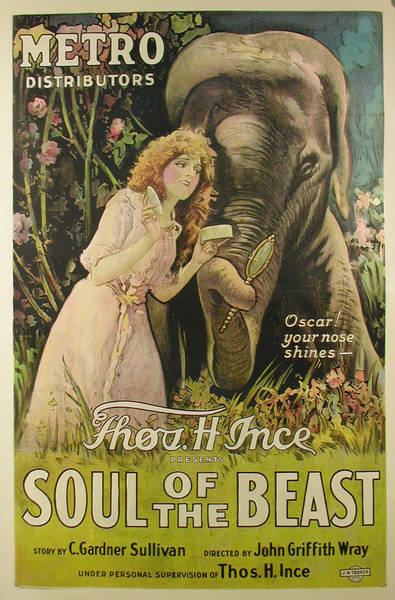
A definitive 6.7/10 rating for a film that redefined the boundaries of cult cinema. Soul of the Beast remains a cornerstone of transgressive art.
The silent era was often characterized by its flirtation with the monumental, yet few films manage to balance the gargantuan physical presence of its stars with the delicate interiority of its human subjects quite like Soul of the Beast (1923). This is not merely a relic of a bygone cinematic grammar; it is a pulsating, frequently harrowing exploration of the blurred lines between the civilized and the feral. While many contemporary critics might dismiss such a premise—a girl and her elephant fleeing an abusive circus—as mere sensationalist fodder, a closer examination reveals a work of startling emotional density and technical ambition.
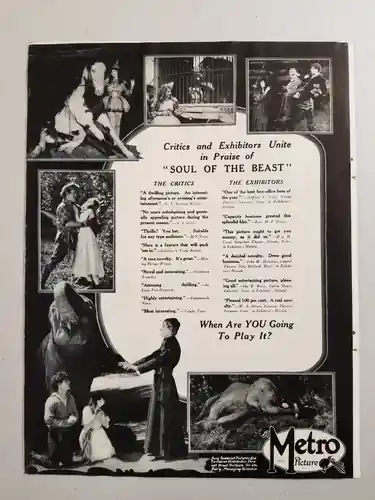
The opening sequences, set within the claustrophobic confines of a traveling circus, are masterfully claustrophobic. Ralph Dixon and C. Gardner Sullivan’s script doesn't shy away from the inherent cruelty of the sawdust ring. Bert Sprotte’s portrayal of the stepfather is a masterclass in silent-era villainy—not through mustache-twirling caricature, but through a heavy, oppressive physicality that makes Ruth’s desperation palpable. In this environment, Madge Bellamy provides a performance of ethereal resilience. She is the fragile heart of the film, yet her connection to Oscar the Elephant imbues her with a borrowed strength that feels almost mythological.
Much like the thematic undercurrents found in The Miracle Man, there is a preoccupation here with the sanctity of the innocent soul in a world governed by greed. However, where other films of the period might lean into religious allegory, Soul of the Beast leans into the primordial. The circus is a microcosm of a broken society, where beauty is commodified and strength is used to subjugate. When Ruth and Oscar make their escape, it isn't just a flight from a man, but a rejection of a decadent, exploitative system.
The transition from the circus to the Canadian logging camp marks a significant tonal shift. The cinematography expands, trading the tight, shadowy interiors of the tents for the vast, grey-toned majesty of the Northern woods. This is a landscape that demands a different kind of survival. The logging camp is presented as a liminal space—a frontier where the rules of the city have no purchase, and the law of the forest hasn't quite been superseded by the law of man. It is a setting that mirrors the ruggedness seen in The Conqueror, yet it feels more intimate, more fraught with immediate physical peril.
Noah Beery enters this space as a force of nature. Beery, a titan of early cinema, brings a menacing gravity to the role of the camp bully. His antagonism toward Paul (Cullen Landis) isn't just a plot device; it’s a philosophical clash. Paul represents the encroaching influence of empathy and modernization, while Beery’s character represents the old world’s reliance on brute force. This dynamic is far more sophisticated than the binary conflicts found in lesser works like Ace High. Here, the stakes are existential.
It is impossible to discuss this film without centering Oscar the Elephant. In an era before CGI or sophisticated animatronics, the physical presence of a live elephant interacting with the cast provides an authenticity that is frankly jaw-dropping. Oscar is not a prop; he is a character with a discernible arc. His protective instincts toward Ruth are filmed with a tenderness that avoids the saccharine. The way the camera lingers on Oscar’s eye—a deep, ancient well of intelligence—suggests a level of consciousness that challenges the human characters' supposed superiority.
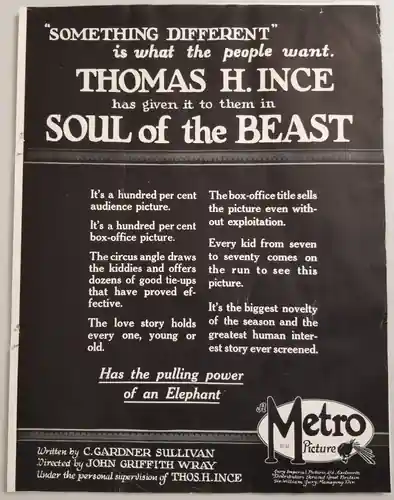
The scenes of Oscar in the logging camp, assisting with the timber or navigating the treacherous terrain, are some of the most visually arresting in silent cinema. There is a sequence involving a river crossing that rivals the tension found in The Burden of Proof for sheer logistical complexity. The filmmakers understood that the spectacle of the beast was only effective if it was grounded in the emotional reality of the girl. Their symbiotic relationship is the film’s true engine, a bond that transcends language and species.
When we look at the contemporary landscape of 1923, Soul of the Beast stands out for its refusal to be easily categorized. It lacks the urban cynicism of Beyond the Rainbow or the drawing-room artifice of The Senator. Instead, it occupies a space similar to the European sensibilities of Livets Gøglespil, where the circus is a site of both wonder and profound melancholy. The film’s pacing is deliberate, allowing the atmosphere of the Canadian wilderness to seep into the viewer’s consciousness, much like the slow-burn tension of Das Rätsel von Bangalor.
The supporting cast, including Vola Vale and Vernon Dent, provide a necessary human texture to the camp scenes. They represent the communal aspect of the logging life—the shared meals, the exhaustion, and the occasional levity that keeps the darkness at bay. This ensemble work is far superior to the often-stilted characterizations in Her Awful Fix or the melodramatic excesses of Within the Cup. There is a lived-in quality to the camp that makes the eventual eruption of violence feel all the more disruptive.
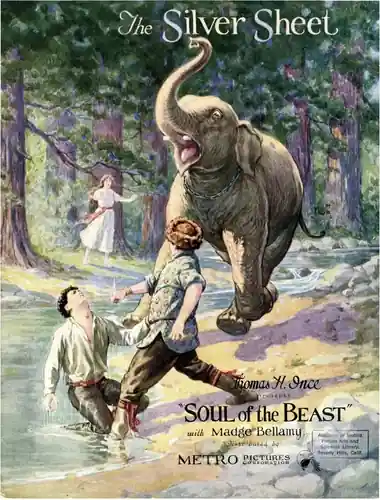
The direction (often attributed to John Griffith Wray) displays an intuitive grasp of scale. He juxtaposes the massive logs and the towering elephant with the small, vulnerable faces of the lovers. The use of natural lighting in the forest sequences creates a dappled, dreamlike quality that contrasts sharply with the harsh, flat lighting of the circus scenes. This visual storytelling is a testament to the sophistication of the industry just years before the advent of sound. It possesses a narrative clarity that many talkies would struggle to replicate.
The climax of the film—a confrontation that brings the themes of bestiality and humanity to a head—is staged with a kinetic energy that is surprisingly modern. It avoids the static staging of A Birthday Tangle and instead opts for a dynamic, multi-layered sequence that utilizes the entire environment. The resolution is not just a romantic victory, but a moral one, affirming that the "soul" mentioned in the title belongs as much to the elephant as it does to the humans.
Reflecting on Soul of the Beast today, one is struck by its enduring relevance. It touches on themes of domestic abuse, environmental harshness, and the ethics of animal companionship with a sincerity that feels remarkably un-dated. While it shares some DNA with the grand spectacles of its time, such as The Greatest Thing in Life, it remains a more focused, visceral experience. It doesn't try to explain the world; it simply shows us the struggle of one woman and one animal trying to find a place of peace within it.
In the pantheon of silent cinema, Madge Bellamy’s Ruth deserves a place alongside the great heroines of the era. Her performance is a quiet rebellion, a refusal to be broken by the weight of the men around her. And Oscar? Oscar is simply one of the most unforgettable screen presences of the 1920s. To watch him move through the frame is to witness a type of cinematic magic that has largely been lost to the era of digital artifice. This film is a reminder that cinema, at its best, is an act of empathy—a bridge between the human experience and the vast, mysterious world of the "other."
Whether you are a scholar of the silent era or a casual viewer looking for a story of profound heart and harrowing adventure, Soul of the Beast is an essential text. It is a film that breathes, that trumpets, and that lingers in the mind long after the final iris-out. It captures the spirit of survival found in The Coward but infuses it with a unique, elephantine majesty that remains unparalleled in the history of the medium. Don't let this one remain buried in the archives; it is a beast with a soul worth discovering.
IMDb 6.3
1921
Community
Log in to comment.