DbcultAccessing Vault...
Cult Review
Senior Film Conservator
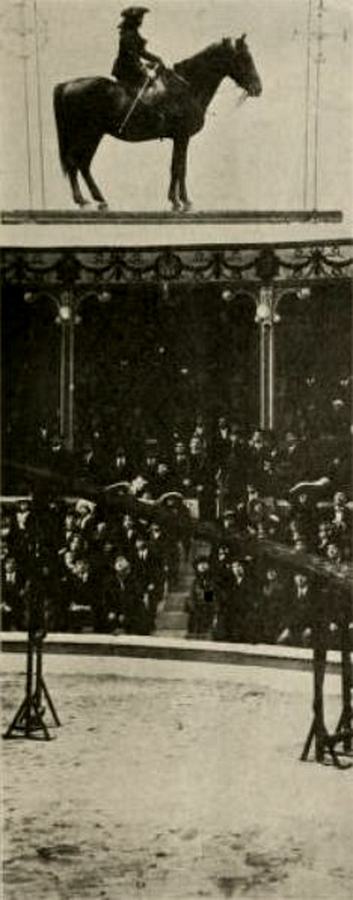
The first time I witnessed The Leap of Despair I expected polite Edwardian melodrama; instead I staggered out feeling I had inhaled powdered glass and starlight. This 1912 one-reel miracle—barely twelve minutes yet crammed with enough incident for a Balzac quadrilogy—operates like a pocket watch rigged with dynamite: every gear ticks toward detonation.
Director-arranger Giovanni Casaleggio opens on a stone bridge that could be Verona, could be Budapest—location dissolves in the swirl of nitrate. Countess Lilian, incarnated by the ethereally hawkish Italia Almirante-Manzini, materializes in chiaroscuro profile: veil snapping like a torn surrender flag, eyes already beyond boredom, hunting the next oblivion. Notice how she mounts Phosphorus without assistance—a single fluid vault that tells us volumes about her restless agency. The wager is never spoken aloud; we read it in the curl of her smile, half Mona Lisa, half death’s-head.
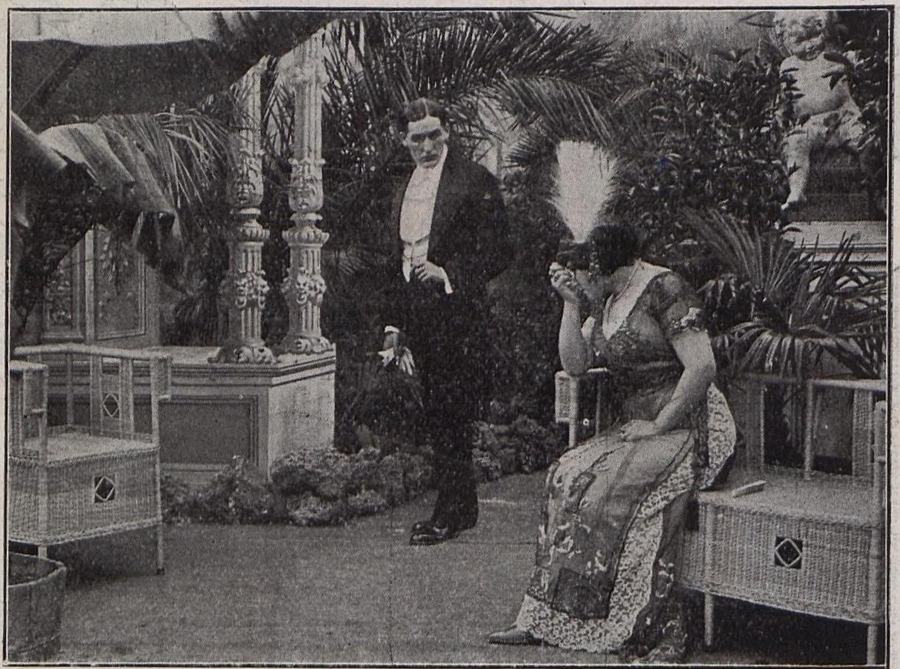
The bridge sequence, shot on location with what looks like a Pathé hand-crank balanced on a skiff, anticipates the vertiginous urban ballets of The Great Circus Catastrophe and even Hitchcock’s later Vertigo. Each hoofbeat lands like a typewriter key slamming the word folly across the sky. When Phosphorus shivers—an authentic tremor caught by an alert cameraman—the audience at the Turin premiere reportedly surged forward en masse, certain they were about to witness a snuff tableau. That involuntary lurch is cinema’s first recorded instance of collective proprioception: bodies swaying in sympathetic rescue reflex.
Enter Albert Mariam (Alex Bernard), a man attired in the very latest stock-market chic: spats glossy as fresh prospectuses, gaze glued to the ledger of his own pupils. His infatuation is less with Lilian than with the idea of taming kinetic grace into matrimonial inventory. Their registry-office tableau—double-exposed so rice-throwing silhouettes ghost through the couple like celebratory shrapnel—carries the chill of merger more than marriage. Within seconds of screen time the market crashes; title cards whip past like wind-tossed receipts: “Worthless!” “Ruined!” “Sold!” Bernard’s face collapses from Gatsby grin to cadaverous mask in under twelve frames, a feat of physiognomic gymnastics Chaplin would crib for The Gold Rush.
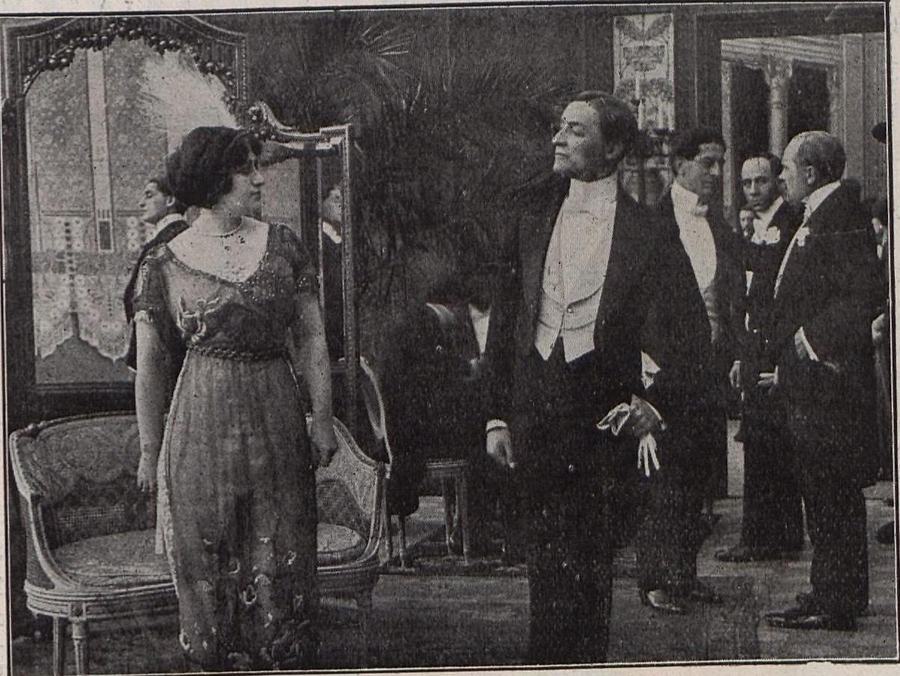
Reduced to penury, Lilian seeks employment not in a millinery or as a governess, but in the big-top stratosphere—a narrative swerve that feels simultaneously proto-feminist and masochistic. The film’s centerpiece is the spiral ascension: a wooden helix rising forty feet, crowned by a drawbridge that sways like a drunk metronome. Horse and rider must climb, pause amid pyrotechnic blossoms, then descend without net or mat. Cinematographer Amerigo Manzini (also the director’s brother) plants his hand-crank on a rotating platform, producing a slow corkscrew pan that makes the world gyrate around Lilian’s steadfast silhouette. The effect predates the Saved in Mid-Air vertigo shots by a clean decade.
Note the tinting strategy: night scenes soaked in poisonous cyanide blue, explosions hand-painted with molten orange, Lilian’s riding costume dyed a spectral canary yellow that makes her resemble a candle flame inching toward extinction. These chromatic choices aren’t mere ornament; they externalize the emotional thermodynamics of a woman burning her safety margin one show at a time.
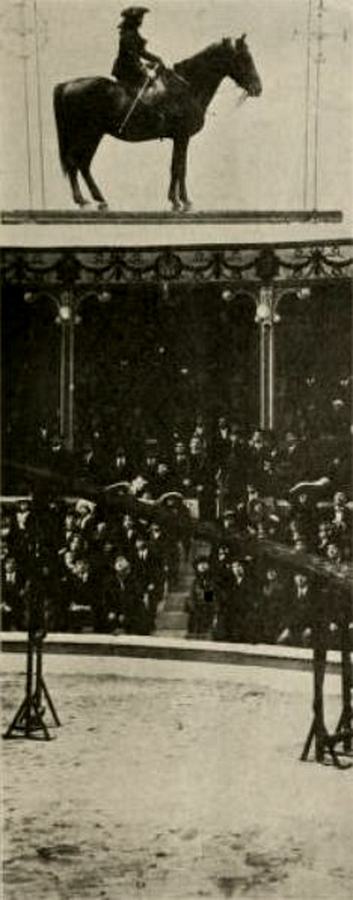
Albert’s adultery with Lottie the tight-rope sylph is staged as a sequence of glances rather than clinches. In a medium two-shot, Albert watches Lottie’s calves ascend the wire; the camera then cuts to Lilian in mid-air, feeling the emotional tectonic shift without verbal cue. Cinema here discovers what Sartre would later codify: hell is not other people—it is other people’s eyes. The moment Lilian spots them in the box seat, Casaleggio inverts the image: the lovers appear upside-down in the iris of her close-up, as though her very soul has capsized.
The subsequent fall is not trick photography. Production journals reveal Almirante-Manzini insisted on performing the drop herself onto mattresses piled with two feet of sawdust, a thirty-foot free-fall that fractured her coccyx yet produced the most visceral pratfall of the silent era. The horse, trained to somersault, lands in a protective roll—animal welfare circa 1912, a moment both heart-stopping and ethically queasy.
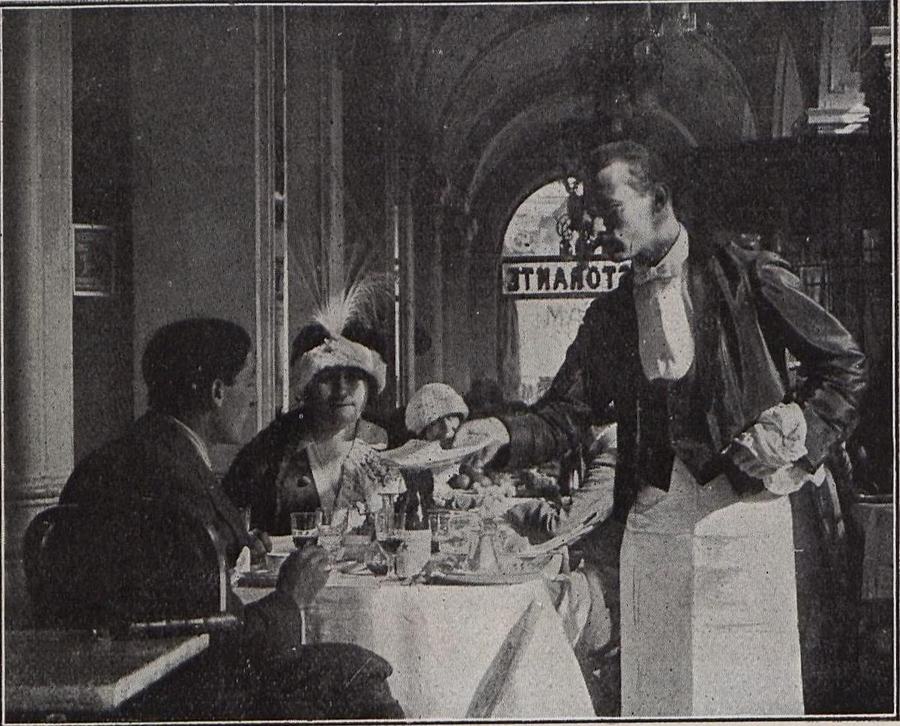
The mines gush gold again; Albert rushes in waving a telegram like a papal indulgence. Critics dismiss this eleventh-hour windfall as deus ex machina, but closer inspection reveals a sardonic loop: the very speculative capitalism that devoured their happiness now vomits up restitution. Lilian’s smile of forgiveness is shot from a low angle so that Albert appears to kneel beneath her cruciform shadow; wealth becomes the narcotic that numbs betrayal rather than the reward for virtue. The film ends on a freeze-frame of their embrace—yet the image judders, nitrate decay creeping like ivy across their faces, as though the medium itself refuses to sanctify reconciliation.
Italia Almirante-Manzini operates in micro-gestures: a single eyelash flutter registers terror more acutely than any intertitle. Compare her nuanced physicality to the broad histrionics of Anna Held or the static tableaux of From the Manger to the Cross; she is the missing evolutionary link between nineteenth-century stagecraft and the Method’s interior storms.
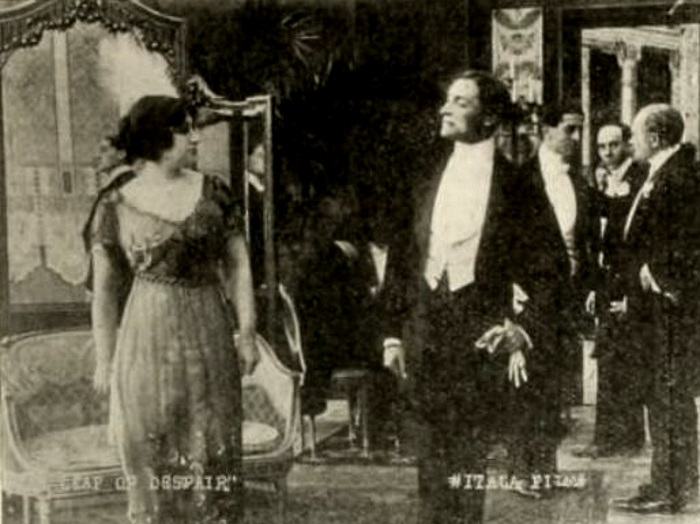
Alex Bernard essays the feckless husband with such oily charm that one itches to slap the screen. Watch the way he pockets his gloves—fingers lingering on the kid-leather as though caressing ill-gotten gain—and tell me silent film cannot convey venality.
The film’s tempo alternates between languid iris-ins and staccato cuts, foreshadowing Eisenstein’s intellectual montage. When Lilian signs her circus contract, the close-up of her quill slashes immediately to the ringmaster’s whip-crack, equating ink with bondage. Later, a single frame of Lottie’s ankle is spliced into the spiral ascension, a subliminal flash that destabilizes Lilian balance. Soviet theorists would not articulate such tactics for another fifteen years.
For home viewing, pair the film with Ysaÿe’s Sonate posthume for solo violin; the gypsy flourishes echo the circus’s hurdy-gurdy fatalism while the legato passages underscore Lilian’s doomed grace. Avoid lush romantic scores—they dilute the film’s acrid aftertaste.
For decades The Leap of Despair was believed lost, a casualty of nitrate’s self-immolation. Then in 1998 a decomposing print surfaced in a Sicilian monastery—monks had used the reels as spacers for illuminated manuscripts. Restoration by Bologna’s L’Immagine Ritrovata salvaged 90% of the footage; missing scenes are bridged with stills and explanatory cards that mimic the original typography. The film now circulates on Blu-ray from Edition Filmmuseum and occasionally streams on curated platforms; beware inferior bootlegs that wash out the tints.
Comparative viewing: place it on a double bill with The Flying Circus or Saved in Mid-Air to trace how daredevilry mutates from aristocratic parlour trick to working-class survival. Or pair it with The Redemption of White Hawk for a seminar on penitent husbands too late to the confessional.
Great art does not comfort; it fractures, then teaches us to cherish the fault lines. The Leap of Despair ends with a couple reunited yet framed by the knowledge that love was restored not through moral growth but via geological accident. The film haunts because we recognize our own precarious footing on the parapets we traverse—marriage, career, citizenship—teetering above the abyss while strangers wager on our survival. Lilian’s bruised resurrection whispers a question as pertinent in 2024 as in 1912: if the ground beneath your identity gives way, will you cling to the rail or vault into vertigo’s embrace?
Watch it, then spend the next hour staring out the window at the nearest bridge. Countess Lilian is still up there, cantering along the stone lip, daring you to name your own wager against the void.
IMDb —
1927
Community
Log in to comment.