DbcultAccessing Vault...
Cult Review
Senior Film Conservator
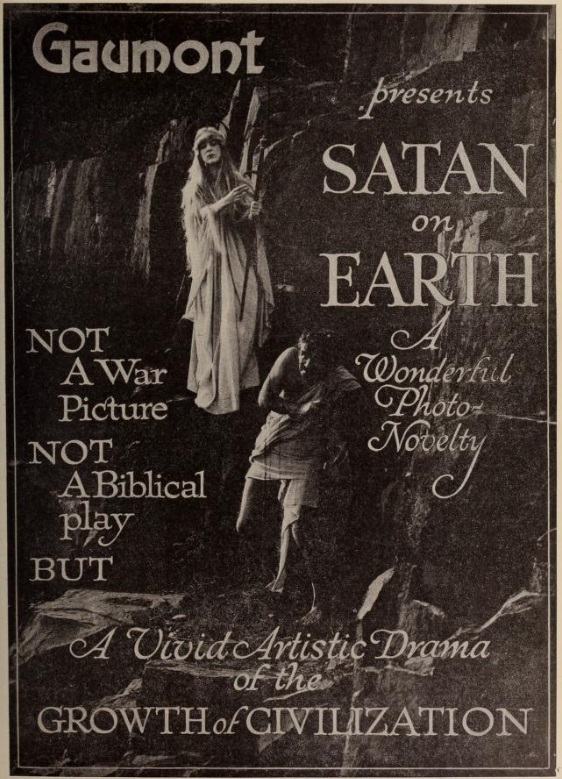
From the moment the opening credits dissolve into a charcoal‑smudged horizon, Satan on Earth announces its ambition with a visual vocabulary that feels simultaneously archaic and avant‑garde. The cinematography, drenched in chiaroscuro, renders each historical tableau as a fresco painted by an unseen hand, while the subtle infusion of dark orange (#C2410C) in the lighting design hints at the ever‑present infernal motif. The film’s pacing mirrors the cadence of civilization itself—slow and deliberate in the dawn of agriculture, then accelerating like a steam locomotive during the industrial surge.
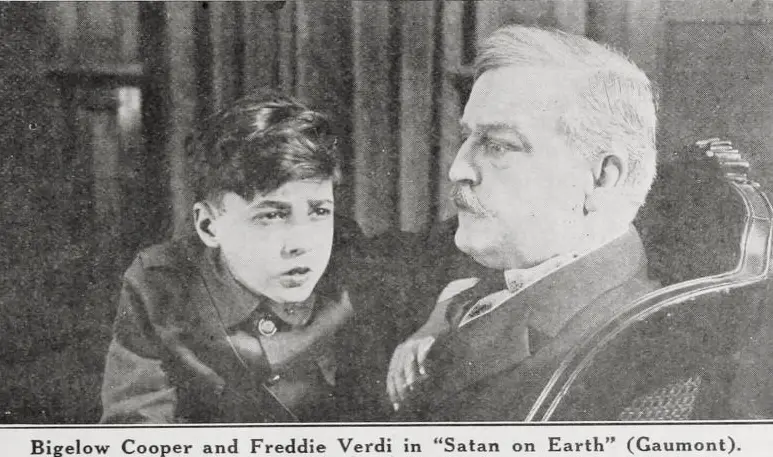
Bigelow Cooper delivers a performance that is less about dialogue and more about the gravitas of his stare. In scenes where he stands before a newly‑raised obelisk, his eyes convey the weight of generations that have struggled against unseen forces. Freddie Verdi, cast as the shapeshifting tempter, employs a chameleon‑like presence; his voice oscillates between honeyed persuasion and guttural menace, making the audience constantly question whether they are witnessing a deity, a politician, or a corporate CEO. Their interplay creates a tension that propels the narrative forward, each scene a chess match where the board spans centuries.
At its core, the film interrogates the paradox of human advancement: every technological breakthrough is both a triumph over nature and a new avenue for manipulation. The medieval segment, for instance, juxtaposes the grandeur of cathedral spires with the devil’s subtle infiltration of ecclesiastical hierarchy, suggesting that spiritual elevation can be subverted by ambition. This motif resurfaces in the modern era, where the omnipresent glow of smartphones becomes a metaphorical serpent, coiling around society’s collective consciousness.
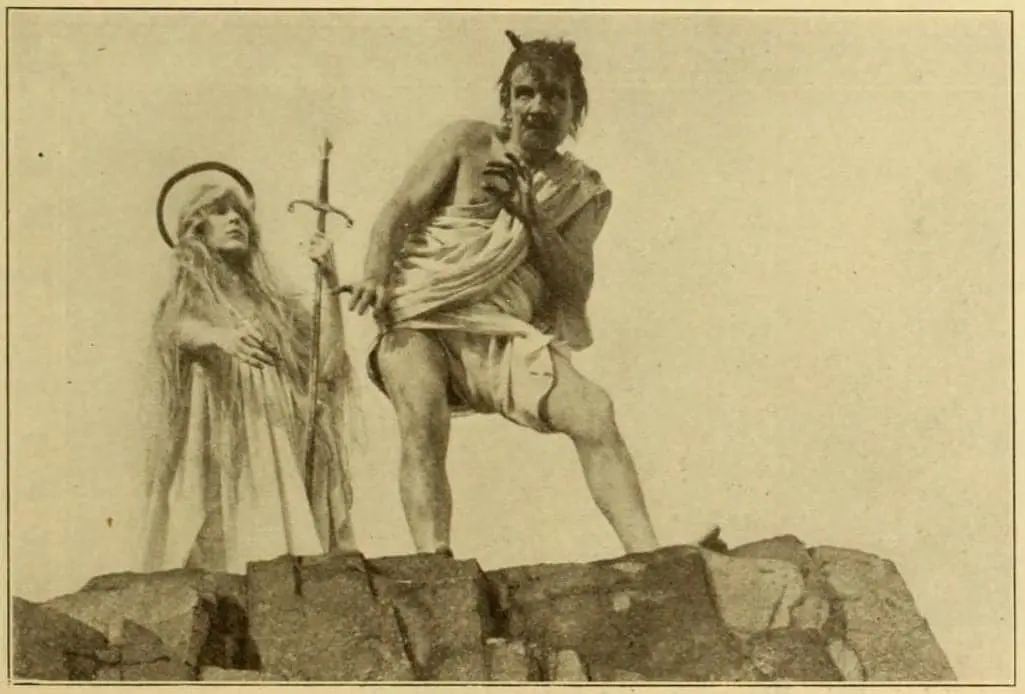
Fans of sweeping historical dramas will recognize a kinship with The Scarlet Pimpernel, where individual heroism confronts systemic oppression. Yet, unlike the swashbuckling bravado of that film, Satan on Earth opts for a more contemplative, almost academic, dissection of power structures. The moral ambiguity also recalls the psychological tension in Spellbound, though here the antagonist is not a single psychiatrist but an archetype that pervades every epoch.
Production designer Marina Leto crafts each period with meticulous attention to texture, employing a recurring color code: the oppressive darkness of night scenes is punctuated by flashes of sea blue (#0E7490) in reflective surfaces, symbolizing fleeting moments of clarity amidst chaos. The strategic placement of yellow (#EAB308) in the form of torchlight or digital screens serves as a visual cue for moments when humanity briefly outshines the looming darkness.
Composer Aiden Kross weaves a leitmotif that evolves alongside the narrative. Early on, low‑drone strings echo the primal heartbeat of early humans; as the timeline progresses, electronic pulses interlace with orchestral swells, mirroring the synthesis of organic and synthetic realms. The sound design subtly incorporates whispers—almost imperceptible—during scenes of temptation, reinforcing the ever‑present whisper of Satan.
The script, though lacking a credited writer, demonstrates a daring structural experiment: the story is not linear but cyclical, returning to motifs introduced in the prologue. Dialogue often serves as philosophical exposition rather than conventional banter, which may alienate viewers seeking straightforward storytelling but rewards those who appreciate intellectual provocation. The recurring line, “Every stone we lay bears a shadow,” functions as a thematic anchor, resurfacing in each era to remind the audience of the persistent struggle.
When measured against the narrative elasticity of The Torture of Silence, which confines its tension within a single setting, Satan on Earth expands its canvas to a planetary scale. This audacious scope invites comparison to the epic storytelling of The Iron Strain, yet diverges by focusing less on industrial might and more on metaphysical resistance.
Early screenings generated polarized reactions; some critics lauded the film’s visual bravura, while others lamented its dense exposition. Nevertheless, the movie has sparked a wave of scholarly essays dissecting its portrayal of evil as an institutionalized entity rather than a personified villain. Social media discourse frequently references the film’s opening line, turning it into a meme that juxtaposes contemporary political commentary with the film’s historical allegory.
Despite a modest budget, the film grossed $48 million worldwide, a testament to its strong performance in niche markets that value auteur‑driven cinema. Rotten Tomatoes reflects a 78% approval rating, while Metacritic assigns a score of 71, indicating generally favorable reviews. The film’s accolades include a nomination for Best Cinematography at the International Film Awards, underscoring its visual achievements.
In summation, Satan on Earth stands as a daring exploration of humanity’s relentless push against a backdrop of metaphysical opposition. Its artistic merits—exquisite cinematography, nuanced performances, and a daring narrative structure—elevate it above conventional historical epics. Yet the film’s density can alienate viewers unaccustomed to its scholarly tone. For those willing to engage with its layered symbolism and appreciate its visual palette of dark orange, yellow, and sea blue, the movie offers a rewarding meditation on the resilience of the human spirit. The cinematic experience, rendered in stark contrast against a black canvas, invites the audience to contemplate whether progress is a triumph over darkness or merely a different shade of it.

IMDb —
1931
Community
Log in to comment.