DbcultAccessing Vault...
6.5/10
Senior Film Conservator
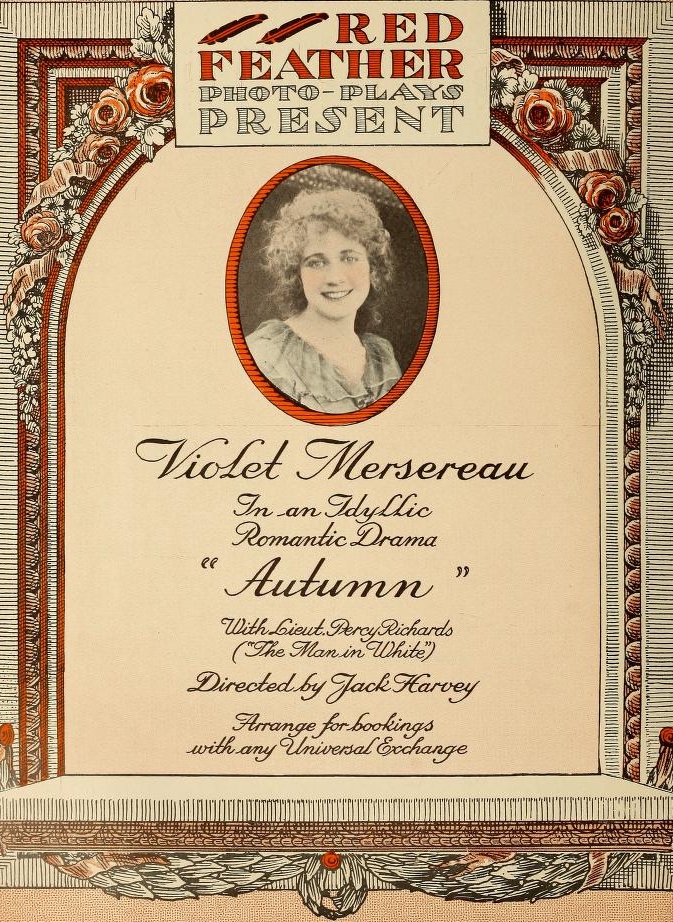
A definitive 6.5/10 rating for a film that redefined the boundaries of cult cinema. Autumn remains a cornerstone of transgressive art.
There is a moment, about halfway through O.A.C. Lund’s bruised tone-poem Autumn, when the camera lingers on a kerosene lamp as its glass chimney shatters under a pistol shot. For an instant the screen is swallowed by pure, liquid darkness—an abyss so total it feels like the film itself might forget to breathe. From that blackout emerges the moral pivot of the entire narrative: a single fragile syllable murmured by a girl raised on sorrow and spruce sap—“I cannot.” Two words that halt a lynching, reroute a life, and rename the very concept of justice in a snow-crushed mining camp that has only ever known retribution.
The picture, released stateside in November 1918 while influenza corpses were being stacked like cordwood in urban alleys, plays like a frostbitten lullaby for a country busy forgetting its own recent wounds. Lund, a Swedish émigré who had ground his lenses on the glacier-slow melancholy of Nordic midsummer nights, imports that same spectral stillness to the Yukon, proving that silence can be more articulate than any intertitle. The result is a work that feels both antique and eerily modern—its DNA braided from Griffith’s Uncle Tom’s Cabin tableaux, DeMille’s candle-lit debauchery, and the nascent psychological realism that would bloom in Scandinavian cinema a decade later.
We open on an abandoned fur-trapper’s hut that seems constructed from rot and resignation. George Arden—played by Richard Leslie with the angular desperation of a man who already suspects the universe is bankrupt—hauls his wife Jeanette across the threshold as though crossing into Hades minus the ferryman. Jeanette, incandescent in her delirium, is laid upon straw that prickles like penitence; the camera hovers above so we see every shiver, every bead of sweat that clings to her collarbone like dew on a dying leaf. The marriage here is not a partnership but a crucifixion—George leaves to fetch a physician, and the act of abandonment becomes the original sin that will echo through fifteen years of amnesia.
Outside, the forest is shot through with pre-dawn indigo, the trunks striped by wedge-shaped slats of artificial moonlight—Lund’s cinematographer Lindsay J. Hall understands that in the north, darkness is not absence but a positive force, dense as felt. The first of many symmetrical dissolves carries us into town where piano wires clang like convulsing nerves inside the Golden Eagle Saloon. A stray round from a drunk’s revolver finds George’s occipital ridge; he folds onto sawdust already soggy with beer and blood. Enter Joe, the half-Cree voyageur rendered by Paul Panzer with stoic eyes that seem older than flint. Joe’s instinctive compress on the wound is shot in chiaroscuro so severe we can count every rivulet of crimson against the sepia skin—an image that anticipates the surgical brutality of Arms and the Woman yet aches with communal tenderness.
Back at the cabin Jeanette delivers a daughter into a world already rationing breath. Lund cuts from the infant’s first cry to the mother’s last exhale, the splice so abrupt it feels like fate slamming a door. The women from the dance hall—floozies in ostrich feathers and miners’ widows—invade the hovel like ravens, yet their rough hands cradle the newborn with reverence. It is Louise (Clara Beyers) who lifts the child toward the rafters as though offering her to whatever thin deity patrols these latitudes, and the gesture transmutes squalor into sacrament. When Joe arrives too late, he pronounces the film’s most lyrical intertitle: “She came to us like the autumn wind. Let her name be Autumn.” The sentence hangs in the mind like wood-smoke; it is both benediction and prophecy, announcing that this girl will be the season that strips everything to the bark and reveals what lies beneath.
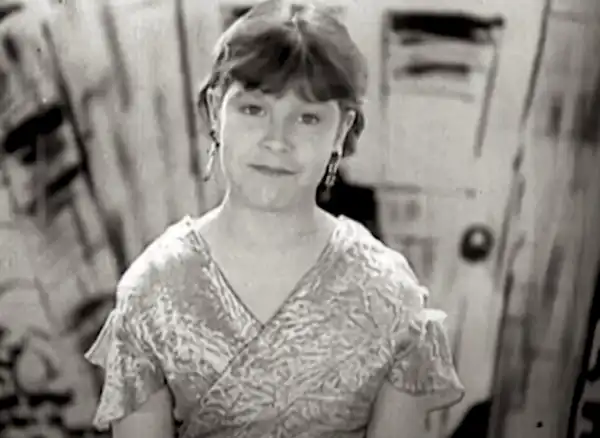
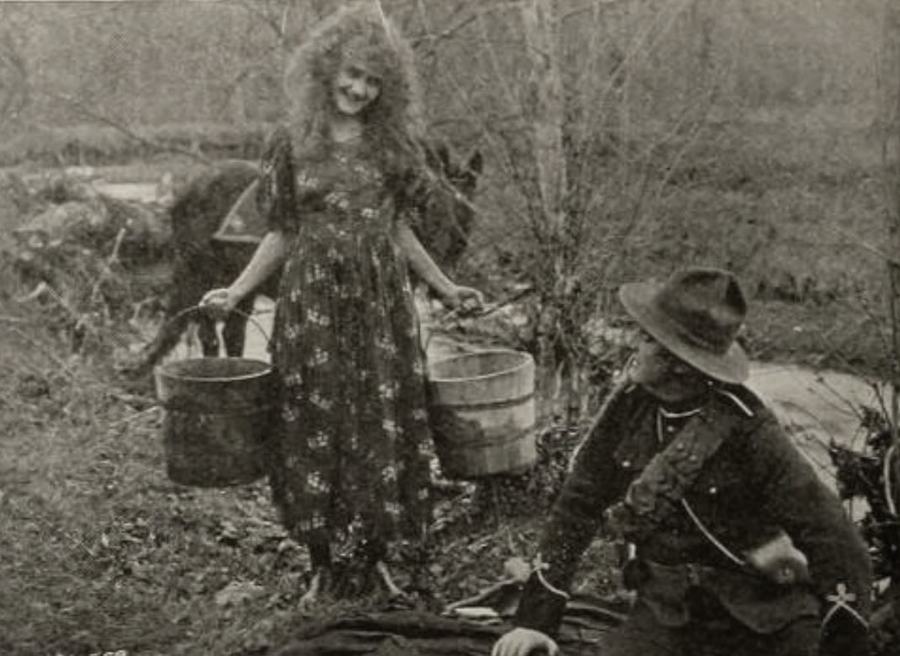
Fifteen elliptical years pass in a single fade—an audacious leap that makes the narrative feel geological. We re-enter Camp Eldora during the salmon-run lull, when mud crusts every boot heel and hope is traded in nuggets the size of baby teeth. Autumn, now incarnated by Violet Mersereau with cheekbones sharp enough to slice bread, moves through the settlement like a rumor of color—hair the tint of burnt birch, eyes holding the resigned clarity of someone who has read the final page of her own story and keeps turning it anyway. She is both foundling and found-ness, raised on Joe’s stories and the Bible of silence.
Across the street stands the man locals call “Nobody”—a mute, scarred hulk who shells walnuts behind the saloon and sleeps inside a cave festooned with fossilized bats. Percy Richards plays him with the rigid gait of a marionette whose strings have been clipped; his eyes flicker like candles behind cracked glass. We intuit, long before the script confirms it, that this wraith is George Arden, the bullet having hollowed out not only identity but the capacity for linear time. Lund permits us to inhabit that amnesia: flashbacks intrude without cue, faces strobe across the negative space of memory, and the effect is less flashback than neural misfire—cinema mimicking concussion.
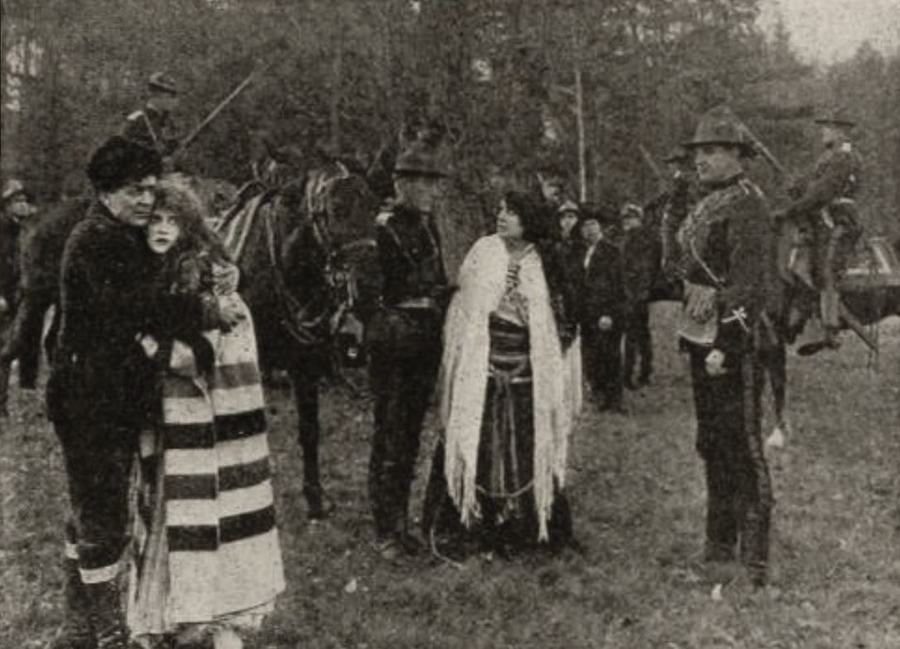
The plot ignites when Royal Mounted Trooper Dick (William Welsh) rides in with a tintype of the missing miner and a mandate to exhume the past. Welsh, whose jawline could guide sleigh-dogs, brings a tremor of ethical fatigue—every crease in his scarlet tunic seems to sigh. His first night in camp he enters the Golden Eagle where Diamond Jack (Lester Stowe) rigs the roulette wheel with the languid arrogance of a man who believes chance is his concubine. Kate—Elizabeth Mudge dripping in diamonds like a chandelier gone feral—watches Jack with hunger sharp enough to scratch glass. Into this hothouse of vice glides Autumn, swaddled in a gown Kate loans her as bait for high-stakes gamblers. The dress is saffron silk, and under the kerosene chandeliers it glows like a slice of moon dropped into a cesspool.

Recognition between Dick and Autumn is wordless: a mutual blink that dilates time. When Jack’s sleight-of-hand trips the lamp, the screen erupts into near-total blackout—one of the longest dark sequences in silent cinema—until a muzzle-flash reveals Jack’s corpse slumped across baize. Autumn, clutching the still-warm pistol, becomes both suspect and witness; Kate, scorned, shoves pepper into her eyes, blinding her with the casual cruelty of a child salting a slug. The imagery is primal: woman weaponizing domesticity, spice turned to vitriol.
What follows is a ten-minute set-piece that rivals the modern suspense of Rupert of Hentzau yet predates it. The lynch mob constructs a gallows from a pine limb and a coil of manila; horses snort steam into dawn the color of pewter. Lund cross-cuts between Autumn’s bandaged eyes and Kate’s glittering décolletage, suggesting that blindness and glamour are opposite faces of the same counterfeit coin. Dick’s gambit—“the innocent shall hang the guilty”—forces each woman to confront the abyss of her own conscience. When Autumn whispers “I cannot,” the admission lands like a psalm; Kate’s reciprocal shriek brands her with Cain’s mark. The rifles of the approaching Mounties sever the rope mid-air, a literal deus ex machina that nonetheless feels earned by the film’s meditation on mercy.
The denouement retreats into the cave where “Nobody” has sketched charcoal portraits of a woman he half-remembers. Dick’s discovery of George’s initials carved into a nugget of fool’s gold triggers a surgical operation performed by a field-surgeon whose spectacles reflect lamplight like twin full moons. Two weeks later memory returns—not as flood but as seepage, the past dripping back like permafrost thaw. George’s reunion with Autumn at the cabin is staged in a single take: father and daughter separated by a window frame thick with dust, each afraid to shatter the illusion with touch. When Joe points to Jeanette’s unmarked grave under a canopy of tamarack, the circle closes with the inexorability of seasons.
Viewed today, the film’s gender politics could fuel a semester’s seminar: women weaponized and sanctified in equal measure, virtue calibrated by unwillingness to kill. Yet Lund refuses tidy binaries; Kate’s venom is born of economic dependence, Autumn’s purity from communal nurture rather than innate sanctity. The picture anticipates the eco-feminist undercurrents of The Witch while predating it by nearly a century, locating female agency inside cyclical nature rather than human law.
Visually, Hall’s cinematography exploits nitrate’s spectral latitude: whites bloom until they ache, blacks swallow detail like quicksand. The tinting—amber interiors, viridian night exteriors, rose dawn—creates an emotional synesthesia reminiscent of later Scandinavian masters. Compare the film’s use of negative space to the glacial silences in The Call of the North; both understand that wilderness is not backdrop but antagonist, a character that hungers.
Performances oscillate between operatic and intimate. Mersereau’s Autumn projects the bruised radiance of Lillian Gish minus the Victorian frailty; her gestures read as choreography for wind. Richards conjures pathos without speech, relying on the stutter of eyelids and the clench of fists. Mudge’s Kate is a diesel engine in pearls—every smile a piston. The cumulative effect is a melodrama that transcends its genre through moral seriousness, a trait it shares with Silver Threads Among the Gold yet exceeds in philosophical reach.
The coda—Autumn and Dick planning marriage as river-ice breaks up—feels less like closure than continuity. The last shot tilts skyward to a skein of geese heading south, a reminder that seasons revolve and every redemption is provisional. Lund gifts us no moral ledger, only the fragile covenant that to remember is to risk grief, and to forgive is to survive it.
In an era when CGI blood is cheaper than corn syrup, Autumn offers something rarer than realism: the ache of mythology, the chill of a wind that arrives fifteen years late yet strips every leaf to its essential vein. Watch it on a night when frost feathers your windowpane; let the film’s silence settle like silt, and you may hear your own pulse echoing the question that haunts every frame—if memory is a wound, what, then, is mercy?
IMDb —
1916
Community
Log in to comment.