DbcultAccessing Vault...
Cult Review
Senior Film Conservator
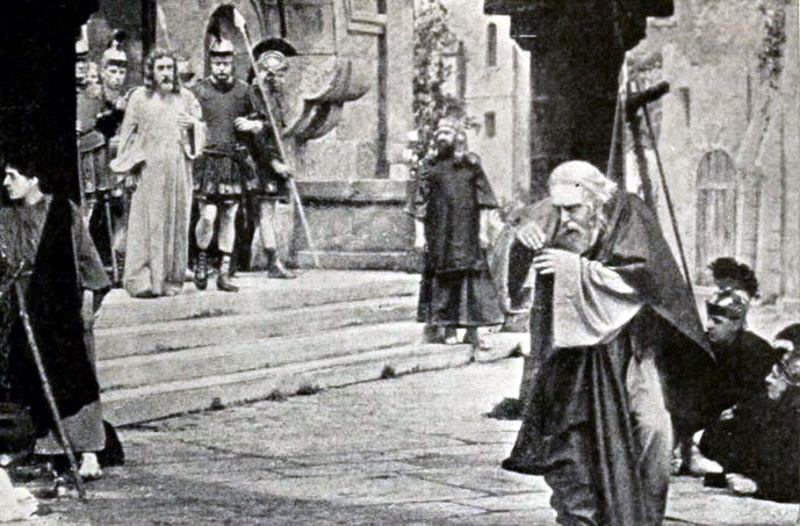
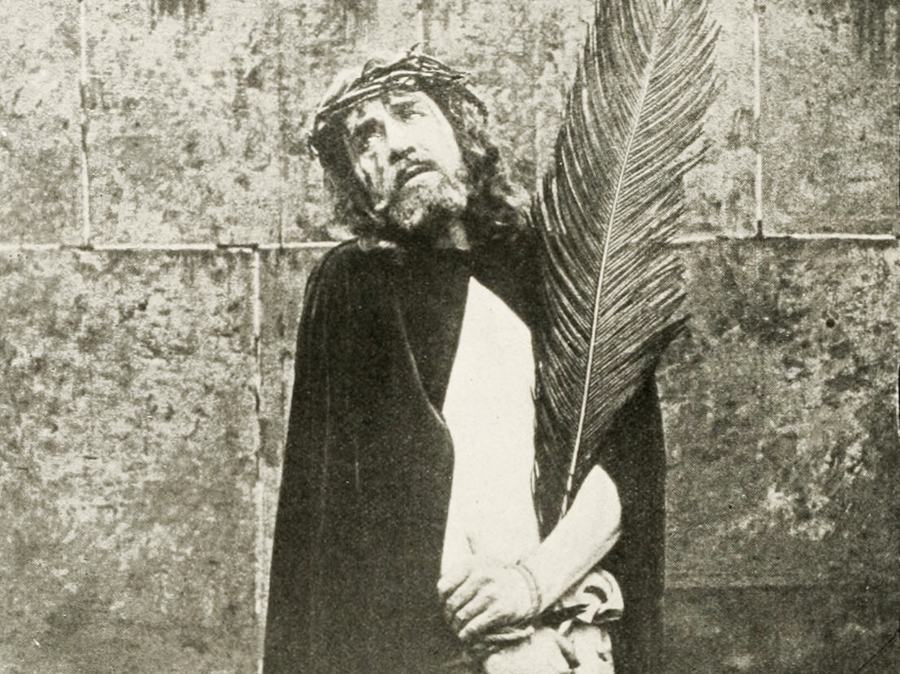
A sun-creased strip of 35 mm nitrate, smelling faintly of myrrh and vinegar, lands on the rewind bench. One frame sticks: Jean Jacquinet’s face, luminously gaunt, framed by a crown of hand-pencilled thorns. The perforations look like stigmata. Already you sense this is not pious kitsch but an artefact that intends to wound the viewer as much as the viewed.
Forget the pastel flannel-board Jesus of Sunday school; cinematographer Gabriel Briand drowns his protagonist in bruised terracotta and sulfuric yellow. Every footstep kicks up a pigment storm so tangible you can taste iron on your tongue. The camera, usually bolted to parquet like a Victorian hatstand, suddenly levitates: a 50-foot crane shot—miraculous for 1903—hovers over Pilate’s courtyard, tilts down to the flagellation, then pirouettes until the world itself seems to orbit the scourged back. The effect is less document than dizzying mise en abyme of complicity: we are both centurion and spy, consumer and consumed.
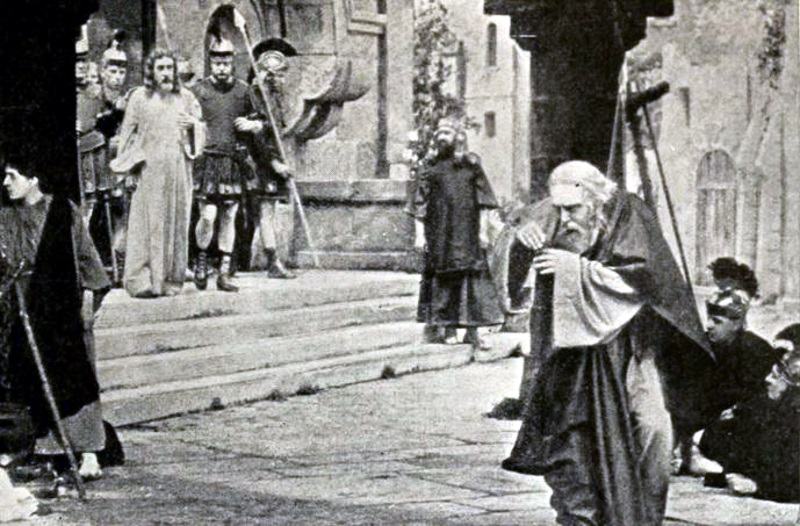
Compare this to the static reverence of The Legend of Provence or the proto-noir dread of The Tide of Death, and you realise how aggressively The Life of Our Saviour weaponises space. Depth is not scenic but eschatological; every alleyway funnels toward Golgotha, every lens flare is a halo inverted.
There was no official score for the 1903 premiere; exhibitors were handed a single sheet: "Play the 'Stabat Mater' once—then cease all music at the raising of the cross." The absence becomes a sonic spike, a negative orchestra. In that vacuum you hear rope fibres pop, a sponge’s wet expiration, the soft thud of a mother fainting. Few films since—including the clamorous Traffic in Souls—have understood that silence can be a louder propaganda than any score.
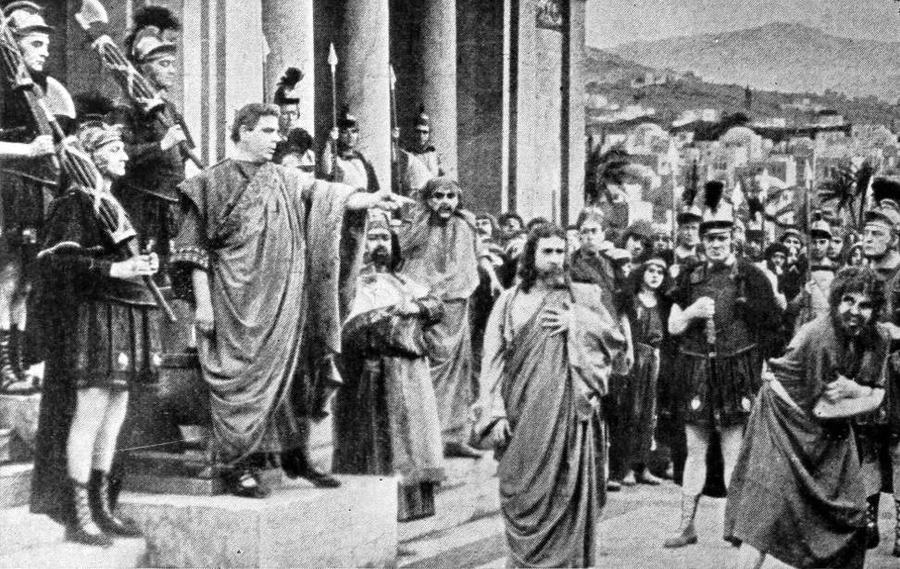
Jacquinet’s Christ is no granite saint; his nostrils flare like a man smelling his own impending combustion. Watch the way his fingers drum against the table during the Last Supper—anxious Morse code against the bread. Gina Moreau answers with a gaze that contains both annunciation and autopsy; she already memorises every lash. Meanwhile Jacques Normand’s Pilate prefigures the bureaucratic chill of The Crucible, signing death with the same ennui one reserves for customs forms.
Pathé’s stencil-colour lab dips each print into a baptism of aniline: vermilion spurts across the scourging scene so violently that some censors feared viewers might faint at the sight of “living blood.” Yet the resurrection glows in a pale sea-blue (#0E7490, chromatically ahead of its century) that seems borrowed from moonlit seawater. The juxtaposition is savage—crimson guilt, cerulean hope—rendered frame-by-frame by armies of women hunched over magnifying glasses, brushes tip-dipped in poison.
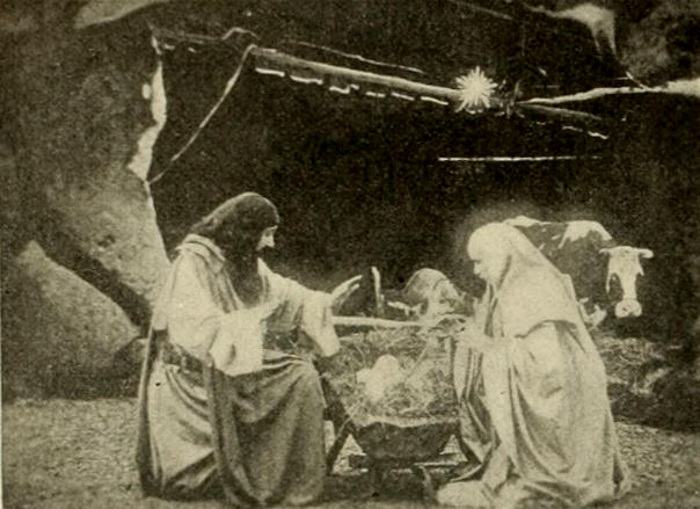
Two shots detonate the narrative: a close-up of a nail, then—cut—an extreme long shot of the city wall. The spatial rupture is so violent that early audiences reportedly gasped, mistaking it for accidental splicing. But the collision is deliberate: intimacy of pain catapulted into panorama of empire. One can trace a direct line from this edit to the Odessa Steps sequence, bypassing the more polite continuity of The Miner's Daughter or the melodramatic reversals of A Million Bid.
Released mere months after the secularist riots of 1903 France, the film refuses both hagiography and anticlerical sneer. Instead it stages a crisis of witness: the camera repeatedly frames spectators within the diegesis—market hags, Roman clerks, children waving palm fronds—who stare back at us, implicating the theatre audience in the jeering chorus. You are not allowed the safe distance of later biblical pageants like The Napoleonic Epics; you are accessory after the fact.
Gina Moreau’s Virgin exceeds the ornamental suffering of The Woman of Mystery or the militant ardour of A Militant Suffragette. In the Pietà sequence she cradles Jacquinet’s lacerated torso, but the camera lingers on her forearms—ropey, work-hardened—announcing a maternal strength that predates any pedestal. The moment shatters the Victorian cliché of passive maternity; this Mary drags death toward dawn.
Police prefects seized prints in Lyon for "excessive realism." One nitrate reel caught flame in a Montmartre booth, sending blackened fragments of the Sermon on the Mount snowing onto boulevard crowds—an accidental auto-da-fé. Such apocrypha only burnished the picture’s legend, much as the disappearance of Little Jack or the moral panic around Champagneruset fed their notoriety.
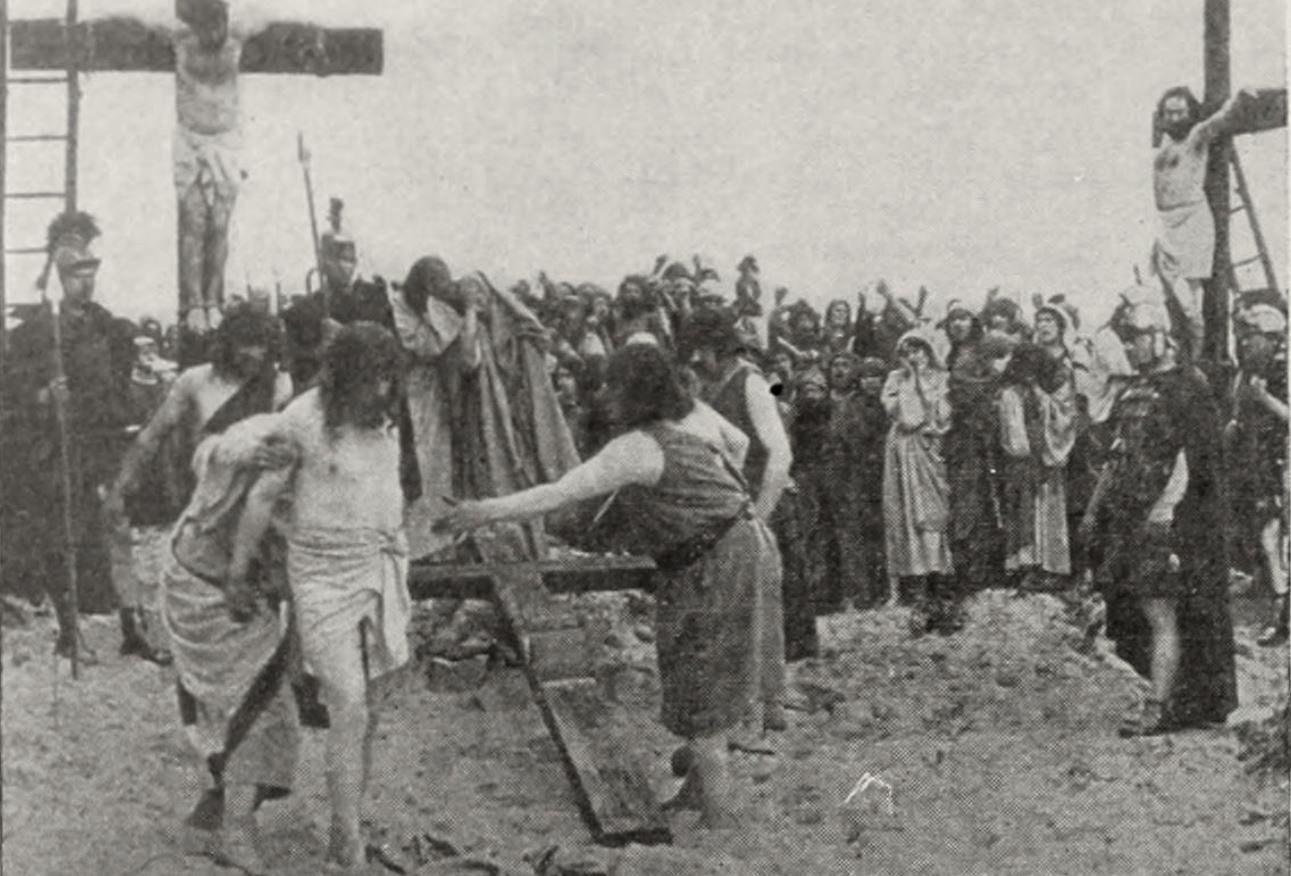
Where Brother Against Brother trades in familial melodrama and Alone in New York flirts with urban picaresque, The Life of Our Saviour opts for cosmic jurisprudence. Its sense of predestination makes even The Last Egyptian seem whimsical. Yet the film also contains flashes of proto-surreal humour: a lamb trots across Pilate’s tribunal wearing a floral garland, an absurdist cameo that anticipates Buñuel’s blasé blasphemy.
In 2022 the Cinémathèque de Provence scanned the lone surviving tinted print at 8K, revealing textures effaced for a century: fingerprints on the nails, a tear evaporating mid-air. The disc’s optional organ track, thankfully, can be muted to resurrect that primal silence—an omission more thunderous than any chord.
Because every contemporary superhero origin, every prestige mini-series crucifixion, borrows subconsciously from this urtext: the colour-coded morality, the slo-mo agony, the guilty POV. Because in an age of algorithmic comfort cinema, this 18-minute reel still feels dangerous—like handling a bullet that’s still hot. Because it reminds us that before CGI thorns, real wrists bled for art, and audiences were expected to bleed back.
Final verdict: Not a devotional curio but a shrapnel fragment of early modernity—sharp enough, over a century later, to pierce the calloused palms of even the most jaded cine-phile.
Community
Log in to comment.