DbcultAccessing Vault...
Cult Review
Senior Film Conservator
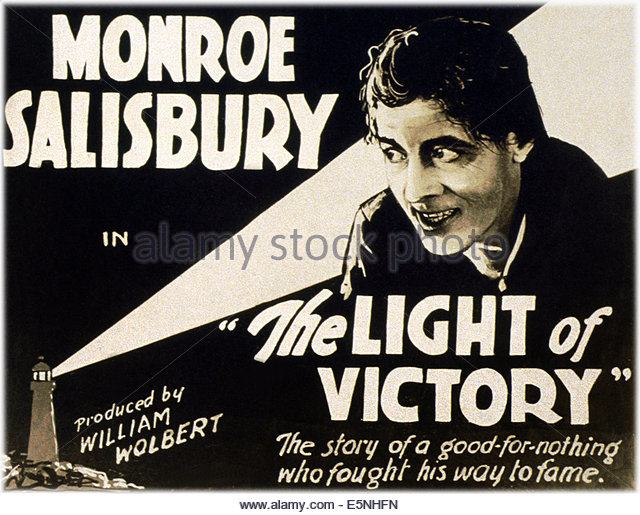
The flickering frames of silent cinema often hold stories that resonate with a surprising contemporary urgency, and The Light of Victory (1919) is a prime example. This isn't merely a historical curiosity; it's a profound exploration of human fallibility, the corrosive power of addiction, and the arduous, often circuitous path to redemption. In an era still grappling with the recent trauma of global conflict, this film, penned by George C. Hull and Waldemar Young, dared to dissect the inner turmoil of a man whose personal demons threatened to eclipse his professional honor and patriotic duty.
Our narrative's anchor is Lieutenant George Blenton, portrayed with compelling nuance by Monroe Salisbury. Blenton is introduced not as a hero, but as a man teetering on the precipice of self-destruction. His initial downfall is agonizingly familiar: an official reception, a moment of weakness, and the public spectacle of intoxication. This single lapse in judgment, amplified by his prominent position within the U.S. Navy, unravels his meticulously constructed life. His engagement to Jane Ravenslee, the formidable captain's daughter, played with resolute conviction by Betty Compson, is summarily dissolved. Compson’s portrayal of Jane is critical here; she isn't merely a damsel in distress but a woman of strength and conviction, whose love for George is tested by his profound failures, yet never entirely extinguished. Her initial decision to break the engagement, though painful, speaks to a societal expectation of decorum and duty that Blenton has flagrantly violated.
The stakes escalate dramatically with the declaration of war. Blenton, despite his tarnished reputation, is entrusted with a mission of critical importance: the delivery of a secret code book to an English admiral. This fragile trust, however, is swiftly betrayed by his persistent vice. The code book, a symbol of national security, is lost to the clutches of German spies, a catastrophic blunder that could tip the scales of war. This sequence, while a plot device, serves as a stark metaphor for Blenton's internal battle – his personal failings now have global ramifications. The weight of this betrayal, both personal and national, is palpable. One might draw a parallel here to the moral quandaries faced by characters in films like The Test, where personal integrity is pitted against overwhelming external pressures.
The ensuing private court-martial is perhaps the film's most chilling segment. Stripped of his dignity, George is presented with a pistol, an implicit command to end his own life, to preserve the honor of the uniform he has so grievously disgraced. It’s a moment of profound psychological horror, a silent scream against the unforgiving standards of military justice. In a final, desperate act of self-medication, he drinks again, then fires the shot. But fate, or perhaps the sheer stubbornness of his will, intervenes; he lives. This survival isn't a reprieve but an extended damnation. He is summarily put ashore on the desolate island of Tafofu, a remote outpost described with chilling brevity as a place 'to rot.' This exile is not just physical; it’s an exile of the soul, a banishment from purpose and belonging.
On Tafofu, Blenton's bitterness towards the U.S. festers, a testament to his shattered pride and perceived injustice. Yet, it is here that a glimmer of hope, however faint, emerges in the form of Lehua, a half-white woman portrayed by Beatrice Dominguez. Dominguez brings a quiet strength and compassionate resolve to Lehua, who sees beyond George's broken exterior to the man he once was, or could be. Her attempts to wean him from his destructive habit are not born of judgment, but of a profound, almost maternal, desire to heal. This relationship offers a stark contrast to his past, a raw, unvarnished connection far removed from the formal strictures of naval society or the romantic expectations of Jane.
Meanwhile, Jane Ravenslee, despite the public disgrace and personal heartbreak, remains bound by a love that defies logic. Her unwavering belief in George's inherent goodness drives her on a perilous journey to find him. This steadfast devotion is a powerful counterpoint to George's self-loathing, a beacon in his self-imposed darkness. Her quest, however, is fraught with danger. Her ship is torpedoed and captured by a German submarine, placing her in immediate peril. This twist of fate not only heightens the dramatic tension but also serves to bring all the major players into a singular, explosive confrontation.
The German submarine, with Jane aboard, converges on Tafofu with a sinister objective: to sink the U.S.S. Victory, the very ship Blenton once served. The irony is poignant, almost cruel. Lehua, sensing the impending catastrophe, desperately attempts to warn the American vessel, her frantic efforts highlighting the futility of individual warning against the machinery of war. It is George, now surprisingly befriended by the German captain in his isolation, who becomes the unlikely catalyst for salvation. His gaze catches the proud flag of the Victory, a potent symbol that pierces through his self-imposed apathy and rekindles a dormant spark of loyalty and duty. In that moment, the years of self-pity and resentment are momentarily forgotten, replaced by an instinct to protect his former comrades.
His signal of danger is the turning point, a silent cry across the water that reverberates with the weight of his past failures and his burgeoning redemption. The Victory, alerted to the threat, retaliates with devastating force, sinking the German submarine. In the ensuing chaos, George confronts the German captain, a deeply personal struggle that transcends national allegiances. It’s a fight not just for survival, but for his soul, a violent exorcism of his demons. He is shot, a fatal wound, but not before ensuring the safety of his countrymen. His death is tragic, yet imbued with a profound sense of purpose. It is a sacrifice that retrospectively sanctifies his earlier disgrace, transforming him from a pariah into a patriot.
Jane, who has endured her own ordeal, finds his body, a bittersweet reunion that underscores the enduring power of love and forgiveness. The film culminates with George being honored posthumously on the Victory, a final, poignant acknowledgment of his ultimate sacrifice. This resolution, while tragic, offers a powerful message of redemption, suggesting that even the most broken individuals can find a path back to honor, even if it requires the ultimate price. The narrative arc, from public shame to solitary exile to ultimate, sacrificial heroism, is a powerful one, echoing themes seen in other films of the era that explored moral comeback, such as I Will Repay, where characters grapple with immense personal debt and the struggle for restitution.
The direction of The Light of Victory, under the collaborative vision of George C. Hull and Waldemar Young as writers, would have relied heavily on visual storytelling, a hallmark of the silent era. The use of close-ups to convey Blenton’s internal torment, the vast, isolating shots of Tafofu, and the dramatic tension of the naval battle would have been crucial. The film’s strength lies in its ability to communicate complex emotional states without dialogue, a testament to the actors’ skills and the director’s visual acumen. Monroe Salisbury, in particular, carries much of the film's emotional weight. His portrayal of George Blenton is a masterclass in silent acting, conveying despair, hatred, and ultimately, a glimmer of nobility, through subtle gestures and powerful expressions. His journey from respected officer to exiled drunkard, and finally to a selfless hero, is meticulously charted.
Betty Compson’s Jane is equally compelling. Her character arc, from heartbroken fiancée to determined seeker and ultimately, a witness to redemption, provides an essential emotional anchor. She represents the enduring power of love and forgiveness, a force that transcends George’s self-destructive tendencies. The character of Lehua, though perhaps less central, is vital. Beatrice Dominguez imbues her with a quiet dignity and an unwavering compassion that serves as a moral compass for George during his darkest hours. Her presence on Tafofu not only provides a chance for George's recovery but also introduces a cultural contrast that enriches the narrative. The supporting cast, including Fred Kelsey, Fred L. Wilson, Andrew Robson, Bob Emmons, George Nichols, and Norval MacGregor, would have contributed to the film's atmosphere and gravitas, each playing their part in the unfolding drama.
The film's exploration of alcoholism is particularly potent for its time. It doesn't shy away from depicting the devastating consequences of addiction, both personally and professionally. George Blenton's journey is a cautionary tale, but also one of hope. It suggests that even when one has fallen furthest, the capacity for redemption remains. This theme of moral reckoning and societal expectation was a frequent subject in early cinema, seen in dramas like Temptation, where characters are often tested by their desires and forced to confront the repercussions of their choices.
Furthermore, the wartime setting elevates the personal drama to a national allegory. George Blenton's personal battle with his demons mirrors the larger conflict, suggesting that national victory often requires individual sacrifice and the overcoming of internal weaknesses. The film subtly weaves patriotism into its fabric, not as jingoistic rhetoric, but as a deep-seated sense of duty that, though buried, can be reignited. The visual depiction of the U.S.S. Victory’s flag, a simple yet powerful symbol, is enough to stir George from his stupor, reminding him of a larger purpose beyond his personal misery. This kind of patriotic awakening through a character's personal struggle is a trope that resonates across many war narratives, from `Red, White and Blue Blood` to countless others.
While The Light of Victory might not be as widely discussed as some of its more famous contemporaries, its narrative depth and thematic ambition make it a noteworthy piece of silent cinema. It offers a window into the moral sensibilities and storytelling conventions of the post-WWI era. The film’s ability to craft a compelling tale of personal disgrace and ultimate heroism, all without spoken dialogue, is a testament to the artistry of its creators and performers. The emotional arcs are clear, the stakes are high, and the resolution, though tragic, feels earned.
The film’s focus on the human cost of war, not just on the battlefield but in the shattered lives of individuals, resonates deeply. It’s a reminder that heroism isn't always about grand gestures but often about overcoming one's own internal battles. The film's message of redemption, achieved through sacrifice, is a timeless one. It speaks to the universal human desire for forgiveness and the chance to make amends, even when the path is arduous and fraught with peril. In an era when cinema was still defining its language, The Light of Victory demonstrated a sophisticated understanding of character development and narrative tension.
For those interested in the evolution of cinematic storytelling, particularly in the silent era, this film provides valuable insights. It showcases the dramatic potential of a relatively nascent art form, proving that powerful stories could be told with visual flair and compelling performances, even without the aid of synchronized sound. The film's exploration of themes like duty, honor, addiction, and love remains as relevant today as it was a century ago. It reminds us that the struggle for self-mastery and the pursuit of redemption are perennial human endeavors, often playing out against the backdrop of larger societal conflicts.
Ultimately, The Light of Victory is more than just a war drama; it is a profound character study, a journey into the heart of a man pushed to his limits and beyond. It’s a testament to the enduring power of silent film to evoke deep emotion and explore complex moral landscapes. The film's conclusion, with George Blenton honored posthumously, leaves a lasting impression, a stark reminder that even in death, a legacy of honor can be forged from the ashes of disgrace. It's a poignant and powerful statement on the human capacity for transformation and the ultimate triumph of spirit over personal failings, encapsulating a message of enduring hope and the possibility of finding 'the light of victory' even in the darkest of personal battles.

IMDb —
1923
Community
Log in to comment.