DbcultAccessing Vault...
6.2/10
Senior Film Conservator
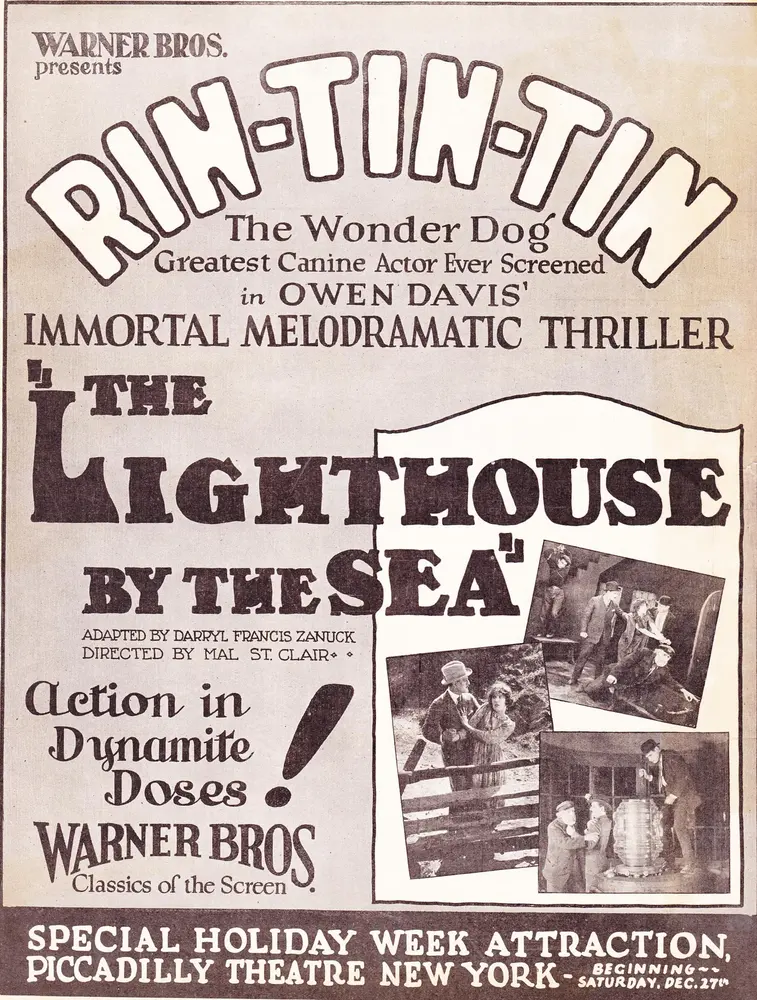
A definitive 6.2/10 rating for a film that redefined the boundaries of cult cinema. The Lighthouse by the Sea remains a cornerstone of transgressive art.
The year 1924 was a pivotal juncture in the evolution of visual storytelling, a time when the grammar of cinema was being etched into celluloid by visionaries who understood that silence was not an absence of sound, but an amplification of presence. In the center of this creative maelstrom stood The Lighthouse by the Sea, a film that arguably cemented the legend of Rin Tin Tin and saved Warner Bros. from the precipice of insolvency. Directed by Malcolm St. Clair and penned by the then-emerging Darryl F. Zanuck alongside Owen Davis, this feature is a masterclass in tension, atmospheric dread, and the sheer charisma of a canine protagonist who possessed more expressive range than many of his human contemporaries.
At the heart of the narrative is the poignant struggle of Caleb Gale, portrayed with a weathered, tragic dignity by Charles Hill Mailes. Caleb’s looming blindness is not merely a medical affliction; it is an existential threat to his identity as the sentinel of the coast. In the silent era, the trope of the 'secret' was a common narrative engine—as seen in the thematic heavy-lifting of The Silence of Dean Maitland—but here, the secret is tied to the physical environment. If the light fails, ships perish. If the authorities discover his infirmity, Caleb is cast into the cold. This creates a pervasive sense of anxiety that permeates every frame of the lighthouse interior.
The cinematography utilizes the chiaroscuro of the lighthouse’s lantern room to mirror Caleb’s internal darkness. As he fumbles with the wicks and the machinery, the audience feels a visceral sympathy. His daughter Flora (played by the luminous Louise Fazenda, stepping away from her usual comedic roles) provides the necessary counterbalance, her youthful energy masking her father’s decline. This dynamic of shared deception is handled with a subtlety that avoids the saccharine traps of later Hollywood melodramas.
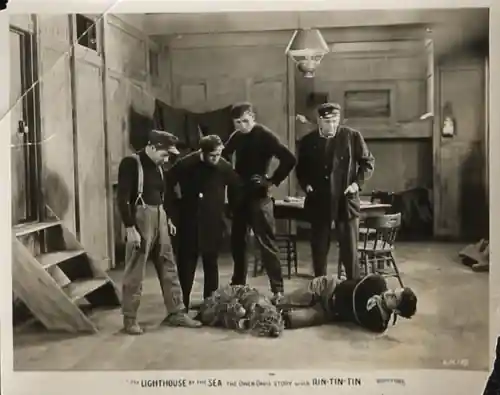
While the internal drama of the Gale family provides the emotional stakes, the external threat arrives in the form of the bootlegging underworld. The 1920s fascination with 'rum-runners' is fully realized here. Joe, the antagonist portrayed with a menacing grit by Matthew Betz, views the lighthouse as a tactical nuisance. The smugglers represent the encroaching modernity of crime—organized, ruthless, and devoid of the maritime honor that Caleb embodies. Unlike the more abstract moral inquiries found in The Question, the conflict in The Lighthouse by the Sea is refreshingly tactile. It is about the control of light versus the exploitation of darkness.
The pacing of the film accelerates as the smugglers orchestrate their assault. The lighthouse, once a beacon of safety, becomes a vertical fortress under siege. The choreography of the fight scenes, particularly those involving the rugged William Collier Jr., is surprisingly modern. There is a weight to the punches and a genuine sense of peril in the stunts that puts many contemporary green-screen spectacles to shame.
It is impossible to discuss this film without acknowledging the sheer magnetism of Rin Tin Tin. In an era where animal actors were often relegated to background texture or comic relief, as seen in some earlier works like Mongrels, Rinty was a genuine leading man. His performance here is nuanced; he isn't just a dog performing tricks, he is a character with agency. Whether he is alerting the household to the presence of intruders or participating in the high-stakes climax, his movements are imbued with a fierce intelligence. His role here feels like a refinement of the animal-as-hero archetype established in Brawn of the North, but with a more sophisticated integration into the plot's mechanical requirements.

Darryl F. Zanuck’s touch is evident in the film’s tight structure. Before he became a studio mogul, Zanuck was a writer who understood the necessity of the 'hook.' The dual-threat narrative—the internal threat of blindness and the external threat of the smugglers—ensures that there is never a lull in the action. The film avoids the meandering philosophical digressions of Soviet contemporaries like Kino-Pravda No. 13: Yesterday, Today, Tomorrow, opting instead for a populist, high-octane delivery that prioritizes emotional resonance and physical stakes.
The dialogue intertitles are sparse but effective, allowing the visual storytelling to carry the heavy lifting. This is 'pure cinema' in the Hitchcockian sense—the audience knows what the characters do not, and the frustration of watching the blind Caleb walk into a trap is a testament to the film’s expert manipulation of perspective. The use of the dog as the only 'witness' who can truly see the whole truth is a brilliant narrative device that elevates the film above standard genre fare.
Visually, the film is a triumph of location scouting and set design. The lighthouse itself feels like a living, breathing entity. The mechanical intricacies of the rotating lens are captured with a fetishistic detail that highlights the era's fascination with industrial power. The exterior shots of the crashing surf are not merely decorative; they serve as a sonic substitute, the visual rhythm of the waves providing a percussive accompaniment to the silent action. While it may lack the experimental flair of Europa postlagernd, it possesses a rugged American pragmatism that is equally compelling.
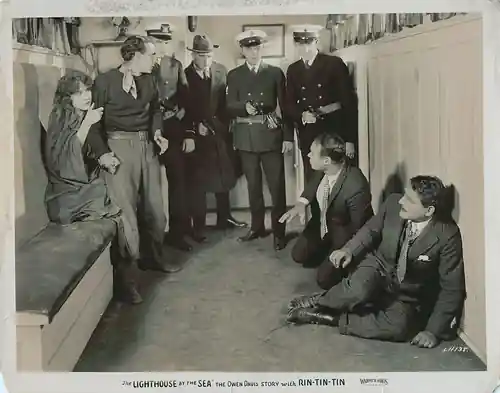
The supporting cast, including the likes of Douglas Gerrard and the versatile Frank Hagney, fill out the world with lived-in performances. There is a sense of community—and the betrayal of that community—that makes the stakes feel personal. Even minor characters, like those played by Andy MacLennan or the Texas Kid, contribute to the textured reality of this coastal enclave. It’s a far cry from the more theatrical, staged feel of The Street Called Straight.
Looking back from a century’s distance, The Lighthouse by the Sea remains a startlingly effective piece of entertainment. It manages to balance the disparate elements of family drama, crime thriller, and animal adventure without ever feeling disjointed. It doesn't rely on the whimsical charms of Landing an Heiress or the historical pageantry of Rob Roy. Instead, it leans into the primal fears of darkness and the universal hope for a loyal protector.
The film’s climax, involving a desperate race against time to relight the beacon, is a masterclass in cross-cutting. As the smugglers close in and Caleb struggles in his sightless world, the intervention of Rinty feels earned rather than miraculous. It is a testament to the film's internal logic that a dog can be the most rational actor in a room full of panicked humans. For those who dismiss silent film as a relic of a simpler time, this work serves as a stern rebuttal. It is sophisticated, emotionally resonant, and technically assured.
In the final analysis, The Lighthouse by the Sea is more than just a 'dog movie.' It is a narrative about the light we keep for others when we can no longer see it ourselves. It is a story of transition—from the old world of maritime tradition to the new world of cinematic spectacle. Whether you are a student of early Hollywood history or simply a lover of well-crafted suspense, this film demands a place in your viewing rotation. It shines as brightly today as it did on that flickering screen in 1924.
IMDb 5.5
1935
Community
Log in to comment.