DbcultAccessing Vault...
Cult Review
Senior Film Conservator
In the bustling, nascent years of American cinema, a period often romanticized yet frequently misunderstood, there emerged a particular kind of narrative that spoke to the era's evolving social consciousness. 'The Little Boy Scout' (1917), featuring the effervescent Ann Pennington, stands as a captivating artifact from this pivotal epoch. It's a film that, despite its century-old vintage, pulsates with themes of autonomy, escape, and the surprising avenues through which freedom can be found. Far from being a mere historical curiosity, it offers a window into the cinematic storytelling conventions of its time, while simultaneously delivering a narrative that, in its core essence, remains strikingly resonant. This isn't just a film; it's a testament to the enduring power of the human spirit to defy oppression, even when portrayed through the silent, expressive language of early cinema.
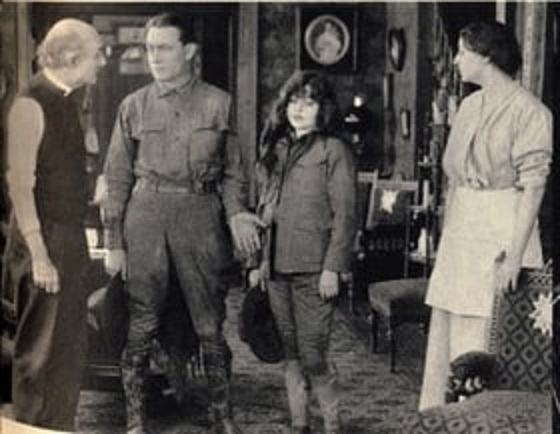
The narrative thrust of 'The Little Boy Scout' is rooted in the plight of Justina Howland, a young woman ensnared by the avarice of her uncle, Miguel. Residing near the U.S.-Mexico border, Justina's anticipated inheritance becomes the catalyst for Miguel's nefarious scheme: a forced marriage to his son, Luis Alvarez. This familial betrayal, a stark illustration of patriarchal control, sets the stage for a dramatic confrontation. The very notion of a woman's destiny being dictated by male relatives was a pervasive societal norm of the time, making Justina's subsequent rebellion all the more potent. The film masterfully builds tension, culminating in the arrival of a priest, signaling the immediate and irreversible nature of Miguel's plan. It's a moment pregnant with dread, yet it also ignites Justina's fierce resolve.
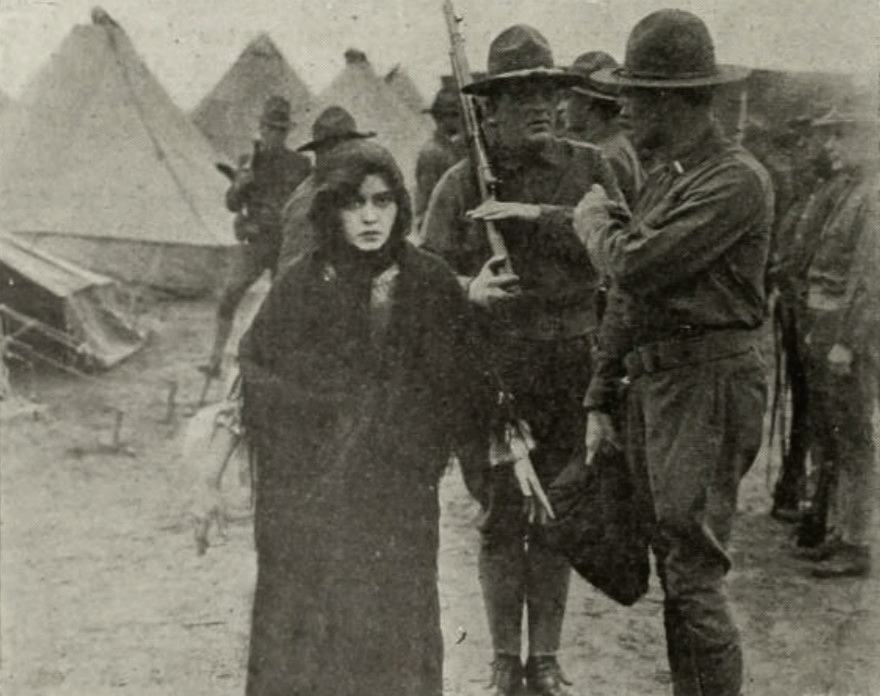
Her escape, a desperate act of self-preservation, is both literal and symbolic. Utilizing the very mule that brought her would-be officiant, she flees across the border, a geographical boundary that also signifies a demarcation between oppression and potential liberation. This act of crossing, a recurring motif in cinema, immediately places Justina in a liminal space, neither wholly Mexican nor yet fully American, but definitively free from Miguel's immediate grasp. Upon reaching the U.S. side, she finds an unexpected haven with Lieutenant Morton's regiment. This encounter is pivotal, introducing a benevolent male figure who contrasts sharply with her tyrannical uncle. It's a trope familiar in early cinema, where virtuous heroes often emerge to rescue damsels in distress, but here, Justina's agency in initiating her escape lends a modern edge to the classic narrative.
Justina's journey to her Aunt Betty in Lowell, Massachusetts, is funded by the soldiers, captivated by her spontaneous dance. This scene is a delightful interlude, showcasing Ann Pennington's real-life talent as a dancer and adding a layer of charming humanity to the otherwise high-stakes drama. The collection taken up by the soldiers underscores a sense of communal support, a stark contrast to the isolation she faced under Miguel. However, the respite in Lowell is fleeting. Miguel, a relentless antagonist, tracks Justina down, his discovery of Aunt Betty's address on a photograph serving as a chilling reminder of his unwavering pursuit. His arrival in Lowell, accompanied by Luis, coincides dramatically with the arrival of Lieutenant Morton's regiment, setting the stage for the film's climactic confrontation. This convergence of characters and storylines, often seen in melodramas like The Closing Net, builds considerable anticipation.
A particularly intriguing element of the plot is Lieutenant Morton's revelation as a local Boy Scout Master. This detail, initially seemingly innocuous, becomes a powerful symbol of Justina's burgeoning desire for freedom and self-determination. Aunt Betty's admiration for Morton and her envy of the Boy Scouts' perceived liberty inspire Justina to consider adopting this unconventional path to escape. The Boy Scout uniform, typically associated with male youth, transforms into a disguise, a cloak of anonymity, and ultimately, a uniform of liberation for Justina. This cross-dressing motif, while perhaps played for comedic effect in some contemporary films, here carries a deeper resonance, highlighting the restrictive gender roles of the era and Justina's radical defiance of them.
The ensuing chase, triggered by Miguel's renewed attempt to seize Justina with the aid of a local sheriff, is a masterclass in silent film suspense. Justina's escape through a window, clad in a Boy Scout uniform, while Aunt Betty bravely fends off the search party, is a moment of pure cinematic exhilaration. The long pursuit, a staple of adventure films, showcases Justina's resilience even as her physical endurance wanes. This sequence, with its blend of urgency and ingenuity, mirrors the spirit found in other films centered on flight and pursuit, though perhaps with a unique gender-bending twist. The raw vulnerability of Justina at her breaking point, exhausted and cornered, heightens the dramatic stakes, making the arrival of Lieutenant Morton, forewarned of her predicament, all the more impactful.
The climax, ingeniously orchestrated, revolves around a large stone marking the state boundary. Justina's unconscious movement to the New Hampshire side, a seemingly minor detail, becomes a legal deus ex machina. Miguel's claim is temporarily thwarted by jurisdictional boundaries, requiring a New Hampshire sheriff. This legal technicality provides Morton with the crucial window he needs. In a swift, decisive move, he secures the services of a minister, transforming the pursuit into an impromptu wedding procession. The Boy Scouts, forming a lane of honor, symbolize a community embracing Justina's newfound identity and freedom. Her marriage, no longer a forced union but a choice made under extraordinary circumstances, represents the ultimate triumph of autonomy over oppression. It's a resolution that, while perhaps melodramatic by modern standards, delivers a deeply satisfying conclusion within the context of early 20th-century storytelling.
Ann Pennington, in the role of Justina Howland, delivers a performance that transcends the limitations of silent cinema. Known for her vivacious stage presence and prodigious dancing talent, Pennington brought a dynamic physicality to her screen roles. In 'The Little Boy Scout', her expressive eyes, fluid movements, and nuanced gestures convey a wide spectrum of emotions – from fear and desperation to defiance and burgeoning joy. Silent actors were masters of pantomime, relying on exaggerated facial expressions and body language to communicate narrative and character. Pennington excels in this, making Justina's journey palpable and engaging even without spoken dialogue. Her ability to embody both vulnerability and steely resolve makes Justina a compelling protagonist, a woman who fights for her own destiny rather than passively accepting it. This kind of spirited female lead was not uncommon in the era, with films like Miss Jackie of the Army and Salvation Joan also featuring women in active, often unconventional, roles.
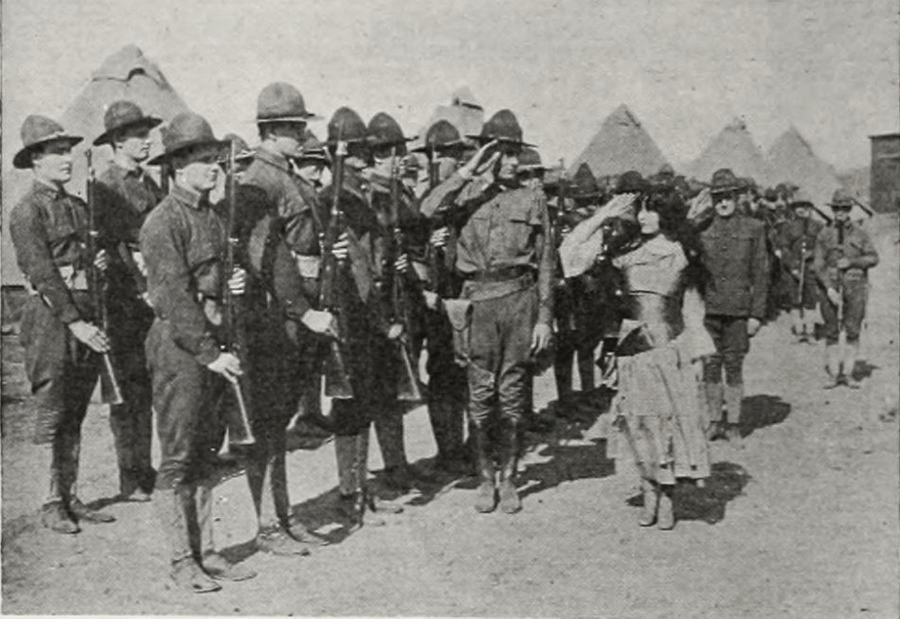
The supporting cast, while not as prominently featured, plays their parts effectively. Fraunie Fraunholz as Luis Alvarez and George Burton as Uncle Miguel embody the villainous archetypes with conviction, their menacing presence providing a tangible threat to Justina. Owen Moore as Lieutenant Morton, on the other hand, exudes a reassuring heroism, a stark contrast to the antagonists. The clear delineation between good and evil, a hallmark of early melodrama, is effectively rendered through these performances. Marcia Harris, as Aunt Betty, provides a delightful blend of warmth and spunk, her spirited defense of Justina adding a touch of humor and unwavering loyalty to the unfolding drama. The ensemble, under Charles Sarver's direction, works cohesively to bring this adventurous tale to life.
Charles Sarver, the credited writer, crafted a narrative that is both adventurous and emotionally resonant. While directorial credits for many early films can be hazy, the effective pacing and clear storytelling evident in 'The Little Boy Scout' speak to a deliberate and competent hand behind the camera. The film utilizes its locations effectively, from the dusty Mexican borderlands to the quaint streets of Lowell, Massachusetts, lending a sense of authenticity and scope to Justina's cross-country odyssey. The chase sequences, in particular, are well-staged, demonstrating an understanding of how to build suspense through movement and rapid cutting, a burgeoning art form in the 1910s. The use of intertitles, the textual inserts that conveyed dialogue and exposition, is judicious, allowing the visual storytelling to take precedence while still guiding the audience through the more complex plot points.
The cinematography, while adhering to the technical limitations of its era, captures the drama with clarity. Static shots predominate, yet there are instances of dynamic camera placement during the chase, hinting at the evolving language of cinema. The film's visual grammar, characteristic of the period, relies on strong compositions and clear sightlines to ensure the audience could follow the action without the benefit of sound. The symbolic use of the border stone, for instance, is a clever narrative device that highlights the importance of physical and legal boundaries, a concept explored in various forms in other early films like The Vital Question, which often grappled with societal rules and their implications.
'The Little Boy Scout' is more than just an entertaining silent film; it's a valuable historical document. It reflects the social anxieties and evolving values of America in 1917. The theme of female autonomy, particularly against forced marriage, resonates deeply. Women's suffrage was gaining momentum, and films featuring strong, independent female characters, even within the confines of melodrama, spoke to a shifting cultural landscape. Justina's transformation into a 'Boy Scout' is a powerful metaphor for breaking free from prescribed gender roles, adopting a masculine identity to gain freedom in a world that offered limited options for women. This echoes themes of identity and societal expectation seen in films like Das Modell, where characters often navigate complex social terrains.
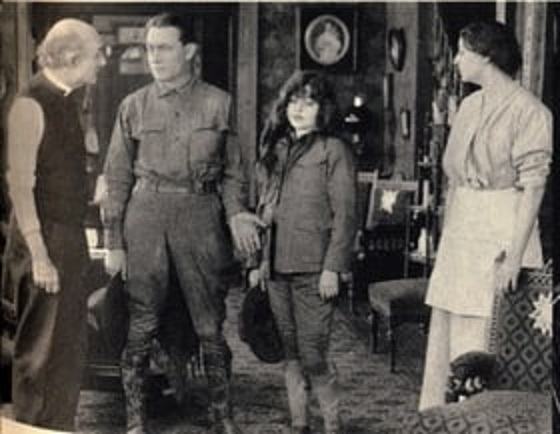
The film also touches upon themes of guardianship and legal rights, which were frequently explored in literature and cinema of the period. Miguel's assertion of his 'lawful guardian' status brings to mind the legal battles and ethical dilemmas portrayed in narratives like The Old Curiosity Shop (though a literary work, its themes were widely adapted) and early legal dramas such as Judge Not or And the Law Says. The resolution, hinging on a state boundary and the swift intervention of a benevolent authority figure, highlights both the complexities and occasional absurdities of legal systems. The Boy Scouts, a relatively new organization at the time, are presented in an overwhelmingly positive light, symbolizing virtue, community, and structured masculinity, which in turn becomes a vehicle for Justina's liberation.
Furthermore, the portrayal of the U.S.-Mexico border, while perhaps simplistic by today's standards, reflects the cultural perceptions and interactions of the time. The border acts as both a barrier and a gateway, a place of danger and opportunity. Justina's initial escape across it is a literal and figurative crossing into a new life, a theme of migration and new beginnings that resonates across many genres, including Westerns like '49-'17. The film, in its quiet way, offers a glimpse into the socio-political fabric of a bygone era, allowing us to understand the concerns and aspirations of its contemporary audience.
'The Little Boy Scout', with its blend of melodrama, adventure, and surprising social commentary, remains a delightful and insightful viewing experience. It's a testament to the enduring appeal of a well-told story, regardless of the technological advancements of cinema. Ann Pennington's vibrant performance anchors the film, making Justina's plight and eventual triumph genuinely moving. The film's unique resolution, utilizing a geographical boundary and the Boy Scout motif, is both charmingly inventive and deeply symbolic, reinforcing the idea that freedom can be found in the most unexpected places and through the most unconventional means. It's a film that, despite its silent nature, speaks volumes about resilience, the fight for personal liberty, and the transformative power of identity.
For those interested in the evolution of cinema, the role of women in early film, or simply a captivating story of escape and self-discovery, 'The Little Boy Scout' offers a rich and rewarding experience. It reminds us that the foundational elements of compelling storytelling – engaging characters, high stakes, and a satisfying resolution – have remained constant throughout cinema's illustrious history, even as the techniques of presentation have changed dramatically. This film, a true gem of the silent era, continues to shine brightly, inviting contemporary audiences to appreciate its historical significance and its timeless narrative appeal.
IMDb 5.7
1934
Community
Log in to comment.