DbcultAccessing Vault...
Cult Review
Senior Film Conservator
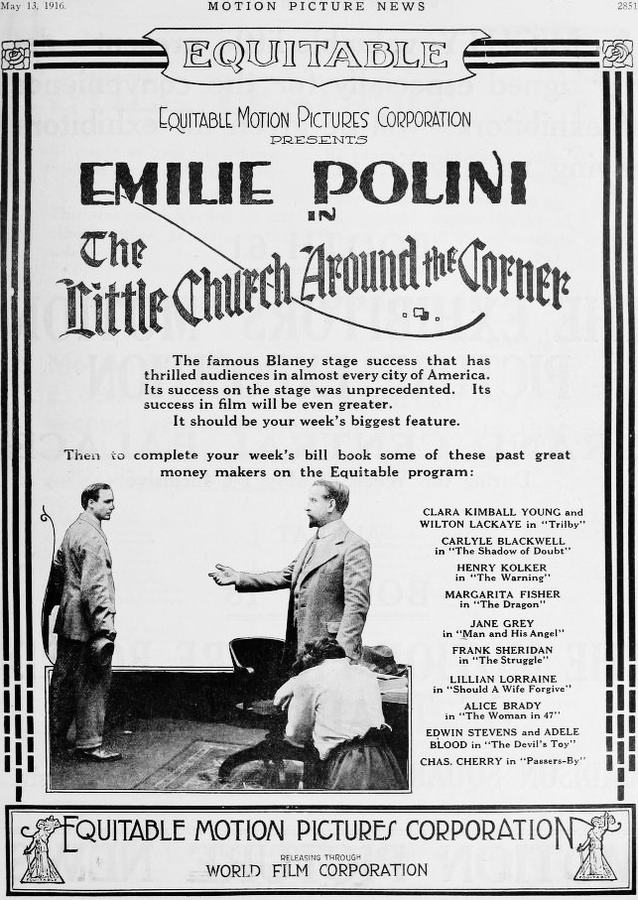
Stepping into the cinematic landscape of the early 20th century, one often encounters narratives steeped in fervent emotion, stark moral dilemmas, and the kind of dramatic sweep that only the silent era could truly master. The Little Church Around the Corner, a film whose very title evokes a sense of quaint serenity, belies the tempestuous human drama raging beneath its surface. This is not a gentle stroll through pastoral fields but a bruising journey into the darker recesses of human motivation, a tale of love curdled into vengeance, and the arduous, often agonizing, path to redemption. It’s a stark reminder that even in an age of nascent filmmaking, the capacity for profound storytelling was already well-established, paving the way for the complex narratives we cherish today.
The film plunges us headfirst into a world where personal slight blossoms into a full-blown vendetta. The central conflict ignites with a spurned suitor, his heart undoubtedly fractured by the rejection of his beloved. She, in a twist of fate that fuels the antagonist’s rage, chooses another – a man tragically ensnared by the insidious grip of morphine addiction. This narrative choice immediately positions the film within a societal context grappling with the devastating realities of drug dependency, a theme that resonates with a grim timelessness. The antagonist, far from licking his wounds in private, meticulously crafts a plan of retribution, a testament to the destructive power of unrequited love turned sour. His machinations are not merely impulsive acts but calculated steps designed to inflict maximum pain and reclaim what he believes was unjustly denied him. The very premise sets up a fascinating exploration of justice, revenge, and the blurred lines between them, echoing the moral quandaries found in films like Dämon und Mensch, where the struggle between good and evil, or rather, the human and the monstrous, takes center stage.
The true depth of the antagonist’s malevolence reveals itself after the birth of the couple's daughter. This innocent arrival, far from softening his resolve, merely provides a fresh, more potent weapon for his arsenal of revenge. He exploits the father’s vulnerability, his morphine habit, reporting the couple to the authorities as unfit parents. This act, cold and clinical, strips them of their parental rights and, more devastatingly, their freedom, as both are institutionalized. The film here delves into the harrowing legal and social implications of addiction, portraying it not just as a personal failing but as a societal judgment, capable of tearing families asunder. The antagonist’s subsequent move to gain legal possession of the child, motivated not by genuine care but by the child's impending inheritance, paints him as a truly despicable figure, a manipulator par excellence. This cynical pursuit of wealth through the exploitation of human misery adds another layer to the film's critique of ambition and morality, a theme not dissimilar to the complex familial and societal pressures explored in The Land of Promise, where inheritance and social standing often dictated personal destinies.
Emilie Polini, in her portrayal of the distraught wife and mother, likely delivers a performance steeped in the expressive, often heightened, gestures characteristic of the silent screen. Her character’s journey – from hopeful bride to institutionalized victim, grappling with the loss of her child and the despair of her husband’s addiction – would demand a profound emotional range. Madge Evans, presumably as the daughter or another pivotal character, would have to navigate the emotional landscape shaped by such intense parental strife. The silent film actor’s craft relied heavily on facial expressions, body language, and the ability to convey complex inner turmoil without dialogue, a skill that could make or break such a melodrama. One can only imagine the heart-wrenching scenes where Polini's character would silently plead, weep, or rage against the injustice of her situation, drawing the audience into her profound suffering.
But the human spirit, even when battered and broken, often finds a way to ignite. The film’s narrative takes a pivotal turn when the parents, against all odds, manage to escape from the asylum. This escape isn't merely a physical liberation; it symbolizes a spiritual awakening, a desperate bid for self-determination and the reclamation of their dignity. It’s a moment of thrilling defiance, reminiscent of the adventurous spirit and cunning required in tales like In Search of the Castaways, where protagonists overcome seemingly insurmountable obstacles. What follows is perhaps the most compelling arc of the entire story: the husband's arduous struggle to cure himself of his morphine addiction. This is not a facile recovery but a grueling, visceral battle against a formidable foe within himself. The film, through its visual storytelling, would have to convey the torment, the withdrawal, and the sheer force of will required for such a transformation. This act of self-purification is driven by an unshakeable desire to prove his fitness as a father, to win back his family, and to defy the antagonist’s cruel judgment.
The success of his self-cure is the turning point, the narrative’s moment of triumph against overwhelming adversity. Now, armed with irrefutable proof of their fitness, the couple embarks on the final, climactic battle: the legal fight to take back their baby. This courtroom drama, though silent, would be imbued with intense emotional stakes. The visual contrast between the now-sober, determined husband and the cunning, yet morally bankrupt, antagonist would be palpable. The film would rely on powerful visual cues, perhaps symbolic imagery, and the compelling performances of its cast to convey the gravity of the legal proceedings and the justice finally served. The themes of perseverance and the ultimate triumph of familial love over spiteful revenge are powerfully articulated here, making a strong case for the enduring power of the human bond.
Beyond the immediate plot, The Little Church Around the Corner serves as a fascinating lens through which to view the societal anxieties and moral compass of its era. The prevalence of drug addiction, particularly to opiates like morphine, was a significant public health concern in the early 20th century, often leading to social ostracization and legal ramifications. The film doesn't shy away from portraying the devastating personal and familial costs of such an affliction. It also touches upon the precarious position of women in society, with Emilie Polini’s character being largely at the mercy of both her husband’s illness and the antagonist’s machinations, highlighting the limited agency many women possessed at the time. The film’s exploration of jealousy as a destructive force is also noteworthy, aligning with the core premise of films like Jealousy, where unchecked envy leads to ruinous consequences.
The narrative’s ultimate resolution, with the couple returning to the small church where they were married, is a powerful symbolic act. This 'little church' becomes more than just a setting; it transforms into a sanctuary of enduring faith, a testament to the sanctity of their vows and the resilience of their love. It’s a full-circle moment, signifying not just the overcoming of external threats but also the internal healing and renewal of their spiritual and emotional bond. This final scene provides a poignant sense of closure, a quiet triumph after a storm of chaos and despair. It suggests that despite the darkest trials, faith, love, and perseverance can ultimately lead to a place of peace and gratitude. This return to a place of origin, a symbol of enduring commitment, provides a powerful emotional resonance that elevates the film beyond mere melodrama.
Without the luxury of spoken dialogue, the burden of storytelling fell squarely on the shoulders of the actors. Emilie Polini’s role, in particular, would have demanded a deeply empathetic and physically expressive performance. Imagine the anguish conveyed through her widened eyes, the despair in her slumped shoulders, or the fierce determination in her rigid posture during the legal battles. Her ability to communicate the wife’s journey from romantic hope to utter devastation, and then to a renewed strength, would be central to the film's emotional impact. Similarly, the actor portraying the addicted husband would need to vividly depict the physical and psychological toll of morphine addiction, as well as the monumental effort of his recovery. This would require a nuanced performance, avoiding caricature while still making the character's internal struggle palpable. The antagonist, too, would need to embody a chilling, calculating villainy without resorting to overt theatricality, making his quiet malice all the more sinister. The subtle interplay of their expressions and gestures would have been crucial in conveying the intricate web of emotions at play.
The absence of dialogue also placed immense pressure on the visual language of the film. Cinematography, even in its nascent stages, would have been employed to heighten the drama. Close-ups would emphasize emotional reactions, while wider shots could establish the oppressive atmosphere of the asylum or the comforting sanctuary of the church. Intertitles, the textual explanations interspersed throughout silent films, would have been crucial for conveying key plot points and character thoughts, acting as a narrative bridge where visual cues alone might not suffice. Their careful crafting, balancing exposition with emotional impact, would have been another silent art form within the film itself. The pacing, too, would be critical, building suspense during the escape and the legal battle, and allowing moments of quiet reflection, such as the final scene at the church.
The Little Church Around the Corner, while perhaps not as widely known as some of its contemporaries, stands as a testament to the power and sophistication of early cinema. It tackles weighty themes with a directness and emotional intensity that transcends its historical context. The film's examination of addiction, revenge, and the arduous road to redemption remains relevant, speaking to universal human experiences. It reminds us that the struggle for family, for dignity, and for a second chance is a timeless narrative, capable of captivating audiences regardless of technological advancements. The unwavering spirit of the parents, their resilience in the face of calculated cruelty, offers a message of hope that resonates deeply.
Considering its place in cinematic history, this film offers valuable insight into the evolving craft of visual storytelling. It showcases how directors and actors, with limited tools, managed to evoke complex emotional landscapes and deliver compelling narratives. The reliance on strong visual cues, expressive performances, and well-placed intertitles highlights the ingenuity of early filmmakers in overcoming the constraints of their medium. This film, like many from its era, represents a crucial stepping stone in the development of cinematic language, demonstrating how foundational elements of drama and character development were established long before the advent of sound and color. It’s a compelling piece of film history that deserves to be rediscovered and appreciated for its raw emotional power and its intricate exploration of the human condition.
In conclusion, The Little Church Around the Corner is far more than a simple melodrama; it's a profound exploration of human frailty and strength, of the darkness of vengeance and the illuminating power of love and redemption. Its enduring themes, coupled with the compelling performances by Emilie Polini and Madge Evans, make it a significant, albeit often overlooked, piece of silent film heritage. It is a powerful reminder that even in the quietest of cinematic forms, the loudest human emotions can find their most eloquent expression.
IMDb 5.4
1928
Community
Log in to comment.