DbcultAccessing Vault...
6/10
Senior Film Conservator
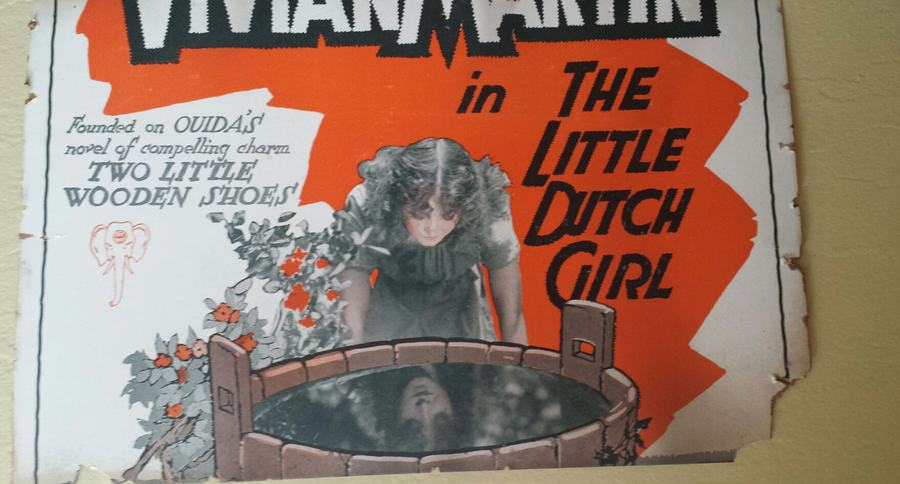
A definitive 6/10 rating for a film that redefined the boundaries of cult cinema. The Little Dutch Girl remains a cornerstone of transgressive art.
Step into the sepia-toned world of 1915, where The Little Dutch Girl unfurls a narrative as delicate as a watercolor and as devastating as a winter storm. This cinematic artifact, penned by Ouida and E. Magnus Ingleton, transcends its silent era origins to deliver a potent commentary on purity, class disparity, and the brutal collision of innocence with a world ill-equipped to safeguard it. It’s a film that resonates with a timeless, aching beauty, inviting us to ponder the fragility of virtue in the face of societal indifference and personal disillusionment. From its very genesis, the story establishes a profound connection to nature, a motif that will echo tragically through its entire runtime.
Our protagonist, known simply as Little Dutch, enters the world under circumstances as idyllic as they are unusual. Discovered as an infant, nestled within a basket amidst the serene lilies of a lake, she is a gift from the water, found by an old gardener whose heart is softened by the antics of his beloved ducks. This origin story imbues her with an almost mythical quality, a child of nature untouched by human artifice. Her early years, spent aiding her guardian in the verdant embrace of the garden and navigating the bustling marketplace, paint a vivid picture of a life lived in harmony with the earth. Julia Stuart, in her portrayal of Little Dutch, embodies this nascent purity with an understated grace, her every gesture conveying a deep-seated connection to her humble existence. She is a living embodiment of pastoral simplicity, a stark contrast to the complexities that await her.
The narrative takes a somber turn when, at the tender age of fourteen, Little Dutch faces the irreparable loss of her guardian. Left with little more than a few coins, the house, and the garden, she navigates this profound solitude with a quiet resilience. This period of her life highlights a profound vulnerability, yet also a burgeoning strength, forged in the crucible of self-reliance. It’s a poignant testament to the human spirit’s capacity to endure, even when bereft of conventional support. The isolation, however, also renders her susceptible to the machinations of a world she barely comprehends, setting the stage for the pivotal encounter that will irrevocably alter her trajectory.
Enter Lionel, a celebrated painter, a figure of urban sophistication and artistic fervor. His quest for a muse, a perfect 'Marguerite,' leads him to the unassuming beauty of Little Dutch. He sees in her not merely a model, but the very essence of unspoiled grace, a living canvas of innocence. His persuasion draws her from her quietude into the dazzling, yet potentially perilous, world of art and high society. This intersection of worlds—the earthy simplicity of Little Dutch and the refined artistry of Lionel—forms the central dynamic of the film. It's a relationship fraught with unspoken tensions, a delicate balance between admiration and potential exploitation. Chester Barnett, as Lionel, skillfully navigates the complexities of a character who is at once drawn to and ultimately humbled by Little Dutch's unblemished spirit.
As Lionel’s attentions intensify, a new element enters the emotional landscape: the burgeoning jealousy of Jean, the woodman. Portrayed with earnest conviction by John Bowers, Jean represents a different kind of love—one rooted in loyalty, protection, and the shared rhythms of their rural community. His affection for Little Dutch is unpretentious, steadfast, and deeply protective. He sees the potential danger in Lionel’s glamorous world, a threat to the purity he cherishes in Little Dutch. This classic love triangle, though subtle in its silent portrayal, adds a layer of poignant conflict, contrasting the allure of the exotic with the comfort of the familiar. Jean’s silent vigil and his eventual heroic actions underscore his unwavering devotion, a stark counterpoint to Lionel’s more cerebral, artistic interest.
A pivotal moment arrives when Lionel invites Little Dutch for an outing, a seemingly innocuous gesture that carries profound implications. This excursion deliberately coincides with a solemn village pilgrimage to the Shrine, a stark symbolic contrast between spiritual devotion and worldly indulgence. Their journey culminates at a hotel, a bastion of urban leisure, far removed from the rustic simplicity of her home. From a secluded arbor, Little Dutch observes the joyful, communal celebrations of her fellow villagers, a poignant tableau that underscores her growing distance from her roots. Yet, even amidst this unfamiliar luxury, her absolute innocence remains an impenetrable shield. When Lionel bids her goodnight upon their return, her unblemished purity has, against all odds, conquered him. He recognizes the profound chasm between their worlds and resolves, with a surprising act of self-restraint, to leave her in peace. His declaration that he must go away, though intended to protect her, leaves Little Dutch adrift in a sea of unspoken sorrow. This moment of Lionel's moral awakening is crucial, revealing a depth to his character that transcends mere artistic desire, hinting at the genuine impact Little Dutch has had on him. It reminds one of the moral quandaries explored in films like The Path Forbidden, where characters grapple with difficult choices in the face of innocence.
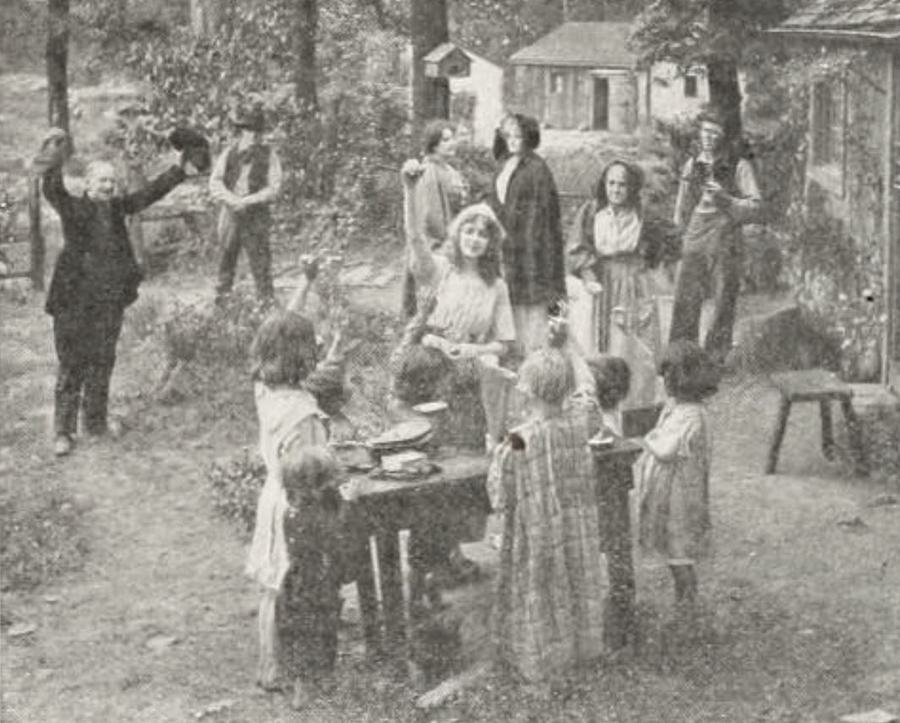
The aftermath of Lionel's departure plunges Little Dutch into a profound quietude, a sorrow that settles upon her like a heavy shroud. Her world, once vibrant with simple joys, now feels hollowed out. It is at this vulnerable juncture that Lise, a character who seems to revel in tormenting Little Dutch, delivers a cruel blow. Her fabricated tale of Lionel’s destitution and illness in the distant "great city" acts as a catalyst, igniting Little Dutch's unwavering, selfless devotion. In a display of profound, almost naive, loyalty, Little Dutch resolves to journey to his aid. The 200-mile trek, undertaken on foot due to her lack of funds, becomes a powerful symbol of her unwavering spirit and the immense sacrifice she is willing to make for someone she believes to be in dire need. This arduous pilgrimage, with its inherent dangers and physical toll, could draw parallels with the solitary and challenging journeys depicted in films such as En hjemløs Fugl (A Homeless Bird), where protagonists face immense personal hardship alone.
Unbeknownst to Little Dutch, Jean, her loyal woodman, learns of her desperate quest. His devotion manifests in swift action; he hastens to the great city, locating Lionel's abode and patiently awaiting her arrival. His presence serves as a silent guardian, a protective shadow against the harsh realities of the urban landscape. When Little Dutch finally arrives, her appearance is a testament to her grueling journey: wooden shoes worn through, clothing bedraggled and torn, a truly forlorn figure. Her innocent heart, however, remains undaunted. She rings the bell, and the door, almost magically, opens, revealing not a humble dwelling but a vast, opulent gallery filled with paintings and statues. This initial glimpse into Lionel's true world is a moment of awe and wonder, but also a precursor to the devastating revelation that awaits her. The sheer scale of the deception, albeit unintentional on Lionel's part, is about to be laid bare.
Following the murmur of voices, Little Dutch parts a curtain, expecting to find a suffering artist. Instead, she is met with a riotous tableau: Lionel, reclining on a couch, surrounded by a boisterous crowd of men and scantily clad, "décolleté" women. This vision shatters her carefully constructed reality, transforming her innocent devotion into agonizing disillusionment. The juxtaposition of her pure intentions and the decadent scene before her is a brutal, visceral shock. A piercing scream, raw and unadulterated, erupts from her, a sound that signifies the irrevocable breaking of her spirit. She flees, her world crumbling around her, the illusion of Lionel’s suffering and her noble quest utterly obliterated. Lionel, recognizing the profound damage, attempts to follow, but it is too late. The chasm between their worlds has proven too vast to bridge, his attempt at protection ultimately failing in the face of her pure, yet easily wounded, heart. This moment of urban disillusionment and the shattering of innocence evokes the stark realities often depicted in social dramas of the era, such as A Factory Magdalen, where vulnerable women confront harsh societal truths.
Faithful Jean, ever vigilant, is not swift enough to prevent her desperate leap into the river, a final, despairing act of surrender. Yet, his unwavering loyalty prevails; he rescues her from the cold embrace of the water, bringing her back to her humble home. But the physical rescue cannot mend the spiritual wound. Little Dutch lies upon her small bed, surrounded by well-meaning neighbors whose sympathy, alas, arrives too late. Her spirit, once so vibrant and resilient, has been irrevocably broken. In a fleeting moment of lucidity, she rouses herself, performing a final, deeply symbolic act: placing two rosebuds in her worn wooden shoes and whispering, "Send them to him." This poignant gesture, a silent message of her enduring, pure affection despite the betrayal, speaks volumes of her unconditional love and her inability to truly hate. It is a heartbreaking testament to her unyielding goodness, even in the face of profound pain. The rosebuds, symbols of love and beauty, become her final, silent communication, a stark contrast to the cacophony of Lionel’s world.
The film culminates in a scene of profound, quiet tragedy. One night, Little Dutch, her spirit gently fading, passes through the open door, drawn irresistibly back to the source of her beginning. She walks to the edge of the lake, the very place where she was found as an infant, and slips silently among the lilies. Her return to the water, to nature’s embrace, completes a tragic cycle, a full circle from innocent discovery to poignant demise. It is a powerful, almost mythological ending, suggesting that her pure spirit, unable to survive in a world of artifice and deception, has returned to the unblemished source from which it sprang. This final act solidifies The Little Dutch Girl as a profound meditation on the cost of innocence, a silent elegy to a spirit too pure for the world it inhabited. The film, through its poignant narrative and strong performances by Julia Stuart, Chester Barnett, and John Bowers, expertly conveys the emotional weight of such a devastating journey. Writers Ouida and E. Magnus Ingleton craft a story that, despite its melodramatic flourishes, strikes a deeply human chord, reminding us of the enduring power of silent cinema to evoke profound emotion and social commentary.
The enduring legacy of The Little Dutch Girl lies in its unvarnished portrayal of a universal theme: the vulnerability of purity in a complex world. It’s a narrative that, while rooted in the sensibilities of its era, speaks to contemporary audiences about the dangers of exploitation, misunderstanding, and the often-cruel disparity between social classes. The film doesn't shy away from depicting the harsh realities faced by the less fortunate, contrasting the bucolic simplicity of rural life with the morally ambiguous opulence of the city. This thematic depth, combined with the raw emotional performances, elevates it beyond a mere period piece into a significant work of early cinema. One cannot help but feel a profound sense of loss, a lament for the beauty and goodness that was unable to withstand the world’s harsh glare. The tragic arc of Little Dutch serves as a powerful cautionary tale, echoing the sentiments found in other grand, emotionally charged narratives of the period, such as The Wrath of the Gods, where fate and human failings converge in devastating ways.
Even a century later, the film’s visual storytelling, though limited by the technology of its time, manages to convey a rich tapestry of emotion. The subtle nuances of expression, the deliberate pacing, and the evocative mise-en-scène all contribute to its powerful impact. The use of natural settings, particularly the lake, acts as a silent character, witnessing both Little Dutch’s genesis and her tragic end. The contrast between the sun-drenched garden and the shadowy, decadent city gallery is particularly effective, visually reinforcing the film’s central conflict. This thoughtful direction, coupled with the compelling performances, ensures that Little Dutch’s story remains etched in the viewer’s memory long after the final frame. It’s a testament to the fact that compelling narrative and emotional authenticity can transcend the spoken word, finding voice in the eloquent silence of early cinema. The film’s exploration of an artist’s muse, and the moral implications of such a relationship, also subtly reflects debates about art and ethics that continue to this day, making its themes surprisingly relevant. The delicate balance between admiration and potential harm, the artist’s vision and the model’s reality, is handled with a nuanced hand, adding another layer to its enduring appeal.

IMDb —
1922
Community
Log in to comment.