DbcultAccessing Vault...
Cult Review
Senior Film Conservator
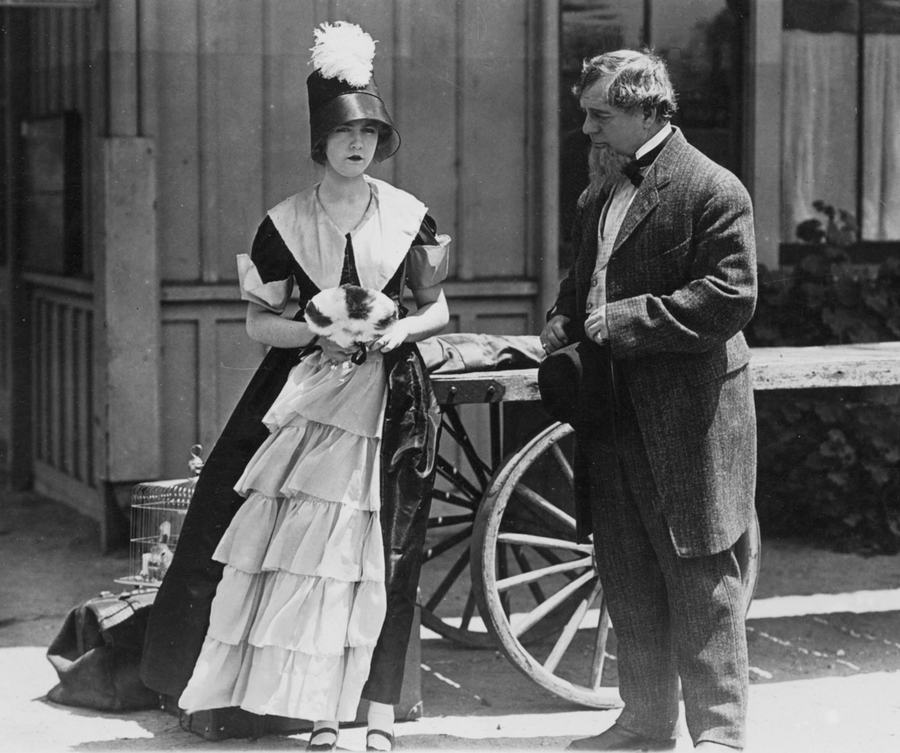
Dorothy Gish tilts her bonnet like a knight lowering a visor, and the whole Western sky seems to inhale.
Frank E. Woods and Bernard McConville have distilled pub-square misogyny into a scant reel-count, yet inside that crucible of gossip they manage to let something delicate unfurl—a hymn to intellect in a landscape that confuses literacy with witchcraft. Watch how the scenario refuses to paint the town as mere villain; every snide glance is undercut by a visual admission of poverty, remoteness, and fear. The result is a moral fresco as sun-cracked as the planks the heroine crosses, but flecked with gold leaf whenever Gish’s face fills the frame.
Millard Webb’s direction is economical, almost surgical.
Instead of grandstanding establishing shots, he begins scenes already half-way through emotional beats: door slamming, skirt hem mid-swish, chalk snapping on slate. The viewer is thrust into the whirl of judgment before registering whose gavel pounds. Cross-cutting between the schoolroom and the church—both spaces of instruction—creates ironic counterpoint: one teaches hope, the other dread; one is lit by skylight, the other by hellish lanterns that throw devil-red tints across parishioners’ faces.
Cinematographer unknown, probably a one-name magician billing himself ‘Rossi’ or ‘Rex,’ offers chiaroscuro worthy of The Warrens of Virginia yet stripped of grand plantation pomp.
When the teacher writes the alphabet on a warped blackboard, dust motes swirl like micro-planets orbiting her chalk. The camera’s iris closes slightly, spotlighting her small wrist, the fragile radius bone beneath calico. Each letter seems etched onto the film stock itself, a reminder that literacy in 1916 was still a kind of secular sorcery.
Performances oscillate between broadsheet morality and something startlingly modern. Violet Radcliffe’s turn as the ringleader of child tormentors channels The Little Dutch Girl’s mischievous energy but curdles it into genuine menace—those pigtails might as well be vipers. Josephine Crowell’s Mrs. Grundy, meanwhile, is less a person than a weather system: her mouth a perpetually gathering storm front, her cane a lightning rod of propriety.
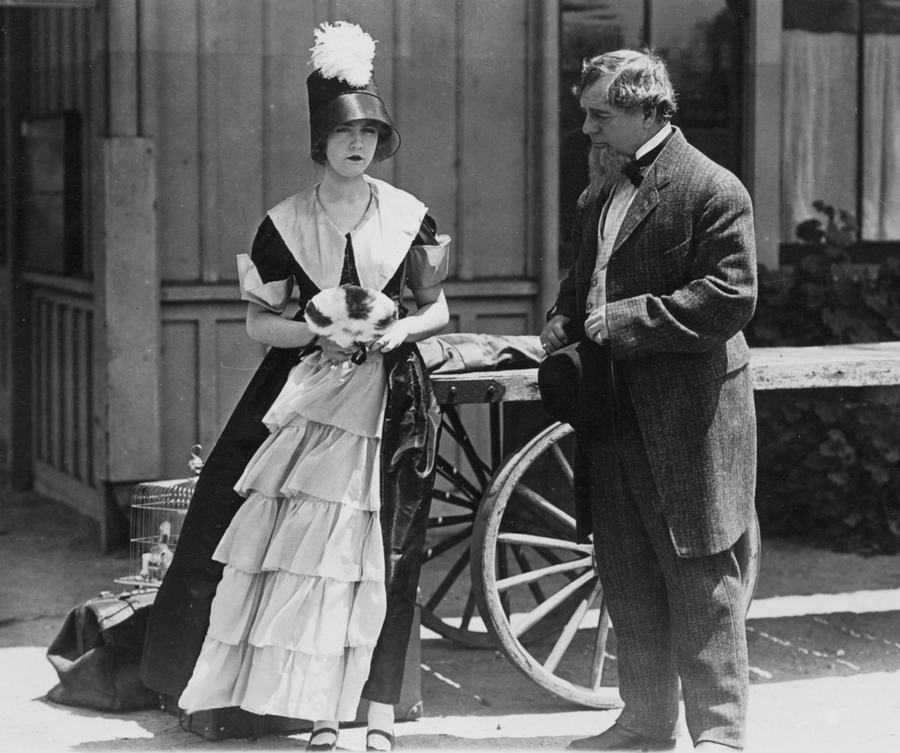
Yet the film belongs, start to finish, to Dorothy Gish. Where sister Lillian traded in beatitude, Dorothy traffics in sparks—her smile is struck flint, her tears hot tallow. She never begs the lens for sympathy; instead she dares it to withstand the luminosity of her defiance.
The screenplay’s structural boldness lies in its refusal to grant audience the catharsis of courtroom vindication. Dismissal arrives swift, almost bureaucratic; there is no villain twirling moustache, only the collective shrug of civic cowardice. Compare that to Flirting with Fate where every mishap is cosmic setup for a punchline; here, mishap is terminus, a reminder that history’s footnotes often end mid-sentence.
Nitrate damage has shredded portions of the third reel, yet the gaps feel perversely poetic—like hymnal pages ripped out by zealots. Intertitles supplied by contemporary archivists ape Woods’ diction: staccato, biblical, salted with frontier vernacular. (“The horse took fright at conscience made visible in moonlight.”) One could argue these reconstructions over-egg the pudding, but they serve the thematic spine: language itself as contested territory.
Elmer Clifton’s playwright character is audience surrogate, but also mirror to industry. He arrives hunting rustic flavour, ends up complicit in tragedy—an indictment of cultural tourism decades before academic jargon coined the term. His final epiphany, delivered in silhouette against dawn fog, feels like Griffith company self-critique, especially ironic since Woods was Griffith’s regular scenarist.
Sound accompaniment, if you’re lucky enough to catch a 16mm print with live music, should tread lightly—solo fiddle, perhaps, bow rosined to mimic cicadas; anything grander would drown the film’s hush.
Comparative viewing: place Evangeline’s pastoral fatalism beside this feature and witness two modes of female endurance—one mythic, the other quotidian. Or pair with Voodoo Vengeance for a diptych on community hysteria, though the bayou thrills of the latter feel operatic compared to the prairie chill herein.
In the current cultural climate, where book bans echo the townsfolk’s bonfires of primers, The Little School Ma’am resonates with uncanny timbre. Its 1916 copyright date may affix it to a specific epoch, yet its anxieties—over education, gendered censure, the rumor-mill as capital punishment—hover like tumbleweed into our feeds. The film’s final image, a lone spelling book drifting downstream, is less elegy than prophecy: knowledge will bob along, bruised but afloat, beyond the grasp of those who fear it.
Verdict: Seek it out in any form—scuffed DCP, archival Vimeo link, or, fortune willing, a rattling 16mm with cigarette burns. Let its quiet radicalism settle on you like alkali dust; then, hours later, find yourself suddenly blinking awake, haunted by the after-image of a woman who taught vowel sounds in a place that could not spell mercy.
IMDb 5.7
1933
Community
Log in to comment.