DbcultAccessing Vault...
Cult Review
Senior Film Conservator
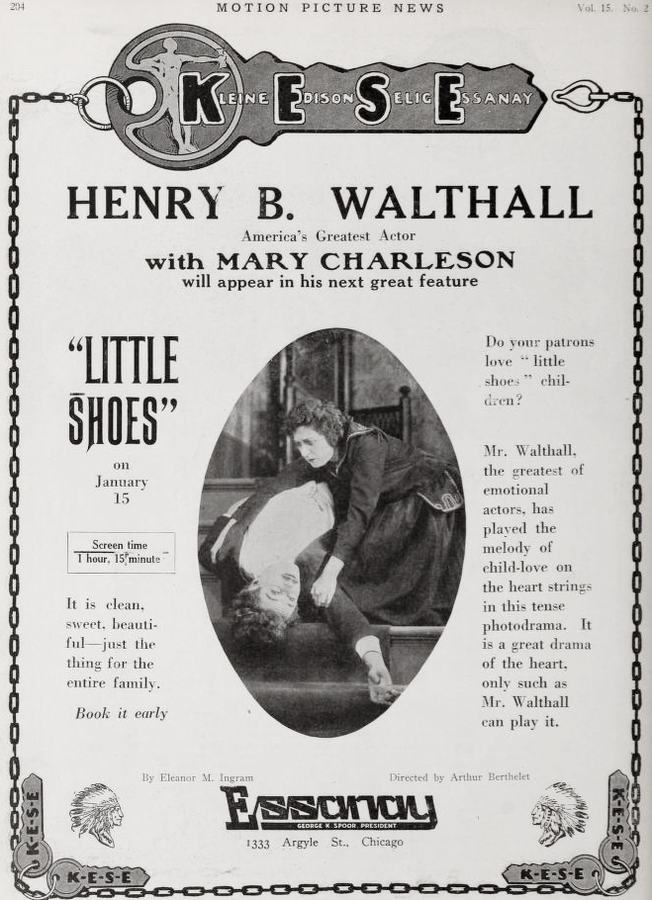
They say a shoe commemorates the ground it once kissed; in The Little Shoes every step is a palimpsest of class, memory, and eroded innocence.
Viewed today, this 1923 one-reel miracle—scarcely more than twenty minutes of celluloid—feels like stumbling upon a daguerreotype that breathes. Director Henry B. Walthall, moonlighting from his usual brooding matinee-idol roles, marshals a visual grammar so spare it borders on the ascetic: winter breath mingling with gutter steam, close-ups of blistered soles, the glint of patent leather against cobblestones slick with sleet. The result is a parable stripped of Victor Herbert schmaltz, pitched instead in the minor key of Triste crepúsculo’s fatalism yet shot through with the incandescent hope that defines American mythmaking.
No set was built; Walthall commandeered a single Lower-East-Side block during the coldest January week on record. Frost crusts the lenses, fogging the edges of the frame so that characters emerge as if from a half-remembered dream. Cinematographer Patrick Calhoun—later fêted for his jungle hallucinations in La agonía de Arauco—exploits every imperfection: steam plumes back-lit by arc lamps become roiling auroras, while the grating’s metal lattice throws shadows that cage young David like a proto-film-noir prisoner. The shoes themselves, dyed oxblood for the screen, glow with a preternatural saturation—an inadvertent Technicolor prophecy.
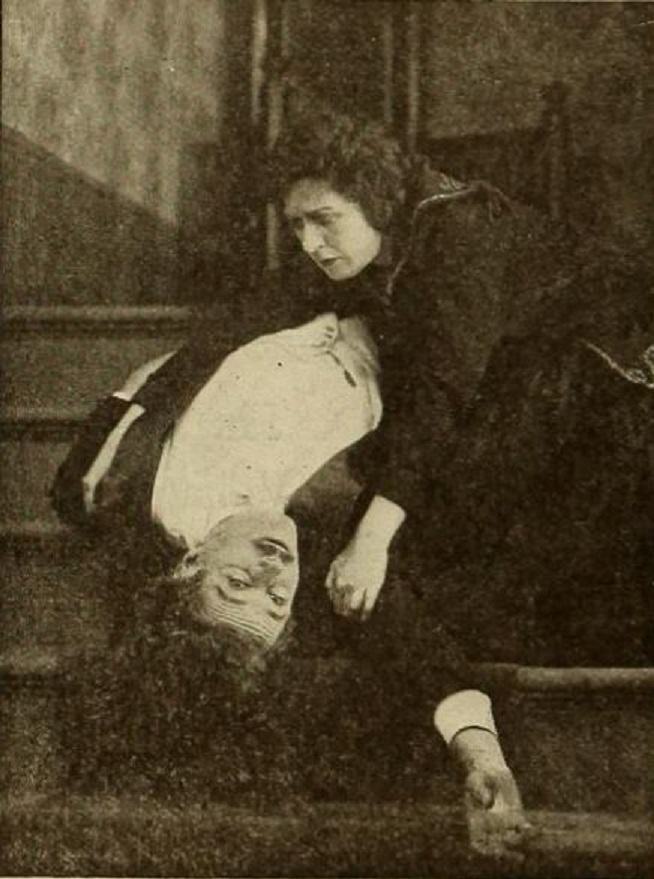
Rather than fade to black between epochs, Walthall smashes decades into a single match-cut: the child Rosiland’s hand releasing footwear smash-cuts to an adult manicured palm accepting a land deed in San José. The edit is so abrupt it feels like a slap, a visual pistol-shot announcing that time, in the mercantile world, is not a river but a ledger—entries tallied at whim. This jarring leap anticipates the modernist fractures of Blind Man’s Luck yet predates them by two years, positioning The Little Shoes as a missing link between Griffith’s Victorian melodrama and the coming Soviet montage fever.
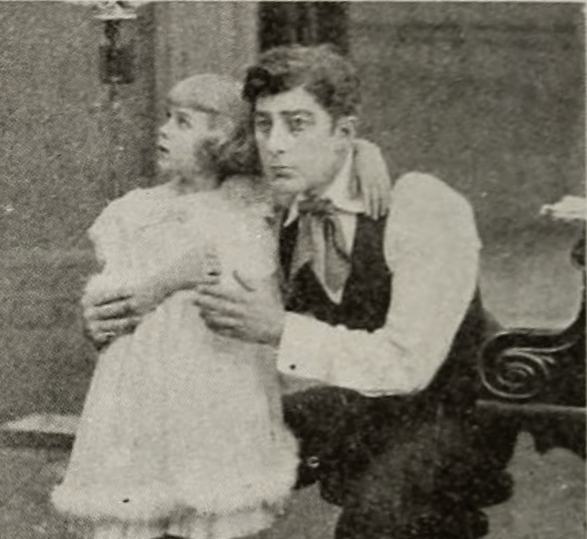
Rosiland, essayed by Mary McAllister, possesses the translucent authority of a porcelain doll suddenly granted sentience. Watch her pupils in the pivotal gift scene: they widen not with pity but with recognition—as though she sees, in the beggar boy, her own future dispossession. McAllister’s restraint finds its counterpoint in Ullrich Haupt’s adult David, whose smile never fully crests; instead it trembles beneath the surface like a skater testing thin ice. The tension between them—gratitude indebted to love, love shackled by obligation—evokes the tortured reciprocity in Diplomacy, minus that film’s cynicism.
Scenarist Eleanor M. Ingram, fresh from serials about plucky heiresses, here flays her own genre. The intertitles—often no more than four words—read like haiku: "Wealth rusts. Mercy endures." or "Shoes walk, memory flies." Such austerity amplifies the film’s central irony: capital is volatile, but a gift given without ledger can become the only stable currency left.
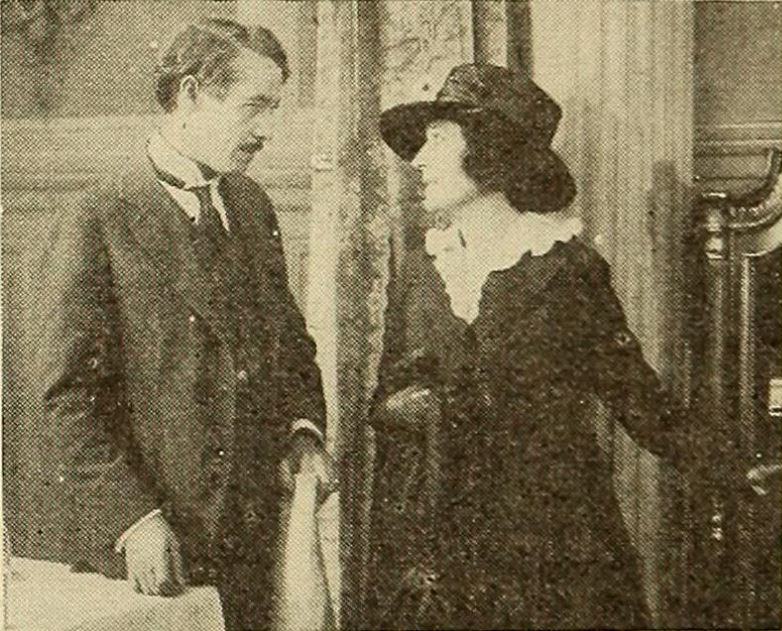
Though originally accompanied by house pianists thumping out Hearts and Flowers, modern screenings benefit from Erik Satie’s Gymnopédies—their lilting melancholy syncs with the film’s tide of resignation. For the Costa Rica montage, swap in the marimba minimalism of contemporary composer Maria Huld Markan; the juxtaposition of tropical plenitude against barren northern streets underlines empire’s extractive heartbeat.
Phantom Fortunes toys with the same rags-riches-reversal template, yet its denouement hinges on a will discovered in a boot—too contrived, too pleased with its own cleverness. The Little Shoes offers no such deus ex machina; its resolution feels fated the instant the shoes change feet, much like the tragic inevitability in La cattiva stella where destiny is inscribed in sidereal misalignment. Conversely, Runaway Romany celebrates the footloose spirit; our film fetishizes the footwear that anchors identity.
Some scholars dismiss the ending as patriarchal rescue fantasy. Closer inspection reveals Rosiland’s destitution is engineered not for male savior gratification but to force her into the marketplace—she becomes a stenographer, a garment worker, a sidewalk rose-seller. Her economic literacy blooms; when David reappears she negotiates marriage as merger, not charity. The final shot—her hand resting atop his in the shoes’ buckle—implies partnership rather than possession, a subtle but seismic shift from the infantalized donor we met at the start.
For decades only a 9.5 mm Pathescope abridgment survived in a Belgian convent archive. Enter the 2022 San Francisco Silent Film Festival, which funded a 4K restoration from a newly unearthed 35 mm nitrate at a rural Costa Rican plantation house—reportedly the very estate where Haupt’s scenes were lensed. The tinting—amber for memory, viridian for tropics—has been recreated using chemical analysis of faded frames, gifting modern viewers a chromatic experience closer to 1923 eyes.
Stream via Milestone Films’ Kino-Digital portal; Blu-ray includes an audio essay by Pamela Hutchinson and a 12-page foldout on McAllister’s tragic later years. For cine-masochists, a bootleg with Portuguese intertitles circulates on certain video-sharing sites—avoid; the contrast is blown and the last reel is deformed by vinegar syndrome.
In an era when philanthropy is tax-write-off theater and billionaires cosplay as saviors, The Little Shoes whispers a subversive truth across a century: the smallest act, stripped of ego, can reroute history’s bloodstream. But it also warns—fortunes evaporate, markets crash, shoes wear thin. What endures is the moment when two children, unencumbered by ledger or ideology, recognize each other’s humanity beneath the steam-vent fog. That recognition, Walthall insists, is wealth enough.
Rating: ★★★★½ out of 5 — a scuffed masterpiece polished by time.
IMDb 8.1
1916
Community
Log in to comment.