DbcultAccessing Vault...
Cult Review
Senior Film Conservator
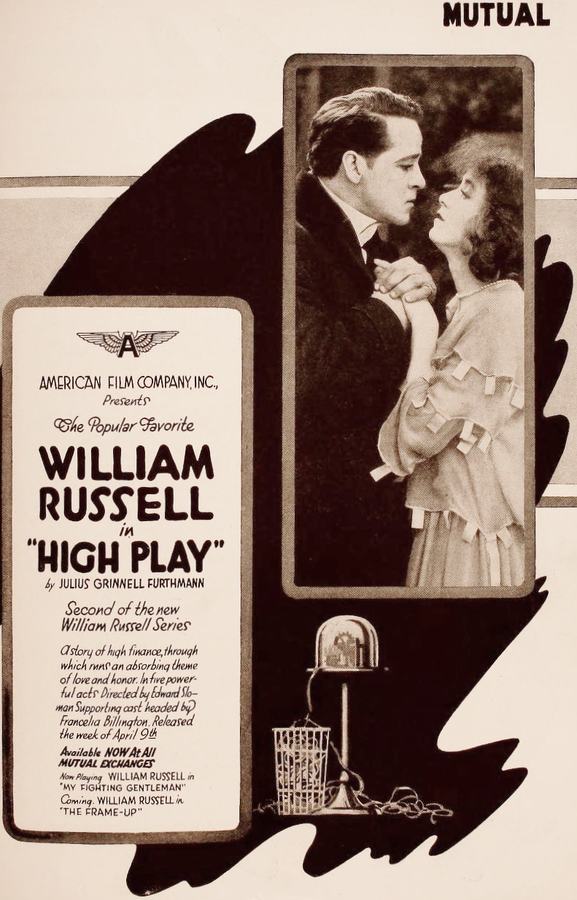
Step back into the nascent days of cinematic storytelling, to an era where grand gestures and intertitles conveyed the intricate dance of human emotion. The year is 1917, a tumultuous period globally, yet within the flickering shadows of the silver screen, narratives of personal integrity and societal corruption resonated deeply. Among these, the film High Play stands as a compelling, if often overlooked, testament to the enduring power of moral drama. Far more than a simple melodrama, this feature, penned by the prolific Jules Furthman, delves into the ethical quagmires faced by a man of standing, whose personal fortune becomes intertwined with his public honor.
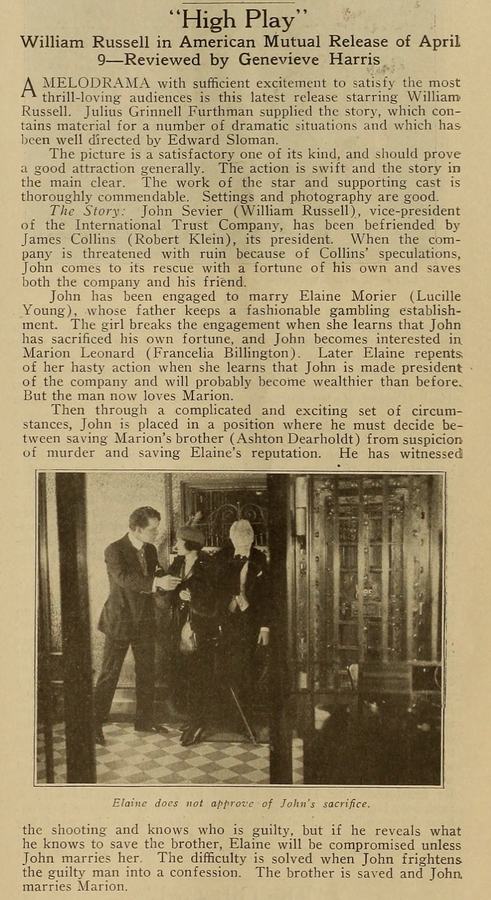
Our story centers on John Sevier, portrayed with a stoic gravitas by the esteemed William Russell, a man whose life appears meticulously ordered. A successful banker, he is engaged to Elaine Morier, a woman of refined tastes and, as it soon becomes clear, a formidable appetite for wealth. Elaine, alongside her father Gerald Morier (Edward Peil Sr.), operates an exclusive gambling club, a setting that immediately hints at the moral ambiguities lurking beneath the veneer of high society. The initial brush with conflict occurs within this very establishment, as John intervenes in a heated dispute involving a club employee, Jim Hammond (Clarence Burton), and a privileged young patron, Tom Leonard (Robert Klein). This seemingly minor incident, a testament to John's innate sense of justice, inadvertently introduces him to Tom's sister, Marion (Lucille Young), a character whose quiet virtue will soon offer a stark counterpoint to Elaine’s mercenary spirit.
The true cataclysm, however, strikes not in the smoky confines of the gambling club, but within the hallowed halls of finance. John discovers a devastating truth: his banking partner, Jim Collins (Ashton Dearholt), has engaged in a series of disastrous investments, leaving the venerable institution on the brink of collapse. This revelation forces John into an agonizing dilemma. His reputation, his life's work, and the livelihoods of countless depositors hang in the balance. In a move that defines his character, John resolves to inject his personal fortune into the bank, a selfless act designed to stave off ruin and preserve public trust. This decision, born of an unshakeable moral compass, acts as a societal litmus test, separating those who value integrity above all else from those whose allegiances are purely transactional.
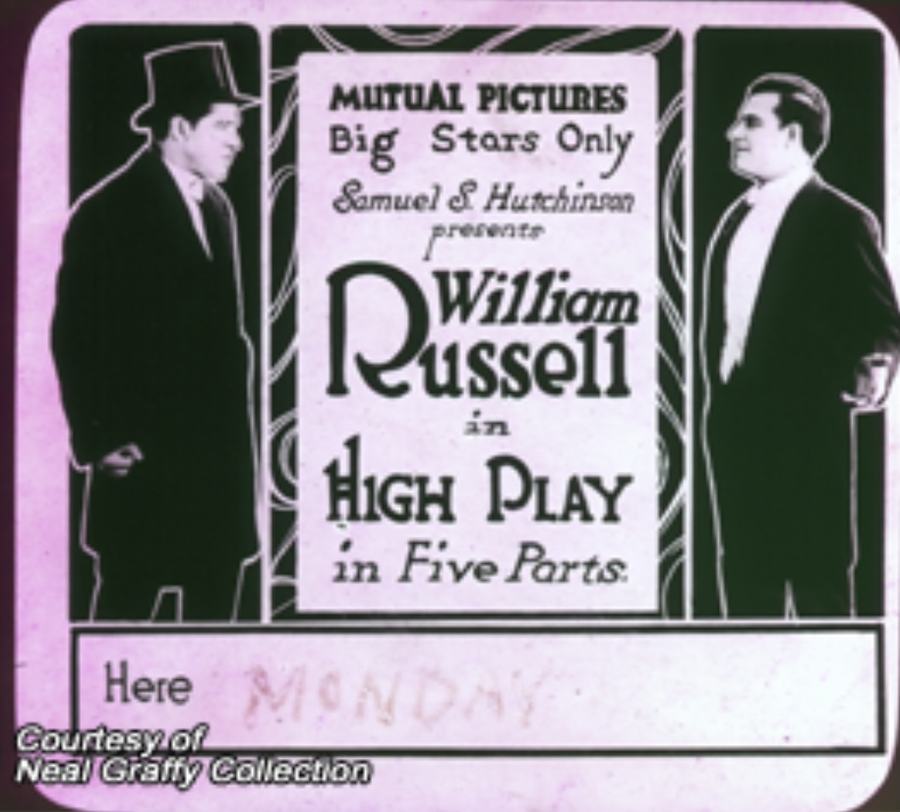
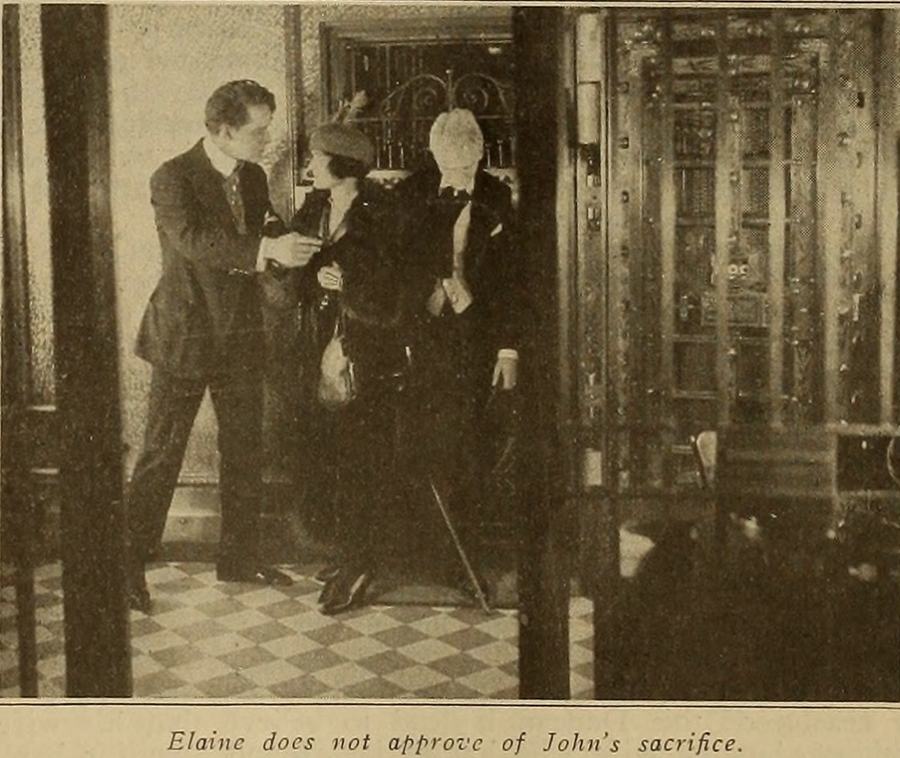
The immediate fallout is dramatic. Elaine, far from applauding his principled stand, reacts with a furious indignation, her carefully constructed dreams of marrying into secure wealth shattered by John's apparent financial sacrifice. Their engagement, once a symbol of social aspiration, is abruptly terminated, revealing the shallow foundation upon which it rested. Yet, in a twist of poetic justice, it is Marion and Tom Leonard, the very individuals John encountered through an act of chivalry, who offer genuine commendation. Their admiration is not for his wealth, but for his courage, his unwavering commitment to honor. This stark contrast underscores the film's central thematic exploration: the inherent conflict between material gain and moral rectitude.
The Moriers, who had been meticulously orchestrating a long-game strategy to siphon John’s wealth, are left reeling by his unexpected act of self-preservation. Their scheme, predicated on his continued affluence, lies in tatters. Realizing their grave miscalculation, they embark on a desperate, rather clumsy attempt to mend the fractured relationship, to steer John back towards Elaine, hoping to salvage some remnants of their avaricious plan. Complications, as the narrative artfully suggests, inevitably ensue, setting the stage for a compelling resolution that promises to disentangle the webs of deceit and affirm the triumph of virtue.
In the silent era, the burden of conveying complex emotions fell heavily on the actors' physicality, their facial expressions, and their ability to project internal states without dialogue. William Russell, as John Sevier, delivers a performance that epitomizes the strong, silent leading man of the period. His portrayal is one of understated dignity, his broad shoulders and resolute gaze communicating a man of unwavering principle. Russell masterfully conveys John's internal struggle—the weight of financial disaster, the betrayal of his partner, and the heartbreak of Elaine's rejection—through subtle shifts in posture and intensely focused expressions. One can almost feel the moral compass spinning within him, recalibrating after each blow.
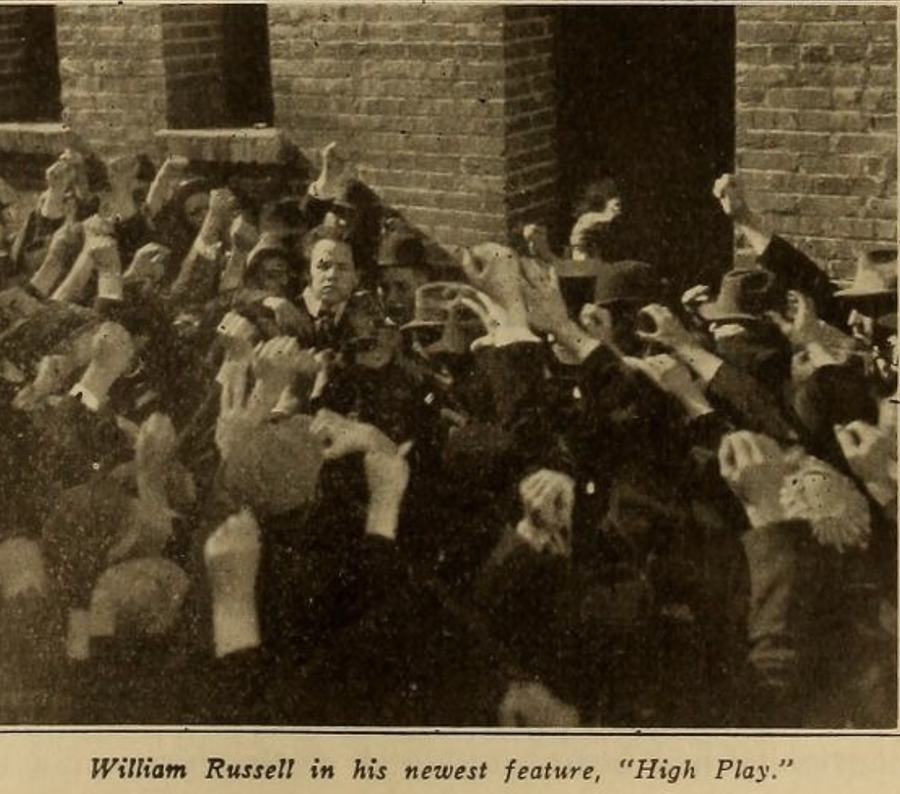
Francelia Billington, as the calculating Elaine Morier, is a fascinating counterpoint. Her beauty is undeniable, but it is a beauty tinged with a predatory edge. Billington imbues Elaine with a cold, strategic ambition, making her sudden outburst of outrage at John’s sacrifice entirely believable. Her performance captures the essence of a woman whose affections are conditional, her desires dictated by financial gain. The subtle shifts in her demeanor, from poised fiancée to furious mercenary, are skillfully executed, painting a vivid portrait of a character driven by avarice. Later, her forced attempts at reconciliation are equally telling, revealing a desperation born not of love, but of thwarted greed.
Edward Peil Sr.'s Gerald Morier is the quintessential conniving father, a puppet master pulling the strings of his daughter’s ambitious scheme. Peil's gestures and expressions convey a sly intelligence, a man accustomed to manipulating circumstances to his advantage. His partnership with Elaine is less a familial bond and more a criminal enterprise, and Peil's performance makes this cynical alliance palpable. Together, Billington and Peil craft a formidable duo of antagonists, whose machinations drive much of the narrative tension.
Lucille Young, as Marion Leonard, provides the film's moral anchor. Her portrayal is one of gentle strength and genuine empathy. In an era where female characters were often archetypes, Young manages to infuse Marion with an authentic warmth and integrity that makes her admiration for John feel earned and sincere. She represents the antithesis of Elaine, valuing character over currency, and her quiet support becomes a beacon for John amidst his personal turmoil. Robert Klein, as Tom Leonard, complements Young’s performance, embodying the supportive and good-hearted brother whose respect for John is immediate and unburdened by ulterior motives. Even the smaller roles, such as Ashton Dearholt’s Jim Collins, the errant banking partner, and Clarence Burton’s Jim Hammond, play their parts effectively in establishing the various forces at play in John’s world.
The screenplay by Jules Furthman is a masterclass in silent film construction, building tension and character through action and consequence rather than exposition. Furthman, known for his prolific output and versatility, demonstrates a keen understanding of human nature, particularly the corrupting influence of unchecked ambition and the redemptive power of integrity. The plot, while seemingly straightforward, is rich with thematic undertones. It explores the fragility of trust, the deceptive allure of wealth, and the ultimate triumph of moral fortitude.
Furthman's writing effectively contrasts the glittering superficiality of the Moriers' world—represented by the gambling club—with the earnest, almost austere integrity of John Sevier. The narrative arc, moving from prosperity to crisis and then to a potential new beginning, is classic yet rendered with fresh urgency. The decision to make John's engagement to Elaine a central plot device, only to have it dissolve under the pressure of his financial sacrifice, is a brilliant stroke, immediately establishing the stakes and the moral alignment of the characters. This narrative choice resonates with the themes of betrayal and redemption found in films like Syndig Kærlighed (Sinful Love) or Syndens datter (Daughter of Sin), where moral transgressions drive the core conflict. Furthman's ability to craft a story where character is revealed through adversity is a hallmark of his enduring talent.
While the director is not specified in the provided details, the film bears the hallmarks of competent, if not groundbreaking, silent era direction. The visual language of High Play would have relied heavily on clear blocking, expressive gestures, and the judicious use of intertitles to guide the audience through the emotional and narrative beats. The pacing, characteristic of the period, would have allowed moments of dramatic weight to unfold deliberately, giving the audience time to absorb the emotional impact of each scene.
Cinematography in 1917, while lacking the sophisticated camera movements and lighting techniques of later decades, would have focused on clarity and composition. The sets—the opulent gambling club, the stern environs of the bank, the contrasting homes of the wealthy and the less ostentatious—would have been carefully designed to establish mood and character. Lighting would have been used to highlight key figures and create dramatic shadows, emphasizing the moral chiaroscuro of the narrative. One can imagine scenes in the gambling club bathed in a somewhat darker, more suggestive light, contrasting with the brighter, more open spaces associated with Marion and Tom, subtly reinforcing the film's thematic distinctions.
Beyond its dramatic plot, High Play offers a fascinating glimpse into the social fabric of early 20th-century America. It critiques the burgeoning world of high finance and the temptations it presented, echoing concerns about corporate ethics and personal responsibility that remain remarkably pertinent today. The film champions the individual who stands firm against corruption, a message that resonated strongly in an era grappling with rapid industrialization and shifting moral landscapes. The character of Elaine Morier, driven by an almost pathological desire for wealth, serves as a cautionary tale against unchecked materialism, a theme that finds parallels in the ruthless ambition depicted in films like The Boss, where power and wealth often corrupt absolutely.
The contrast between Elaine and Marion also speaks to evolving perceptions of women's roles and values. Elaine embodies the 'social climber' archetype, her worth measured by her financial prospects, while Marion represents a more traditional, yet deeply admirable, ideal of virtue, empathy, and unconditional support. This dichotomy was a common trope in silent cinema, but High Play executes it with a clarity that elevates it beyond mere cliché.
The film's exploration of betrayal, particularly by a business partner, taps into a universal fear—the breakdown of trust in professional and personal spheres. John Sevier's decision to sacrifice his own wealth to save his institution is not just an act of individual heroism but a profound statement on communal responsibility. It suggests that true leadership involves safeguarding the well-being of others, even at great personal cost. This moralistic framework, where integrity is ultimately rewarded and deceit exposed, aligns with the clear-cut good-versus-evil narratives often seen in films like The Wrath of the Gods, where moral failings inevitably lead to consequence.
Even a century later, the core dilemmas presented in High Play remain strikingly relevant. How much are we willing to sacrifice for our principles? Does financial success truly equate to personal worth? These are questions that continue to echo through contemporary society, making this silent drama a surprisingly potent piece of social commentary. The film, like After Five, which also delves into the moral complexities of business and personal life, showcases how early cinema was already grappling with sophisticated ethical questions.
In its entirety, High Play is more than just a historical artifact; it is a vibrant piece of cinematic art that speaks across the decades. It reminds us of a time when stories were told with a compelling directness, where character was forged in the fires of adversity, and where the triumph of virtue, however hard-won, felt profoundly satisfying. The performances, particularly William Russell's embodiment of unwavering integrity and Francelia Billington's portrayal of calculated ambition, are powerful in their silent intensity. Jules Furthman's narrative craftsmanship ensures a plot that is both engaging and morally resonant.
For those willing to look beyond the absence of sound and color, High Play offers a rich tapestry of human experience, a timeless exploration of greed versus honor, and a testament to the enduring appeal of a well-told story. It’s a film that quietly asserts the profound truth that true wealth lies not in material possessions, but in the unshakeable integrity of the human spirit. It is a compelling reminder that some games, like life itself, are played for much higher stakes than mere money.
IMDb 7.2
1932
Community
Log in to comment.