DbcultAccessing Vault...
Cult Review
Senior Film Conservator
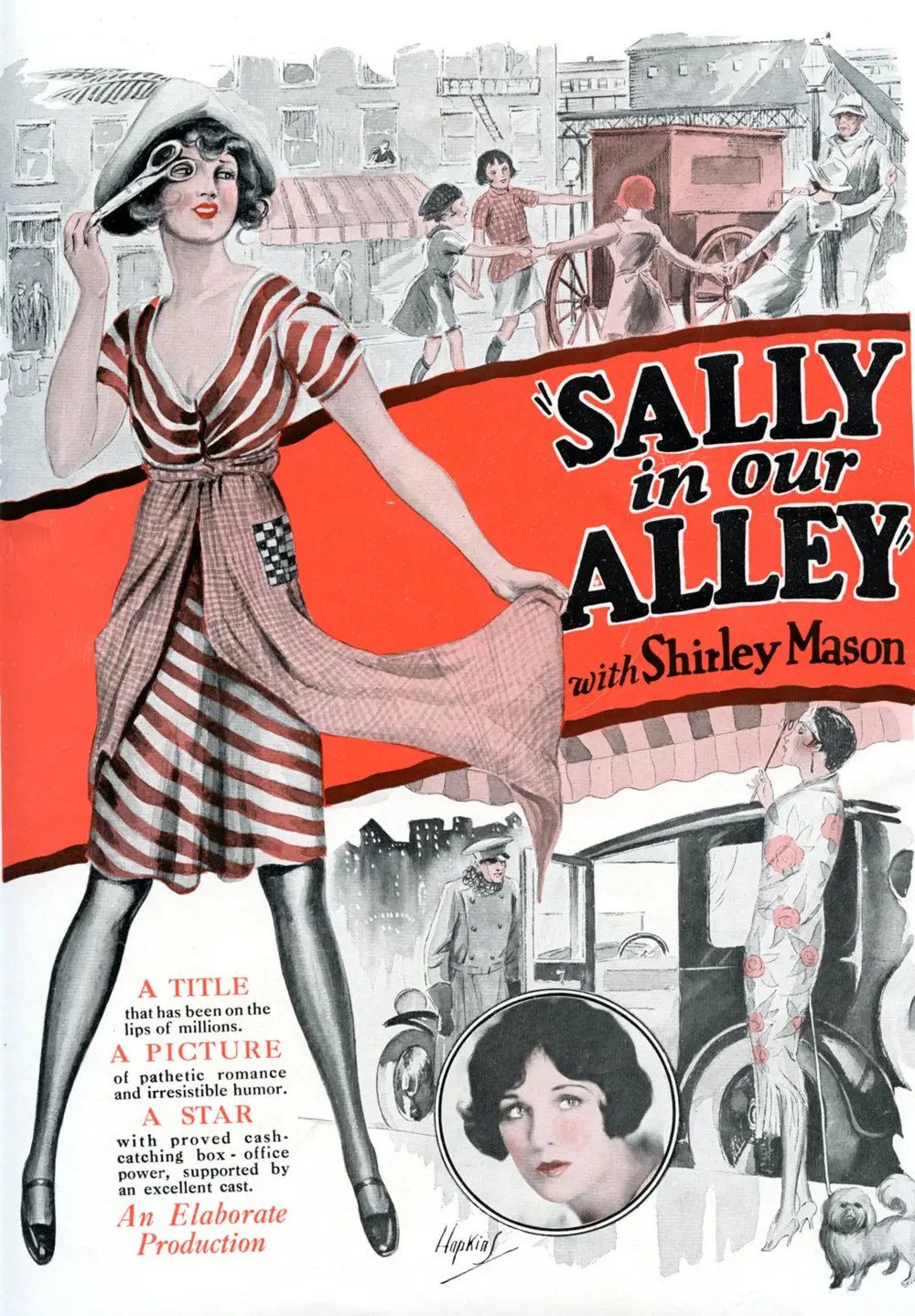
Does Sally in Our Alley (1927) still hold up nearly a century later? Short answer: yes, but only if you appreciate the specific, sentimental rhythm of late-period silent cinema. This film is a quintessential 'working girl' drama that prioritizes heart over narrative innovation, making it a must-watch for historians of the genre and a likely pass for those who demand modern pacing.
This film is for viewers who find beauty in character-driven vignettes and those interested in how the 1920s viewed the 'melting pot' of New York City. It is definitely not for audiences who are allergic to heavy-handed melodrama or those who find the 'poor but happy' trope to be patronizing. It is a film of its time, for better and for worse.
1) This film works because of the genuine, lived-in chemistry between Shirley Mason and her three foster fathers; their domestic scenes feel like a precursor to the modern 'found family' trope, offering a warmth that balances the film’s later cynicism.
2) This film fails because the transition to the penthouse life is handled with the subtlety of a sledgehammer, painting the wealthy characters as such one-dimensional caricatures that the conflict feels rigged from the start.
3) You should watch it if you enjoyed the domestic sentimentality of Home, Sweet Home or the class-conscious romanticism of A Lickpenny Lover.
Sally in Our Alley is a charming, if sentimental, example of late-silent era storytelling that succeeds primarily through its warm characterizations. While the plot follows a predictable 'rags-to-riches-to-rags' trajectory, the authentic chemistry between the lead actress and her three foster fathers provides a level of emotional depth rarely seen in standard 1920s programmers. It captures a specific American anxiety about social mobility that remains relevant, even if the execution is dated.
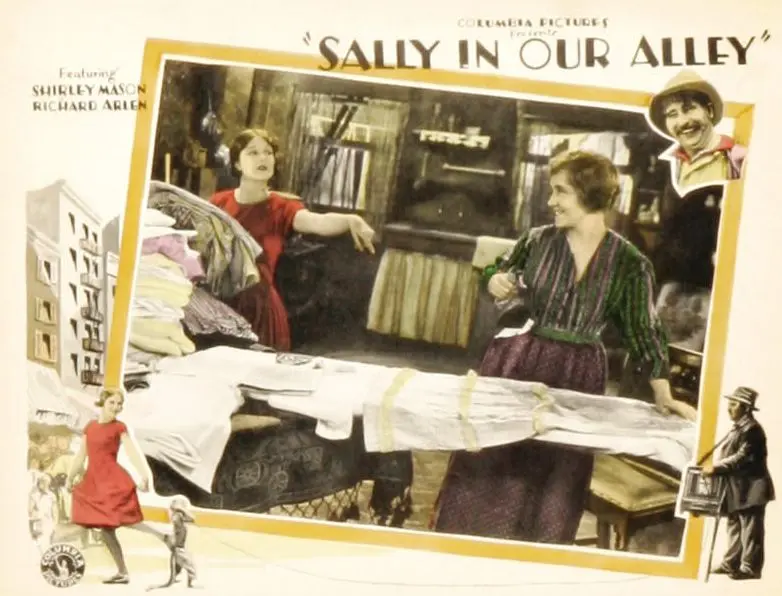
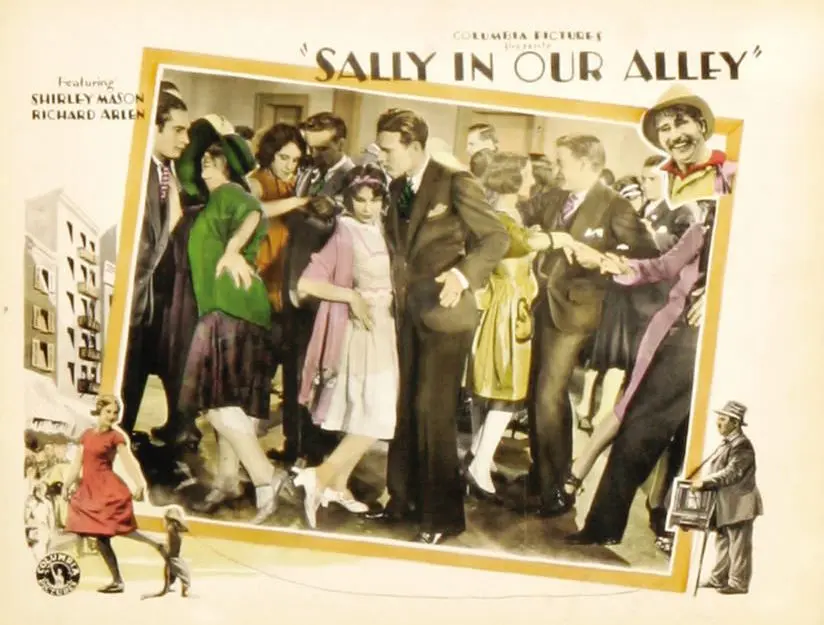
The real soul of Sally in Our Alley isn't the romance between Sally and Jimmie, but the relationship between Sally and her three 'bachelor foster-fathers.' Played by Alec B. Francis, William H. Strauss, and Paul Panzer, these three men—a pawnbroker, an organ-grinder, and a peddler—represent the diverse working-class fabric of old New York. Their performances are surprisingly restrained for 1927, avoiding the bug-eyed pantomime that plagued many silent comedies of the era.
There is a specific scene early in the film where the three men are sitting at the dinner table, bickering over who gets the best cut of meat Sally has prepared. It’s a mundane moment, but it’s handled with such specificity that you believe in their history. They aren't just actors in costumes; they feel like men who have shared a cramped apartment for a decade. This grounding is essential because it makes the second-act 'kidnapping' by the wealthy aunt feel like a genuine tragedy rather than a mere plot point.
Compare this to the treatment of working-class families in Not So Long Ago, where the poverty often feels sanitized for the screen. In Sally's alley, there is dirt, there is noise, and there is a sense of struggle, but it is never presented as something to be pitied. It is simply life. The film’s refusal to make the alley look like a slum is one of its most radical choices.
Shirley Mason was often overshadowed by her sister, Viola Dana, but in Sally in Our Alley, she proves she had the range to carry a feature. Mason has a way of using her eyes to communicate a mixture of defiance and vulnerability. When she is first brought to the penthouse, there is a shot of her standing in a massive, marble-floored hallway. She looks tiny, almost swallowed by the architecture. It’s a visual metaphor that works perfectly without a single intertitle.
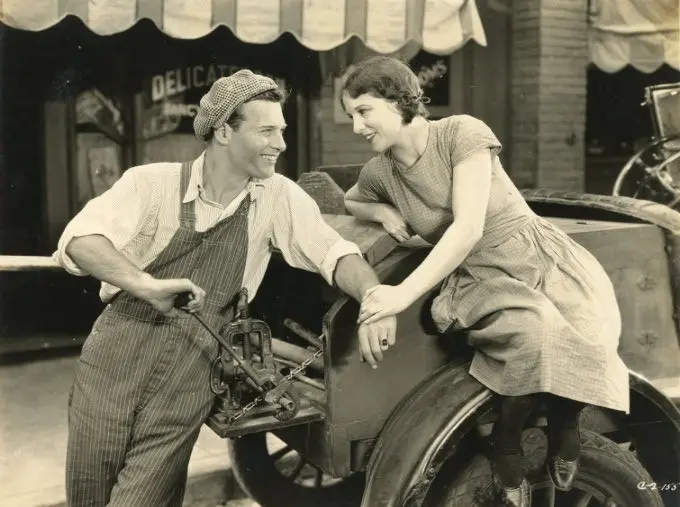
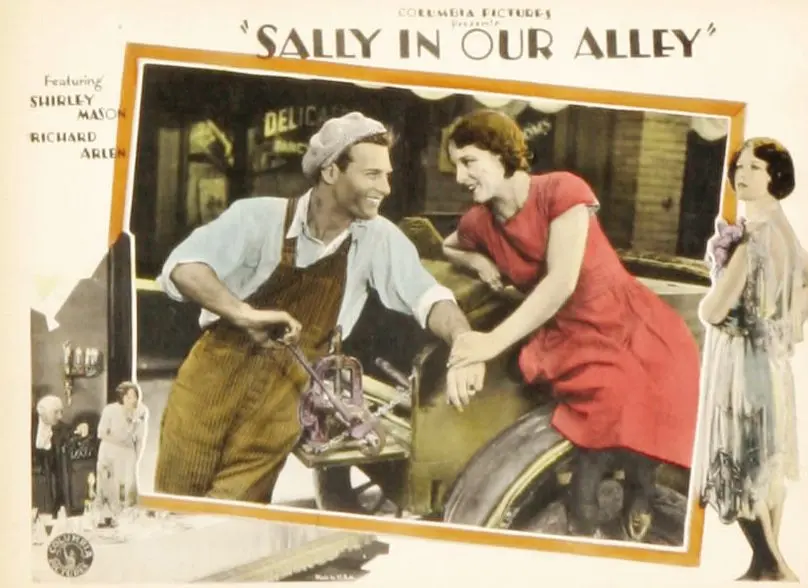
However, Mason occasionally falls into the trap of over-acting her 'innocence.' There are moments where she skips or pouts in a way that feels performative rather than natural. It’s a minor gripe, but it pulls the viewer out of the more grounded reality the film tries to establish. Despite this, her chemistry with Richard Arlen is palpable. Arlen, playing the plumber Jimmie, brings a rugged, no-nonsense energy that acts as a great foil to the theatricality of the upper-class characters.
"The film doesn't just ask where Sally belongs; it asks if the American Dream of upward mobility is actually a nightmare of cultural erasure."
The cinematography in Sally in Our Alley is surprisingly sophisticated. The director (Walter Lang, though often uncredited in early career discussions) uses lighting to differentiate the two worlds Sally inhabits. The alley scenes are shot with high-contrast, 'busy' lighting—shadows of laundry lines and fire escapes crisscross the frames. It feels alive and warm.
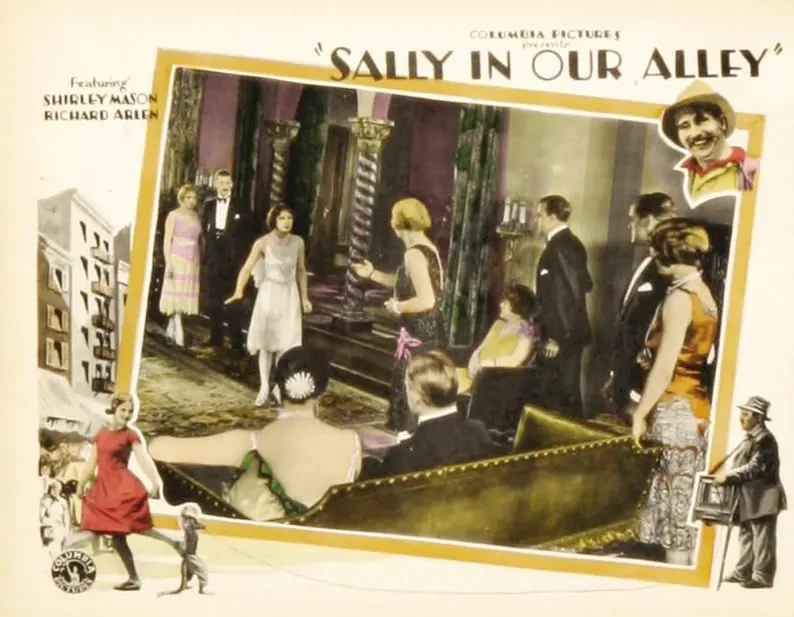
In contrast, the penthouse scenes are shot with flat, high-key lighting that makes everything look expensive but cold. The lack of shadows in the aunt's home reflects the lack of soul in her lifestyle. This isn't just accidental; it’s a deliberate use of the medium to reinforce the narrative’s themes. You see similar visual dichotomies in films like The Apple-Tree Girl, but rarely is it executed with this much visual intent.
The pacing, however, is where the film stumbles. The transition into the final act feels rushed. After spending so much time establishing the 'three dads' and the romance with Jimmie, the film seems to panic in the last fifteen minutes, throwing in a series of coincidences to bring Sally back to her roots. It works. But it's flawed. A more patient script would have allowed the aunt’s realization of her own loneliness to breathe, rather than having it happen in a single intertitle.
Pros:
Cons:
Sally in Our Alley (1927) is a middle-of-the-road silent film that is elevated by its heart. It’s not a revolutionary piece of cinema like some of its contemporaries, but it possesses a warmth that is hard to manufacture. The film’s greatest achievement is its depiction of the working class—not as a group to be pitied or 'fixed,' but as a community that possesses a richness of spirit that money cannot buy.
If you can overlook the clunky, rushed ending and the occasionally saccharine performance by Mason, there is a lot to love here. It’s a comfortable, cozy watch that reminds us why these stories were so popular during the silent era. It’s a minor classic, but a classic nonetheless. 7/10.
IMDb —
1919
Community
Log in to comment.