DbcultAccessing Vault...
Cult Review
Senior Film Conservator
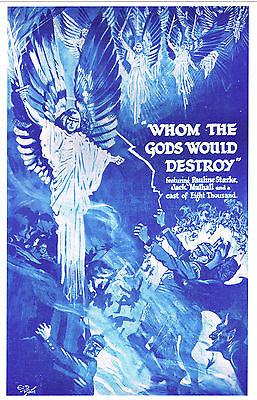
Stepping back into the cinematic landscape of 1919, one encounters a film like Whom the Gods Would Destroy, a work that, even a century later, resonates with an almost uncomfortable prescience. Directed by Frank Borzage and written with a keen sense of the era's anxieties by Cyrus Townsend Brady, Nan Blair, and Charles R. Macauley, this silent epic doesn't just narrate a story; it encapsulates a global psyche reeling from unprecedented devastation. It’s a powerful testament to the nascent art of filmmaking's capacity to grapple with immense, world-altering events, offering both a chronicle of suffering and a yearning for redemption. The title itself, drawn from the ancient Greek adage, immediately sets a somber, almost fatalistic tone, hinting at the hubris and folly that often precede great falls.
At its core, the narrative pivots around a young, brilliant inventor whose discovery of a potent new explosive ignites the initial spark of conflict. This isn't merely a plot device; it's a profound exploration of the Faustian bargain inherent in scientific progress. The invention, intended perhaps for industrial advancement or national defense, quickly morphs into a tool of unprecedented destruction, a harbinger of the mechanical slaughter that defined the Great War. This theme of innovation's moral ambiguity is powerfully rendered, showing how a single discovery can reshape the geopolitical landscape and, in turn, individual destinies. It's a stark reminder that the very ingenuity that propels humanity forward also possesses the capacity to tear it asunder.
The film swiftly moves to illustrate this duality. Agents from a powerful German chemical firm, sensing the immense strategic value of this new explosive, skillfully maneuver to bring the inventor into their fold, luring him to study at a prestigious German university. Here, the film begins to peel back layers of national identity and cultural differences. The inventor, whose sensibilities are likely rooted in a more humanitarian or perhaps less rigid cultural context, finds himself increasingly repelled by certain aspects of the German populace and their prevailing ethos. This cultural clash, depicted through nuanced performance and intertitles, highlights the growing ideological chasm that would soon engulf Europe. His disillusionment is a crucial turning point, leading him to abandon his studies and seek refuge in the more neutral, perhaps more aesthetically aligned, climes of Belgium.
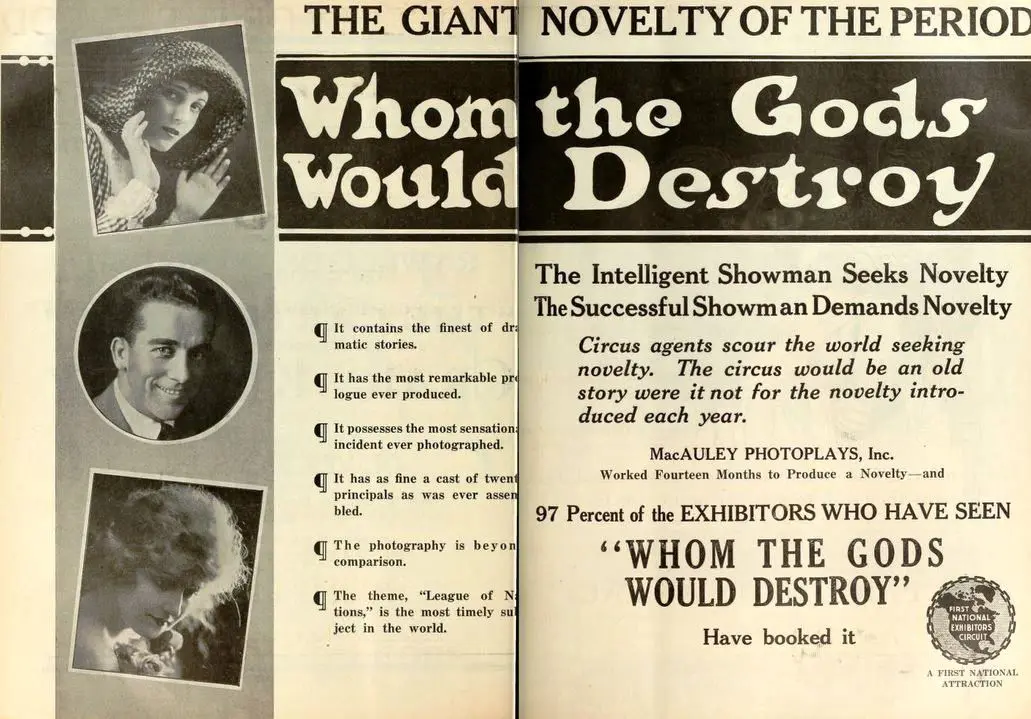
The relocation to Belgium, however, offers no true sanctuary. As the drums of war begin to beat a deafening rhythm across the continent, Belgium, a nation striving for neutrality, becomes an immediate casualty of the Prussian war machine. It is amidst this brutal invasion that the inventor, now stripped of his academic aspirations and thrust into the role of an unwitting observer, finds his true purpose. His heroic act of saving a Belgian burgomaster's daughter from the invading forces marks a pivotal shift in the narrative, transforming him from a detached intellectual into an active participant in the human drama of survival. This moment, portrayed with an intensity characteristic of silent film's reliance on visual storytelling, is not merely a romantic gesture but an assertion of human decency in the face of barbarity.
The ensuing period for both the inventor, played with earnest conviction by Edward Hearn, and the burgomaster's daughter, brought to life by the expressive Pauline Starke, is a harrowing tableau of suffering. The film doesn't shy away from depicting the grim realities of war, albeit through the lens of early cinema. One can imagine the visual language conveying the displacement, the deprivation, the constant fear, and the profound psychological toll that conflict exacts upon individuals. Their shared endurance of these 'horrible sufferings' forms the emotional core of the film, forging a bond cemented not by frivolous romance but by mutual vulnerability and resilience. This aspect of shared trauma and emergent connection might draw thematic parallels with films that explore the human cost of conflict, such as Remorse, a Story of the Red Plague, though the specifics of their narratives diverge considerably. However, the universal theme of enduring hardship and finding solace in human connection remains potent.
The cast, a collection of talent from the era, delivers performances that, through exaggerated gestures and profound facial expressions, communicate the depth of emotion without a single spoken word. Pauline Starke, in particular, must convey the terror, resilience, and eventual hope of the burgomaster's daughter with remarkable clarity. Edward Hearn, as the inventor, carries the weight of his initial naivety, his subsequent disillusionment, and his ultimate transformation into a protector. Supporting players like Charles K. French, Wilton Taylor, Nanine Wright, and the versatile Jean Hersholt, who often brought a distinct gravitas to his roles, would have contributed significantly to the film's immersive atmosphere. The silent era demanded a unique form of acting, one that could transcend the lack of dialogue to convey complex internal states, and Whom the Gods Would Destroy would have relied heavily on these actors' abilities to project empathy and anguish across the screen.
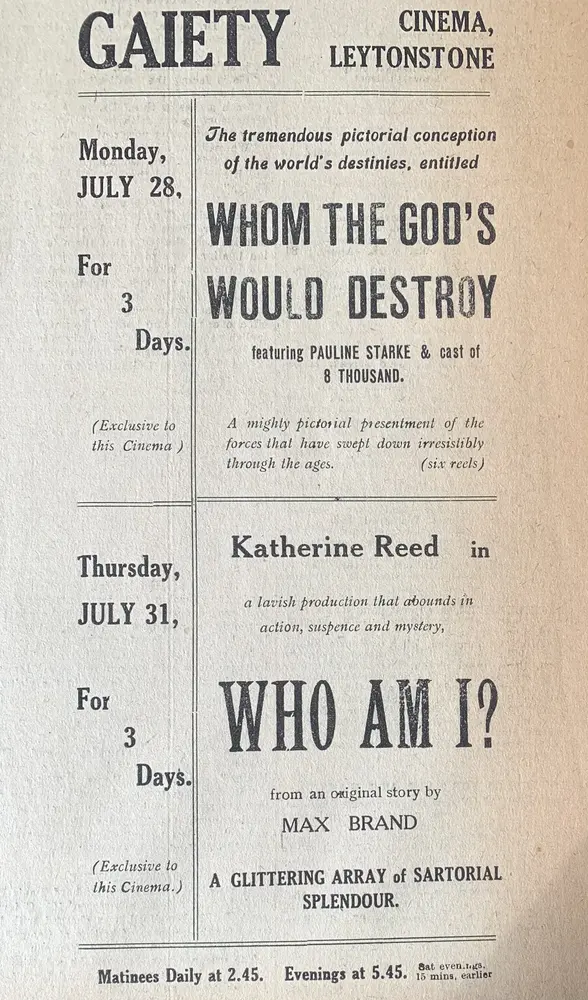
The film's ultimate trajectory, following the personal torment of its protagonists, mirrors the larger global yearning for an end to hostilities. As the war finally concludes, a fragile peace descends, allowing the inventor and the burgomaster's daughter to find a measure of happiness. This resolution, while perhaps offering a conventional romantic arc, is imbued with a deeper significance. Their happiness isn't a frivolous, unearned joy, but a profound sense of relief and quiet contentment born from shared adversity. It represents the triumph of the human spirit over overwhelming odds, a micro-narrative of resilience reflecting the macro-narrative of a world attempting to heal.
Concurrently, the film broadens its scope to encompass the momentous events unfolding on the international stage. The Paris conferences, where the formerly warring nations convened to forge a new global order and direct their collective effort towards world peace, serve as a backdrop to the personal triumph of the main characters. This juxtaposition is crucial: the personal quest for peace and happiness is mirrored by the collective, ambitious, and ultimately fraught endeavor of nations to prevent future cataclysms. The film, released so soon after the armistice, would have tapped directly into the public's fervent hope for a lasting peace, a sentiment that resonated deeply across all strata of society. This aspiration for a new era of international cooperation, though ultimately challenged by subsequent historical events, was a powerful force in the immediate post-war period, and the film captures this zeitgeist effectively.
However, Whom the Gods Would Destroy refuses to end on an entirely saccharine note of uncomplicated triumph. The inclusion of the assassination of Kurt Eisner of Bavaria at the film's conclusion serves as a powerful, almost jarring, counterpoint to the nascent hopes for global peace. Eisner, a socialist journalist and politician who played a significant role in the German Revolution and served as the first Minister-President of Bavaria, was a symbol of the fragile, often violent, political transitions occurring across Europe. His assassination in February 1919, just months before the film's release, would have been a fresh and deeply disturbing memory for contemporary audiences. This historical detail transforms the film's ending from a simple 'happily ever after' into a more complex, nuanced statement about the enduring challenges to peace and stability. It reminds us that even as grand conferences convened and individuals found personal solace, the seeds of future discord and violence were already being sown in the tumultuous political landscape of post-war Europe.
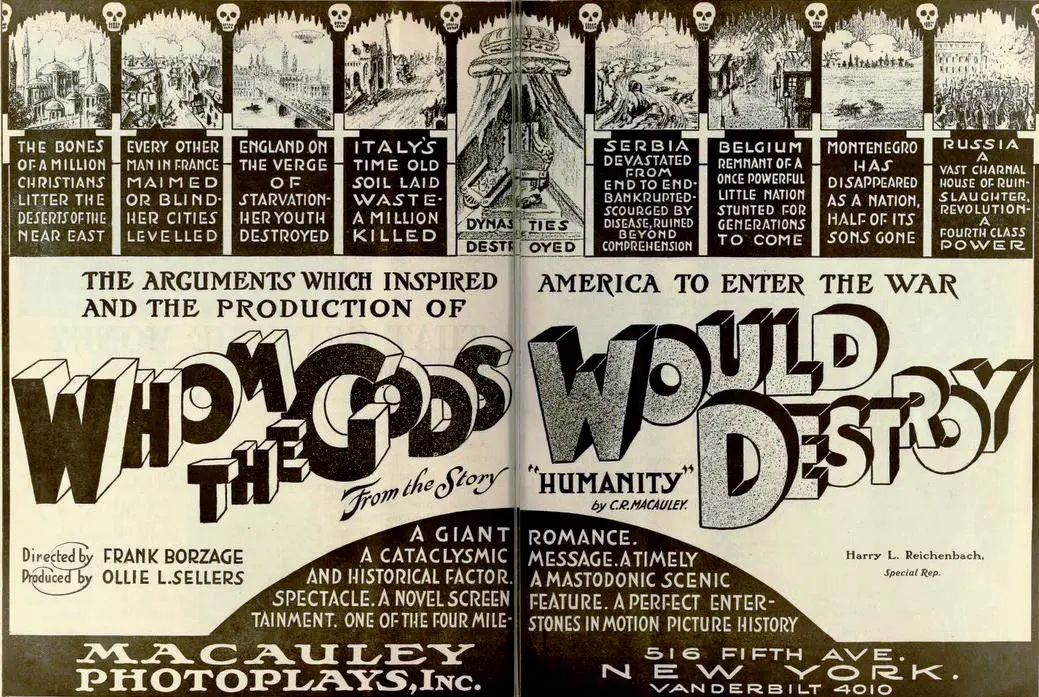
This final, somber note elevates Whom the Gods Would Destroy beyond a mere war romance. It imbues the narrative with a sense of realism and historical awareness that is often absent in films of the period. It suggests that peace is not an endpoint but an ongoing, precarious process, vulnerable to the very human passions and political machinations that ignite conflicts. The film's writers, Cyrus Townsend Brady, Nan Blair, and Charles R. Macauley, demonstrate a sophisticated understanding of the historical moment, choosing to temper the personal triumph with a stark reminder of the broader political instability.
In its entirety, Whom the Gods Would Destroy stands as a compelling artifact of early 20th-century cinema, a film that attempts to grapple with the monumental forces of war, technological advancement, and the human search for meaning and connection amidst chaos. It's a film that speaks to the destructive potential of human invention, the disillusionment that can arise from cultural clashes, and the profound resilience of individuals caught in the maelstrom of history. The journey of the inventor and the burgomaster's daughter is not merely a tale of survival, but a poignant exploration of how personal destinies are irrevocably intertwined with global events.
The film's power lies in its ability to translate the abstract horrors of war into a deeply personal narrative, making the vast scale of the conflict relatable through the lens of individual experience. It’s a work that, for its time, was ambitious in scope and profound in its thematic concerns. While cinematic language has evolved dramatically since 1919, the core messages about the futility of war, the double-edged sword of innovation, and the enduring human capacity for both destruction and compassion remain as relevant today as they were a century ago. To view Whom the Gods Would Destroy is to witness not just a piece of film history, but a reflection on humanity's perennial struggles and its enduring, if sometimes fragile, hope for a better tomorrow. It reminds us that the lessons of the past, particularly those etched in the suffering of war, must never be forgotten, and that the quest for peace, both personal and global, is a continuous, arduous journey.
IMDb 9.3
1925
Community
Log in to comment.