DbcultAccessing Vault...
Cult Review
Senior Film Conservator
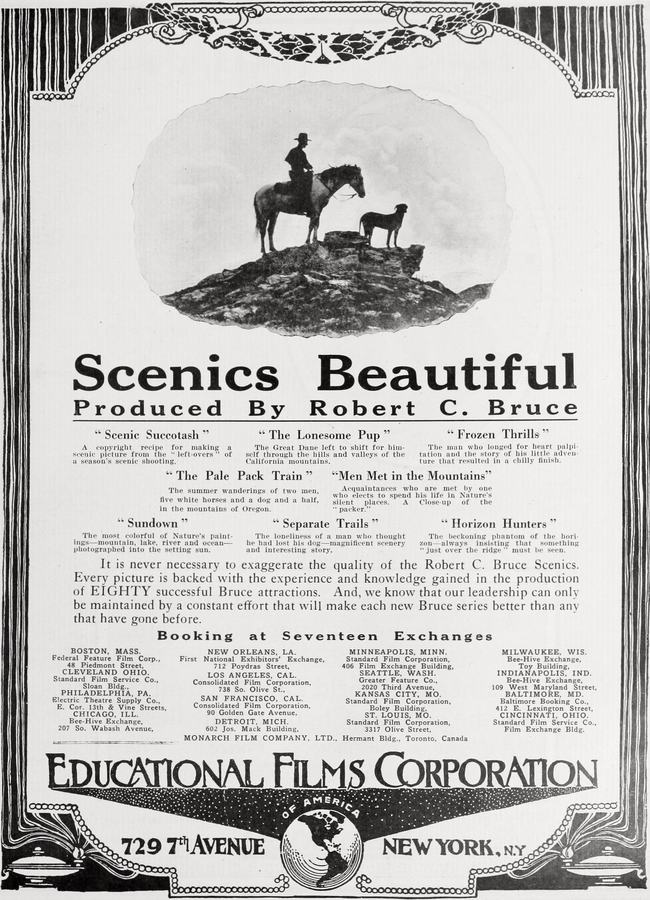
To understand The Lonesome Pup, one must first grapple with the unique cinematic language of Robert C. Bruce. In an era when the industry was increasingly obsessed with the proscenium-bound dramas of the studio system, Bruce took his camera into the breathing, unscripted world. While films like The Girl from Rector's were busy capturing the artifice of urban social climbing, Bruce was interested in the ontological truth of a landscape. The Lonesome Pup is perhaps the purest distillation of this obsession. It is a film that breathes with the wind and shivers with the cold of the Pacific Northwest, using a small, four-legged protagonist to anchor a vastness that would otherwise overwhelm the viewer.
The aesthetic here is one of stark, unadorned beauty. Unlike the shadowy, gothic undertones of The Death-Bell, Bruce’s work is flooded with the natural light of the high altitudes. However, this light doesn't signify safety; rather, it highlights the pup's vulnerability. There is a specific sequence where the dog pauses on a granite outcropping, silhouetted against a sky that feels infinite. In this moment, the film transcends its 'scenic' label and becomes a study in loneliness. The pup is a vessel for the audience's own sense of displacement in a rapidly industrializing world.
What makes The Lonesome Pup so compelling is its refusal to anthropomorphize its subject through clumsy intertitles or forced sentimentality. In The Beautiful Adventure, the narrative relies on the intricate dance of human relationships, but here, the relationship is between a creature and the earth. Bruce treats the canine with a dignity that was rare for 1917. The pup’s movements are unforced, its reactions to the environment genuine. When it encounters a rushing mountain stream, the tension is palpable—not because of a scripted threat, but because the raw power of the water is captured with such fidelity.
"In the silence of the Bruce scenic, we find a dialogue between the soul and the soil that no spoken word could ever replicate."
Technically, the film is a marvel of its time. Bruce was known for carrying heavy equipment into locations that would make modern cinematographers balk. This physicality translates into the frame. There is a tangible weight to the images. Comparing this to the controlled environments of The Grey Parasol, one can see the radical departure Bruce was making. He wasn't just filming a story; he was capturing an expedition. The grain of the film stock interacts with the mist of the mountains, creating a texture that feels almost tactile.
When we look at other films of the period, such as A Son of the Hills, we see a similar fascination with the rural and the rugged. However, while A Son of the Hills uses the landscape as a backdrop for human drama, The Lonesome Pup allows the landscape to be the drama. The pup is merely our guide through this cathedral of pines. There is a sequence involving a fallen log over a ravine that rivals the suspense of The Tiger, yet it achieves this without a villain or a weapon. The antagonist is gravity; the stakes are survival.
Furthermore, the film’s pacing is remarkably modern. It doesn't rush to a climax. It lingers on the way light hits a spiderweb or the way the pup’s ears twitch at the sound of a distant hawk. This contemplative speed is a far cry from the frantic energy of Spooks. Bruce invites us to sit in the stillness, to feel the passage of time in a way that few silent films dared. It shares a certain spiritual kinship with the later works of European masters, perhaps even echoing the somber introspection found in Doch Anny Kareninoy, though stripped of the Russian theatricality.
Bruce was a man who believed that the camera could see things the human eye missed in its haste. In The Lonesome Pup, he employs long shots that emphasize the scale of the pup against the mountainside. This isn't just for visual flair; it’s a philosophical statement about the insignificance of the individual. In The Final Curtain, the world is a stage, but in Bruce’s world, the stage is so large that the actors are nearly invisible. This perspective was revolutionary.
The use of natural light creates a chiaroscuro effect that rivals the staged lighting of Lady Barnacle. The depth of field is staggering for the period.
Isolation, survival, and the indifference of nature. It serves as a precursor to the modern 'man vs. wild' genre but with a poetic soul.
Consider the scene where the pup encounters a small bird. There is no Disney-fied friendship here. There is only curiosity and the brief intersection of two different lives in a shared space. It lacks the overt sentimentality of Miss Meri, opting instead for a documentary-like observation. This realism makes the moments of perceived 'loneliness' even more poignant because they feel earned rather than manufactured.
As the film draws to its close, there is no grand resolution. The pup does not find a golden collar or a warm hearth. It simply continues its journey. This open-endedness is a brave choice. It mirrors the relentless forward motion of nature itself. While Vengeance might offer a cathartic payoff, The Lonesome Pup offers only the continuation of existence. It is a film that demands the viewer find their own meaning in the silence.
In the broader context of global cinema, such as the epic scale of Die Herrin der Welt, Bruce’s short film might seem small. But its impact is measured in the intimacy of its observation. It predates the avant-garde movements of the 1920s by focusing on the object—the pup, the stone, the tree—as a thing of inherent value. It shares the whimsical yet melancholy DNA of Pierrot, but replaces the greasepaint with the dust of the trail.
Even when compared to the mystery-driven plots like The Missing Bullet, the greatest mystery in Bruce’s work remains the internal life of its subject. What is the pup thinking as it stares into the embers of a dying campfire? We can never know, and that mystery is the film’s greatest strength. Robert C. Bruce didn't just document the world; he gave the world a soul through the eyes of a lonesome pup.
Ultimately, The Lonesome Pup stands as a testament to the power of the image. In a world increasingly cluttered with noise, Bruce’s silent odyssey reminds us of the profound eloquence of the earth. It is a vital piece of cinematic history that deserves more than a footnote; it deserves a place in the pantheon of films that taught us how to truly look at the world around us. The pup’s journey is our own—a wandering search for meaning in a landscape that is as beautiful as it is vast.
IMDb 7.3
1935
Community
Log in to comment.