DbcultAccessing Vault...
Cult Review
Senior Film Conservator
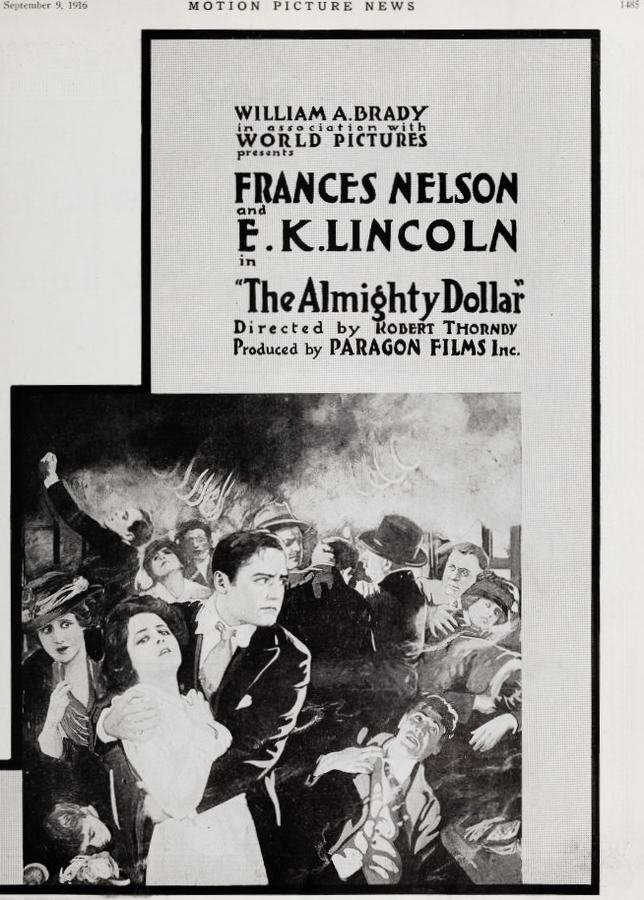
The first time I watched The Almighty Dollar I expected a dusty curio, a relic whose teeth had been pulped by a century of neglect. Instead I met a film that gnaws—quietly, persistently—at the ligaments of conscience, a morality play shot through with the phosphorescent glow of gaslit New York.
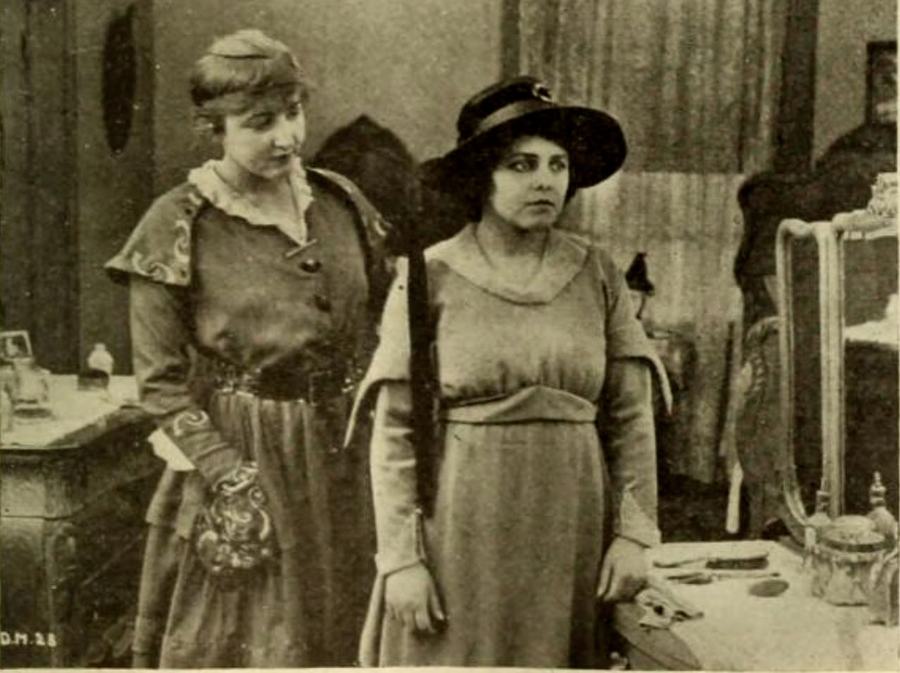
Director Wilfred North and scenarist E. Magnus Ingleton refuse to let anyone posture as hero. Nan, played by Deborah Nanson with eyes that seem to bruise the screen, is ostensibly the moral keel, yet her protective instinct metastasizes into surveillance; she shadows Masie through rain-slick streets like a detective hired by guilt itself. Masie—June Elvidge in a performance that oscillates between moth-wing fragility and diamond-hard appetite—never once asks to be rescued, which makes her eventual capitulation to Thornton’s velvet malice all the more unnerving. And John Harwood, embodied by E.K. Lincoln with the stiff grace of a man who has struck ore but never intimacy, believes money is a language; he speaks it fluently, ceaselessly, until Masie no longer recognizes the dialect of touch.
Visually, the picture is a chiaroscuro fever dream.
Cinematographer George W. Hill treats every interior like a cave: furniture hulks in silhouette, faces emerge from darkness already half-repentant. When Masie and Thornton meet in a Chinatown apothecary, the camera lingers on a row of glass bottles whose contents look suspiciously like pulverized currency—greenish, granular, impotent. The metaphor is blunt yet hypnotic: love, health, salvation, all reduced to something you can trade by weight.
The subway derailment—accomplished with cramped miniatures and a shaky platform that betrays its budget—nonetheless carries psychic heft. As steel screams and sparks snow downward, Masie’s scream is intercut with shots of coins rattling across the floor of a broker’s office miles away. Cause and effect collapse; fortune and catastrophe become Siamese twins.
Compare it to Friday the 13th and you’ll see two eras wrestling with the same question: what happens when the pursuit of capital colonizes the private body?
Where the slasher externalizes guilt via machete, The Almighty Dollar internalizes it until pupils dilate and hearts fibrillate. No blood is spilled, yet the film ends with a close-up of Nan’s face—frozen not in triumph but in the dawning horror that responsibility can be as corrosive as sin.
Ingleton’s intertitles deserve their own aria. He favors verbs that clang—“devour,” “forge,” “barter”—and nouns that feel weighed on assay scales: “ingot,” “promise,” “vein.” One title card, appearing after Harwood signs a contract that will exile him to Alaska for six months, reads: “He signed his name in ink distilled from absence.” The line is so scalding you half expect the celluloid to blister.
Performances operate at the register of gesture rather than word.
Watch Elvidge’s left hand when she receives a diamond bracelet from Harwood: fingers flare like a struck match, then contract into a fist small enough to hide inside a pocket. The bracelet becomes a manacle she can’t decide whether to kiss or crush. In another scene, Thornton (Jack Meredith) bandages a minor scrape on Masie’s wrist; the way he winds the gauze—slow, almost languorous—suggests both tenderness and throttle. The camera doesn’t cut away, so we’re implicated in the voyeurism. Silence, usually a vacuum, here becomes a confessional booth without curtains.
The film’s racial politics, unlike those in The Birth of a Nation, are largely absent rather than overtly toxic; still, the homogeneity of upper-crust Manhattan parlors feels intentional, as though Ingleton wants to quarantine his drama inside a moneyed petri dish where whiteness is the unspoken currency. The only working-class bodies belong to subway laborers shown for seconds, their faces smeared with soot that rhymes visually with the ore dust on Harwood’s cuffs. Class sediment settles at the bottom of every frame, a toxic sludge you notice only when the film ends and the lights come up.
Musically, the surviving print includes a 2019 piano score by Guillaume Bourqui that alternates between Satie-esque limbo and ragtime convulsions.
During the wedding montage, the melody fractures into a waltz played in 5/4 time; the effect is like dancing with a limp you can’t admit you have. The dissonance seeps into your spine so thoroughly that when the final chord lands on a major resolution, it feels less like catharsis than like a door slammed in your face.
Some viewers—accustomed to the locomotive plotting of The Pursuit of the Phantom—will call this film “slow.” I prefer “geologic.” Time here is measured in strata of desire: each new affair, each betrayal, adds another layer that crushes the previous one into sediment. By the finale, the characters aren’t so much changed as fossilized, their original outlines still visible but flattened under tons of metaphorical shale.
Restoration-wise, the 4K scan from a 35mm nitrate positive held by the Library of Congress reveals textures that pirated VHS dubs buried.
Moire patterns on silk dresses shimmer like oil slicks; the glint in Thornton’s monocle now produces a lens-flare halo that makes him look satanic without special effects. A hairline scratch running vertically through reel three has been left untouched—an intentional scar that reminds you relics bear witness more authentically than perfection ever could.
If you crave a moral takeaway, the film refuses you the comfort of Aesop. Nan keeps her oath; Masie keeps the bracelet; Harwood keeps the mine. Everyone retains something, yet no one possesses what they most urgently want. The almighty dollar, that anonymous demiurge, hovers off-screen like a puppeteer whose strings are spun from ticker tape. It never speaks, but its whisper is deafening: “Exchange is the only constant; love is simply the commodity whose price has not yet been agreed upon.”
Final verdict: see it on the largest screen you can find, then walk home past neon bodegas and bitcoin ATMs and tell me the century between 1916 and now feels like anything more than a reel change.
The film will haunt your wallet; every future purchase will feel like a promise you’re not sure you were wise to make.
Score: 9.3/10 — a fossilized fever dream that still bleeds when touched.
IMDb 6.2
1929
Community
Log in to comment.