DbcultAccessing Vault...
Cult Review
Senior Film Conservator

In an era defined by grand gestures and the nascent art of visual storytelling, The Love Net emerges from the silent film archives as a poignant testament to human resilience and the unpredictable currents of fortune. Released in 1918, a year brimming with global upheaval, this cinematic offering from the pen of Clara Beranger, a prolific and often underappreciated writer of the period, delivers a narrative steeped in the melodramatic conventions of its time, yet imbued with a timeless emotional core. It's a film that, despite its age, speaks volumes about the enduring human spirit, the insidious nature of greed, and the surprising wellsprings of benevolence that can alter a life's trajectory in an instant.
At its heart, The Love Net is an exploration of vulnerability and the profound bonds forged in adversity. We are introduced to the endearing figure of little Patty Barnes, portrayed with an affecting innocence by Madge Evans, who, even at a young age, conveys a deep well of emotion that transcends the spoken word. Patty's world is her grandfather, Captain Amos Barnes, brought to life by Jack Drumier with a stoic dignity that belies his character's looming despair. Their existence, perched precariously in a ramshackle abode on the rugged New England coast, is one of simple pleasures and inherent poverty. This idyllic, if impoverished, existence is shattered by the arrival of Mrs. Gaythorne, a character of classic villainy embodied by Kate Lester, whose desire to adopt Patty is less about altruism and more about an aristocratic whim. Her instrument in this cruel endeavor is James Henley, a figure whose moral compass is clearly swayed by wealth and influence.
The film masterfully sets up this initial conflict, drawing the audience into the impending tragedy with a sense of inevitability. The machinations of Mrs. Gaythorne, who dispatches Henley to secure the mortgage on the Barnes' humble dwelling, serve as a stark reminder of the power dynamics prevalent in society, where the wealthy could, with alarming ease, dismantle the lives of the less fortunate. The ensuing displacement of Amos, rendered homeless and penniless, marks a pivotal descent into the depths of despair. His forced relocation to the 'poor farm' is a narrative device that not only highlights the harsh social realities of the era but also serves as the unlikely crucible for the film's most significant turning point. This narrative beat, where an elderly, proud man is stripped of his dignity and forced into institutional care, resonates with a profound sadness, drawing parallels to other films of the era that grappled with social welfare and the plight of the marginalized, such as The Stain, which often explored the societal repercussions of poverty and crime.
It is within the bleak, unadorned walls of the poor farm that the narrative begins its improbable ascent from tragedy. Here, Amos encounters two figures from his distant past, a reunion that feels less like coincidence and more like the gentle hand of fate. Eben Cobb, portrayed by Charles Sutton, runs the establishment with a quiet, unassuming goodness, a stark contrast to the grim reality of his surroundings. More astonishingly, Amos also crosses paths with John Harding, a character whose true identity is shrouded in a captivating mystery. William T. Carleton imbues Harding with an intriguing blend of weariness and astute observation. Harding, a millionaire, has deliberately adopted the guise of a poverty-stricken invalid, a fascinating narrative conceit designed to allow him to escape the clutches of his avaricious relatives and, more importantly, to observe humanity unfiltered by the distorting lens of wealth. This dramatic irony adds a layer of depth to the plot, as the audience is privy to Harding's true status while the characters around him remain oblivious.
Harding's decision to feign destitution is a masterstroke by Beranger, allowing for a profound examination of character. He is not merely observing, but testing the waters of human kindness and loyalty. His interactions with Amos and Eben, devoid of any expectation of personal gain, become the true measure of their character. Once convinced of their inherent goodness and the unwavering loyalty that time has failed to diminish, Harding reveals his hand. The gesture of leaving Eben a substantial check is not just an act of charity; it is a recognition of genuine virtue, a reward for integrity found in the most unlikely of places. This moment of revelation, where the 'invalid' sheds his disguise to become a benefactor, is a powerful turning point, transforming the poor farm from a symbol of despair into a place of unexpected redemption. It's a narrative flourish that echoes the dramatic reveals found in other melodramas of the era, where hidden identities often serve to propel the plot toward a satisfying, if sometimes fantastical, resolution, much like the intricate plots seen in films such as The Magic Eye, where secrets are central to the unfolding drama.
The film then pivots to a heart-stopping climax, deftly weaving together the threads of despair and nascent hope. Patty, now living under the harsh thumb of Mrs. Gaythorne, receives an intriguing and somewhat whimsical invitation from Harding: a 'pirate cruise' near his yacht. This seemingly innocent invitation carries the weight of future promise, a beacon of light in Patty's otherwise bleak existence. Simultaneously, Amos, consumed by a grief so profound that it eclipses all reason, makes a tragic decision. Believing himself utterly alone and with nothing left to live for, he sets sail in his small boat, intending to end his life. The scene is imbued with a quiet, desperate dignity, as Drumier's portrayal conveys the depth of a man pushed beyond his limits.
In a twist of cruel irony, Patty, perhaps drawn by a child's curiosity or an instinctive yearning for her grandfather, has stowed away on Amos's boat, unbeknownst to him. The unsuspecting grandfather, in his despair, pulls the plugs, sealing the fate of both himself and his beloved granddaughter. The tension in this sequence is palpable, a silent scream conveyed through the actors' expressions and the visual storytelling. The boat, slowly succumbing to the encroaching waves, becomes a symbol of their fading hopes. It is at this critical juncture, when all seems lost, that John Harding emerges as the deus ex machina. Having kept a watchful eye, perhaps anticipating such a desperate act, he swiftly intervenes. His yacht, previously a symbol of his hidden wealth, now transforms into a vessel of salvation. The rescue is dramatic and timely, a cinematic flourish that delivers the audience from the brink of tragedy to the warm embrace of a happy resolution. This kind of last-minute rescue, often involving a benevolent wealthy figure, was a common trope in early cinema, providing a satisfying emotional release for audiences who had endured the characters' trials and tribulations. One might even draw a parallel to the dramatic rescues and moral lessons found in films like The Man Who Came Back, where characters face dire circumstances before finding redemption.
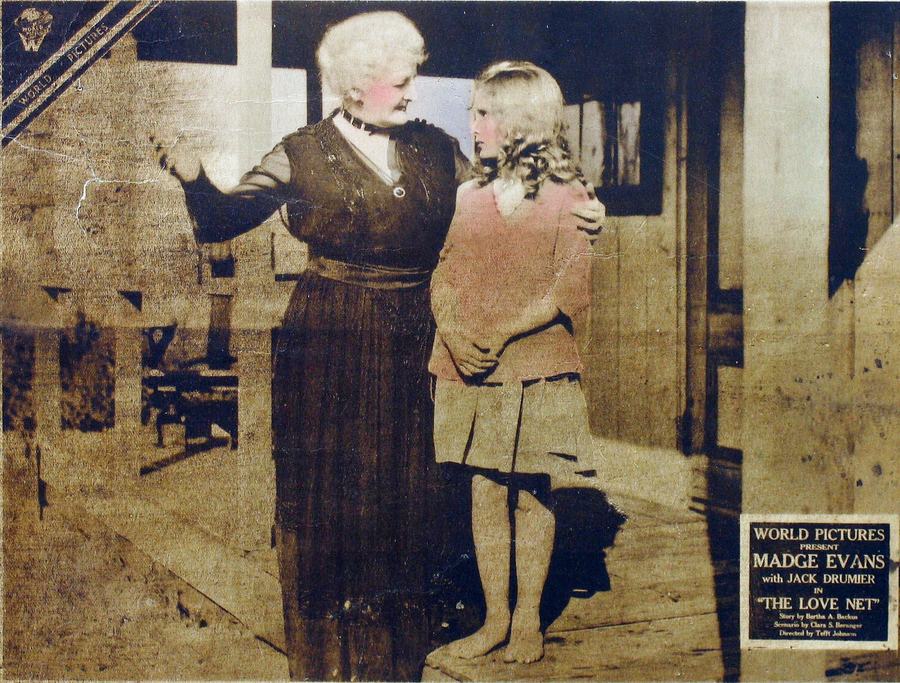
Clara Beranger's screenplay for The Love Net exemplifies the intricate craft of silent film writing. Without the luxury of spoken dialogue, Beranger had to construct a narrative that was visually compelling, emotionally resonant, and clear in its intentions. The plot is a masterclass in building tension and releasing it, utilizing archetypal characters to convey universal themes. Her ability to craft distinct personalities through actions and minimal intertitles is commendable. The villainy of Mrs. Gaythorne, the quiet dignity of Amos, the innocent charm of Patty, and the insightful benevolence of Harding all shine through, testament to Beranger's keen understanding of human nature and cinematic storytelling. Her work, alongside that of other pioneering female writers in early Hollywood, often pushed boundaries and explored complex emotional landscapes, contributing significantly to the development of film as an art form. The 'love net' itself, a metaphorical construct, represents the interconnectedness of fate, friendship, and compassion that ultimately ensnares its protagonists in a web of comfort and happiness, rather than despair.
The ensemble cast, under the direction of an uncredited but clearly capable hand, delivers performances that are deeply expressive. Madge Evans, in particular, stands out. Her portrayal of Patty is remarkably nuanced for such a young actress in a silent film. Her wide, expressive eyes and subtle gestures convey a range of emotions – from innocent joy to profound sadness – that draw the audience deeply into her plight. Jack Drumier as Captain Amos Barnes embodies the stoicism and quiet despair of a man facing overwhelming odds. His physical portrayal of weariness and grief is heartbreaking, making his eventual rescue all the more impactful. William T. Carleton as John Harding manages to convey both the cunning of his disguise and the inherent goodness of his character, a delicate balance that is crucial to the film's emotional payoff. The exaggerated, yet effective, gestures characteristic of silent film acting are employed here to great effect, ensuring that every emotion, every plot twist, is communicated clearly to an audience accustomed to visual rather than auditory cues.
The visual language of The Love Net is also a key component of its success. The stark contrast between the rickety shack and the opulence of Harding's yacht, or the grim reality of the poor farm, is used to underscore the film's thematic concerns of class disparity and the capriciousness of fortune. The cinematography, while perhaps rudimentary by modern standards, effectively captures the mood of each scene, from the windswept melancholy of the coast to the claustrophobic despair of the sinking boat. Lighting and composition are used to highlight key emotional moments, drawing the viewer's eye to the most significant actions and expressions. The film’s pacing, a crucial element in silent cinema where intertitles must guide the narrative without slowing it down unnecessarily, is generally well-handled, ensuring that the story unfolds with a compelling rhythm that keeps the audience engaged.
The Love Net is more than just a melodrama; it is a fascinating historical document that reflects the social anxieties and moral sensibilities of its time. The portrayal of the poor farm, for instance, offers a glimpse into early 20th-century attitudes towards poverty and social welfare. The film's ultimate message, that kindness and loyalty are virtues that will eventually be rewarded, even in a world seemingly dominated by greed and injustice, is a timeless one. It speaks to a fundamental human desire for fairness and the belief that good triumphs over evil. This optimistic worldview, while perhaps idealistic, provided solace and entertainment to audiences navigating their own turbulent times, much like the escapism offered by other narrative-driven films of the period, such as Hotel Paradiso, which transported viewers to different worlds.
The film's exploration of family, both by blood and by choice, is another compelling aspect. The bond between Patty and Amos is central, a pure and unwavering affection that drives much of the narrative. The introduction of John Harding, who effectively adopts both Amos and Patty into a life of comfort and happiness, redefines what family can be. It suggests that true kinship is not merely about biological ties but about shared values, compassion, and mutual support. This expanded view of family, where benevolent outsiders step in to provide care and security, offers a heartwarming counter-narrative to the harsh realities faced by many orphans and elderly individuals during that period.
In conclusion, The Love Net stands as a charming and emotionally resonant silent film that, despite its century-plus age, retains a surprising degree of power. It's a reminder of the foundational elements of storytelling that continue to captivate audiences: compelling characters, dramatic conflicts, and the enduring hope for a happy ending. Clara Beranger's thoughtful script, combined with the expressive performances of its cast, particularly Madge Evans and Jack Drumier, crafts a narrative that is both specific to its era and universal in its themes. The film's journey from destitution to salvation, from the poor farm to the comfort of a yacht, is a testament to the idea that even in the darkest moments, a 'love net' of friendship, loyalty, and unexpected generosity can emerge to catch those who are falling. It's a delightful cinematic artifact, offering a window into the past while still delivering a message that resonates deeply with contemporary audiences, reminding us that compassion and connection are indeed the most valuable treasures.
While its melodramatic flourishes might seem quaint to modern eyes, they are integral to its charm and effectiveness as a silent picture. The film's ability to evoke such strong emotions without a single spoken word is a powerful demonstration of cinema's early potential. It’s a film that deserves to be rediscovered, not just as a historical curiosity, but as a genuinely moving story about the triumph of kindness over cruelty, and the unexpected ways in which fate can intervene to mend broken lives. The 'love net' truly casts a wide, saving embrace.
IMDb 5.3
1925
Community
Log in to comment.