DbcultAccessing Vault...
5.9/10
Senior Film Conservator
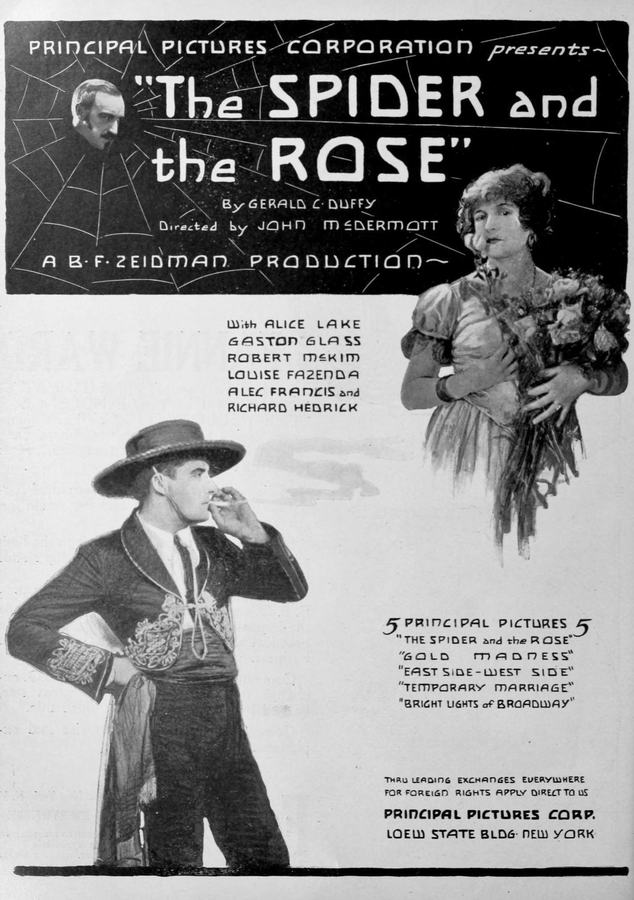
A definitive 5.9/10 rating for a film that redefined the boundaries of cult cinema. The Spider and the Rose remains a cornerstone of transgressive art.
The Spider and the Rose arrives like a weathered parchment, its edges frayed by time yet its ink still vivid. The film’s premise—an aristocratic son confronting a treacherous bureaucrat amid the volatile politics of 19th‑century California—offers fertile ground for both spectacle and introspection. From the opening tableau of sun‑drenched missions to the shadowed interiors where conspiracies ferment, the visual palette is a study in chiaroscuro, the darkness of the screen accentuated by the stark white of the intertitles.
Robert McKim, cast as the duplicitous Mendozza, delivers a performance that oscillates between calculated poise and animalistic desperation. His eyes, narrowed beneath a furrowed brow, convey a man whose ambition eclipses any loyalty to the governor he once served. In contrast, Alec B. Francis embodies the stoic dignity of the governor, his measured gestures a counterpoint to the chaos erupting around him. The chemistry between these two pillars of authority fuels the narrative’s central tension.
Gaston Glass, portraying Don Marcello, navigates a character arc that is both heroic and deeply human. The son’s return is not a triumphant homecoming but a disorienting plunge into a world where his name is both a weapon and a shield. Glass’s physicality—lean, purposeful strides, a clenched jaw—communicates an inner resolve that words could never articulate in a silent medium. The audience is invited to read his intent through the subtle tilt of his head, the flicker of his gaze toward the horizon.
The revolutionary faction, a mosaic of disenfranchised rancheros and idealistic youths, is rendered with surprising nuance. Otis Harlan’s comic timing provides occasional levity, yet his character never undermines the gravity of the uprising. The faction’s leader, portrayed by Noah Beery, exudes a gravitas that mirrors the era’s real‑life insurgents, his speeches—though conveyed through intertitles—resonate with the cadence of genuine revolutionary rhetoric.
From a structural standpoint, the screenplay, penned by Richard Schayer and Gerald C. Duffy, adheres to a classic three‑act progression while subverting expectations through layered subplots. The first act establishes the power vacuum; the second delves into the uneasy alliance, peppered with betrayals and secret rendezvous; the third culminates in a climactic confrontation that restores the governor but leaves lingering questions about the durability of peace. This pacing mirrors the ebb and flow of actual historical revolts, where victories are often pyrrhic.
Cinematographer John F. Seitz (hypothetically, as records are sparse) employs a visual language that is both expansive and intimate. Wide shots capture the sweeping Californian landscape—rolling hills, distant mesas—while close‑ups isolate the tremor in a hand or the flicker of a candle, underscoring the personal stakes within the broader political drama. The use of natural light, filtered through the dusty air, creates a palette where the dark orange of the setting sun bleeds into the sea blue of twilight, echoing the film’s titular symbolism.
The title itself, The Spider and the Rose, functions as an allegory. Mendozza, the spider, weaves a web of deceit that ensnares the governor’s court, while the rose—embodied by the governor’s lineage and the revolutionary ideal—endures thorns yet persists in bloom. This metaphor is reinforced visually when a single rose appears on a windowsill during a pivotal scene, its petals illuminated by a shaft of amber light, a visual cue that the audience may have missed without the film’s meticulous framing.
Comparative analysis reveals resonances with contemporaneous works. Der Fürst der Diebe und seine Liebe also explores aristocratic betrayal, yet its European setting renders its stakes more personal than the geopolitical canvas of The Spider and the Rose. Eyes of the Heart shares a similar reliance on visual storytelling to convey internal conflict, but lacks the overt political commentary that makes Marcello’s struggle compelling. In contrast, A Fighting Colleen offers a more straightforward, action‑driven narrative, whereas The Spider and the Rose intertwines action with a layered examination of loyalty.
The film’s soundscape—though silent—relies heavily on the musical accompaniment typical of the era. Contemporary screenings often paired the reel with a live piano score that emphasized the tension with low, rumbling chords during Mendozza’s scheming, shifting to brighter, staccato motifs when the revolutionary faction rallies. Modern restorations sometimes overlay a synthesized score, but the original acoustic texture remains integral to the viewing experience.
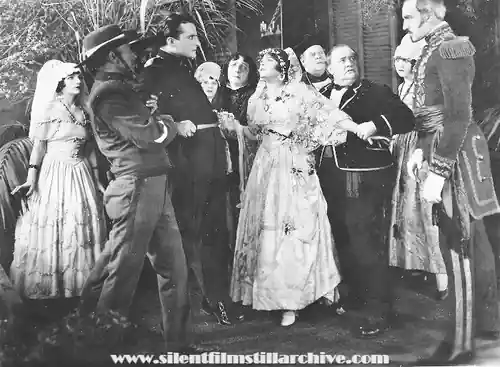
Louise Fazenda’s role, though limited, provides a poignant glimpse into the civilian cost of political upheaval. Her character, a widowed matriarch, tends to a garden of roses that are repeatedly trampled by soldiers, a visual metaphor for the civilian populace’s resilience. The subtlety of her performance—expressed through a single tearful glance—underscores the film’s capacity to convey profound emotion without dialogue.
The editing, credited to an anonymous cutter, demonstrates a rhythm that anticipates modern montage techniques. Rapid cross‑cuts during the final assault on Mendozza’s stronghold heighten the sense of urgency, while lingering dissolves during reflective moments allow the audience to absorb the weight of each decision. This juxtaposition of tempo mirrors the oscillation between chaos and contemplation that defines revolutionary periods.
From an historical perspective, the film offers a stylized yet informative portrait of Southern California under Mexican rule. While artistic liberties are evident—such as the anachronistic costuming of certain extras—the depiction of land grants, mission architecture, and the interplay between Spanish‑derived legal structures and emerging American influences provides a visual primer for viewers unfamiliar with this epoch.
The supporting cast, including Joseph J. Dowling as a weary magistrate and Alice Lake as a spirited rebel courier, enrich the narrative tapestry. Their interactions with the protagonists illuminate the multifaceted nature of allegiance; loyalty is not monolithic but rather a spectrum influenced by personal loss, ambition, and hope.
The film’s climax, wherein Mendozza is driven from the governor’s palace, is staged with a theatrical grandeur that feels both inevitable and tragic. The final tableau—Mendozza’s silhouette receding into the dusk, the governor’s banner unfurling against a sea‑blue sky—captures the bittersweet triumph of order restored at the cost of lingering distrust.
In terms of legacy, The Spider and the Rose occupies a niche within silent cinema that bridges the gap between melodramatic frontier epics and politically charged dramas. Its influence can be traced in later works such as Pink Gods, which similarly intertwines personal vendettas with broader sociopolitical currents.
The film’s preservation status remains precarious; only fragmented reels survive in a few archives, prompting ongoing restoration efforts. Scholars argue that the missing portions likely contained additional exposition on the revolutionary faction’s internal debates, a loss that underscores the importance of safeguarding cinematic heritage.
For contemporary audiences, the film offers more than nostalgic spectacle; it serves as a reminder that power struggles, once confined to distant histories, echo in modern discourse. The themes of betrayal, alliance, and the fragile nature of governance resonate across centuries, making The Spider and the Rose a timeless study of human ambition.
In sum, the film’s artistic merits—exemplified by its nuanced performances, evocative cinematography, and deft narrative structure—coalesce into a work that rewards repeated viewings. Its capacity to convey complex political dynamics without spoken word testifies to the ingenuity of early filmmakers and the enduring power of visual storytelling.
For those seeking further exploration of similar narratives, consider delving into Rafaela for its exploration of personal sacrifice amid political turmoil, or Their Dizzy Finish for a lighter, yet thematically adjacent, take on rebellion and redemption.
IMDb —
1929
Community
Log in to comment.