DbcultAccessing Vault...
Cult Review
Senior Film Conservator
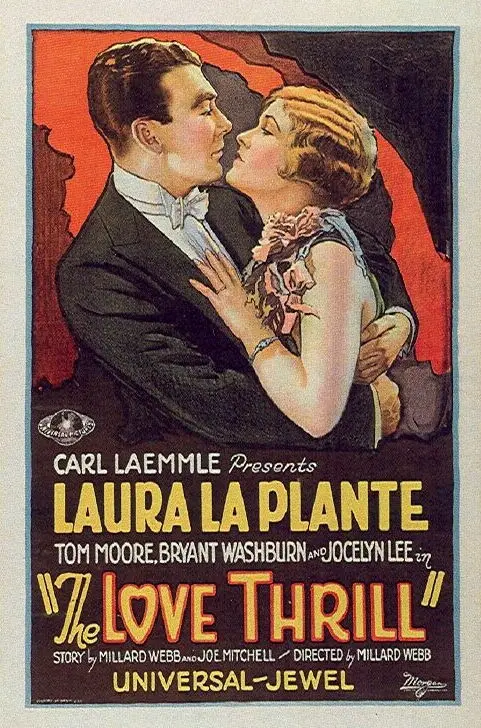
Is The Love Thrill worth your time in the modern era of instant gratification? Short answer: yes, but only if you are willing to look past its dated gender politics to find the genuine comedic pathos underneath.
This film is specifically for enthusiasts of the 'shopgirl' subgenre and those who find beauty in the expressive facial acting of the 1920s; it is definitively NOT for viewers who require fast-paced action or modern cynical subversions of romantic tropes.
1) This film works because Laura La Plante possesses an uncanny ability to convey profound longing through subtle shifts in her gaze, making her invisibility to Jack feel like a physical wound.
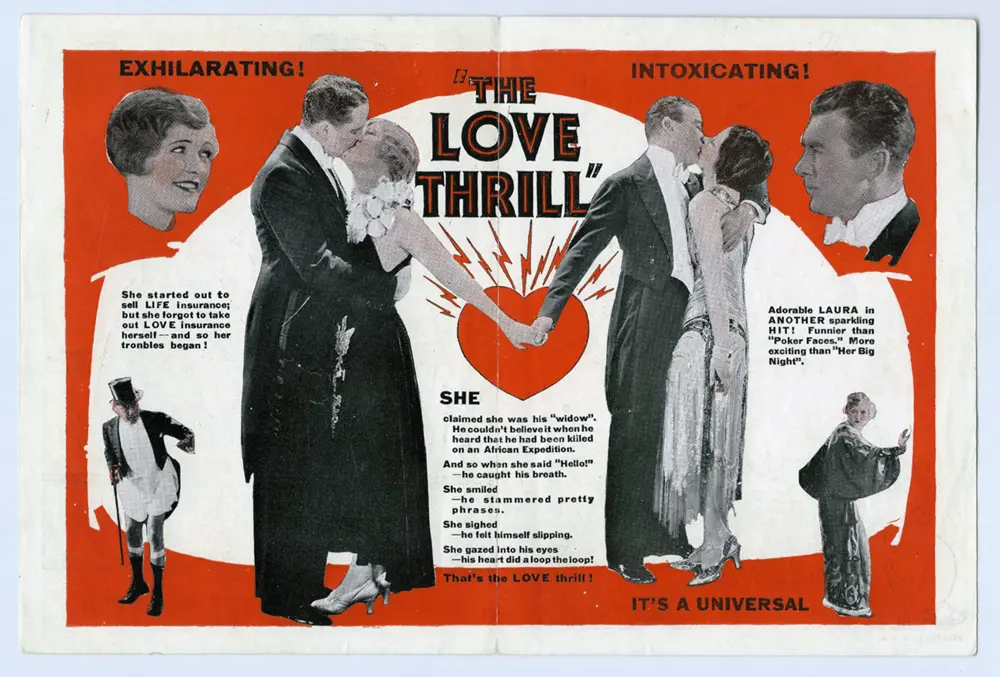
2) This film fails because the male lead, Jack Sturdevant, is written with such a high degree of obliviousness that he occasionally crosses the line from 'charming bachelor' to 'infuriatingly dim-witted.'
3) You should watch it if you enjoy the tension of a slow-burn romance where the stakes are purely emotional and the resolution depends on a single moment of clarity.
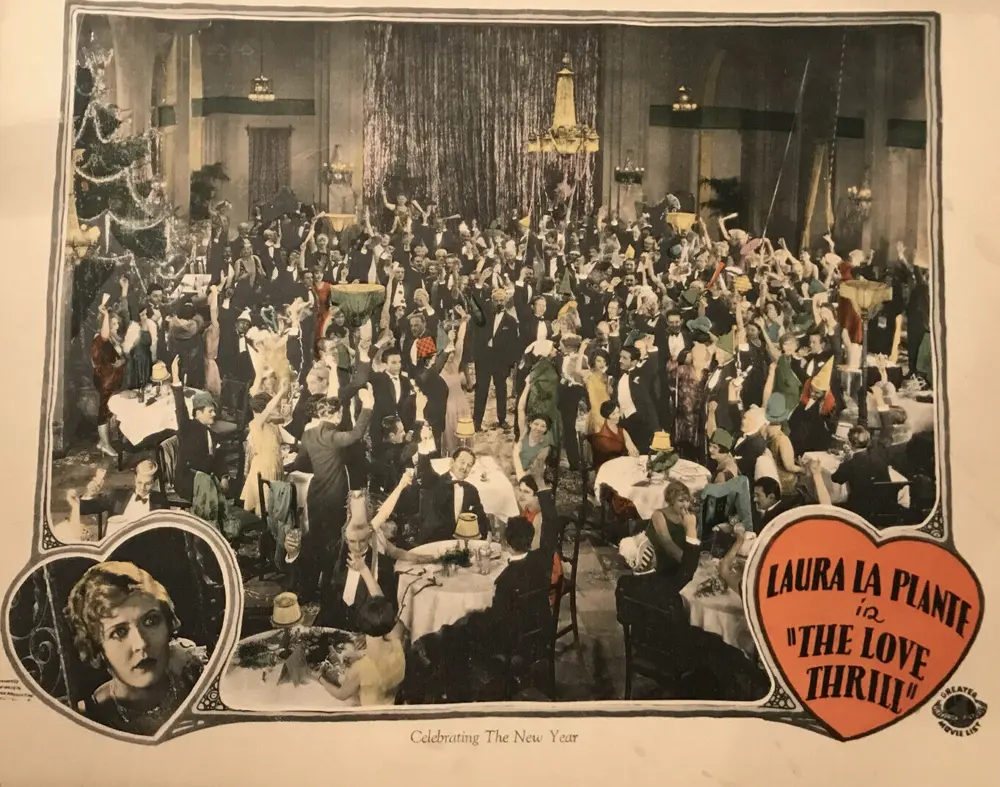
The Love Thrill operates on a premise that is both timeless and terrifying: the idea that you can be in the same room as the person you love and yet remain entirely non-existent to them. Millard Webb, the director, uses the camera to emphasize this distance. In an early scene where Joyce tries to catch Jack's eye at a social gathering, the framing consistently places Jack in the center of the light, while Joyce is frequently obscured by other bodies or relegated to the soft-focus edges of the frame. This isn't just a technical choice; it's a visual metaphor for her social standing.
The script, penned by a collaborative team including Joseph A. Mitchell and James T. O'Donohoe, leans heavily into the 'working girl' archetype that was popular at the time. However, unlike The Way of a Girl, which treats its protagonist's journey with a bit more whimsy, The Love Thrill feels more grounded in the anxiety of the era. Joyce isn't just looking for love; she's looking for validation of her own existence in a world that treats her as replaceable.
It works. But it’s flawed. The pacing in the middle act feels like it’s treading water, waiting for the inevitable moment where Jack finally 'sees' Joyce. Yet, when that moment arrives, it is handled with a delicacy that saves the film from becoming a mere melodrama.
Yes, The Love Thrill is worth watching for its historical value and the performance of Laura La Plante. It provides a fascinating window into 1920s social hierarchies. While the plot is simple, the emotional execution is surprisingly sophisticated for a silent-era comedy-drama. If you appreciate the art of visual storytelling without the crutch of dialogue, this film offers a rewarding experience.
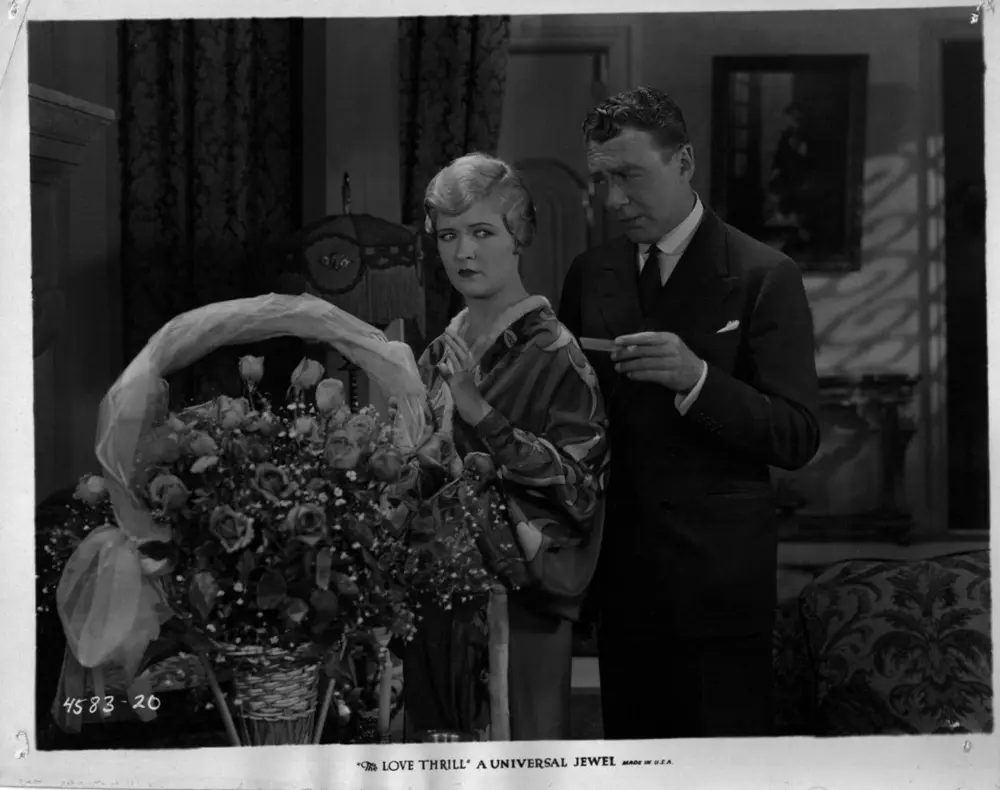
Laura La Plante was a powerhouse of the Universal silent era, and here she proves why. Her performance is a masterclass in 'the look.' There is a specific moment in the second act where she prepares to meet Jack, adjusting her hair with a mixture of hope and devastating self-doubt. It is a brutally simple sentence in motion: 'I hope I am enough.' Contrast this with the more theatrical performances found in The Merchant of Venice, and you see the evolution of film acting toward a more naturalistic, intimate style.
Tom Moore, as Jack, has the difficult task of being the object of desire without being an active participant in the romance for most of the runtime. He plays the 'oblivious male' with a certain breezy charm that prevents the character from being truly disliked, though modern audiences might find his lack of awareness frustrating. The supporting cast, including the reliable Arthur Hoyt and Bryant Washburn, provide the necessary comedic relief, though their subplots occasionally feel like distractions from the central Joyce-Jack dynamic.
"The Love Thrill is a testament to the power of the close-up. In an age before Dolby sound, a twitch of a lip or a glistening eye was the only symphony a director needed."
The cinematography by the uncredited camera team is surprisingly crisp. The use of lighting to differentiate between Joyce’s drab working-class environment and Jack’s opulent world is effective, if not groundbreaking. There is a clear visual language at play here: shadows are long and oppressive when Joyce is alone, but the screen seems to explode with light whenever she enters Jack’s orbit, reflecting her internal state rather than the physical reality of the room.
When compared to the gritty realism of The Silent Lie, The Love Thrill is decidedly more polished and commercial. It was designed to be a crowd-pleaser, a 'thrill' for the heart, and in that regard, it succeeds. The sets are lavish, the costumes are quintessential 1920s chic, and the overall production value suggests that Universal was putting significant weight behind La Plante as a star.
One unconventional observation: the film actually functions better as a psychological study of obsession than a traditional romance. If you view Joyce’s actions through a modern lens, her persistence borders on the pathological. She is essentially stalking a man who doesn't know her name. While the 1927 audience saw this as 'true love's determination,' a 2024 audience might see it as a fascinating, albeit unintentional, exploration of limerence. This shift in perspective actually makes the film more interesting to watch today than it probably was upon its initial release.
Pros:
Cons:
The Love Thrill is a charming, if slightly uneven, artifact of the silent era. It doesn't possess the raw power of The Untamed or the dramatic weight of The Beautiful Lie, but it occupies a comfortable middle ground. It is a film about the desire to be seen, a theme that remains as relevant in the age of social media as it was in the age of silent cinema. La Plante is the engine that keeps this vehicle moving, and her performance alone justifies a viewing. It’s a chase. But she’s the only one running. And in the end, that’s what makes it a thrill worth experiencing.
IMDb —
1919
Community
Log in to comment.