DbcultAccessing Vault...
Cult Review
Senior Film Conservator
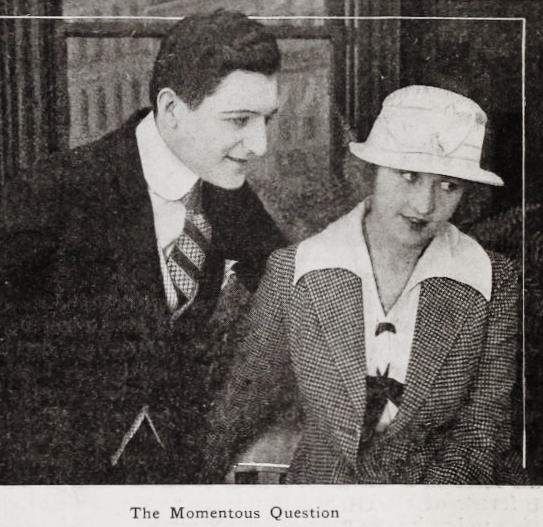
Step into the tumultuous landscape of early 20th-century melodrama, where societal stratifications were rigid, moral quandaries were grand, and the human heart, in its exquisite vulnerability, was often subjected to the most extraordinary trials. Ivan Abramson's 1918 cinematic offering, Her Surrender, emerges from this era not merely as a relic, but as a fascinating artifact of its time, pushing the boundaries of emotional and narrative audacity. It’s a film that dares to explore themes of class disparity, redemption, and the almost mystical power of human connection, all wrapped in a plot so intricately melodramatic that it demands both our suspension of disbelief and our profound engagement. This isn't just a story; it's a social commentary, a psychological exploration, and a testament to the dramatic potency of silent cinema.
The narrative commences by drawing us into the rarefied air of New York's elite, where two titans of industry and philanthropy, Theodore Cortlandt and Madeline Stuyvesant, are locked in a quiet, yet fierce, rivalry. Cortlandt, a millionaire with a penchant for public benevolence, finds his daughter, Rhoda, beloved by Webster, the scion of the Stuyvesant empire. Their union seems preordained, a harmonious blending of fortunes and influence. Yet, beneath this glittering surface, the cracks of societal inequality are already beginning to show. Enter Burton Woodrow, a man tethered to the Cortlandt household by employment, but driven to the precipice of desperation by his mother's consumptive illness, a plight all too common in an era devoid of robust social safety nets. His act of stealing $250 from Cortlandt is not one of malice, but of a son's desperate love, a stark counterpoint to the casual philanthropy of his employer. His subsequent incarceration for a year casts a long shadow, not just over his own life, but unknowingly, over the very fabric of the Cortlandt family's future.
Parallel to this, Abramson introduces us to the grittier realities of urban life, far removed from the Stuyvesant and Cortlandt mansions. Clarice Lee, a figure from the underworld, embodies the 'fallen woman' archetype, entangled in a dangerous romance with Chicago Jim, a ruthless gang leader. The worlds collide when Mrs. Stuyvesant and Rhoda, in their charitable endeavors, visit a poor family residing adjacent to Clarice's apartment. This seemingly innocuous act of benevolence thrusts them into a scene of raw violence, as Chicago Jim, discovering Clarice's infidelity with a gang member named Pugsy, unleashes his fury upon her. Her cries, piercing the thin walls, draw Rhoda and Mrs. Stuyvesant to her rescue, a moment of stark contrast between the sheltered lives of the philanthropists and the brutal existence of those they seek to 'help'.
Clarice, quick-witted and manipulative, seizes this opportunity for upward mobility. With a performance worthy of the stage, she spins a tale of victimhood, claiming Jim’s brutality stemmed from her refusal to participate in his criminal schemes. Mrs. Stuyvesant, ever the compassionate reformer, falls prey to this deception, taking Clarice into her home. This act, while noble in intent, introduces a viper into the bosom of the Stuyvesant family, setting in motion a chain of events far more devastating than any street brawl. The social commentary here is subtle but potent: the blind spots of the privileged, their susceptibility to curated narratives of suffering, and the dangerous consequences of bringing disparate worlds together without true understanding.
The simmering rivalry between Cortlandt and Mrs. Stuyvesant boils over when Cortlandt, suspecting bribery in a million-dollar contract, publicly denounces Mrs. Stuyvesant as a 'trickster' in Webster's presence. Webster, a paragon of filial loyalty, defends his mother, leading to a bitter quarrel with Cortlandt and his subsequent expulsion from the Cortlandt home. This dramatic rupture not only highlights the entrenched pride of the Gilded Age elite but also clears the path for Clarice's insidious machinations. Within the Stuyvesant household, Clarice, with her newfound proximity, develops an intense, unrequited infatuation with Webster, who remains oblivious, his heart belonging solely to Rhoda. Spurned and resentful, Clarice's true nature as a calculating opportunist emerges. She persuades Pugsy, her former lover and still devoted admirer, to lure Rhoda to his room, intending to degrade her. This despicable act of vengeance escalates the melodrama to a horrifying peak, showcasing the dark undercurrents of jealousy and social climbing.
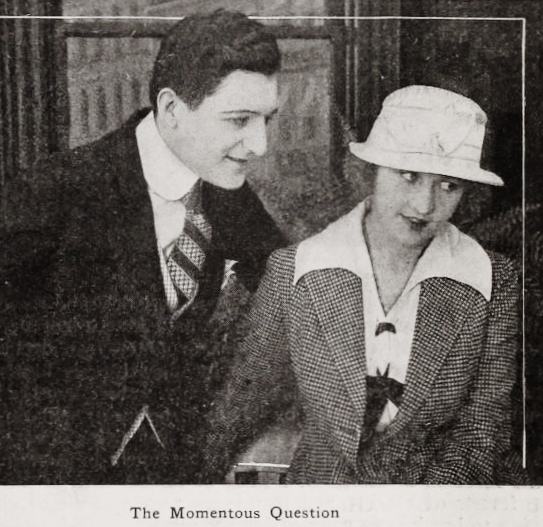
Rhoda's ordeal is brutal. Defending herself against Pugsy's assault, she is severely wounded, suffering immense blood loss. Her life hangs by a thread, and doctors declare that only a blood transfusion can save her. This critical moment becomes the crucible for the film's most profound thematic explorations. Webster, hearing of Rhoda's dire condition, immediately offers his blood, a selfless act of love. However, Theodore Cortlandt, consumed by stubborn pride and still seething from his quarrel with Webster, vehemently refuses, commanding the doctors to instead advertise and offer $500 for the necessary blood. This decision, born of arrogance and familial estrangement, is the pivotal turning point, sealing the fate of all involved.
And then, a twist of fate so exquisitely ironic it could only exist in the grand tapestry of silent melodrama: Burton Woodrow, recently released from prison, unable to secure employment, reads the advertisement. Destitute and desperate, he applies at the hospital. After a necessary period of rest, a quantity of his blood is transfused into Rhoda's veins. The dramatic weight of this moment is immense. The man Cortlandt condemned, the man whose life he indirectly ruined, becomes the unwitting savior of his daughter. The film masterfully builds this tension, revealing the full extent of the irony only after the life-saving act is complete. Before his discharge, Burton learns the identity of the recipient: Rhoda Cortlandt, the daughter of the very man who sent him to prison. This revelation is a gut punch, adding layers of complexity to his act of heroism and setting the stage for the film's most audacious premise.
This sequence, particularly the refusal of Webster's blood for financial compensation, echoes the often-harsh realities of class division and the transactional nature of even life-saving acts in a capitalist society. It also highlights Cortlandt's rigid adherence to pride over pragmatism, a flaw that ultimately precipitates the very outcome he would later rail against. The narrative here is a powerful indictment of the emotional cost of such pride, a theme that resonates across many silent dramas of the era, such as The Revolt, where personal stubbornness often leads to unforeseen, tragic, or dramatically ironic consequences.
With Rhoda's recovery, the film introduces its most unique and, to modern sensibilities, most perplexing trope: the concept of 'blood-love'. As Cortlandt and the Stuyvesants reconcile, and the engagement of Webster and Rhoda is joyfully announced, Rhoda is plagued by constantly recurring visions of Burton. Wherever she goes, he appears; whatever she does, he is recalled to her mind. His vision, a phantom limb of her consciousness, constantly calls to her. She struggles against this inexplicable pull, this unwelcome intrusion into her promised happiness, but eventually realizes that with the blood given to her by Burton has come love. This isn't mere gratitude or psychological trauma; it's presented as a visceral, undeniable connection, a love transmitted through the very essence of life itself.
This 'blood-love' trope, while scientifically absurd, is a fascinating narrative device in the context of early 20th-century melodrama. It speaks to a romanticized, almost mystical understanding of human biology and connection, where blood is not just a physiological fluid but a carrier of spirit, emotion, and destiny. It allows the film to circumvent conventional societal barriers to love, providing a 'supernatural' justification for Rhoda's sudden, overwhelming affection for a man from a lower social standing and with a criminal past. It's a dramatic shorthand for fate, a way to ensure that the hero and heroine, despite all odds, are drawn together by an irresistible force. This theme, while perhaps not as explicitly biological, finds echoes in other melodramas where characters are bound by an unseen, powerful destiny, such as The Jury of Fate, where predetermined connections often override societal expectations.
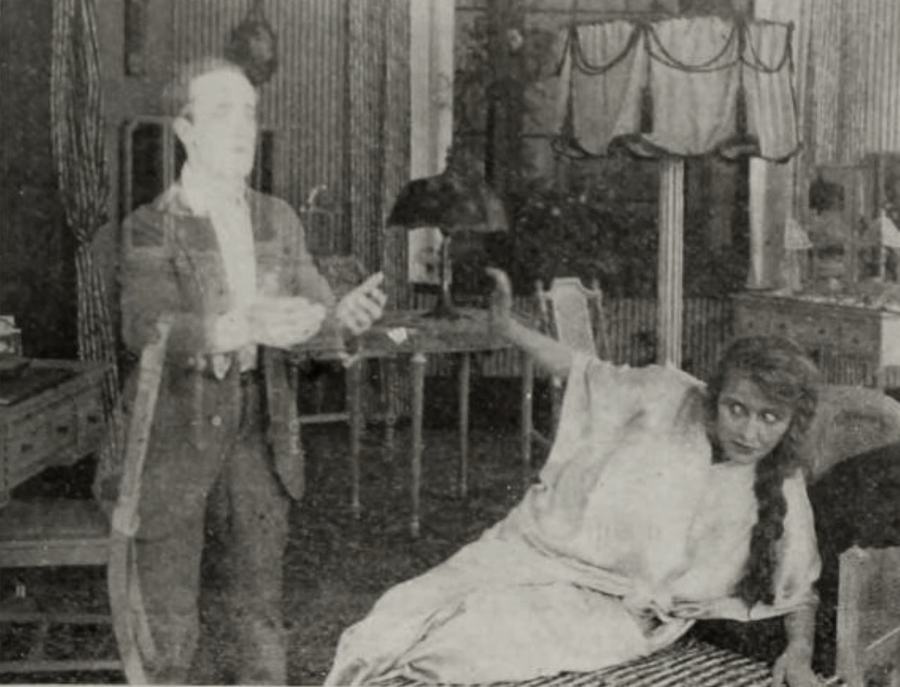
Unable to restrain the call of his blood, Rhoda surrenders to it, telephoning Burton and asking him to visit her. He does, and she confesses her love. Burton, deeply moved but acutely aware of his past, tells her that he loved her long before his imprisonment, but fears his shadow will darken her future. Rhoda, with the conviction of newfound love, pleads with him, declaring that his shadow will fade in the warmth of her affection. This scene is pivotal, showcasing the raw emotional power of their connection against the backdrop of societal disapproval and personal shame. It's a testament to the idea that love, in its purest form, can transcend even the most daunting obstacles.
The climax is a masterclass in melodramatic confrontation. That evening, Webster, blissfully unaware of the seismic shift in Rhoda’s affections, finds her in Burton's arms. His horror is palpable, a silent scream of betrayal and heartbreak. Rhoda, with unwavering conviction, returns his engagement ring, uttering the film's most iconic line: “Condemn me if you will, Burton gave me blood, and with it came love.” This declaration is not just a rejection; it's a profound statement on the nature of her love, a love born of an extraordinary circumstance that defies conventional understanding.
Webster's reaction is perhaps the most noble and selfless act in the entire film. Realizing the power of true love, he sacrifices his own happiness for Rhoda's sake, taking back the returned engagement ring with a gesture of profound acceptance. This act of selflessness elevates Webster from a mere romantic rival to a figure of tragic heroism, a man who understands that love, when true, cannot be coerced or denied. His character arc, from loyal son to heartbroken suitor to magnanimous benefactor of love, is remarkably poignant. This kind of noble sacrifice is a recurring motif in silent films, where characters often endure personal anguish for the greater happiness of others, a theme also explored in films like The Glory of Youth.
The final confrontation arrives with Theodore Cortlandt's entry, as he learns the truth. Shocked and enraged, he denounces Burton and orders him from his house, his pride and class prejudice once again asserting themselves. But it is Webster, the erstwhile rejected suitor, who intervenes with unexpected force and clarity. He confronts Cortlandt, asserting that his stubbornness in not permitting him to give his blood caused this entire chain of events. This moment of truth-telling is powerful, forcing Cortlandt to confront his own culpability. Webster's impassioned plea moves Cortlandt, breaking through his hardened pride, leading him to consent to the marriage of his daughter to the man he once sent to prison. This final act of forgiveness and acceptance, prompted by Webster's wisdom, brings the narrative to a surprisingly hopeful, albeit unconventional, conclusion. It suggests that even the most rigid societal barriers and personal prejudices can be overcome by the transformative power of love and understanding.
Her Surrender is a quintessential example of Ivan Abramson's directorial style. Abramson, a prolific filmmaker of the silent era, was known for his sensational melodramas that often tackled controversial subjects with a blend of moralizing and titillation. Films like The Angel Factory similarly delved into societal ills and human depravity, but Her Surrender stands out for its unique 'blood-love' premise. Abramson understood the power of visual storytelling to convey heightened emotions, relying heavily on close-ups to capture the nuanced expressions of his actors and intertitles to deliver crucial dialogue and narrative exposition. The pacing, while deliberate by modern standards, was designed to build suspense and emotional intensity, drawing the audience into the characters' internal struggles.
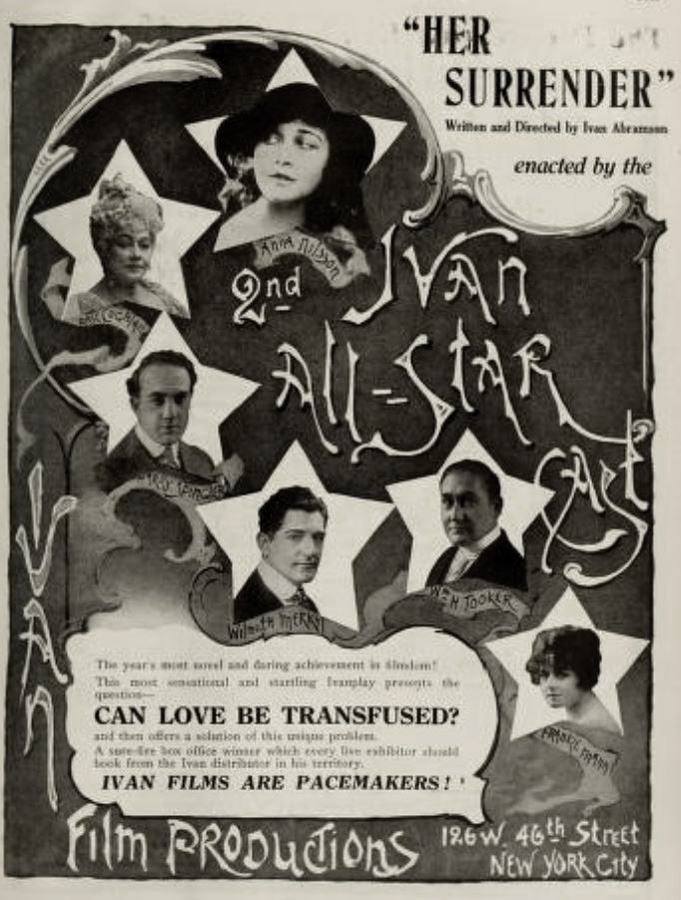
The cast, led by Anna Q. Nilsson as Rhoda Cortlandt, Harry Spingler as Burton Woodrow, and John Merkyl as Webster, deliver performances that, even without spoken dialogue, convey the depth of their characters' emotional journeys. Nilsson, with her expressive eyes and graceful demeanor, perfectly embodies Rhoda's transformation from a privileged socialite to a woman consumed by an inexplicable, fated love. Spingler brings a quiet dignity and underlying pain to Burton, making his journey from disgraced thief to reluctant hero compelling. Merkyl's portrayal of Webster is particularly noteworthy for its nuance, showcasing the character's journey from conventional suitor to a figure of profound self-sacrifice. The subtle gestures, the lingering gazes, and the dramatic physicality of silent acting are all employed to maximum effect, ensuring that the audience feels the weight of every decision and every emotional revelation.
The film's exploration of class differences is also a significant aspect of Abramson's commentary. The stark contrast between the opulent lives of the Cortlandts and Stuyvesants and the desperate circumstances of Burton and Clarice is not merely background; it's a driving force of the plot. The narrative suggests that beneath the veneer of philanthropy, there exists a deep-seated prejudice and a lack of true understanding between social strata. Burton's initial crime is a direct consequence of his poverty, and his subsequent inability to find work after prison highlights the unforgiving nature of society. Even Cortlandt's initial refusal of Webster's blood, preferring to pay an anonymous donor, speaks volumes about his class-conscious pride. This critique of social hypocrisy and the limitations of charity, which often fails to address systemic issues, is a recurring theme in many silent films concerned with social realism, such as Out of the Drifts or even international productions like Fior di male.
Her Surrender, for all its melodramatic excesses, offers a surprisingly rich tapestry of human emotion and social commentary. It's a film that asks us to consider the nature of love: Is it a conscious choice, a societal construct, or an inexplicable, primal force that transcends logic and circumstance? The 'blood-love' trope, while a product of its era's fascination with nascent medical science and romantic mysticism, serves as a powerful metaphor for destiny and the unexpected ways in which human connections are forged. It challenges the audience to ponder whether true love can indeed arise from the most unlikely, even biologically impossible, circumstances.
The film's ultimate message is one of redemption and the triumph of love over prejudice. Burton, initially condemned by society, finds not only forgiveness but profound love through an act of selfless heroism. Cortlandt, the embodiment of rigid pride, is forced to confront his own flaws and ultimately yields to the power of a love he cannot comprehend but must accept. Webster, the noble rival, embodies the highest form of self-sacrifice, demonstrating that true love sometimes means letting go. These themes, presented with the raw, unfiltered emotionality characteristic of silent cinema, continue to resonate, reminding us that the human heart, in all its complexity, remains an endless source of dramatic fascination.
In an age where cinematic storytelling often prioritizes realism, Her Surrender reminds us of the power of heightened drama, of stories that embrace the fantastical to explore profound truths about human connection. It's a testament to the ingenuity of early filmmakers who, working within the constraints of their medium, crafted narratives that were both deeply personal and broadly resonant. This is a film that demands to be seen, not just as a historical curiosity, but as a vibrant, audacious piece of storytelling that continues to provoke thought and stir the emotions, proving that some surrenders, however unconventional, are truly worth making.
IMDb —
1925
Community
Log in to comment.