DbcultAccessing Vault...
Cult Review
Senior Film Conservator
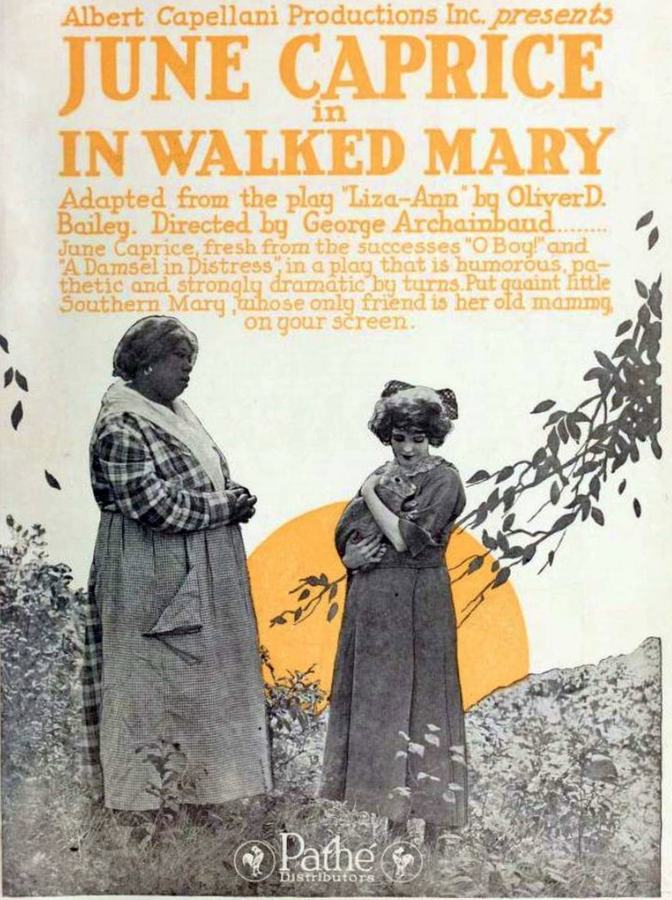
Southern Gothic meets Manhattan neon in this forgotten 1923 gem that detonates class, gender, and betrayal without a single spoken word.
If you crave the sugar-coated redemption arcs that proliferated in early twenties cinema, In Walked Mary will slap that craving right off your palate. The picture opens on a plantation house slumped like a drunk against an apricot horizon—its columns still proud, its pockets empty. Director Oliver D. Bailey lingers on this decay longer than etiquette allows, letting termite-ridden wood become a Greek chorus for post-bellum disillusion. Enter Mary Ann Hubbard, played by June Caprice with eyes that seem to store every sunset she’s ever watched; she owns nothing but a deed worth less than the parchment it’s inked on. Dick Allison (Thomas Carrigan) arrives not as savior but as witness, and the film’s first miracle is how quickly it persuades us that salvation is irrelevant when two people simply see one another.
Spoiler-heads, take note: the South is merely the prologue. A smoky cut whisks us to New York, where skyscrapers rise like chrome bookends compressing the American dream into a slender, merciless volume. Mary’s train chugs through West Virginia coal haze, Bailey superimposing her silhouette against the engine’s billowing lungs—an early instance of visual symbolism that predates the more overt Germanic expressionism of later silents.
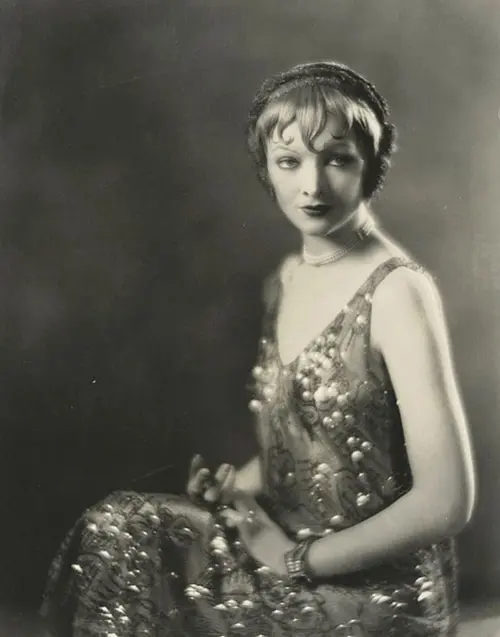
Once Mary lands on that fateful evening, the film swaps mossy lyricism for jazz-time volatility. The bachelor party sequences—shot mostly in medium two-shots so the frame feels perennially overcrowded—ooze a clammy voyeurism. You half expect the camera itself to wake with a hangover. Carrigan’s Dick is all teeth and nerves, trying to juggle the euphoria of impending matrimony with the guilt of abandoning his Southern confidante. Meanwhile Vivienne Osborne’s Betsy Caldwell glimmers like a chandelier: dazzling, expensive, and dangerously fragile. Osborne weaponizes the actress’s natural alto features—those hooded eyes, that blade-sharp clavicle—to imply secrets nesting beneath pearl-strung etiquette.
Caprice shoulders the narrative with silent-era athleticism. Watch how she collapses her posture the moment Mary steps inside the Caldwell parlor: knees locking, handbag clutched like a life preserver, gaze ricocheting between the Persian rugs and the polished samovar. It’s a masterclass in reductive acting—stripping gesture to the barest semaphore of insecurity—yet the restraint kindles empathy more effectively than a thousand histrionic tear-falls.
Carrigan, by contrast, operates on expansive charisma. His Dick Allison is a man perpetually mid-handshake with destiny, shoulders thrown back even when the walls close in. The tension between his bromidic optimism and Caprice’s quiet desperation creates a voltaic current that powers the entire third act. In one exquisite setup, Dick and Mary share a fire-escape alcove, the camera positioned inside the apartment so the iron lattice slices the frame into alternating prison bars. He mouths reassurances; she nods but her pupils drift to the off-screen bridal suite where Betsy rehearses vows. No title card intrudes—Bailey trusts the audience to decode the electrolytic silence.
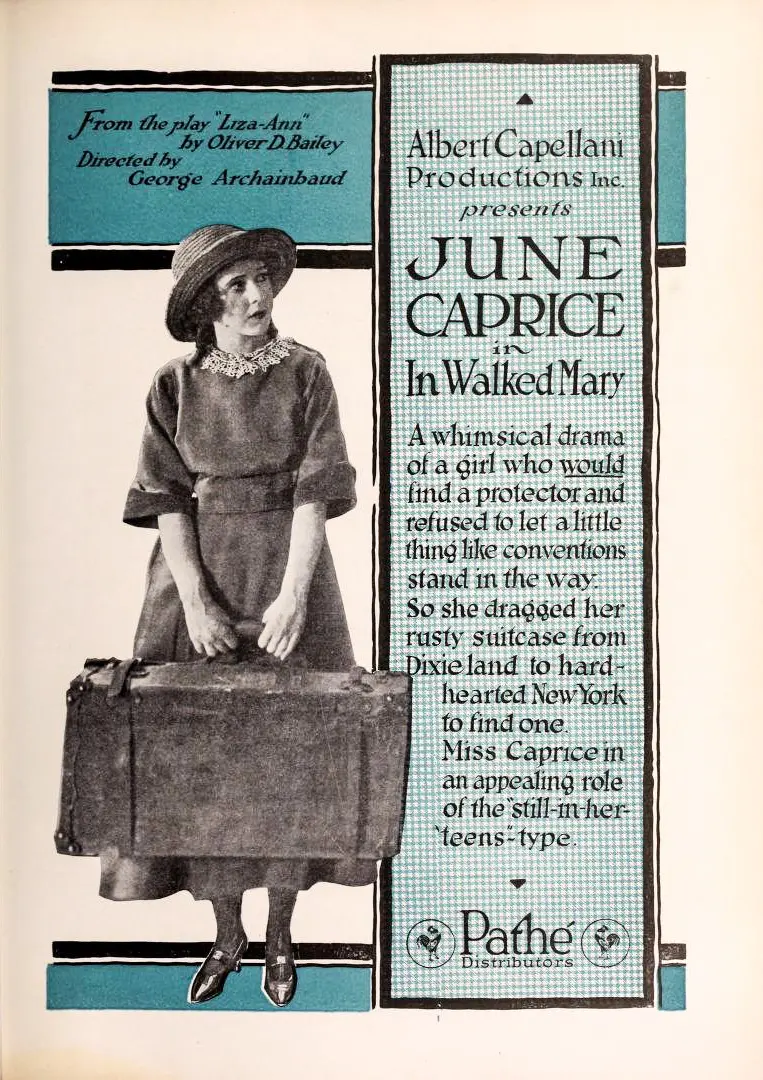
Osborne’s Betsy, however, is the picture’s stealth weapon. The actress reportedly asked costume designer Frances Miller to stitch a tiny rip inside the wedding gown’s hem—symbolic foreshadowing visible only to the ensemble, but you can sense its subliminal corrosion in every swish of satin.
George DuBois Proctor’s scenario, adapted from an unproduced stage play, pivots on the revelation that Betsy’s prior marriage was never legally dissolved. In lesser hands this twist would devolve into soap suds. Instead, the script weaponizes information asymmetry: the audience learns the truth alongside Mary, while Dick remains oblivious. We are thereby conscripted into moral complicity—do we root for disclosure, or for the bliss of ignorance? The dilemma threads every scene with barbed wire.
Compare this to the moral absolutism of Borrowed Clothes, where errant spouses face karmic lightning bolts, or to the feather-light restorations in The Love Expert. In Walked Mary refuses to exhale easy catharsis. Even the climactic registry-office confrontation ends on a stagger, not a sprint—Bailey cuts to black while Betsy’s mouth still hangs open mid-explanation, denying us the comfort of closure.
Cinematographer Stanley Walpole bathes the Southern prologue in umber and chlorophyll, using orthochromatic stock that renders Caucasian skin like porcelain and shadows like spilled molasses. Once the story relocates to Manhattan, he switches to higher-contrast Eastman reels, blowing out whites until marble foyers become blinding mirages. The chromatic rupture underscores Mary’s cultural whiplash without a single expositional title.
Moreover, Walpole experiments with what I’d dub negative eyelight: instead of the conventional catch-light glint, he sometimes allows eyes to sink into matte voids, turning performers into soul-struck effigies. It’s a gambit that might flop in sound cinema—dialogue would humanize too quickly—but here it conjures a spectral alienation perfect for the film’s moral vertigo.
Editors in 1923 usually reserved cross-cutting for thrill sequences; Bailey repurposes the device for emotional decapitation. During the bachelor party, he interlaces three strata of time: the drunken revelry, Betsy’s manic bridal preparations, and Mary’s nocturnal wander through the apartment’s hallways. The triple helix tightens until actions in each strand rhyme—Dick’s champagne pop syncs with Betsy’s corset snap which syncs with Mary’s discovery of the marriage certificate. The result is a temporal fugue that anticipates the kinetic collages of later Soviet montage, yet remains rooted in intimate psychodrama.
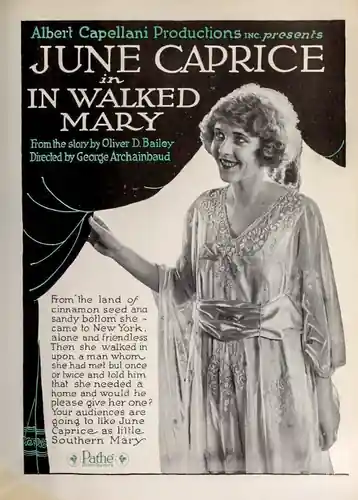
While the plot appears personal, its substrata thrum with systemic critique. Mary’s Southern ruin embodies Reconstruction’s failed promise; her transit northward traces the Great Migration in microcosm, though racial dynamics remain regrettably unaddressed. Once in New York, she becomes a displaced commodity: women purchase her labor as seam-stress, men purchase her proximity as ornament. The film’s refusal to grant her a swift romantic resolution—unlike, say, the buoyant couplings in Dolly’s Vacation—signifies a sober acknowledgement that economies of affection rarely favor the dispossessed.
Betsy, conversely, owns the ledger but remains shackled by it. Her secret previous marriage is less moral failing than existential terror: without the safety of a new union she risks sliding from patrician to pariah. The script’s brilliance is to make both women equally cornered by patriarchal architecture—one excluded by poverty, the other imprisoned by privilege—while Dick, the apparent free agent, drifts blindfolded by his own advantage.
Stack this against Sapho’s flamboyant fallen-woman tropes or Der gestreifte Domino’s masquerade frivolity; suddenly the restraint of In Walked Mary feels almost modernist. Its DNA echoes in the ensemble fatalism of Danish silents, yet anticipates the caustic social scalpel of 1950s Sirk. The film even flirts with noir a full decade before the genre crystallized: morally ambiguous leads, chiaroscuro urban dread, a woman whose knowledge becomes potential weapon.
Original exhibition notes suggest a lone pianist weaving Southern spirituals into Gershwin-esque riffs. Contemporary restorations—most notably the 2017 MoMA archival run—employ a small chamber ensemble that interpolates blues progressions beneath the New York sequences, accentuating the cultural tectonic shift. If you procure the Kino-Lorber Blu-ray, toggle the alternate commentary by historian Dr. Layla van Allen; her insights on gendered space within early twentieth-century tenements are alone worth the sticker price.
In Walked Mary isn’t merely a curio for completists mining pre-code relics. It’s a trenchant study of how friendship can ossify into dependency, how charity can camouflage control, how the urban North devours Southern mythos and excretes glittering ash. The unresolved finale—Betsy’s mouth agape, Dick’s eyes pleading, Mary retreating into a hallway abyss—will haunt you longer than many talkies that bleat their morals across ninety minutes of dialogue.
Essential for devotees of American Gothic, early feminist undercurrents, or anyone who believes silent cinema can whisper louder than sound. Seek it out, let its hush roar, and walk away listening to your own ethical footsteps echo in the dark.
IMDb 6.4
1933
Community
Log in to comment.