DbcultAccessing Vault...
7.1/10
Senior Film Conservator
A definitive 7.1/10 rating for a film that redefined the boundaries of cult cinema. The Lover of Camille remains a cornerstone of transgressive art.
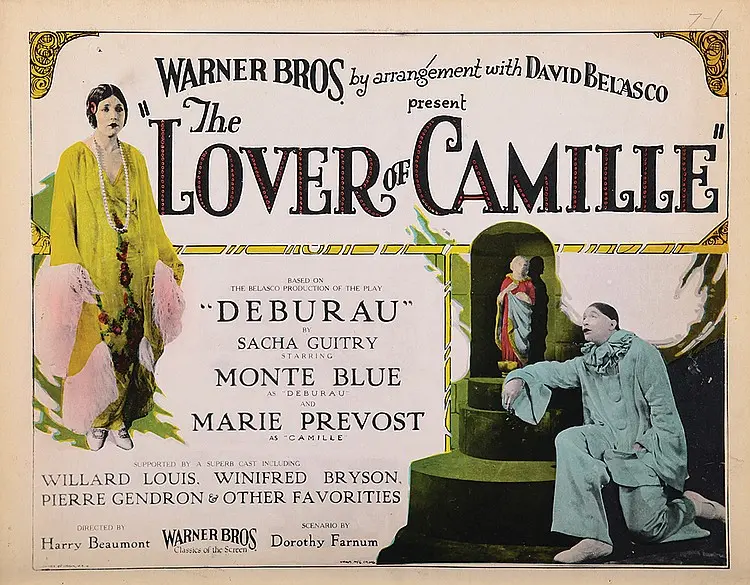
In the pantheon of silent cinema, few works capture the agonizing intersection of theatrical artifice and raw human desolation as potently as The Lover of Camille. Directed with a sophisticated eye for the burgeoning visual language of the 1920s, this 1924 production serves as an adaptation of Sacha Guitry’s play 'Deburau,' a choice that immediately imbues the film with a literary pedigree and a Gallic sensibility often missing from contemporary Hollywood melodramas. The film is not merely a chronicle of a failed romance; it is a sprawling, atmospheric interrogation of the masks we wear—both literally, in the case of the protagonist’s pantomime, and figuratively, in the social dances of Parisian high society.
The narrative centers on Jean-Gaspard Deburau, portrayed with a haunting, understated intensity by Monte Blue. Unlike the swashbuckling bravado seen in Michael Strogoff, Blue’s performance here is one of interiority and subtle kineticism. He captures the tragedy of a man who can command the laughter of thousands through silence but remains utterly voiceless in the face of his own domestic erosion. His Deburau is a man of the people, yet he is sequestered in a private purgatory, a theme that mirrors the isolation found in the more experimental narratives of the era, such as Fantomas - On the Stroke of Nine, though here the villain is not a criminal mastermind, but the fickle hand of fate.
The arrival of Marie Duplessis, played by the luminous Marie Prevost, acts as the catalyst for Deburau’s descent. Prevost, often relegated to lighter roles in films like Don't Call Me Little Girl, reveals a startling dramatic range here. She embodies a Camille who is less a victim of consumption and more a victim of her own insatiable desire for novelty. When she abandons Deburau, the film shifts from a romantic tragedy into a psychological study of obsession. The cinematography utilizes deep shadows and stark lighting to emphasize the protagonist's crumbling psyche, creating a visual texture that feels far more modern than its 1924 release date would suggest.
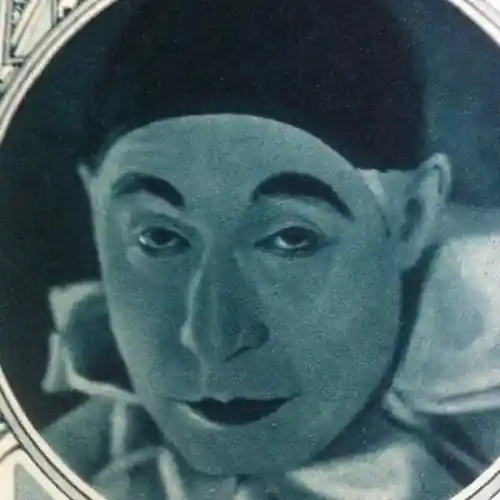
The film’s most devastating sequence—and perhaps its most enduring contribution to silent cinema—is the return of Marie. In a scene thick with dramatic irony, she encounters a withered, heartbroken Deburau and fails to recognize him. Worse still, she mistakes him for a different former lover, effectively erasing his existence from her history while he stands directly before her. This moment of non-recognition is a masterclass in silent storytelling; the camera lingers on Monte Blue’s face as the realization sets in that his grand passion was, for her, merely a footnote. It is a level of emotional cruelty that makes the stakes of What Love Will Do or Her Moment feel almost quaint by comparison.
This sequence serves as the fulcrum upon which the film’s philosophical weight rests. It posits that love is not a shared reality but a subjective hallucination. Deburau’s 'Camille' was a construction of his own artistic soul, a muse he dressed in the finery of his imagination. To see that muse return, stripped of her divinity and burdened by the commonness of forgetfulness, is the ultimate disillusionment. The film handles this transition with a cynical grace, avoiding the easy sentimentality that often plagued early 20th-century cinema.
As the protagonist retreats from the romantic battlefield, the film introduces a secondary arc involving his son, Charles. This pivot provides a necessary counterpoint to the central tragedy. While Jean-Gaspard’s light is fading, Charles represents the cyclical nature of the theater. The success of the son on the very stage where the father once reigned offers a bittersweet consolation. It is a theme of legacy that resonates with the epic scope of Armenia, the Cradle of Humanity, albeit on a much more intimate, familial scale. The transition of the 'Pierrot' costume from father to son is handled with a ritualistic reverence, symbolizing the immortality of the art form even as the artists themselves wither away.

The supporting cast, featuring stalwarts like Willard Louis and Rosa Rosanova, provides a rich tapestry of Parisian life that prevents the film from becoming too claustrophobic. Their performances ground the high-flown melodrama in a recognizable reality, much like the ensemble work in June Madness or the character-driven comedy of A Pair of Sixes. However, the tone remains resolutely somber, a far cry from the slapstick energy of Call a Taxi or the frantic pacing of Monty Works the Wires.
The screenplay by Dorothy Farnum, based on Guitry’s work, is a marvel of economy. In an era where intertitles were often used as a crutch, The Lover of Camille trusts its visual compositions to convey complex emotional states. The set design meticulously recreates the bohemia of 19th-century Paris, with its crowded cafes and velvet-draped theaters, creating a sense of place that is as much a character as Deburau himself. The lighting, particularly in the backstage scenes, evokes a chiaroscuro effect that highlights the duality of the performer—the bright, painted face of the clown versus the shadowed, hollowed eyes of the man behind the makeup.
When compared to the rugged landscapes and visceral stakes of Pure Grit or the frontier ethics of Bull Arizona, this film feels remarkably cosmopolitan. It is a 'city' film in every sense, preoccupied with the moral decay and aesthetic splendor that only a metropolis like Paris can foster. It shares a certain DNA with the episodic tension of Beatrice Fairfax Episode 9: Outside the Law, but it elevates the 'fallen woman' and 'wronged man' tropes into something approaching high tragedy.
Ultimately, The Lover of Camille is a haunting reminder of the potency of silent film. It doesn't need the spoken word to articulate the sound of a heart breaking; it simply shows us the slow, agonizing stillness of a man who has realized that his life’s great love was a case of mistaken identity. While it lacks the sheer spectacle of The Fortune Teller or the whimsical absurdity of Le peripezie dell'emulo di Fortunello e compagni, it possesses a gravity that few of its contemporaries can match. It is a film for the melancholic, the artistic, and the disillusioned—a beautifully shot, impeccably acted requiem for a love that never truly existed.
"A transcendent exploration of the theatrical soul, where the boundary between the greasepaint and the grief is irrevocably blurred. Monte Blue delivers the performance of a lifetime in this harrowing deconstruction of romantic myth."
For those seeking a cinematic experience that transcends mere entertainment and ventures into the realm of genuine art, this 1924 gem is an essential viewing. It stands as a testament to the era's ability to tackle sophisticated adult themes with a maturity and visual panache that remains breathtaking a century later. The Lover of Camille is not just a film; it is a ghost of a bygone era, whispering truths about the fickleness of the human heart that remain as relevant today as they were in the silent halls of the twenties.
IMDb —
1925
Community
Log in to comment.