DbcultAccessing Vault...
6.6/10
Senior Film Conservator
A definitive 6.6/10 rating for a film that redefined the boundaries of cult cinema. Soldiers of Fortune remains a cornerstone of transgressive art.
Robert Clay barges into the tropics like a man who has mistaken manifest destiny for a dinner invitation, and the film never quite forgives him for it.
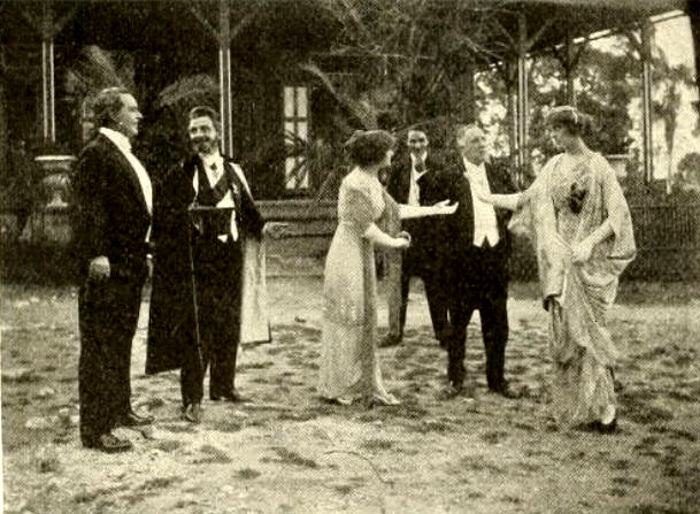
That, paradoxically, is why Soldiers of Fortune still crackles a century later: it is a morality play that refuses to moralize, a colonial farce drunk on its own gunpowder. Director Allan Dwan, fresh from escorting Fantomas through Parisian sewers, now plunges into banana-republic chaos with the same kinetic appetite, but this time the villain wears epaulettes and the hero wields a transit compass.
The plot, distilled, is boy-meets-dictatorship; yet every scene oozes surplus meanings like sap from a slashed ceiba tree. Augustus Thomas’s source novel—serialized in 1897 amid the Spanish-American War fever—was already a geopolitical ventriloquist act, and Richard Harding Davis’s journalistic fingerprints smear the intertitles with cigar-smoke braggadocio. The 1919 adaptation, however, lets the images stutter and swagger for themselves. When Clay (Dustin Farnum, laconic as a sloth but twice as dangerous) surveys the cantina, the camera lingers on a fly crawling across a portrait of Simón Bolívar. Cut to Mendoza (John St. Polis) adjusting the same frame so the fly crawls onto the Liberator’s eye. In five seconds we learn everything about who gets to write history and who merely soils it.
Farnum’s performance is a masterclass in underboil: he moves as if his spine were a question mark that never straightens.
Compare him to the era’s other rugged metaphors—Douglas Fairbanks vaulting balconies like a caffeinated acrobat, or William S. Hart’s Calvinist gunslingers—and you find a leading man who solves problems not by leaping but by loitering with intent. His shoulders slump in contemplation; his hat brim droops like a wilted palm frond. When he finally slugs Mendoza, the punch lands off-frame; we only see the general’s medal spinning on the floor, still glittering despite the indignity. Violence here is an afterthought, gossiped about rather than glorified.
Laline Brownell, as the half-Hibernian firebrand Inez, gets the film’s most radical close-up: a 68-second shot where she burns a love letter, letter by letter, feeding each flaming scrap to a guttering candle. The iris-in isolates her tear ducts; the tear itself refuses to fall, suspended like a truce that never arrives. Silent-era scholars often cite Alone with the Devil for proto-feminist close-ups, but Brownell’s micro-symphony of restraint predates them by two years and several shades of heartbreak.
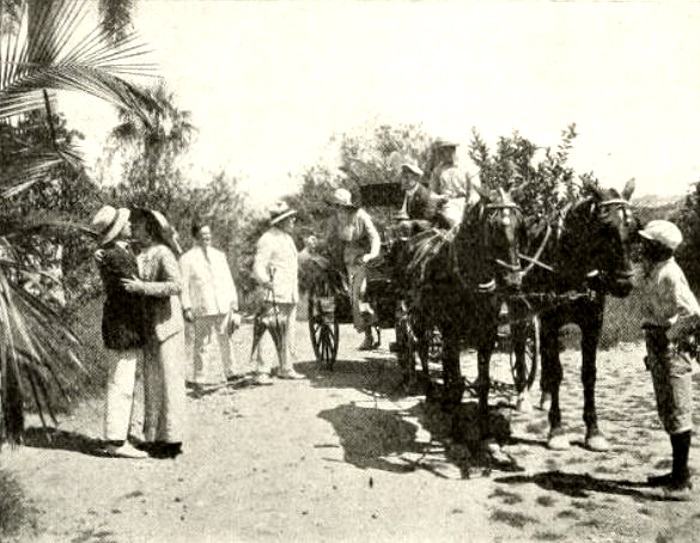
The cinematography, credited to veteran Hal Young, oscillates between postcard exoticism and proto-Godardian detachment. Notice the sequence where Clay dynamites the hillside: the explosion is shown twice—first in long shot, debris blossoming like black chrysanthemums; then again, via rear projection inside the cantina, where patrons flinch at their own reflections. The double exposure isn’t a technical boast; it’s a dialectic. We witness the same agony from the victim’s perch and the voyeur’s barstool, a visual equation that forecasts our TikTok century of recursive trauma.
Intertitles arrive sparingly, often sardonic. “The revolution was postponed on account of rain.” “Clay’s conscience—an article frequently mislaid, seldom lost.” Each card is typeset in a jittery, hand-scrawled font that mimics the drunken telegrapher’s Morse. Compare this to the staid, newspaper-clipping inserts of The Black Chancellor, and you sense how typography itself can whisper subversion.
The 2023 4K restoration—funded by a consortium of University of Georgia mining alumni, irony noted—mined two surviving 35mm nitrate prints, one in Buenos Aires (Spanish intertitles), one in Rochester (English). The resulting hybrid required digital bilingual grafting, frame by frame. The tints adhere to a fever-chart logic: amber for siesta haze, sea-blue for nocturnal conspiracies, green for the copper mine that underwrites every betrayal. Most revelatory is the new score by Afro-Peruvian ensemble Tutuma. Cajón percussion replaces timpani clichés; the pan-flute leitmotif for Clay is actually a quena played through a broken telegraph key, creating a rasp that evokes corroded ambition.
Listen for the moment when Mendoza’s army crosses the plaza: footfalls syncopate with the cajón, but every fourth beat drops out—an audible sinkhole into which the viewer’s certainty disappears.
Post-screening, I kept flashing on last year’s news cycle: lithium contracts, coup rumors, U.S. “advisors” photographed beside generals whose medals outweigh their body mass. Soldiers of Fortune pretends to be about 1890s silver lodes, yet its true mineral is deniability—the art of profiting while pretending to civilize. Clay departs Olancho poorer in pocket but richer in myth, leaving locals to bury sons beneath a flag he never learned to salute. The film refuses a reformation arc; instead it offers a shrug so elegant it feels like absolution.
Contrast this moral liquidity with the granite certitudes of Les Misérables, Part 2: Fantine, where every tear is tallied by a cosmic accountant. Dwan’s universe runs on barter and bravado; redemption is simply another commodity whose market crashed.
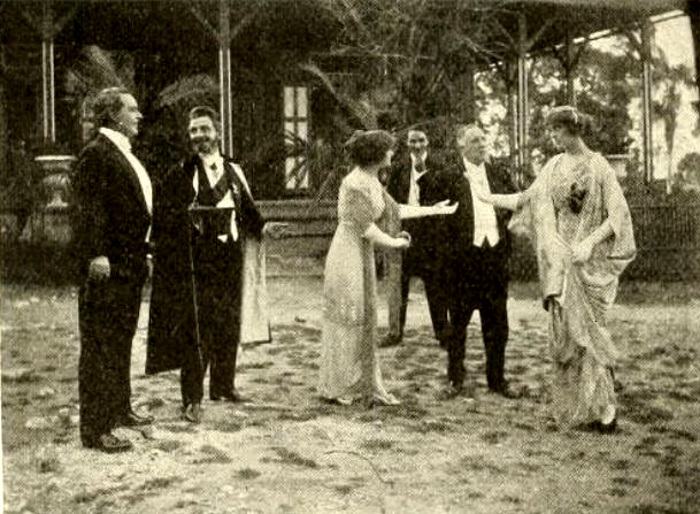
John St. Polis essays Mendoza with the drowsy sadism of a man who has read Nietzsche but only the index. Watch how he fingers the braid on his tunic: each gold strand becomes a rosary bead for reciting conquests. Winthrop Chamberlain’s Yankee speculator, a supporting role ballooned by studio committee, provides comic relief so venal it circles back to tragedy—his final line, delivered while clinging to a departing train, is a single intertitle: “Tell my wife I was… diversified!” The train belches steam onto the words, erasing them before we finish reading.
Among the rebels, George Stillwell’s cigar-chewing Lieutenant Morales registers most vividly. He has exactly 42 seconds of screen time yet earns immortality via an eyebrow raise that says, “I have seen tomorrow, and it needs better funding.”
Inez’s agency is no anachronistic graft; the script grants her the picture’s only self-authored exit. She refuses both Clay’s half-hearted proposal and Mendoza’s patriarchal redemption, choosing instead a convent whose walls, she jokes, are “thicker than any man’s promise.” The camera respects her decision by not following her through the gate. We stay outside with Clay, hat in hand, for once wordless. Feminist critics may argue the convent is another cage; within the film’s symbolic economy, however, it is the sole zone unprofaned by either mineral lust or foreign passports.
Compare this to Rebecca the Jewess, where the heroine’s religiosity is fetishized as both virtue and vulnerability; Inez’s spirituality is a strategic demilitarized zone.
Olancho is sketched via three recurrent visual anchors: the church bell tower (vertical axis of salvation), the copper smelter smokestack (vertical axis of extraction), and the horizon-wide railroad (horizontal axis of escape). Dwan crosscuts among them so relentlessly that by the climax they collapse into a single super-imposed image: the bell’s toll echoing through the smokestack’s plume while the train steams across the frame. The country becomes a Möbius strip where salvation, exploitation, and exodus share the same track, forever chasing their own tails.
The restored edition streams on Criterion Channel (region-locked) and plays select repertory houses accompanied by live Tutuma ensembles. Kino Lorber’s Blu-ray drops October; extras include an audio essay on U.S. mining interventions and a short doc on Afro-Peruvian music’s migration to silent exhibition. For the curious, avoid the 2003 Alpha DVD—its score is a Casio drum loop that turns every sword fight into aerobics.
Should you crave thematic double-features, pair this with One Wonderful Night for another tale of accidental insurrection, or Atlantis if you prefer your imperial critique waterlogged.
Verdict: 9/10—A swashbuckler that swashes until the buckle snaps, revealing the raw skin of history underneath.

IMDb —
1931
Community
Log in to comment.