DbcultAccessing Vault...
7.2/10
Senior Film Conservator
A definitive 7.2/10 rating for a film that redefined the boundaries of cult cinema. Âme d'artiste remains a cornerstone of transgressive art.
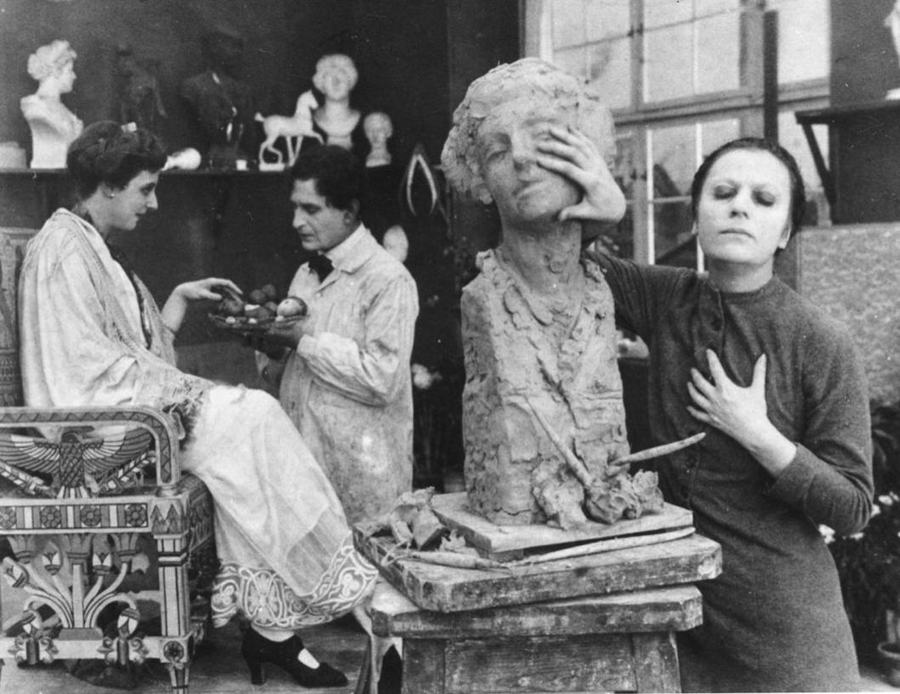
In the pantheon of early cinema, few figures command the same intellectual reverence as Germaine Dulac. With Âme d'artiste (1924), she doesn't merely direct a film; she orchestrates a visual symphony that interrogates the very essence of the creative ego. Set against the foggy, gaslit allure of a fictionalized London, the film delves into the labyrinthine psyche of a renowned actress and the playwright who views her as his ultimate muse. However, Dulac is far too sophisticated a filmmaker to settle for a simple tale of unrequited longing. Instead, she utilizes the source material—a Danish play by Christian Molbech—to launch a scathing yet poetic critique of patriarchal possessiveness.
The film exists at a fascinating crossroads of cinematic history. Produced by the legendary Albatros studio and featuring a screenplay co-written by Alexandre Volkoff, it marries the technical precision of the Russian emigre style with Dulac's own radical French Impressionist sensibilities. Unlike the stark realism found in Shattered, which focuses on the crushing weight of social circumstance, Âme d'artiste is preoccupied with the internal, often invisible, vibrations of the human heart. It is a film of glances, of shadows, and of the agonizing space between what is said and what is felt.
At the core of the narrative is a profound ideological conflict regarding the nature of love. Dulac presents us with two distinct modes of being. On one hand, we have the women—portrayed with staggering depth by Yvette Andréyor and Ève Francis—who embody a form of love that is synonymous with sacrifice. They are willing to sublimate their own desires, their reputations, and their very identities for the sake of the 'Art' and the men they believe in. On the other hand, the male characters, particularly the playwright played by Iván Petrovich, exhibit a form of love that is indistinguishable from territoriality. To them, the actress is not a peer but a vessel—a trophy to be curated and controlled.
This thematic tension reminds one of the dramatic stakes in Oltre l'amore, yet Dulac elevates the discourse by grounding it in the visual language of cinema. She uses rhythmic montage and superimpositions to illustrate the playwright’s obsessive thoughts, effectively turning the screen into a mirror of his fractured psyche. The contrast is jarring: while the women navigate the world with a quiet, resilient dignity, the men are often depicted as volatile, driven by a fragile masculinity that demands constant validation.
What sets Âme d'artiste apart from contemporaneous works like The Sport of the Gods is its commitment to 'photogénie.' Dulac believed that cinema should strive to express the soul of things through light and movement. In this film, the camera is never static in its intent. Even in moments of repose, the lighting—a delicate chiaroscuro—suggests a world of hidden meanings. The theatrical sequences are particularly noteworthy; they are not merely filmed plays but are deconstructions of the act of performance itself. We see the artifice of the stage, the sweat of the actors, and the hunger of the audience, all blended into a singular, hallucinatory experience.
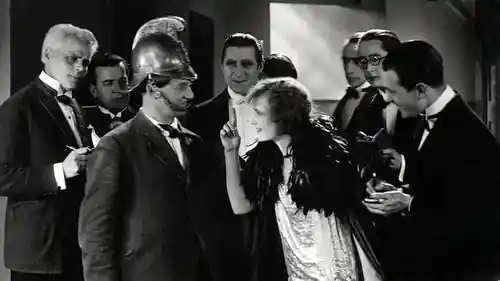
The use of close-ups in Âme d'artiste is nothing short of revolutionary. Dulac lingers on the faces of her actresses, capturing the minute flickers of doubt and resolve that a more conventional director would have overlooked. This focus on the internal landscape aligns the film more closely with the psychological depth of A Child of Mystery than with the straightforward adventure of Cyclone Smith Plays Trumps. Every frame is saturated with intent, every cut designed to evoke a specific emotional resonance.
The cast is a veritable 'who's who' of the era's European talent. Yvette Andréyor delivers a performance of remarkable nuance, balancing the public persona of a diva with the private vulnerability of a woman caught in a social vice. Her interactions with Iván Petrovich are charged with a palpable tension that oscillates between creative synergy and destructive obsession. Petrovich, for his part, captures the arrogance of the 'tortured artist' archetype with a precision that feels uncomfortably modern. We also see the presence of Charles Vanel and Gaston Modot, actors who would go on to define French cinema for decades, adding a layer of gravitas to the supporting ensemble.
The influence of the Albatros studio—known for its high production values and penchant for artistic experimentation—is evident in every set piece. The London settings are recreated with a stylized flair that feels more like a dreamscape than a geographical location. This atmospheric richness is far removed from the utilitarian sets of The Handy Man or the rugged landscapes of A Daughter of the West. In Dulac’s hands, the environment is an extension of the character’s internal state.
While Âme d'artiste is primarily an aesthetic triumph, it would be a mistake to ignore its socio-political dimensions. Dulac was a pioneering feminist, and her worldview permeates the film. She subtly critiques the societal expectations placed upon women in the 1920s—the demand that they be both the inspiration for art and the silent martyrs who facilitate its creation. The playwright’s wife, played by Ève Francis, is perhaps the most tragic figure in the film. Her quiet endurance is a stark commentary on the erasure of female identity within the domestic sphere.
This exploration of gendered suffering provides a much-needed depth that is often absent in the more escapist fare of the time, such as Aladdin and the Wonderful Lamp. Dulac insists on the validity of the female experience, refusing to let her heroines be reduced to mere plot points in a male-driven narrative. Even when compared to the displaced protagonists in The Exiles, the characters in Âme d'artiste possess a psychological interiority that was quite radical for its time.
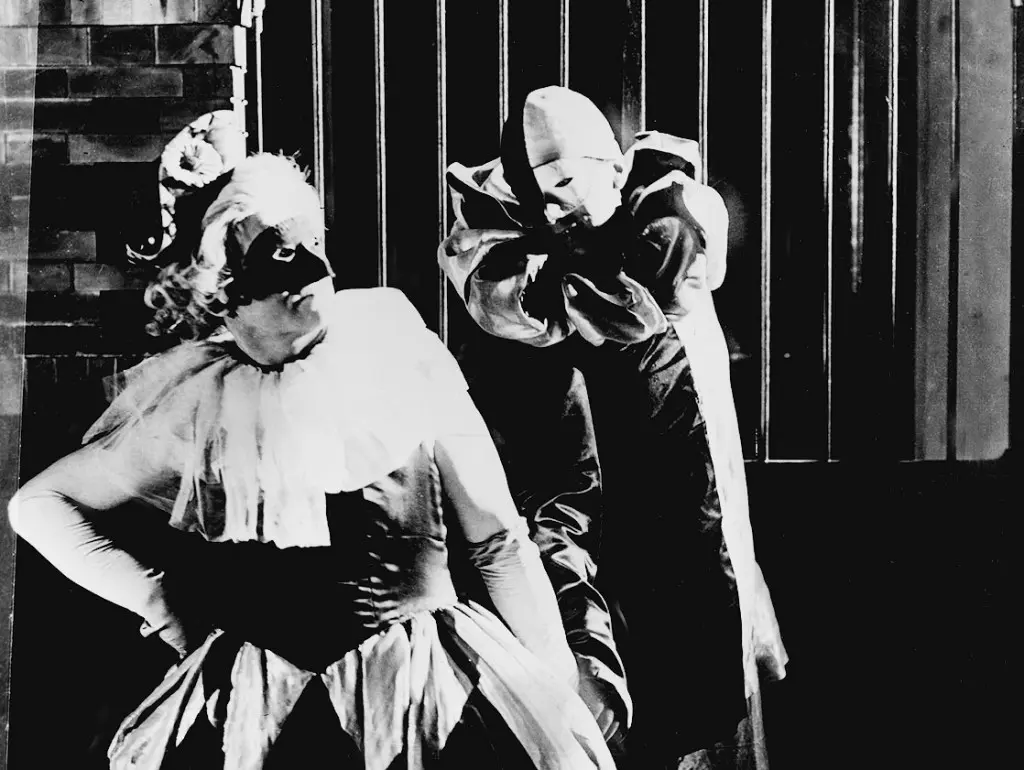
One cannot discuss this film without praising its editing. Dulac was a proponent of the 'visual book,' where the rhythm of the images takes precedence over the literal interpretation of the script. The way she cuts between the bustling streets of London and the intimate, claustrophobic interiors of the theater creates a sense of perpetual motion. This kinetic energy is far more sophisticated than the linear storytelling found in Hoarded Assets or the documentary-style pacing of Kitchener's Great Army in the Battle of the Somme.
There is a specific sequence involving the playwright’s fever dream where Dulac utilizes rapid-fire editing to simulate a mental breakdown. It is a masterclass in avant-garde technique, demonstrating how cinema can transcend the boundaries of language to communicate visceral sensation. This commitment to the 'pure' cinematic form is what links Dulac to the great experimenters of the silent era, placing her work alongside the most daring efforts of the 1920s.
Watching Âme d'artiste today is a haunting experience. It serves as a reminder of a period when cinema was still discovering its own power, unburdened by the rigid conventions of the sound era. While some might find the pacing more deliberate than the frenetic energy of A Perfect 36, the rewards for the patient viewer are immense. It is a film that demands to be felt as much as it is seen.
In the broader context of Dulac’s filmography, this work stands as a bridge between her more traditional narrative efforts and her later, purely abstract films. It contains the DNA of the surrealist movement while maintaining a foothold in the emotional reality of its characters. It avoids the whimsical superficiality of Where Is My Wife? and the bohemian clichés of Az utolsó bohém, opting instead for a rigorous, honest exploration of the human condition.
Ultimately, Âme d'artiste is a testament to the enduring power of the female gaze in cinema. It is a sophisticated, deeply moving work that remains as relevant today as it was a century ago. It challenges us to look beyond the surface of the image, to find the 'soul' that Dulac so masterfully captured on celluloid. Whether you are a scholar of the avant-garde or a lover of classic drama, this film is an essential piece of cinematic history that continues to vibrate with life, much like the transition from the darkness of night to the first light of From Dusk to Dawn.
IMDb 6.7
1934
Community
Log in to comment.