
DbcultAccessing Vault...
Cult Review
Senior Film Conservator
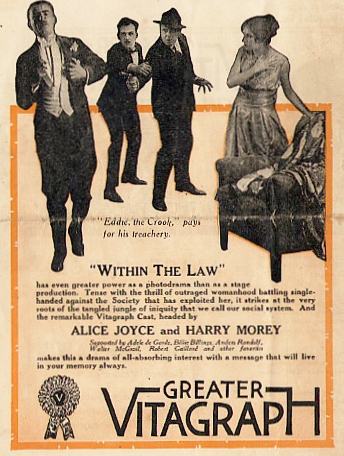
The 1917 adaptation of Bayard Veiller’s stage triumph, Within the Law, stands as a monumental pillar in the early cinema of social consciousness. Directed with a surprising degree of kinetic energy for the era, it transcends the mere 'filmed play' aesthetic to become a visceral indictment of class-based jurisprudence. At its heart lies Alice Joyce, whose portrayal of Mary Turner offers a nuanced departure from the waifish vulnerability often found in [Little Miss Nobody](/movies/little-miss-nobody-1917). Joyce provides a performance of steel and shadow, capturing a woman whose soul has been scorched by the furnace of institutional failure.
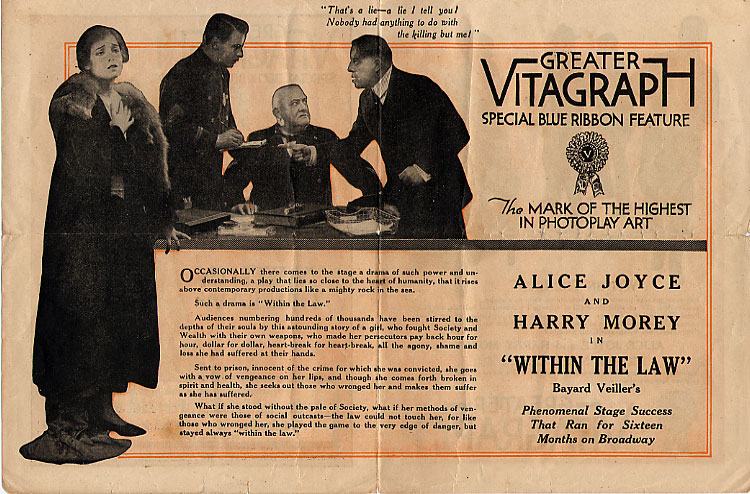
The film opens in the oppressive grandeur of the Gilder department store, a microcosm of Gilded Age capitalism where the human element is merely an entry in a ledger. When Mary Turner is accused of larceny, the speed at which the machinery of the law grinds her down is terrifying. Unlike the sprawling, multi-generational suffering found in [Les Misérables](/movies/les-miserables), Within the Law focuses its lens on the immediate, suffocating transition from innocence to criminalization. The courtroom scenes are not merely plot points; they are an autopsy of a system that values property over personhood. The writers, Bayard Veiller and Eugene Mullin, masterfully illustrate how 'justice' is often a luxury afforded only to those who can afford the best interpreters of the code.
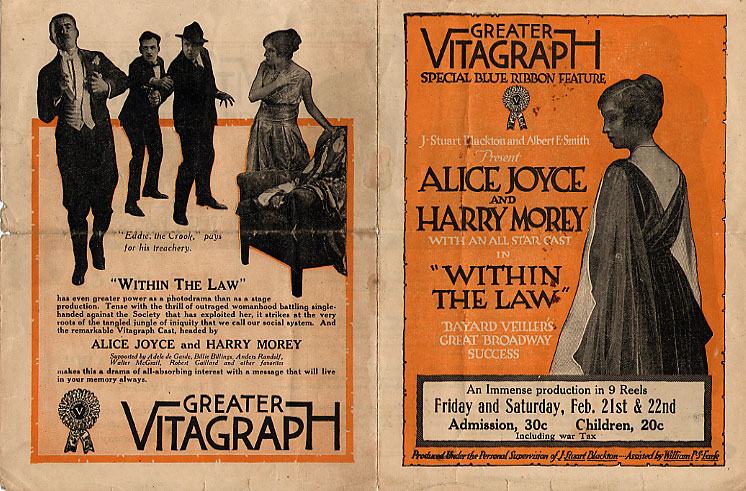
The brilliance of the narrative lies in Mary’s post-prison evolution. In many films of this period, such as [The New York Peacock](/movies/the-new-york-peacock), the protagonist might descend into a life of overt crime or tragic martyrdom. Mary Turner, however, chooses a path of intellectual dominance. She studies the law with the fervor of a theologian, seeking the cracks in the foundation. By the time she forms her 'gang'—which includes the charismatic Harry T. Morey—she has transformed into a legalistic ghost, a phantom that haunts the elite by playing their own game better than they do. This theme of using the law as a shield for illicit activity echoes the tension found in [Robbery Under Arms](/movies/robbery-under-arms-1907), though here the battleground is the parlor and the courtroom rather than the bush.
Visually, the film utilizes the Vitagraph house style to great effect. The use of deep focus in the office of Edward Gilder (Anders Randolf) creates a sense of looming authority, making Mary appear even smaller and more isolated during her initial confrontation. The cinematography captures the stark contrast between the claustrophobic prison cells and the opulent, yet morally bankrupt, drawing rooms of the upper class. This visual dichotomy serves to reinforce the film's central thesis: that the law is a flexible membrane, expanding to protect the wealthy and contracting to strangle the poor. One can see echoes of this visual storytelling in [The Green Cloak](/movies/the-green-cloak), where the setting itself becomes a character in the unfolding mystery.

Alice Joyce’s face is a canvas of shifting intentions. In the film's second act, her gaze shifts from the wide-eyed terror of the accused to the sharp, predatory stillness of the strategist. It is a performance that anticipates the 'femme fatale' of the 1940s, yet it is grounded in a righteous indignation that makes her actions feel like a holy crusade rather than a simple vendetta. When she interacts with the younger Gilder (Walter McGrail), there is a delicious ambiguity to her affection. Is she truly falling in love, or is he merely the ultimate pawn in her grand gambit? This psychological complexity is far more advanced than the moral binaries present in [The False Friend](/movies/the-false-friend).
To understand the impact of Within the Law, one must compare it to other contemporary explorations of social strife. While [Oliver Twist](/movies/oliver-twist) relies on the intervention of benevolent patriarchs to resolve the protagonist's plight, Mary Turner rejects such paternalism. She does not wait for a savior; she becomes the architect of her own salvation. Her refusal to break the law while simultaneously mocking its spirit creates a fascinating moral paradox. In [The Marble Heart](/movies/the-marble-heart), we see the consequences of emotional rigidity, but in Mary Turner, we see the power of intellectual rigidity—a refusal to let the world define her as a victim.
The film also touches upon the concept of the 'reformed' criminal, a trope also explored in [The General's Children](/movies/the-generals-children). However, where other films might focus on spiritual redemption, Within the Law is concerned with social equity. Mary’s associates are not looking for a clean slate; they are looking for a fair share of the spoils. The supporting cast, particularly Eugene O'Rourke and Adele DeGarde, provide a grounded realism that prevents the film from drifting into abstract melodrama. They represent the collateral damage of a society that offers no safety net, a theme that resonates as strongly today as it did in 1917.
The pacing of the film is remarkably modern. The transition from the first-act tragedy to the second-act heist-like tension is seamless. The screenwriters avoid the pitfalls of excessive intertitles, allowing the actors' physicality to carry the narrative weight. This is particularly evident in the climactic scenes where the police attempt to trap Mary’s syndicate. The tension is built through editing and blocking rather than dialogue, a technique that shows a sophisticated understanding of the medium’s unique strengths. One might find similar narrative tension in [Le ravin sans fond](/movies/le-ravin-sans-fond), though the stakes here are rooted in social survival rather than purely physical peril.
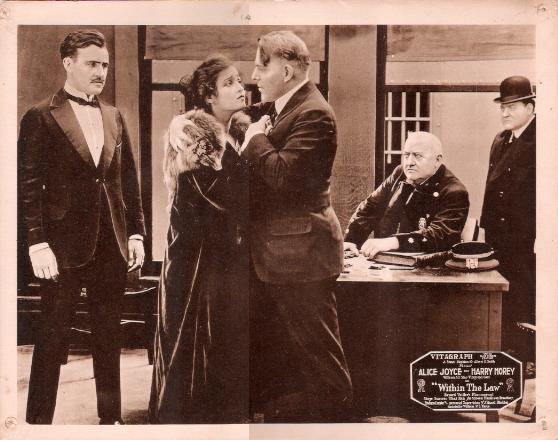
Furthermore, the film’s treatment of the police is notably cynical. The detectives are not the heroic figures often portrayed in early cinema; they are often portrayed as the blunt instruments of the ruling class. This skepticism toward authority is a precursor to the more overt critiques found in [Beware of Strangers](/movies/beware-of-strangers). The 'law' in this film is not a moral compass but a set of rules for a rigged game. Mary’s victory is not just over Edward Gilder, but over the very idea that she is inherently 'lesser' because of her social standing or her criminal record.
In the final analysis, Within the Law is a profound meditation on the nature of vengeance. It asks a difficult question: can one seek justice within a corrupt system without becoming corrupted oneself? Mary Turner walks this tightrope with incredible poise. While the film offers a somewhat conventional resolution to satisfy the censors of the time, the preceding ninety minutes are a harrowing journey through the dark heart of the American Dream. It lacks the sentimentalism of [The Heart of Lincoln](/movies/the-heart-of-lincoln), opting instead for a gritty, uncompromising realism.
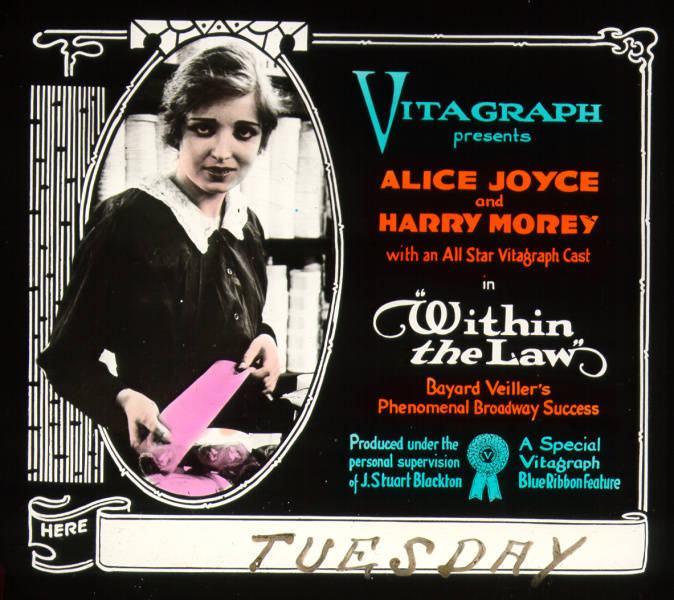
The film’s relevance persists because the structural inequalities it critiques have not vanished; they have merely evolved. Mary Turner remains a symbol of the disenfranchised who refuses to be silenced. Her story is a precursor to modern legal thrillers, but it possesses a raw, elemental power that few contemporary films can match. It is a masterwork of the silent era that deserves to be studied not just for its historical importance, but for its enduring artistic vitality. It is a cinematic experience that, much like [The Daughter of the Don](/movies/the-daughter-of-the-don), explores the intersections of heritage, law, and personal destiny with a sophisticated eye.
Ultimately, Within the Law is a testament to the power of the individual to challenge the monolith. It is a film that demands your attention, rewards your scrutiny, and leaves you questioning the very foundations of the society we inhabit. Alice Joyce's Mary Turner is not just a character; she is a warning and an inspiration, a woman who found her voice in the silence of the law.
Final Verdict: A Cinematic Triumph of Socio-Legal Critique
For those interested in the evolution of the crime genre, this is essential viewing. Compare it to the rhythmic pacing of The Last Dance or the moral inquiries of The Truth About Helen to see just how far ahead of its time this Vitagraph production truly was.