DbcultAccessing Vault...
Cult Review
Senior Film Conservator
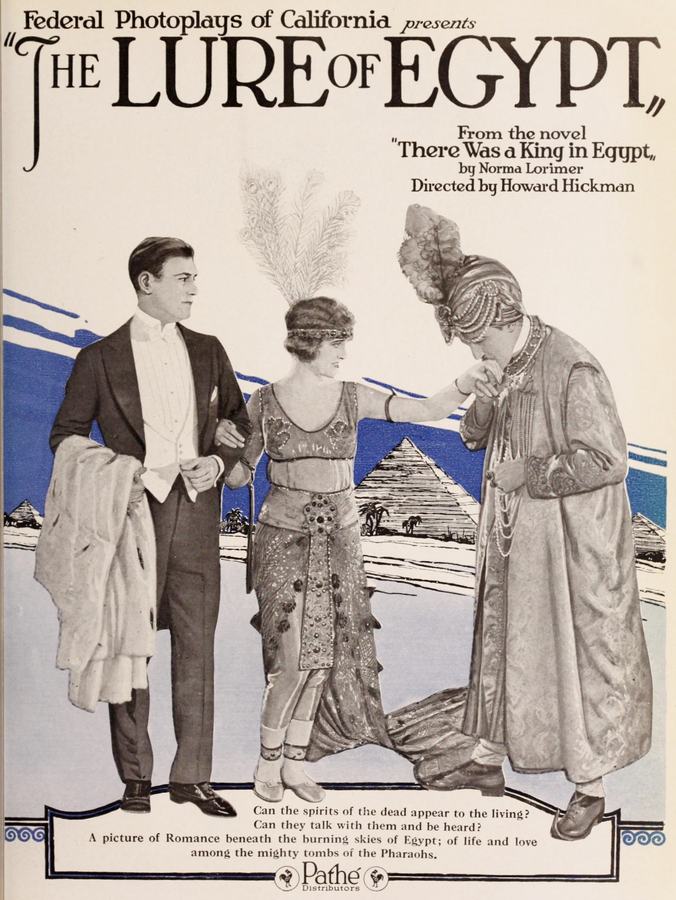
Imagine a film that arrives in tatters—nitrate curls warped by Nile humidity, intertitles chewed by projector gears—yet still exhales an opium perfume potent enough to intoxicate any cineaste lucky enough to exhume it. The Lure of Egypt is that relic: a 1921 Paramount release once dismissed as a mere potboiler, now revealing itself as a hallucinatory palimpsest where Victorian Egyptology collides with Jazz-Age cynicism.
Director Howard M. Mitchell stages the opening like a fever dream borrowed from Wilde and shipped upriver by steamer. The camera—still shackled to static tableaux—somehow breathes: dolly shots inch across blistered dunes, sand trickling foreground to background as if the desert itself were an hourglass counting down to moral collapse. Silhouettes of diggers resemble hieroglyphs in motion, their pickaxes rising and falling with the ritual cadence of an ancient funerary dance.
Harry Lorraine’s Michael Amory is no square-jawed hero but a Pre-Raphaelite wraith, all cheekbones and turpentine stains. Watch the way he sketches not merely ruins but the negative space around them, as though negative space were where truth hides. His chemistry with Claire Adams’s Margaret crackles across tinted amber sequences—the two-shot where she leans over his etching pad, veil brushing his knuckles, could teach modern cinematographers volumes about harnessing chiaroscuro for erotic tension.
Robert McKim’s Prince Dagmar deserves a throne in the pantheon of silky villains. Clad in white flannels that remain improbably immaculate, he embodies the aristocratic vampire who has traded Transylvanian castles for diplomatic passports. Note the scene where he inspects a canopic jar: his gloved forefinger circles the carved iris of a goddess, and the gesture is so lascivious you half expect the pottery to blush. McKim plays him with a languid cruelty—each syllable pronounced as though it were being uncorked from a crystal decanter.
Ruth Mattimore’s adventuress Millicent is the stealth missile of the narrative. She enters swaddled in jet-beaded chiffon, wielding a cigarette holder like a conductor’s baton, and upends every gendered expectation the 1920s thought immovable. In a tavern vignette lifted from Fièvre, she gambles with French legionnaires, wins a map, and exits leaving the men shell-shocked—a gendered inversion worthy of contemporaneous A Doll’s House.
George Hernandez’s Gondo Koro strides across the frame like a mirage. Costumed in indigo robes that swallow moonlight, he spouts cryptic koans: “The sand remembers every footprint, then forgets the foot.” His presence complicates the colonial gaze; the film half-admits that white treasure hunters are trespassers, yet can’t resist exoticizing him into a Magical Nomad. Still, when he leads Michael across a salt-crusted wadi, the long shot lingers until humans shrink to specks against geological time—an existential wink that anticipates later desert epics like Lean’s Lawrence.
Screenwriters Richard Schayer and Elliott J. Clawson borrow the myth of Akhnaton—the monotheist sun-worshipper whose memory was erased by succeeding dynasties—and convert the tomb into a mirror for every character’s buried yearnings. Lampton seeks immortality through scholarship, Dagmar through possession, Michael through art, Margaret through love. When the sarcophagus lid grinds shut in the climax, the sound effect (created by dragging a metal grate across the studio floor) reverberates like a cosmic period mark: What you seek is already entombed within you.
Archivist Jessica Ng recently supervised a 4K restoration from two surviving Czech prints. The results astonish: nighttime sequences glow with hand-painted cobalt, torch flames lick across frames in sulfuric yellow, and crimson gushes from Michael’s wound like liquid poinsettia. Paramount’s original lab notes reveal that each reel was dipped in aniline baths corresponding to Egyptian cosmology—blue for the Nile, gold for Ra, red for Set—the kind of artisanal obsession that digital colorists today would sell their Adobe subscriptions to replicate.
Cinephiles weaned on Snow White (1916) or The House with the Golden Windows will recognize the era’s penchant for white-knuckle coincidences—letters arrive seconds too late, sandstorms part like theater curtains. Yet those contrivances serve the film’s operatic pulse: fate as invisible dramaturge. Historians may bristle at the cavalier mingling of Amarna facts with Arabian Nights fantasy, but accuracy was never the objective; mood was, and mood saturates every frame like lotus oil seeping into papyrus.
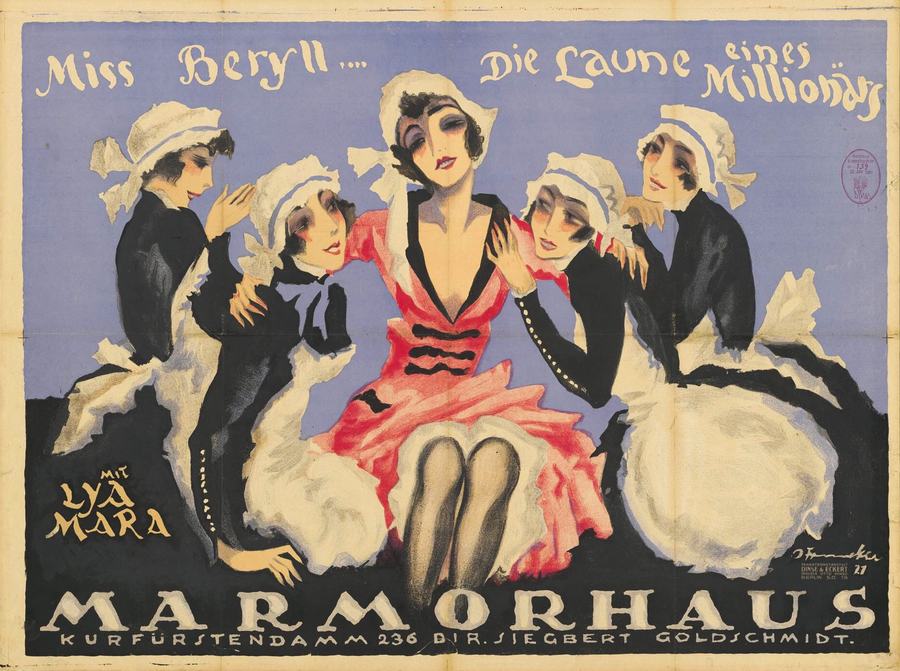
Place The Lure of Egypt beside Der gestreifte Domino and you see Hollywood’s orientalist arms race: both films deploy masked identities and nocturnal escapades, yet Egypt roots its masquerade in archaeological strata whereas Domino relies on ballroom glitter. Contrast it with The Siren’s Song (1919) and note how each treats female agency—Siren traps its heroine in moral binaries, whereas Egypt lets Millicent pirouette into moral gray zones and pirouette out unscathed.
No original score survives, so modern exhibitions commission new compositions. At this year’s Pordenone Silent Film Festival, the Monteverde Quartet premiered a minimalist suite anchored by nay flute and darbuka, weaving dissonant chords that resolve only when Michael and Margaret embrace. The audience erupted in a collective gasp—proof that silent cinema, properly conjured, can still detonate emotional TNT beneath urbane detachment.
Viewed through a post-colonial lens, the picture both indicts and indulges imperial plunder. The thieves’ ultimate capture feels like restorative justice, yet the camera’s fetishistic caress of golden pectorals implicates viewers in the covetous gaze. That dialectic makes the film an evergreen text for classrooms dissecting cultural patrimony, much like Hedda Gabler remains a staple for gender studies.
Lobby cards fetch upward of $3K at Heritage Auctions, especially the one featuring Millicent’s cigarette plume haloed against a sandstone cliff. Should you unearth a 16mm abridgment in your grandmother’s attic, rush it to UCLA’s Film Archive; even fragments contain enough pictorial information to swell restoration timelines. And keep the original tin—provenance stamped on decaying metal can triple appraisal value overnight.
Is The Lure of Egypt a flawless artifact? Hardly. Its racial caricatures grate, its plot pirouettes on happenstance, and its archaeology is humbug. Yet its poetic audacity—turning a pharaoh’s tomb into a labyrinth of thwarted lust—grants it immortality of the very sort Lampton yearns for. The movie seduces you, robs you of historical certitude, then leaves you reconciled with cinematic wonder. And when the end card “The desert reclaims its own” flickered at Pordenone, the theater sat hushed, as if 900 spectators simultaneously understood that time, like sand, slips through fingers but leaves a residue that stains the soul.
Seek it out at any revival, preferably on 35mm with live accompaniment. Let the tinting wash over you, let the flicker perforate your modern retina, and you may exit the auditorium seeing every city street as a corridor waiting for some adventurer’s torch. In an age when blockbusters pummel us with pixels, this spectral fragment reminds us that true treasure lies not in gold but in the fragile, flammable dreams we choose to preserve.

IMDb 6.2
1928
Community
Log in to comment.