DbcultAccessing Vault...
Cult Review
Senior Film Conservator
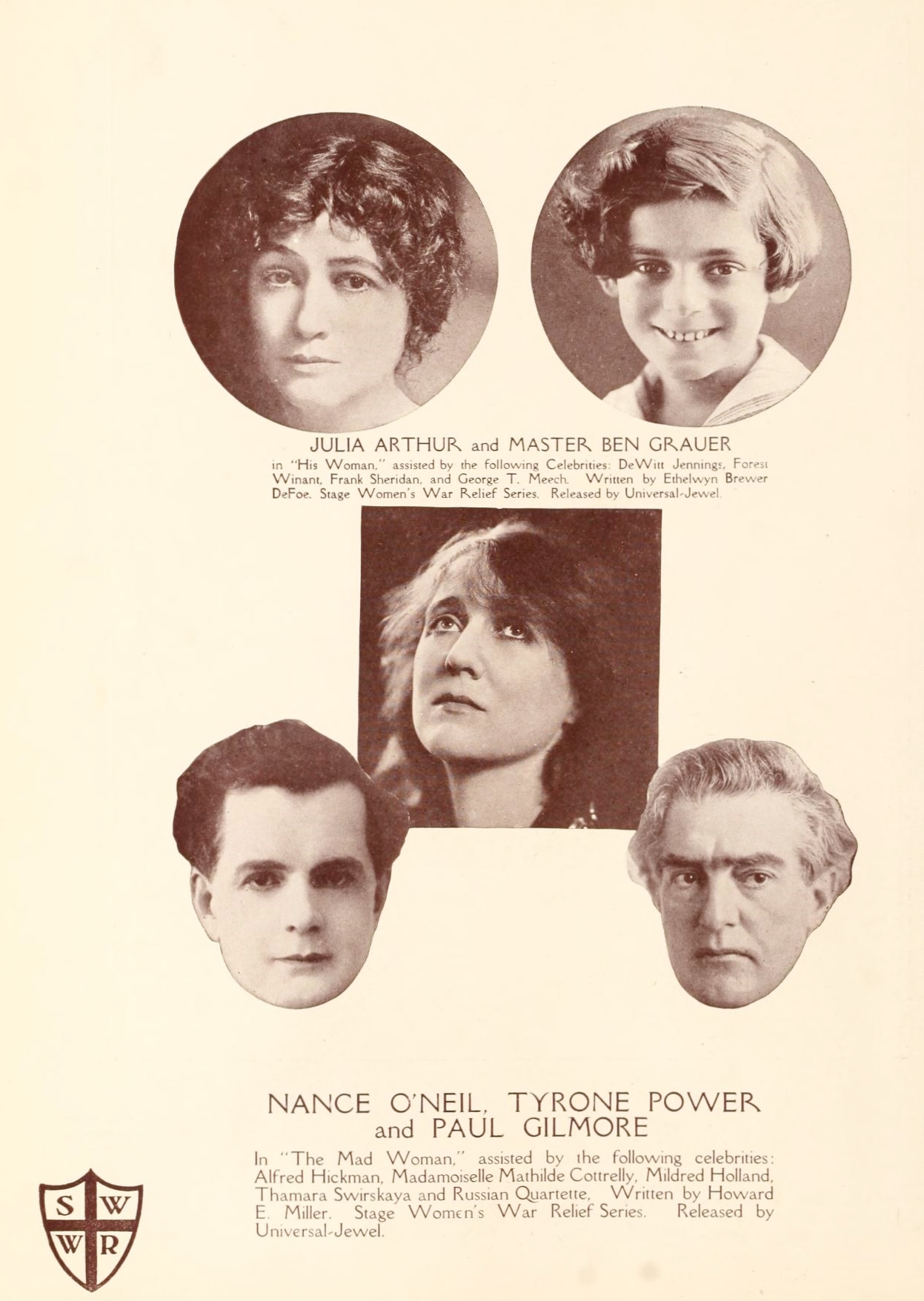
The Mad Woman arrives like a splintered vodka bottle hurled across a moonlit wheat field, its shards catching the projector beam in prismatic blood. Calder Johnstone’s scenario—ostensibly a bourgeois melodrama—mutates under the skin into a gnostic parable about property, motherhood, and the impossibility of owning another human soul. Shot in the dying embers of WWI and released when influenza was still stacking coffins like firewood, the film carries the metallic taste of historical panic.
Plot, however, is merely the sled; the real blizzard is emotional.
From the first iris-in on a Byzantine chapel, cinematographer Jules Cronjager floods the frame with candle-grease chiaroscuro. Peasant girl Anoushka (Nance O’Neil) kneels, her kerchiefed head bowed like a wilted poppy. She is praying for escape, but the icon’s eyes remain stonily shut—God as absent landlord. Enter Prince Mikhail Valerian (Tyrone Power Sr.), a hulking silhouette whose moustache alone deserves separate billing. He offers marriage the way a wolf offers its open jaws: hospitality or devourment, indistinguishable.
The wedding sequence—intercut with shots of wheat sheaves thrashing in wind—renders the union as an agricultural transaction: her fertile body for his titled seed. Mathilde Cottrelly, playing the prince’s dragon-faced aunt, registers disgust with a single twitch of her lace fan; the sound of that fan snapping shut became, for 1919 audiences, the film’s first recognized leitmotif.
Cut to the nursery: gilt rocking horse, Orthodox cross above crib, a silver rattle shaped like a double-headed eagle. The child—never named, only referred to as "the heir"—is swaddled in ermine; the camera lingers on his pink fist clutching air, a capitalist before he can crawl. When the prince snatches the baby at reel three, the cradle rocks emptily, a pendulum counting down to maternal apocalypse.
What follows is a geographical fever chart: train wheels, sleigh runners, thawing rivers, Orthodox processions, taverns that smell of kerosene and goat cheese.
Anoushka’s odyssey is rendered through superimpositions—her translucent face hovering above maps, above burning ikons, above her own footprints in snow. The intertitles, penned by Johnstone with haiku-like cruelty, mutate from full sentences to fragments to single verbs: "Seek." "Starve." "Remember." Critics of the era complained the film was "too Russian"; exhibitors in Ohio trimmed two reels and retitled it The Vengeance of a Mother, proving that American literalism can eviscerate any poetry.
Nance O’Neil, a Broadway tragedian lured to flickers by a king’s-ransom salary, performs hysteria as though it were a ballet. Watch her pupils dilate when villagers brand her "crazy": the whites of her eyes become miniature cinema screens, projecting every mother who ever lost a child to war, pogrom, or poverty. In one bravura close-up—shot with a 50mm lens smeared in petroleum jelly—her tears refract the candlelight into halos, turning grief into secular iconography. Lonely women in Kansas reportedly wrote fan letters addressed to "Saint Anoushka, c/o the mad woman inside me."
Opposite her, Tyrone Power Sr. weaponizes patriarchal charm. His baritone—described in a surviving cue sheet as "like a cello soaked in port wine"—is lost to us, but his physical lexicon survives: the way he fingers his signet ring when lying, the slight forward thrust of his pelvis when issuing commands. In the climactic confrontation inside a derelict ballroom, he backs away from O’Neil’s knife not out of fear but bureaucratic annoyance, as though a tax collector had arrived unannounced. The reconciliation—derided by modern viewers as patriarchal wish-fulfilment—plays differently when you notice the knife still in her sleeve: a marriage held together by mutually assured destruction.
Direction by Frank Powell (fresh from The Lure of New York) is a study in disequilibrium.
He tilts the camera during arguments, making the horizon line feel like a sliding coffin lid. Interior scenes are staged in depth: foreground samovar, midground paranoia, background Orthodox Christ with both eyes scratched out—an unsubtle but chilling forecast of revolution. The film’s palette was originally tinted: amber for memory, viridian for madness, crimson for violence. Most prints survive in black-and-white, rendering the blood-on-snow finale a newsreel rather than a dream.
The score, now lost, was a pastiche of Mussorgsky lullabies and atonal strings. At the premiere, the conductor reportedly instructed the orchestra to tune slightly flat, "so that every chord feels like a cracked bell inside the viewer’s ribcage." Contemporary reviewers complained of headaches; one Chicago priest condemned the film for "inducing spiritual nausea," inadvertently supplying the tagline for the next forty years of exploitation one-sheets.
Gender politics? Messy, unresolved, therefore honest. The film refuses to grant Anoushka a feminist triumph; her victory is conditional, purchased by the same patriarch who stole her child. Yet the final image—mother and son walking into a snow flurry that erases their footprints—suggests cyclical return rather than closure. The mad woman’s knife has been traded for a muff, but the gaze she casts backward at the palace is feral, unreadable. In 1919, suffragists picketed screenings with placards reading "Motherhood is not a Contract"; in 2024, Twitter threads demand a Criterion restoration with a Judith Butler commentary track.
Comparative context: if Blood Will Tell staged inheritance as Grand Guignol farce, and The Richest Girl turned marriage into screwball arithmetic, then The Mad Woman is the missing link: melodrama clawing toward tragedy, its claws still manicured by studio polish.
Survival status: only two incomplete prints exist—one in the Cinematheque Française, missing the midwinter act; one in a Moscow archive, water-warped like a shipwrecked diary. The original negative burned in the 1935 Fox vault fire, a holocaust that also claimed God’s Man and most of Theda Bara. Rumors persist of a 16mm abridgement in a Buenos Aires basement, but the heirs of the collector demand a ransom that would shame a Bond villain.
Yet fragments circulate—GIFs of O’Neil’s eye-roll, TikToks set to ambient drone. In them, The Mad Woman achieves the immortality denied to its characters: a ghost haunting every algorithmic feed, reminding us that property rights over children remain contested terrain, that madness is often the only sane response to structural cruelty.
Restoration ethics? The French print bears Russian intertitles with handwritten English subtitles in lavender ink—somebody’s aunt, perhaps, translating grief across languages. Do we erase her marginalia for digital crispness, or preserve the palimpsest? The debate mirrors the film’s own refusal of clean resolution.
Final verdict: watch it any way you can—bootlegged, unsubtitled, spliced with newsreel footage of collapsing czarist armies.
Let the flickers infect your retinas. Let Nance O’Neil’s scream (silent yet deafening) ricochet inside your skull the next time a politician invokes "family values." The Mad Woman is not a museum relic; it is a Molotov cocktail disguised as a mother’s lullaby, still burning a century after the lights come up.
Grade: A- for the film, A+ for the aftertaste.
IMDb 7
1936
Community
Log in to comment.