DbcultAccessing Vault...
5.8/10
Senior Film Conservator
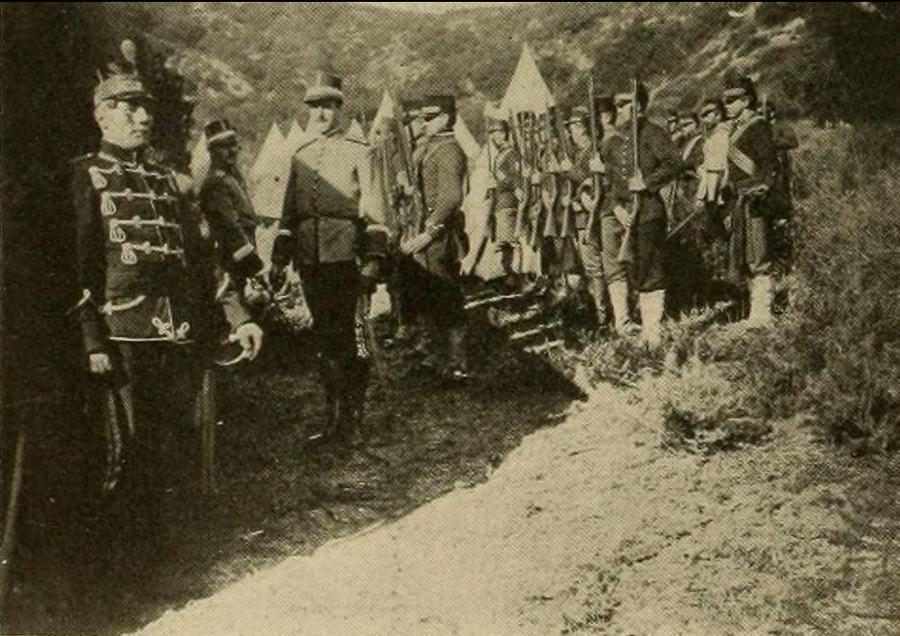
A definitive 5.8/10 rating for a film that redefined the boundaries of cult cinema. The Dishonored Medal remains a cornerstone of transgressive art.
If you delve deep enough into the sepia-toned archives of the 1910s, you eventually stumble upon a work that feels less like a relic and more like a premonition. The Dishonored Medal, released in 1914, is precisely that kind of cinematic anomaly. Directed by Christy Cabanne and featuring a young Raoul Walsh, this film isn't merely a melodrama of the French Foreign Legion; it is a scathing, if perhaps unintentional, critique of the psychological scars left by imperialist hubris. In an era where cinema was still finding its syntax, this production manages to weave a complex tapestry of identity, bloodlines, and the crushing weight of paternal neglect.
The film opens with a sequence that feels uncomfortably intimate for a century-old production. George Gebhardt’s Lt. Dubois is portrayed not as a dashing hero, but as a man whose charisma is a predatory tool. His seduction of Zora (played with a haunting fragility by Miriam Cooper) is framed through a lens of exoticism that was prevalent at the time, yet the emotional fallout is rendered with a modern visceral intensity. When Dubois gives her his medal for bravery, it is an act of supreme irony. He is trading a symbol of state-sanctioned courage for the silence of a woman he has no intention of claiming. This motif of the 'dishonored' object serves as the film’s moral anchor, much like the abandonment themes explored in Madame Butterfly.
The narrative transition to the desert interior is where Cabanne’s direction truly flourishes. The vastness of the Algerian landscape is not just a backdrop; it is a character that swallows the sins of the past only to spit them back out in the form of a revolution. The introduction of Sheik Achmed (Dark Cloud) provides a fascinating counterpoint to Dubois. Achmed represents a form of paternal nobility that transcends biology, a theme we see echoed in the domestic tragedies of The Only Son. His decision to raise El Rabb as his own, alongside his biological son Bel Khan, sets the stage for a brotherhood forged in the crucible of shared struggle rather than shared genes.
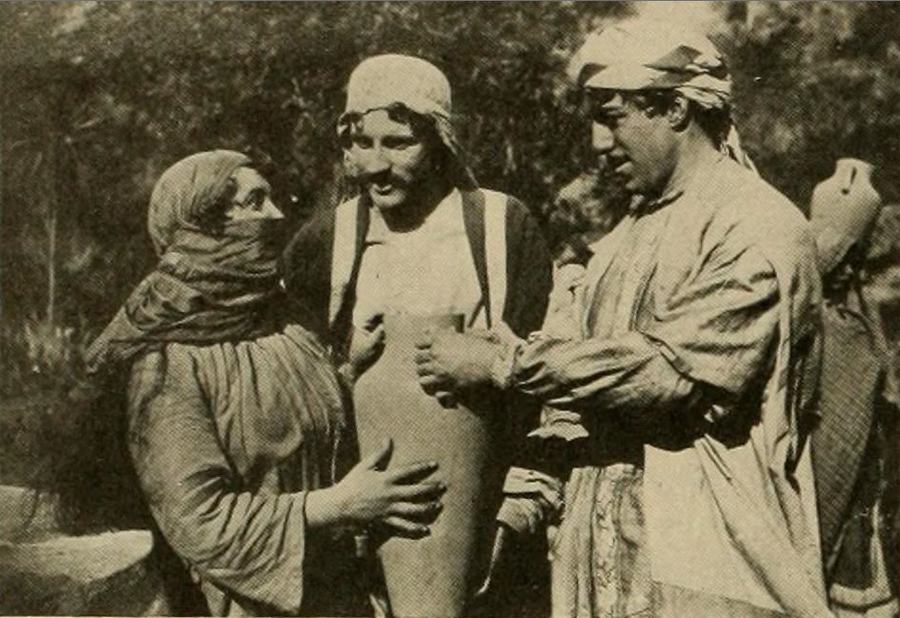
One cannot discuss this film without acknowledging the presence of Raoul Walsh. Before he became the legendary director of high-octane adventures, Walsh was a screen presence of considerable magnetism. Here, he brings a brooding, kinetic energy to the role of the rebel. There is a specific scene where El Rabb looks at the medal—the only link to a father he has never known—and you can see the conflict of a man caught between two worlds. It is a performance that anticipates the gritty realism of later silent epics like Man of the Hour.
The chemistry between Walsh and Frank Bennett (as Bel Khan) is the emotional heartbeat of the film's second act. Their camaraderie is portrayed with a sincerity that makes the impending tragedy all the more potent. As they organize the revolt against the French occupiers, the film shifts from a domestic drama into a proto-political thriller. The staging of the skirmishes in the desert is remarkably sophisticated for 1914. Cabanne utilizes deep focus and wide shots to emphasize the scale of the conflict, creating a sense of inevitable doom that mirrors the fatalism found in Tess of the D'Urbervilles.
Visually, The Dishonored Medal is a masterclass in early lighting techniques. The contrast between the sun-bleached Algerian plains and the shadowy, claustrophobic interiors of the French military outposts serves as a visual metaphor for the clash of cultures. The medal itself is often the brightest point in the frame, a glimmering reminder of a lie that has spanned decades. It is a piece of metal that carries the weight of an entire empire’s arrogance.
The climax of the film is a masterfully choreographed sequence of recognition and regret. When General Dubois finally comes face-to-face with El Rabb, the revelation is not a moment of joyous reunion but a gut-punch of existential horror. The General realizes that in his quest to 'civilize' and 'conquer,' he has effectively been trying to murder his own legacy. This thematic resonance is what separates this film from standard adventure fare of the era. It possesses a psychological depth that rivals the best work of the period, including the somber character studies found in Sumerki zhenskoy dushi.
To watch The Dishonored Medal today is to witness the birth of the 'desert epic' genre. While it lacks the technicolor grandiosity of David Lean, it possesses a raw, unvarnished power. The film was produced by the Reliance-Majestic Studio, a company that was instrumental in the early career of D.W. Griffith, and you can see that influence in the cross-cutting and the rhythmic editing of the battle scenes. However, Cabanne’s voice remains distinct; he is less interested in the 'spectacle of history' and more concerned with the 'spectacle of the soul.'
The casting is also worth noting for its historical curiosity. Seeing Dark Cloud, a real Indigenous American actor, playing an Algerian Sheik is a testament to the fluid (and often problematic) casting practices of early Hollywood. Yet, Dark Cloud brings a dignity to the role that transcends the racial masquerade, providing the film with its most stable moral center. This subversion of the 'savage' trope is something that would rarely be seen again with such nuance until much later in cinema history.
In the final analysis, The Dishonored Medal is a haunting meditation on the permanence of our actions. It suggests that the past is never truly buried; it is merely waiting for the right moment to resurface, wearing the very medals we used to hide our shame. The film avoids the easy sentimentality of many of its contemporaries, opting instead for a conclusion that feels earned and appropriately somber. It is a work of significant lexical diversity in its visual storytelling, using the language of light and shadow to articulate truths that words, at the time, could not yet reach.
For those interested in the evolution of the narrative feature, this film is essential viewing. It bridges the gap between the primitive shorts of the early 1900s and the sophisticated features of the 1920s. It is a story of blood, sand, and the agonizing realization that the greatest enemies we face are often the ones we created in our own image. If you appreciate the tragic irony of Robbery Under Arms or the spiritual weight of Life of Christ, you will find much to admire in this forgotten masterpiece of the silent era.
IMDb —
1924
Community
Log in to comment.